Skip to content
Launching a private label clothing brand looks exciting from the outside. You pick a name, create a logo, post mockups on social media, and imagine the first orders coming in. But that is not the hard part. The real challenge starts when your first product has to feel right, fit right, arrive on time, and still be available when customers want to buy it again. That is where many new brands slow down. They do not fail because the idea was weak. They fail because the supply side was unstable, the product choice was too broad, or the first launch was built on guesswork instead of a repeatable system.
A private label clothing brand is launched by choosing a clear product niche, preparing a small but focused product line, working with a manufacturer that can handle sampling and small runs, testing market demand, and then scaling only after product quality and repeat orders are stable. The smartest launch is usually not the biggest one. It is the one with the lowest risk and the clearest path to restocking.
Imagine two founders starting in the same month. One launches twelve styles, spends heavily on branding, and struggles with delays, fit problems, and leftover stock. The other launches one heavyweight tee and one hoodie, tests a few colors, gathers feedback, then reorders the winners. Six months later, the second founder usually looks more “lucky.” But it is not luck. It is a better launch model. If you want to build a brand that can survive after the first drop, the goal is not just to launch. The goal is to launch in a way that gives you room to learn, improve, and grow without losing control.
What Is a Private Label Clothing Brand?
A private label clothing brand is a brand that sells products under its own name while production is handled by a manufacturer. You own the brand direction, product concept, pricing, and customer experience. The factory handles pattern making, sampling, sourcing, production, and delivery based on your requirements. This model allows smaller brands to enter the market faster because they do not need to build their own factory, hire a production team, or invest in machinery before proving demand.
What does a private label clothing brand mean?
A private label clothing brand means your business is built around brand ownership, not factory ownership. Your customers see your label, your packaging, your website, and your product story. Behind the scenes, the actual garment is developed and produced by a manufacturing partner. That makes this model attractive for startups, content creators, fitness brands, lifestyle labels, and growing DTC businesses.
But this model is often misunderstood. A lot of people think private label only means “put my logo on a blank product.” In reality, private label can sit across a wide range of product depth. At the simple end, it may involve selecting an existing garment block, changing colors, adding labels, and applying screen printing or embroidery. At the deeper end, it may include custom fit adjustments, fabric selection, wash treatments, logo trims, packaging, and long-term repeat production.
The strength of a private label brand depends on how clearly responsibilities are divided. The founder is not supposed to do everything, but the founder still needs control over the important decisions. The table below shows how that balance usually works.
| Area | Brand Controls | Manufacturer Supports |
|---|---|---|
| Brand name and positioning | Yes | No |
| Product concept | Yes | Supports with feasibility |
| Fabric recommendations | Final approval | Main technical guidance |
| Pattern development | Approval and feedback | Execution |
| Sampling | Review and correction | Development |
| Bulk production | Order approval | Execution |
| Quality consistency | Joint responsibility | Joint responsibility |
| Delivery schedule | Planning and communication | Production and shipment |
This structure is why a strong private label brand is never just a marketing project. It is a system. The brand side shapes demand. The production side makes that demand sustainable. If one side is weak, the business feels unstable very quickly.
Is a private label clothing brand right for you?
This model is a good fit if you want to build a real brand without owning manufacturing assets. It works especially well for founders who understand their audience, know what kind of product they want to sell, and prefer to move in stages instead of making one large inventory bet at the beginning.
It is often the right path for:
- DTC startup brands testing their first collection
- Gym, yoga, and lifestyle creators launching branded apparel
- Streetwear brands starting with tees, hoodies, and sweatpants
- Small labels that want low-risk entry and fast market feedback
- Founders who want to focus on product and sales, not factory management
It is usually a weaker fit for people who want complete control but are not ready to learn how product development works. It is also risky for founders who buy from a different factory every time to save a few cents per piece. That approach may look cheaper in the short term, but it often creates expensive problems later: fabric shade changes, size inconsistency, slower reorders, and weak product reviews.
A more useful way to think about it is this: private label gives you a lower barrier to entry, but it does not remove the need for discipline. You still need product focus, a realistic budget, and a factory partner that can support the stage your brand is actually in.
The table below shows why many startup brands choose private label over building their own production system.
| Option | Upfront Cost | Launch Speed | Flexibility | Production Control | Risk Level |
|---|---|---|---|---|---|
| Build your own factory setup | Very high | Slow | Low | High | Very high |
| Use private label manufacturing | Low to medium | Fast | High | Medium | Medium |
| Buy generic wholesale stock | Low | Fast | Low | Very low | Medium |
For most new brands, private label sits in the most practical middle position. It gives enough control to create a real brand, but not so much cost that the business becomes heavy before the first sales data comes in.
Which products fit a private label clothing brand?
The best launch products are usually not the most fashionable. They are the most repeatable. That is one of the most important lessons for new founders. A product may look exciting on Instagram, but if it is difficult to fit, hard to source, easy to damage, or impossible to reorder consistently, it may be a bad first product.
For a new private label clothing brand, the most efficient starting categories are often:
- T-shirts
- Heavyweight tees
- Hoodies
- Sweatshirts
- Sweatpants
- Yoga pants
- Leggings
- Matching activewear sets
- Casual knit basics
- Simple blank-based styles with custom branding
These products work well because they are easier to standardize than highly structured fashion garments. A basic knit product usually gives you more room to control sizing, fabric performance, logo placement, and repeat production. It is also easier to test in multiple colors without multiplying your risk too quickly.
Here is a practical comparison.
| Product Type | Launch Difficulty | Fit Risk | Repeat Order Potential | Ideal for New Brands |
|---|---|---|---|---|
| Basic T-shirt | Low | Low | High | Yes |
| Heavyweight hoodie | Medium | Low | High | Yes |
| Leggings | Medium | Medium | High | Yes |
| Activewear set | Medium | Medium | High | Yes |
| Tailored fashion dress | High | High | Medium | Less ideal |
| Complex outerwear | High | High | Medium | Less ideal |
This is why many strong brands begin with products that can be worn every week, not once in a season. Basics build volume. Basics give clearer sales data. Basics also give you a better chance of stable restocking, which is where real growth starts.
For a factory like Modaknits, this product direction makes sense. Its strengths are most aligned with knit basics, activewear, casual core pieces, and products that need stable repeat production rather than one-time fashion novelty. That matters because the best manufacturer is not the one that says yes to everything. It is the one whose system matches the kind of brand you want to build.
How Do You Start a Private Label Clothing Brand?
You start a private label clothing brand by narrowing your niche, choosing a small number of products, preparing clear product references, testing samples, and working with a manufacturer that can support low-risk early orders. The best starting plan is simple enough to manage, specific enough to communicate, and flexible enough to improve after real customer feedback comes in.

How do you plan a private label clothing brand?
The first planning mistake many founders make is thinking too broadly. They say they want to start a streetwear brand, a gym brand, or a fashion label. That is not yet a plan. It is only a direction. A real plan needs to answer three questions very clearly:
- Who are you selling to?
- What product are you known for first?
- Why should that customer buy from you instead of another brand?
If you cannot answer those questions in one minute, your product development process will become expensive and confusing.
A useful first-stage planning model is to narrow the brand around one audience and one product line. For example, instead of “activewear for women,” you may focus on “soft compression leggings and bra sets for women who want low-to-medium support for everyday gym use.” Instead of “streetwear,” you may focus on “oversized heavyweight tees and logo hoodies for creators and lifestyle communities.”
The narrower the first idea, the easier it becomes to choose fabric, fit, branding, and price.
This table shows how different brand directions affect planning.
| Brand Direction | Core Customer | Strong First Product | Price Level | Supply Need |
|---|---|---|---|---|
| Basic casualwear | Everyday DTC customer | Tee, hoodie, sweatpants | Mid | Stable restock |
| Fitness apparel | Gym and yoga user | Leggings, bra set, fitted top | Mid to high | Fabric performance |
| Creator merchandise | Influencer audience | Graphic tee, logo hoodie | Low to mid | Small batch speed |
| Premium blanks | Streetwear or boutique brand | Heavyweight tee, fleece hoodie | Mid to high | Fabric handfeel |
A clear plan also helps control waste. Many new brands lose money because they develop too many products before identifying what the customer actually wants. A focused line of one to three styles is usually more useful than a wide line of eight to twelve styles with no clear winner.
What do you need before you start?
A lot of founders delay launch because they think they need a complete professional package before contacting a factory. In reality, you need less than many people assume, but what you do prepare should be practical.
A strong starting package often includes:
- Product reference images
- Target customer description
- Preferred fabric direction
- Rough size range
- Color ideas
- Logo file
- Label or packaging preferences
- Quantity estimate for testing
- Target selling price
You do not always need a full technical file on day one, especially if your factory can support development and guide the process. But you do need enough information to avoid vague communication. “I want something like this but better” is not enough. “I want a 100% cotton oversized tee with a thicker handfeel, dropped shoulders, and room for a chest print plus neck label” is already much more workable.
Below is a simple checklist that helps founders prepare before sampling.
| Item | Why It Matters | Must Have? |
|---|---|---|
| Reference photos | Shows style direction | Yes |
| Logo artwork | Needed for branding placement | Yes |
| Fabric preference | Shapes handfeel and cost | Strongly recommended |
| Size idea | Affects fit and grading | Yes |
| Order estimate | Helps quote MOQ and price | Yes |
| Packaging direction | Helps final presentation | Optional at first |
| Target launch date | Helps timeline planning | Yes |
For startup brands, speed matters. If your factory can sample in 3 to 5 days and support small test orders in 5 to 10 days for selected products, that can shorten your launch cycle dramatically. It means you can move from idea to test much faster, which is valuable when trends shift quickly or when you are building through content and community rather than traditional retail.
At the same time, speed should not be treated as the only decision point. Fast sampling is helpful, but only if the sample is usable. Fast production is attractive, but only if the second order still matches the first. The right question is not only “How fast can you make it?” It is also “Can you make it fast and keep it stable when I reorder?”
How do you choose your first products?
Choosing first products is one of the highest-impact decisions in the entire launch process. The wrong first product can lock you into high costs, long delays, difficult sizing issues, and weak repeat sales. The right first product gives you useful customer feedback, manageable risk, and a realistic path to reorders.
The strongest first products usually share five traits:
- Easy to explain
- Easy to wear
- Easy to restock
- Easy to brand
- Easy to improve after feedback
That is why many brands start with basics and activewear rather than highly technical or highly decorative pieces. A basic product does not mean weak branding. It means a stronger foundation.
A practical launch structure often looks like this:
- 1 hero product
- 1 support product
- 2 to 4 color options
- 1 clear fit direction
- 1 brand message
For example:
- Hero product: heavyweight oversized tee
- Support product: fleece logo hoodie
- Colors: black, washed grey, cream
- Fit: relaxed unisex
- Brand angle: premium casual basics for everyday wear
Or:
- Hero product: squat-proof leggings
- Support product: matching bra top
- Colors: black, brown, olive
- Fit: sculpting but comfortable
- Brand angle: soft performance activewear for daily training
This structure works because it gives you enough variety to test demand without creating unnecessary complexity. When too many styles are launched at once, it becomes harder to know what customers actually liked. Was it the color? The fit? The price? The category? Too many moving parts produce weak conclusions.
The financial side is just as important. The table below shows why a focused launch often protects cash flow better.
| Launch Style | Number of SKUs | Inventory Risk | Operational Complexity | Clarity of Feedback |
|---|---|---|---|---|
| Focused launch | 2 to 6 | Lower | Lower | Strong |
| Wide launch | 12 to 30 | Higher | Higher | Weak |
| Trend-heavy launch | 8 to 20 | High | Medium to high | Unstable |
For most founders, the goal of the first launch should not be to look big. It should be to learn fast. A small number of carefully selected products creates cleaner data, less waste, and a better chance of profitable restocking.
How do you choose your niche, price, and launch model?
A clothing brand is not only defined by the garment. It is also defined by the commercial logic around the garment. That means your niche, price level, and launch model have to work together. If they do not, even a good-looking product can underperform.
Start with the niche. Ask yourself whether you are serving a lifestyle, a function, or an identity.
- Lifestyle brands sell the feeling around daily wear
- Function-based brands solve a use problem, such as gym support or comfort
- Identity-based brands connect to a community, taste, or creator audience
Then think about price. Your price cannot be guessed from what you hope customers will pay. It has to come from product cost, shipping cost, platform cost, content cost, and margin target.
A simple pricing structure may look like this:
| Cost Area | Example Cost Per Piece |
|---|---|
| Garment production | $6.50 |
| Branding trims/print | $1.20 |
| Packaging | $0.80 |
| Shipping allocation | $1.50 |
| Total landed cost | $10.00 |
If the landed cost is $10.00, selling at $18.00 may look competitive, but it leaves limited room for paid traffic, content creation, discounts, returns, and growth. A founder needs to understand this early. A product that sells well but leaves no operating margin will create pressure very quickly.
Now connect that to launch model. There are usually three practical options:
- Small-batch stock launch
- Pre-order launch
- Low-volume replenishment model
A small-batch stock launch works well when fast production and fast restocks are possible. A pre-order launch works when your audience already trusts you. A low-volume replenishment model is often one of the safest structures for a startup because it lets you place a small initial order, watch demand, then reorder winning colors or sizes without taking too much inventory risk.
This is exactly why manufacturing flexibility matters so much. A brand does not just need a factory to make products. It needs a system that supports the way the brand plans to grow.
How Do You Build a Private Label Clothing Brand?
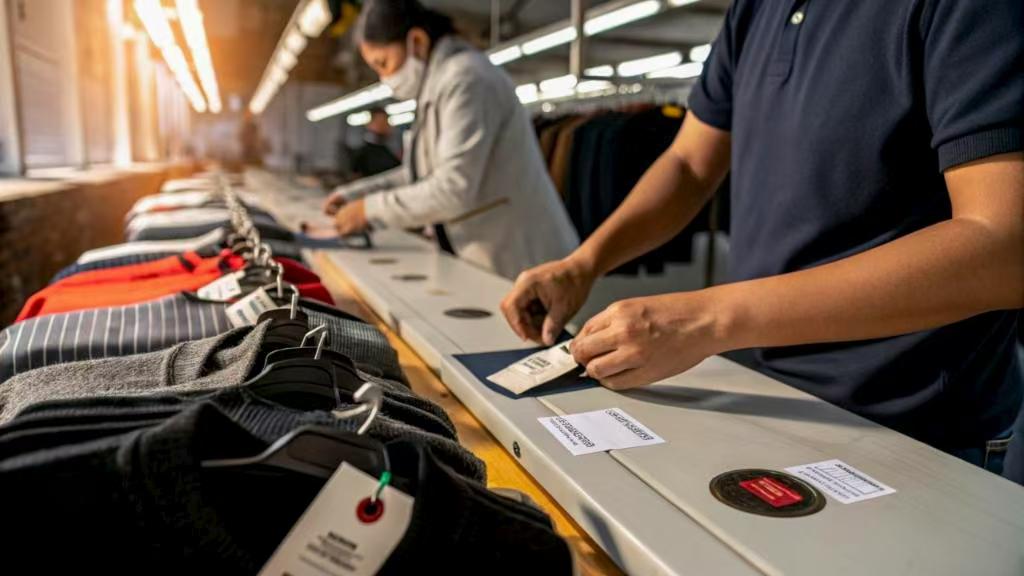
Building a private label clothing brand is not just about design. It is about turning your idea into a product that customers can trust, reorder, and recommend. This means aligning three things: product identity, material quality, and branding details. A strong brand is not built on one good sample. It is built on consistent results across multiple orders.
What defines your private label clothing brand identity?
Your brand identity is not your logo alone. It is how your product feels, fits, and performs every time someone wears it.
Most successful brands define identity through three layers:
- Product focus (what you sell repeatedly)
- Visual consistency (colors, graphics, tone)
- Wearing experience (fit, comfort, durability)
For example:
| Brand Type | Identity Focus | Product Strategy |
|---|---|---|
| Streetwear | Oversized, bold graphics | Heavyweight tees, hoodies |
| Activewear | Performance + comfort | Leggings, fitted tops |
| Minimal basics | Clean, premium feel | Neutral tees, sweat sets |
A mistake many founders make is trying to look “premium” through branding alone. But real brand perception comes from:
- Fabric handfeel
- Fit accuracy
- Stitching quality
- Print durability
If these are inconsistent, customers will not come back, no matter how strong your branding looks online.
How do you choose fabrics and fits?
Fabric and fit decisions directly affect:
- Customer satisfaction
- Return rate
- Repeat purchase rate
This is where many brands underestimate complexity.
For example, a T-shirt is not just a T-shirt. Fabric weight, yarn quality, and finishing all change how it feels.
| Fabric Type | Weight (GSM) | Feel | Best Use |
|---|---|---|---|
| Lightweight cotton | 140–180 | Soft, breathable | Summer tees |
| Midweight cotton | 180–220 | Balanced | Everyday wear |
| Heavyweight cotton | 220–300 | Structured, premium | Streetwear |
Fit is equally important:
- Oversized fit = lower sizing risk, more forgiving
- Slim fit = higher precision needed
- Activewear fit = requires stretch + recovery performance
For activewear:
- Stretch ratio
- Compression level
- Fabric recovery
These directly impact product performance.
A common issue:
Many brands get a good first sample, but the second production batch feels different. This often happens because:
- Fabric supplier changed
- Dye process varied
- Pattern adjustments were not standardized
This is why working with a factory that maintains stable fabric sourcing and pattern control is critical.
How do you add labels, logos, and packaging?
Branding is where your product becomes “your brand.”
The main branding elements include:
- Neck label (woven or printed)
- Hang tag
- Logo print or embroidery
- Packaging (bags, boxes)
Each has cost and positioning impact.
| Branding Element | Cost Impact | Brand Effect |
|---|---|---|
| Printed neck label | Low | Clean, minimal |
| Woven label | Medium | Premium feel |
| Embroidery logo | Medium | Durable, high-end |
| Screen print | Low | Flexible design |
| Custom packaging | Medium | Strong unboxing experience |
For startups, a smart approach is:
- Start simple
- Focus on consistency
- Upgrade branding after validation
Over-investing in packaging before product validation is a common mistake.
Customers remember:
- How the product feels
- How it fits
- Whether it lasts
Not just how the package looks.
How Do You Find a Private Label Clothing Brand Manufacturer?
Finding the right manufacturer is one of the most important decisions you will make. A good factory helps you grow. The wrong factory creates delays, inconsistencies, and missed opportunities. The key is not just finding a factory that can produce, but one that matches your stage and product type.
What should a private label clothing brand manufacturer offer?
A suitable manufacturer should not only provide production, but also support your development process.
At minimum, they should offer:
- Sampling capability
- Fabric sourcing support
- Pattern development
- Small-batch production
- Bulk production scalability
- Quality control process
- Clear communication
For growing brands, the most valuable factories also provide:
- Fast sampling (3–5 days)
- Small batch production (1–100 pieces)
- Stable restocking ability
- Ability to scale to 1000+ units
Here is a comparison of factory types:
| Factory Type | MOQ | Speed | Flexibility | Best For |
|---|---|---|---|---|
| Large factory | High (500+) | Medium | Low | Established brands |
| Small workshop | Low | Fast | Medium | Early testing |
| Structured mid-size factory | Medium | Fast | High | Growing brands |
A structured factory with both small-batch and scale capability often gives the best long-term advantage.
How do MOQ and sampling work?
MOQ (Minimum Order Quantity) is one of the biggest concerns for new brands.
Typical MOQ ranges:
| Product Type | Typical MOQ |
|---|---|
| Basic T-shirt | 50–100 pcs |
| Hoodie | 100–300 pcs |
| Activewear | 150–300 pcs |
But modern factories (like Modaknits’ model) may support:
- 1–20 pcs for testing
- 50–100 pcs for small launch
- 500+ pcs for scaling
Sampling process usually follows:
- Send reference or design
- Pattern creation
- Sample production (3–7 days)
- Feedback and adjustment
- Final sample approval
Key things to check in samples:
- Fabric feel
- Fit accuracy
- Stitch quality
- Print or embroidery quality
- Shrinkage after wash
A strong sample process reduces risk before bulk production.
Is small-batch production better for a private label clothing brand?
For most startups and growing brands, small-batch production is not just better—it is necessary.
Why?
Because it reduces:
- Inventory risk
- Cash flow pressure
- Unsold stock
And increases:
- Speed to market
- Product testing accuracy
- Flexibility
Here is a simple comparison:
| Production Model | Risk | Speed | Flexibility |
|---|---|---|---|
| Large batch | High | Slow | Low |
| Small batch | Low | Fast | High |
Small batch allows you to:
- Test 2–3 styles
- Identify best sellers
- Reorder only what works
However, small batch only works if the factory takes it seriously.
Many factories accept small orders but:
- Delay production
- Reduce quality attention
- Prioritize larger clients
That is why choosing a factory designed for small order + repeat production is critical.
How Much Does a Private Label Clothing Brand Cost?
Starting a private label clothing brand does not require millions, but it does require structured budgeting. The biggest mistake is underestimating hidden costs or over-investing in the wrong areas. A smart launch focuses on product, not unnecessary complexity.
What are the main startup costs?
The core cost areas include:
| Cost Category | Estimated Range |
|---|---|
| Sampling | $50–$200 per style |
| Production (per piece) | $5–$25+ |
| Branding (labels, prints) | $0.5–$3 |
| Packaging | $0.5–$2 |
| Shipping | $1–$5 per piece |
| Marketing | Variable |
Example startup scenario:
| Item | Quantity | Cost |
|---|---|---|
| T-shirt production | 100 pcs | $800 |
| Branding & packaging | 100 pcs | $150 |
| Shipping | 100 pcs | $200 |
| Samples | 2 styles | $150 |
| Total | ~$1,300 |
This is why many brands start with:
- 1–2 products
- 50–100 pieces
- Limited colors
How can a private label clothing brand start small?
Starting small is not a limitation. It is a strategy.
A smart small-start model:
- 1 core product
- 2–3 color options
- 50–100 pcs total
- Focus on testing
This allows:
- Faster learning
- Lower financial risk
- Better product-market fit
With factories that support:
- 5–10 day production
- Quick restocking
You can run a test → reorder → scale cycle efficiently.
How do you control risk and budget?
Risk control comes from decisions, not luck.
Key strategies:
- Start with basics, not complex designs
- Avoid too many SKUs
- Work with one stable supplier
- Focus on repeatable products
- Track customer feedback closely
Biggest cost mistakes:
- Ordering too many styles
- Ignoring sample quality
- Changing factories frequently
- Over-spending on branding early
A strong brand grows step by step.
How Do You Grow a Private Label Clothing Brand?
Growing a private label clothing brand is not about launching more products every month. It is about finding one or two products that customers actually want, making sure those products perform well after delivery, and then building a repeatable restock system around them. Many founders think growth means more designs, more colors, and more categories. In real business, growth usually comes from the opposite direction. It comes from better focus, cleaner data, and a supply chain that can support repeat orders without changing the product too much.
A lot of small brands make their first sales through content, paid ads, word of mouth, or influencer support. But the second stage is harder. That is when customers start asking questions such as: “Will you restock this color?” “Will the next batch fit the same?” “Can I reorder the same hoodie for my team next month?” “Can you keep this fabric?” If the answer is unclear, the brand starts losing trust. That is why growth is closely tied to product stability, stock planning, and reorder speed.

For most small and growing brands, the safest growth model is based on three steps:
- test in small volume
- identify winners with real sales data
- restock proven products before expanding into new items
This sounds simple, but many brands skip the middle step. They sell a product once, then rush to launch new styles before understanding why the first one worked or failed. That often leads to higher inventory pressure, weaker cash flow, and too many slow-moving SKUs.
How do you test and restock a private label clothing brand?
The most practical way to grow is to treat the first launch as a market test, not as a final statement of your brand. Your first drop should help you answer real questions:
- Which style gets the most clicks?
- Which color converts best?
- Which sizes sell fastest?
- Which products get repeat purchases?
- Which items create return or complaint issues?
Without these answers, your next production decision is only guesswork.
A useful first test can be small and still produce valuable data. For example, a startup brand may launch:
| Product | Colors | Quantity per Color | Total |
|---|---|---|---|
| Heavyweight tee | Black, white, grey | 20 each | 60 |
| Logo hoodie | Black, washed grey | 20 each | 40 |
That is only 100 pieces total, but it already gives useful information. If black tees sell out in 10 days, grey takes 25 days, and white has the highest return rate because of transparency concerns, your next order becomes much clearer. You do not need to “feel” what the market wants. You can see it.
When reviewing a test launch, pay attention to both sales data and product feedback. A product that sells fast but gets complaints may still become a problem later. A product that sells steadily and gets strong comments on comfort, fit, and quality usually has better long-term value.
The table below shows the kind of signals worth tracking after a first launch:
| Data Point | Why It Matters | What It May Tell You |
|---|---|---|
| Sell-through rate | Shows demand strength | Whether the style deserves restocking |
| Size sell-out speed | Helps size planning | Whether your size ratio is correct |
| Color performance | Helps future purchasing | Which shades are safest for repeat orders |
| Return rate | Protects margin | Whether fit or fabric needs correction |
| Customer reviews | Reveals product strengths | What to emphasize in marketing |
| Repeat purchase rate | Shows loyalty | Whether the product can become a core item |
For clothing brands, a good sell-through rate in an early launch is often around 60% to 80% within the first 30 to 45 days, depending on traffic quality and price level. If a product sells less than 30% in that window, it usually means one of three things: the product is weak, the positioning is unclear, or the audience is wrong. If a product sells above 80% very quickly, that looks good, but it may also mean you understocked a potential winner.
Restocking should not be delayed too long. If a brand waits until stock is fully gone, it may lose momentum, especially if production plus shipping takes several weeks. A safer model is to restock when 30% to 40% of the inventory remains for a strong-selling item. That gives more room for production and transit time.
A simple restock framework can look like this:
| Product Status | Suggested Action |
|---|---|
| Fast seller + low complaints | Restock quickly |
| Medium seller + good feedback | Keep, but reduce quantity |
| Slow seller + weak feedback | Stop or redesign |
| Fast seller + high complaints | Fix before restock |
This approach helps protect cash and keeps the product line cleaner. It also helps your manufacturer work more efficiently because future orders are based on real demand instead of random expansion.
How do you know which products deserve scaling?
Not every product that sells once deserves larger production. A brand should scale only the products that prove they can support stable revenue, not just short-term excitement. A good product for scaling usually performs well in at least four areas:
- consistent sales
- stable customer feedback
- manageable return rate
- reliable production repeatability
For example, a hoodie may sell well in the first batch because the design looks strong in social media photos. But if the second batch creates complaints about shrinkage, pilling, or sleeve length, that product is not yet ready for larger volume. On the other hand, a plain heavyweight tee may look less exciting but generate better repeat orders because customers like the fit and wear it often. In many cases, the second product is more valuable for brand growth.
A useful way to judge scale-readiness is to score each product after the first and second launch rounds.
| Product Checkpoint | Strong Signal |
|---|---|
| Sales speed | Sells steadily without heavy discounting |
| Customer reviews | Positive comments on fit, feel, and quality |
| Return rate | Low and stable |
| Restock interest | Customers ask for the product again |
| Production consistency | New batch matches approved sample closely |
| Margin | Enough room after shipping and marketing costs |
Brands that scale well usually grow around “anchor products.” These are items that create stable monthly demand. In many private label brands, anchor products are:
- oversized tees
- premium hoodies
- sweatpants
- leggings
- matching activewear sets
- blank-based logo essentials
These products work because they solve repeat-use needs. Customers buy them for daily wear, training, lounging, or community identity. They are not one-time novelty items. That makes them easier to restock and easier to build long-term marketing around.
A practical example of product scaling may look like this:
| Stage | Tee Order | Hoodie Order | Goal |
|---|---|---|---|
| First test | 60 pcs | 40 pcs | Learn demand |
| Second order | 120 pcs | 80 pcs | Confirm winners |
| Third order | 300 pcs | 200 pcs | Improve efficiency |
| Growth stage | 500+ pcs | 300+ pcs | Reduce unit cost and support volume |
This step-by-step path is much safer than jumping from a 50-piece test straight to a 1,000-piece order. The larger jump may look efficient on paper, but if the fabric, fit, or color is not fully proven, the downside becomes expensive very quickly.
How do you manage cash flow while growing?
Many clothing brands do not fail because of weak sales. They fail because their cash gets locked into the wrong products. Cash flow is one of the biggest real-life issues in apparel growth, especially for private label brands that have to pay for production before inventory is sold.
The pressure usually comes from four areas:
- too many SKUs
- slow-moving stock
- large MOQs
- poor reorder timing
This is why focused brands often outperform creative but scattered brands. A founder may feel proud of launching 15 styles, but if only 3 of them are making money and the rest are sitting in storage, growth becomes heavy instead of healthy.
Here is a simple example of how SKU spread affects cash:
| Launch Model | Number of SKUs | Average Qty per SKU | Total Units | Inventory Risk |
|---|---|---|---|---|
| Focused line | 4 | 50 | 200 | Lower |
| Wide line | 12 | 50 | 600 | Much higher |
The second brand may look bigger online, but it also needs more money, more storage, more photos, more ads, and more management. If the products do not move evenly, cash gets trapped.
To manage cash flow better during growth, many brands use these rules:
- restock winners first
- cut weak products faster
- avoid adding new categories too early
- keep color options controlled
- negotiate production timing carefully
- match stock planning to actual sales pace
For many small and growing labels, the most efficient model is not “launch big.” It is “sell through, then replenish.” This is especially true when working with a manufacturer that supports small-batch testing and medium-scale repeat orders.
Lead time also affects cash flow more than many new founders realize. If a product takes 30 to 45 days to produce and another 5 to 10 days to ship by air, poor planning can easily create stock gaps. Stock gaps do not only reduce sales. They also reduce trust. If customers find that your best product is always unavailable, they may not wait for the next batch.
That is why brands should track reorder points carefully. A simple planning example:
| Monthly Sales | Safe Reorder Point |
|---|---|
| 50 pcs/month | reorder at 20 pcs left |
| 100 pcs/month | reorder at 35–40 pcs left |
| 300 pcs/month | reorder at 90–120 pcs left |
This gives some protection against production and shipping delays.
How do you grow without losing product quality?
One of the biggest fears for growing brands is this: the first batch was good, but the next batch changed. This is a serious problem because growth depends on repeat trust. If customers liked the first product and then received a different handfeel, fit, or finish later, the brand starts losing credibility.
Quality problems often increase during growth for very practical reasons:
- the factory changes fabric sources
- the pattern is not locked properly
- the sewing line changes method
- color standards are not controlled carefully
- quality checks become less strict when volume increases
That is why a brand needs to treat quality control as part of growth, not just part of production.
A strong quality system usually includes:
- approved reference sample kept on file
- fixed measurement chart
- fixed fabric composition and weight
- print or embroidery placement standard
- pre-shipment inspection process
- wash test or wear test on important products
Here is a simple quality control table for repeatable core products:
| Control Area | What Should Stay Stable |
|---|---|
| Fabric | composition, weight, handfeel, color |
| Fit | chest, length, sleeve, waist, rise |
| Branding | placement, size, print or embroidery quality |
| Construction | stitch density, seam quality, finishing |
| Packaging | labels, tags, folding, bag style |
For products like heavyweight tees, hoodies, leggings, and activewear sets, these details matter a lot because customers often compare the new item directly with the old one. Even small changes can create complaints.
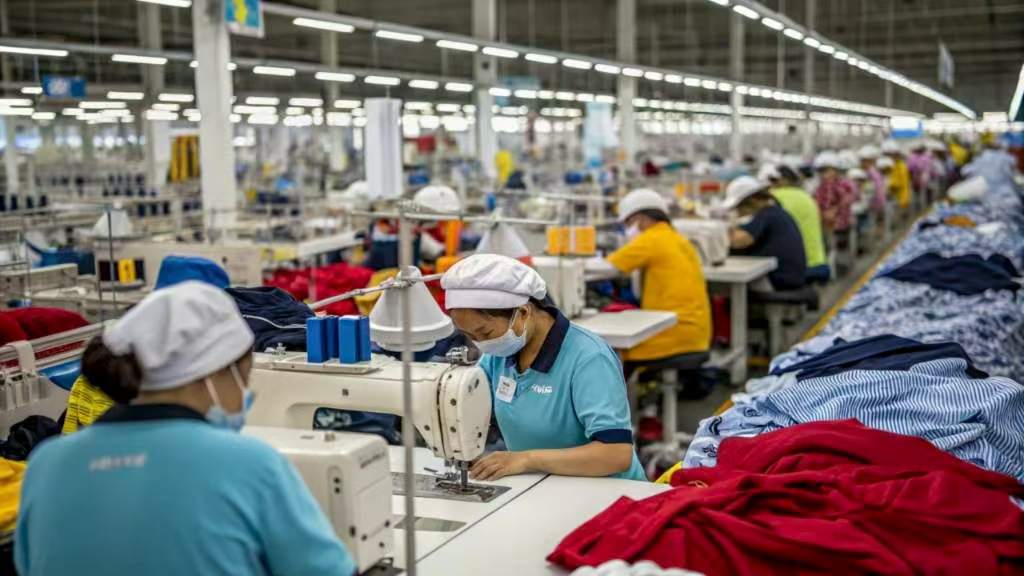
This is why a manufacturer’s internal structure matters so much. A factory that only wants one-time orders may produce a decent sample but fail at repeat consistency. A factory that understands long-term product lines is more useful for a growing brand because it can connect sample development, bulk production, and repeat orders inside one more stable system.
How do you expand your brand the smart way?
Expansion should come after product proof, not before it. Once you have one or two reliable products, you can grow in a more controlled way. Smart expansion usually happens in one of these directions:
- more colors in a winning style
- better size coverage
- seasonal updates to a core product
- matching sets or companion products
- slight upgrades in fabric or trims
For example, if a brand has a strong oversized tee, the next step may not be launching jackets, denim, and accessories all at once. A better next move may be:
- add two new colors
- introduce a long-sleeve version
- release a matching fleece hoodie
- improve packaging for higher perceived value
That is a much cleaner growth path because it builds around proven demand.
A practical expansion roadmap can look like this:
| Growth Phase | Best Move |
|---|---|
| After first successful launch | Restock same product |
| After second stable reorder | Add colors or size depth |
| After strong demand on one category | Add one related product |
| After stable monthly sales | Explore new category carefully |
This protects the brand from becoming too scattered. It also makes sourcing and production easier because related products often use similar fabrics, trims, or fit logic.
For many private label brands, the strongest long-term growth does not come from chasing every trend. It comes from building a line of products that customers can trust, reorder, and recommend. That is why the real question is not only “How do I grow?” It is “How do I grow while keeping the product dependable?”
That is where the right manufacturer becomes part of the growth strategy. If your factory can support small tests, fast development, stable repeat production, and gradual scale-up, growth becomes more manageable. If not, every new stage of the brand feels harder than it should.
For a business like Modaknits, this is exactly where the value sits. The ability to support sampling, small runs, repeat basics, and later scale-up gives growing brands a more practical path. Instead of forcing a founder to choose between tiny workshop flexibility and large-factory scale, the goal is to create a smoother transition from first test order to steady repeat production. That matters most for categories like tees, hoodies, sweatpants, leggings, and basic activewear sets, where consistency is often what turns a first-time customer into a repeat customer.
Conclusion: Build a Brand That Can Be Repeated, Not Just Launched
Launching a private label clothing brand is not the difficult part. The real challenge is building something that can be repeated, restocked, and scaled without losing quality or control. The brands that last are not the ones with the most designs, but the ones with the most stable products.
If you look at successful brands, they usually share a similar path:
- They start with a small number of focused products
- They test the market instead of guessing
- They improve based on real feedback
- They build around repeatable, proven items
- They grow step by step, not all at once
At every stage, the product is the foundation. Fabric, fit, consistency, and delivery matter more than short-term trends. Customers come back when they trust that what they receive today will match what they received last time.
This is where your manufacturing partner becomes part of your brand system. A factory that supports small-batch testing, fast sampling, and stable repeat production allows you to move with less risk and more confidence. It gives you the flexibility to start small, learn quickly, and scale only when your product is ready.
If you are planning to launch or grow your private label clothing brand, the next step is simple:
- Start with one clear product
- Prepare your references or ideas
- Test with a small batch
- Improve and restock what works
If you want to move faster and reduce early-stage risk, you can reach out to Modaknits with your ideas, reference images, or target product. From sampling to small orders and scalable production, the process can be structured to match your growth stage.
A strong clothing brand is not built in one launch. It is built through consistent products, controlled growth, and the right support behind the scenes.