Skip to content
Have you ever checked the label on your workout gear and noticed it’s nearly always made of polyester1? That’s no accident. So, what makes this synthetic fiber dominate the activewear industry?
Polyester is used in sportswear because it’s lightweight, durable, moisture-wicking2, and quick-drying. It also holds shape well, resists wrinkles, and adapts easily to high-performance blends, making it ideal for everything from yoga leggings to marathon jerseys.
I’ve helped dozens of performance wear brands scale, and in nearly every case, the core fabric—no matter the design—was polyester or a poly-blend. Here’s why it remains the industry’s first choice.
What Makes Polyester Ideal for Sportswear?
Polyester isn’t just cheap or convenient—it’s a high-performance material engineered for physical movement, sweat management, and style durability.
Polyester outperforms many other fibers in breathability, sweat-wicking, shape retention, and resistance to shrinkage. That’s why brands rely on it for base layers, outerwear, and everything in between.
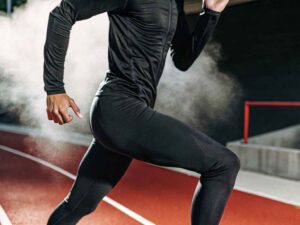 Speed Training
Is polyester really more breathable and moisture-wicking than cotton?
Yes—and here’s why. Cotton absorbs moisture and holds it, which makes the fabric feel heavy and wet during workouts. Polyester, on the other hand, repels moisture and pushes it to the surface where it evaporates faster.
- Cotton holds up to 7% water by weight.
- Polyester holds less than 0.4%—meaning it dries 5x faster.
- Modern poly blends use cross-section yarns (like mesh or zig-zag filaments) to improve airflow.
That’s why polyester tees stay light and dry even during high-intensity exercise.
How does polyester enhance stretch, durability, and quick-dry performance?
Pure polyester is strong but not stretchy. But when blended with spandex or elastane, it forms the backbone of stretch fabrics. Its fibers are also thermoplastic—meaning they respond well to heat setting, locking in shape.
| Feature | Polyester Advantage |
|---|---|
| Stretch | Works well in blends |
| Durability | Abrasion-resistant and strong |
| Quick-Dry | Dries faster than any natural fiber |
These properties make polyester perfect for performance wear that gets washed—and worn—frequently.
Technical Benefits of Polyester in Athletic Clothing
Polyester’s molecular structure gives it more than just comfort—it’s a performance powerhouse with benefits you can feel and test.
From odor control to shape memory, polyester is engineered for the demands of athletic wear. Its resilience to physical stress and sweat gives it an edge over most alternatives.

Does polyester hold its shape better after repeated wear and washing?
Yes. Unlike natural fibers like cotton or bamboo, polyester has “memory.” Once heat-set, it retains its shape even after hundreds of wears and washes.
- Resists pilling due to its strong filaments
- Maintains elasticity in stretch blends
- No shrinking under normal care conditions
That’s why polyester leggings don’t sag or lose their contour, even after extended use.
How do polyester fibers help reduce odor and sweat buildup?
Polyester naturally resists bacterial growth, which is the main source of odor in activewear. Some modern polyester fabrics are infused with antimicrobial finishes or silver ions for even greater odor protection.
| Odor-Resistant Feature | Effect on Wear |
|---|---|
| Hydrophobic surface | Limits moisture accumulation |
| Antimicrobial finishes | Reduces bacteria and smells |
| Quick-dry time | Less time for odor to develop |
This makes polyester especially useful in garments worn during long or intense workouts.
Polyester vs Other Sportswear Fabrics: What’s the Difference?
While polyester dominates, other fibers like nylon, spandex, and even bamboo are used in athleticwear. So, how does polyester compare?
Polyester is generally more durable and fast-drying than natural fibers, and often more cost-effective and colorfast than nylon or bamboo. However, it’s best when combined with complementary fibers to optimize flexibility and softness.
Is polyester more suitable than nylon or spandex for intense training?
In many ways, yes. Nylon is softer but can absorb more water and takes longer to dry. Spandex is extremely stretchy but lacks structural strength on its own.
| Fabric | Pros | Cons |
|---|---|---|
| Polyester | Durable, colorfast, fast-drying | Can feel coarse if unbrushed |
| Nylon | Smooth, abrasion-resistant | Less moisture-wicking |
| Spandex | Extreme stretch | Weak alone, needs blending |
In high-performance gear, polyester is usually the base, with added nylon or spandex for extra comfort or stretch.
Can natural fabrics like bamboo or cotton compete with polyester in sportswear?
Not really—not for high-performance goals. Bamboo and cotton are breathable but absorbent. They feel great, but aren’t ideal for sustained sweat or athletic durability.
- Bamboo: Soft and naturally antimicrobial, but weaker in structure
- Cotton: Comfortable for casual wear, but retains moisture and shrinks
These fibers are better suited for athleisure or yoga—not HIIT or running.

Sustainability in Focus: Is Polyester Still the Right Choice?
Polyester is often criticized for being synthetic and non-biodegradable. But recycled polyester (rPET)3 and closed-loop systems are changing the conversation.
While polyester is not naturally biodegradable, innovations in recycled polyester and circular manufacturing are making it a more eco-responsible choice.
What are the innovations in recycled polyester (rPET) for eco-conscious sportswear?
rPET is made from post-consumer plastic like water bottles. It reduces the need for virgin fossil fuels and cuts greenhouse gas emissions by up to 75%.
| rPET Benefit | Description |
|---|---|
| Resource-efficient | Uses waste instead of new oil |
| Energy-saving | Requires less energy to produce |
| Quality retention | Maintains performance properties |
Big brands like Nike, Adidas, and Modaknits are integrating rPET into their collections.
Is polyester truly sustainable or should brands consider alternatives?
Polyester isn’t perfect, but it’s evolving. When compared with cotton (high water use) or virgin synthetics (fossil fuel intensive), recycled polyester is a responsible middle ground.
- Blended fabrics with recycled nylon, spandex, or organic cotton offer balance
- Mono-material garments (100% polyester) are easier to recycle post-consumer
- Waterless dyeing and biodegradable additives are emerging technologies
The future lies not in abandoning polyester—but in improving how it’s made and reused.
Conclusion
Polyester remains the top choice for sportswear because it delivers unmatched performance in stretch, durability, moisture management, and washability. With innovations in recycling and eco-manufacturing, it’s also becoming a smarter environmental choice. Whether you’re designing activewear for pro athletes or everyday movement, polyester provides the versatility to perform and last.
-
Discover the advantages of polyester in sportswear, including durability, quick-drying properties, and its role in high-performance gear. ↩
-
Learn about the science behind moisture-wicking technology and how it enhances athletic performance and comfort during workouts. ↩
-
Explore how recycled polyester is transforming the sportswear industry into a more sustainable option, reducing waste and emissions. ↩