Skip to content
Are you frustrated when your favorite leggings or sports bras start sagging and losing their snug fit? Many activewear enthusiasts face this annoying issue. Saggy fabrics reduce comfort and performance, impacting your workouts and daily activities. Thankfully, understanding why this happens can help prevent and even reverse this common problem.
Activewear fabrics lose elasticity primarily due to frequent washing, heat exposure, chemical breakdown from sweat, oils, and detergents, and consistent stretching during use. Spandex or elastane fibers, responsible for elasticity, gradually weaken when exposed repeatedly to harsh conditions. Proper care routines can significantly slow this process.
Imagine your favorite workout leggings losing their tight, supportive feel after just a few months. You invested in quality, yet the performance fades rapidly. Let’s dive deeper to understand exactly why activewear loses elasticity and how you can prevent this from happening.
What Causes Activewear Fabrics to Stretch Out or Sag?
Everyone wants their workout clothes to stay supportive and comfortable for as long as possible. To achieve this, you first need to understand what causes elasticity loss in activewear fabrics.
Activewear stretches out or sags because elastane (spandex) fibers break down due to repeated washing, heat exposure, stretching, sweat, body oils, and harsh detergents. These conditions weaken the fibers, causing fabrics to lose their shape and elasticity.
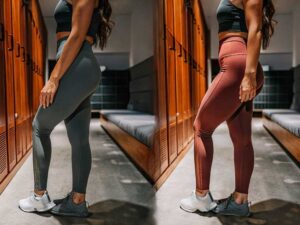 Locker-Room Leggings
Does repeated washing or heat exposure weaken spandex or elastane fibers?
Repeated washing, particularly in hot water or using dryers, significantly damages spandex fibers. Heat makes elastane brittle and reduces its ability to recover after stretching. Over time, these fibers become loose, causing sagging and a less supportive fit.
Frequent washing cycles, especially in hot temperatures, are brutal on spandex or elastane. High heat breaks down the chemical bonds within elastic fibers, causing permanent damage. Dryer heat exacerbates the problem, accelerating fiber deterioration. To protect elasticity, always use gentle, cold wash cycles and air-dry activewear.
| Washing Method | Impact on Elasticity |
|---|---|
| Hot water wash & dryer | Severe elasticity loss |
| Cold water wash & air-dry | Minimal elasticity loss |
How do sweat, body oils, and detergents break down elasticity?
Sweat and body oils, combined with harsh detergents, gradually degrade elastane fibers. Chemicals from these substances interact with fibers, causing them to lose their stretch and snap-back abilities. Over time, activewear fabric becomes permanently loose.
Sweat contains salts and acids that weaken elastane fibers when repeatedly absorbed into fabrics. Similarly, body oils stick to fibers, attracting dirt and bacteria, accelerating fiber breakdown. Harsh detergents further damage elastane, stripping away protective coatings. Choosing gentle, specialized activewear detergents can greatly prolong elasticity.
| Chemical Agent | Effect on Elastane |
|---|---|
| Sweat & body oils | Fiber weakening, increased sag |
| Harsh detergents | Rapid elasticity breakdown |
| Gentle detergents | Elasticity preservation |
Which Activewear Materials Are Most Vulnerable to Elasticity Loss?
Selecting durable activewear starts with understanding fabric vulnerabilities. Different materials behave differently under stress and washing conditions.
Polyester-spandex blends typically lose elasticity quicker than nylon-based fabrics due to weaker recovery properties. Additionally, low-GSM (grams per square meter) lightweight fabrics are more prone to permanent stretch loss and fabric thinning under tension.

Is polyester-spandex blend more prone to stretch loss than nylon-based fabrics?
Yes, polyester-spandex blends1 typically stretch out quicker. Nylon fibers have superior elasticity and recovery compared to polyester, making nylon-based blends more durable and resistant to long-term sagging.
Polyester-spandex blends are popular for affordability but tend to stretch out and lose their original shape faster. Nylon’s molecular structure gives it higher tensile strength and better elasticity recovery, meaning activewear containing nylon holds shape significantly longer.
| Fabric Blend | Durability of Elasticity |
|---|---|
| Polyester-Spandex | Moderate to low |
| Nylon-Spandex | High |
Do low-GSM fabrics wear out faster under tension and motion?
Low-GSM fabrics are indeed more susceptible to elasticity loss. They are thinner, lighter, and less resistant to continuous stretching and friction, leading to quicker fabric fatigue and loss of shape.
Low-GSM activewear feels great initially due to its lightweight nature but doesn’t handle repetitive stretching well. Thinner fabrics rapidly thin out further, losing their ability to snap back. Higher GSM fabrics maintain shape better because of increased density and fiber strength, providing better support during intense movements.
| GSM Range | Elasticity Durability | Recommended Usage |
|---|---|---|
| Below 180 | Low | Low-intensity activities |
| 200-280 | High | Moderate to high-intensity workouts |
How to Prevent Activewear from Losing Its Elastic Fit
Keeping activewear in prime condition is about adopting simple yet effective care habits. Good laundry routines significantly extend the life of your favorite pieces.
Prevent elasticity loss by washing activewear in cold water, using gentle detergents2, avoiding fabric softeners, and air-drying clothes. Limit exposure to high heat and harsh chemicals to maintain fabric stretch and shape over extended periods.

Should you wash activewear in cold water and air dry only?
Yes. Washing activewear exclusively in cold water and air drying prevents heat damage and preserves elastane fibers, significantly extending garment life.
Hot water damages the elastane fibers in activewear by weakening their chemical bonds, leading to brittleness and sagging. Air drying eliminates heat exposure entirely, preserving fiber elasticity and structural integrity. This simple adjustment dramatically extends the lifespan of activewear.
What laundry habits can help maintain stretch and shape over time?
Using gentle detergents specifically designed for athletic fabrics, washing on gentle cycles, avoiding fabric softeners, and promptly air drying clothes after washing greatly maintains stretch and shape.
Fabric softeners coat fibers, hindering elasticity. Avoiding softeners and harsh detergents preserves fiber health. Turning clothes inside-out during washing reduces abrasion. Additionally, promptly removing activewear from machines after washing prevents wrinkles and further fabric stress.
| Laundry Tip | Effectiveness |
|---|---|
| Cold water & air drying | Excellent |
| Gentle detergent | Excellent |
| No fabric softeners | Essential |
| Turning inside-out | Beneficial |
When Should You Replace Activewear That’s Lost Elasticity?
Knowing when to let go of stretched-out activewear is important for comfort and performance. It’s also key for your wardrobe’s hygiene and practicality.
Replace activewear when leggings or sports bras lose supportive structure, show visible thinning, feel constantly loose, or no longer recover their shape after washing. Consider repurposing or recycling to minimize waste and environmental impact.
How can you tell if your leggings or sports bras are past their prime?
Activewear is past its prime if fabric sags noticeably, support diminishes, elasticity is visibly compromised, or fabric becomes transparent in stretched areas.
Key indicators of worn-out activewear include fabric thinning, loss of original snugness, transparency upon stretching, and visible sagging even after washing. When comfort, support, and appearance decline, it’s time to replace your garments.
Is it better to repair, repurpose, or recycle worn-out activewear?
Repurposing or recycling is usually better than repairing significantly stretched-out activewear. Minor issues may be fixable, but elasticity loss is typically irreversible.
Minor tears or loose stitches can be repaired, but stretched-out fibers cannot be restored. Repurposing worn garments as cleaning cloths or recycling them through textile recycling programs minimizes environmental impact. Brands increasingly offer recycling options to sustainably dispose of activewear.
| Action | Best For |
|---|---|
| Repair | Minor damage, not elasticity loss |
| Repurpose | Moderate wear |
| Recycle | Extensive elasticity loss |
Conclusion
Activewear fabrics inevitably lose elasticity due to washing, heat, sweat, and fabric type. Understanding fabric vulnerabilities, adopting proper laundry care, and knowing when to replace garments help maintain activewear performance and extend its lifespan. With mindful habits, your favorite pieces can last significantly longer, supporting your active lifestyle effectively.