Skip to content
Every time I walk into a shopping mall or scroll through my favorite online stores, I’m amazed by the range of affordable, trendy clothes. But there’s a question that keeps coming back to me as both a fashion industry insider and a regular consumer: where are all these clothes really made? With the cost of living and ethical consumerism on the rise, understanding where our clothes are manufactured is more relevant than ever.
Almost all clothing that Americans purchase today is produced outside the United States, mainly in Asian countries like China, Vietnam, and Bangladesh. These countries dominate the U.S. apparel supply chain because of their vast production capacity, competitive costs, and expertise.
It’s not just about buying a T-shirt or a pair of leggings—it’s about connecting the dots between global economics, workers’ livelihoods, environmental impact, and the choices we make every day. If you’re curious about the real journey of your wardrobe, let’s take a closer look together.
Why Do Apparel Clothing Manufacturers in Asia Dominate the U.S. Market?
When I work with international clients, the question always comes up: why does almost every American clothing brand source from Asia? The simple answer is that Asian manufacturers offer a mix of speed, scale, price, and flexibility that’s hard to match anywhere else.
Asian factories control the market because they consistently deliver large orders quickly, keep costs down, and adapt to trends, all while providing reliable quality.1 Their workforces are not only large but also highly skilled in garment making.
The dominance of Asia in the U.S. clothing market wasn’t always guaranteed. Over the past 30 years, a combination of investment in production capacity, adoption of new technology, and aggressive export strategies has shifted the center of global apparel production. Brands in the U.S. look to Asia not just for cost, but for the assurance that complex orders can be turned around quickly and at scale. My experience tells me that most brands would struggle to keep up with demand without Asian partners.
How Did China and Vietnam Become Leaders in U.S. Clothing Imports?
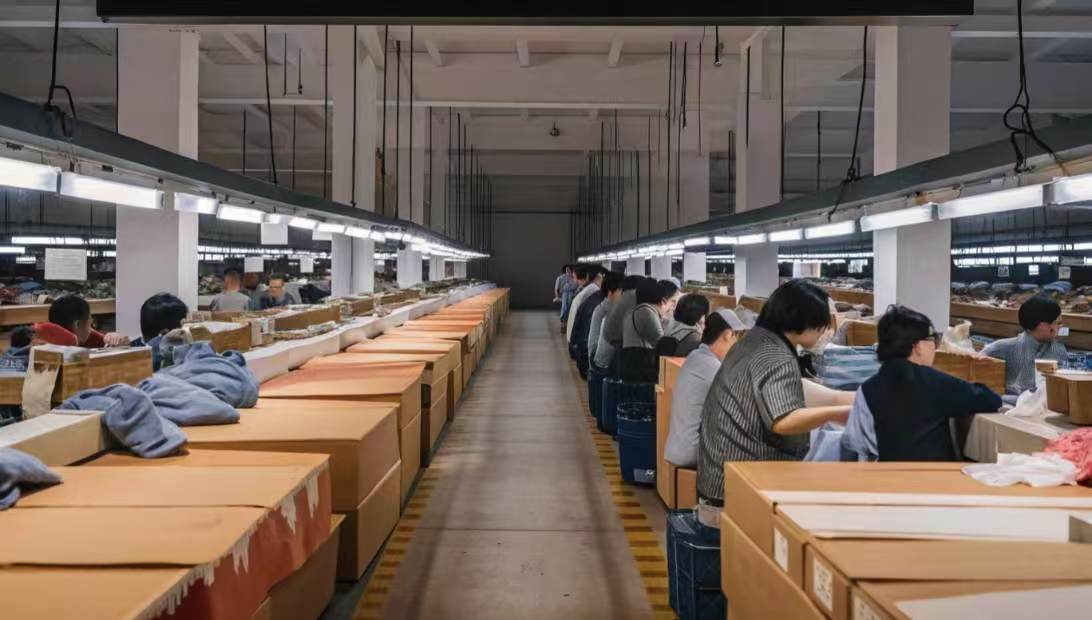
Apparel sorting line
If you trace the growth of clothing manufacturing in China and Vietnam, it’s almost like following a playbook for building an export powerhouse. Both nations took active steps to dominate the global supply chain.
China and Vietnam built their leadership through government support, huge investments in infrastructure, an emphasis on workforce training, and a relentless focus on exporting. Today, their factories offer a mix of efficiency, expertise, and low costs that attract the world’s top brands.
Let’s look at how this played out:
- Government support: Policies in China and Vietnam were designed to attract foreign investment and boost exports. Tax breaks and export zones encouraged factory growth.
- Infrastructure: From industrial parks to modern ports, these countries built what they needed to move massive amounts of goods quickly.
- Workforce: Factory jobs became key to economic growth, with millions trained in garment making and quality control.
- Experience: Decades of working with major brands gave suppliers in both countries a deep understanding of global quality standards.
- Logistics: Reliable shipping and strong logistics networks ensured on-time deliveries.
It’s no accident these countries now set the pace in global apparel production. They’ve built a system designed for scale, speed, and reliability.
What Role Do Low Labor Costs Play in Global Apparel Production?
Labor costs have always been one of the most decisive factors in choosing where to manufacture clothes. The cost difference between hiring workers in Asia versus the U.S. is still staggering—and brands are acutely aware of every dollar saved.
Lower labor costs allow Asian countries to offer much cheaper prices than American factories, which directly influences where brands choose to make their clothes. This advantage remains one of the strongest forces shaping the global apparel industry.
The wage gap doesn’t just affect the cost of making a single T-shirt. It impacts the price you pay at the register, the margins for brands, and the ability of companies to take risks with new designs or invest in marketing. Many factories in China, Vietnam, and Bangladesh operate with labor costs that are just a fraction of what a U.S. facility would pay, and this reality continues to drive the outsourcing trend.
Some additional factors matter too: access to raw materials, government incentives, and scale. But as long as labor cost gaps remain, production will keep flowing to low-cost regions.
How Much Clothing Sold in the U.S. Is Actually Made Domestically?
People are often surprised—and sometimes even a little disheartened—when they learn how little American-made clothing is on the shelves. Walk through any department store or fast fashion outlet, and the “Made in USA” label is hard to find.
Right now, less than 3% of all clothing sold in the United States is produced domestically. Nearly everything else comes from overseas suppliers, with the majority made in Asian countries.
This shift didn’t happen overnight. Decades ago, American garment factories were everywhere, providing millions of jobs. Today, most production happens abroad. There are still a few American brands and factories focused on high-end, ethical, or niche markets, but for the bulk of the U.S. market, overseas suppliers dominate.
Why Has U.S.-Based Apparel Manufacturing Declined to Less Than 3%?

This dramatic decline is something I see reflected in the industry data and in the stories of older professionals who watched American factories shut down. So what changed?
Rising wages, high costs of compliance, the move toward fast fashion, and aggressive global competition forced most U.S. apparel manufacturing offshore. Lower-cost regions made it impossible for many local factories to survive.
Key reasons include:
- Wages: Labor in the U.S. is expensive compared to Asia. This makes it hard for American factories to compete on price for basic clothing.
- Offshoring: Big brands found they could cut costs and boost profits by moving production to lower-wage countries.
- Trade agreements: Free trade deals made it cheaper to import clothing.
- Technology: Factories in the U.S. often lagged in automation and new production methods.
- Speed: The fast fashion boom pushed the need for quicker turnarounds, something many domestic factories couldn’t deliver.
It’s not just economics—it’s about the evolution of the entire fashion ecosystem. The result? Most U.S. clothing jobs vanished or moved overseas.
Are There Any Growing Trends in American Apparel Manufacturing?
Despite the bleak numbers, there are new shoots of growth in the U.S. apparel sector. As a manufacturer, I’ve seen more inquiries for local, ethical, and custom production than in the past.
Premium segments, small-batch production, sustainability, and a renewed interest in “Made in USA” branding are breathing life into domestic manufacturing. These trends are gaining momentum with both brands and consumers.
Emerging trends I notice:
- Sustainability: Some factories use recycled materials or eco-friendly dyes, targeting conscious buyers.
- Customization: Technology now allows for on-demand and personalized production—something overseas mass production can’t always offer.
- Speed: Local factories can deliver small batches in days, perfect for new brands testing the market.
- Automation: Robotics and digital processes are making production more cost-effective.
- Local pride: Consumers are willing to pay more for “Made in USA” products, especially for gifts or premium fashion.
These trends aren’t replacing imports—but they are carving out profitable niches and helping the U.S. apparel industry evolve.
What Are the Leading Countries Supplying Clothing to the U.S.?
It’s easy to guess, but the numbers are always eye-opening. A handful of countries supply the majority of all clothing on American store shelves. For anyone in the fashion industry, understanding these relationships is crucial.
China, Vietnam, and Bangladesh are the main suppliers of apparel to the U.S. market, together making up more than half of all imported clothing.2 Other countries—like India, Indonesia, and Mexico—also play important roles, but the “big three” dominate.
Market share can shift with tariffs, policy changes, or supply chain disruptions. Brands keep a close eye on these countries to manage costs and reduce risk. My daily work involves talking to suppliers from these regions and comparing their strengths, speed, and service.
Here are the latest numbers for the top U.S. apparel suppliers. These shares may change, but the trend is clear: Asia leads.
China supplies about 22–25% of U.S. apparel imports, Vietnam 19–21%, and Bangladesh 8–10%, with other countries sharing the rest.
Top U.S. Apparel Suppliers (2024 data)
| Country | Market Share (%) | Typical Products |
|---|---|---|
| China | 22–25 | T-shirts, basics, sweaters |
| Vietnam | 19–21 | Activewear, outerwear |
| Bangladesh | 8–10 | Knitwear, denim, shirts |
| Others | 44–51 | India, Indonesia, Mexico |
This table paints a clear picture of how concentrated the U.S. apparel supply chain has become. Changes in trade policy or disruptions—like the COVID-19 pandemic—can have ripple effects across the whole market.
How Has Global Trade Impacted the Shift in Manufacturing Locations?
Global trade rules and policies have changed the entire geography of the clothing industry. As someone who manages international orders, I see this play out with every new regulation or tariff.
Trade agreements, shifting tariffs, supply chain risks, and even global events have encouraged brands to diversify suppliers, sometimes moving orders from one country to another for better prices or stability.
Some of the major influences:
- Tariffs: Trade wars, especially between the U.S. and China, have led some brands to move production to Vietnam, Bangladesh, or Mexico.
- Free trade agreements: Treaties like NAFTA made it cheaper to import from Mexico.
- Logistics: Global events—like port congestion, COVID lockdowns, or natural disasters—force brands to rethink their supply chains.
- Compliance: Stricter U.S. rules on forced labor have pushed some brands to seek “safer” supply countries.
The end result is a highly dynamic, sometimes fragile, but always cost-focused global apparel supply system.
What Are the Economic and Ethical Implications of Overseas Manufacturing?
There’s always a trade-off between price and values. Sourcing clothing from overseas brings benefits and risks for both companies and consumers. This is a big topic in meetings with new brand owners and procurement managers.
While overseas manufacturing cuts costs and increases profits for brands, it often raises tough questions about working conditions, local job losses, and environmental impact. The drive for lower prices can come at a human and ecological cost.
On the economic side, brands can grow faster and offer cheaper products to consumers. But the flip side is the loss of American jobs and the vulnerability that comes from long, complex supply chains. Ethically, stories of sweatshops, pollution, and unsafe working conditions are still too common. Many brands are now investing in audits and compliance, but there’s a long way to go.
How Do Environmental and Labor Standards Differ Between Countries?
The standards for labor rights and environmental protection are very uneven worldwide. Brands that care about their reputation need to look beyond the price.
Countries like the U.S. have strict rules and enforcement, while many Asian manufacturing hubs are still catching up, sometimes sacrificing standards for speed and cost. Progress is being made, but problems remain.
Comparison Table
| Country | Labor Protections | Environmental Standards |
|---|---|---|
| USA | Strong | Strict |
| China | Improving, still mixed | Improving, but concerns |
| Vietnam | Moderate | Moderate |
| Bangladesh | Often weak, improving | Improving, still issues |
For example, in Bangladesh, the 2013 Rana Plaza collapse highlighted ongoing safety issues. China has increased worker protections but still faces criticism about factory conditions. U.S. and European brands now require third-party audits, but enforcement and follow-up can be weak. Environmentally, water pollution from dyeing and finishing remains a major concern in some Asian countries.
Are American Consumers Supporting More Ethical Apparel Clothing Manufacturers?
In recent years, I’ve seen a clear shift in what some American consumers care about. More people now ask where and how their clothes are made, and some are willing to pay extra for assurance of better practices.
A growing number of American consumers are choosing brands with strong ethical and environmental commitments, especially those that use sustainable materials, ensure fair wages, or offer “Made in USA” lines. Social media is making these issues impossible to ignore.
Key trends I observe:
- More buyers search for certified brands (Fair Trade, GOTS, OEKO-TEX).
- “Made in USA” and eco-friendly tags have become key selling points.
- Young consumers often check a brand’s supply chain transparency before buying.
- Social media and viral campaigns can quickly highlight labor or environmental issues.
This movement is still a minority, but it’s gaining traction and forcing major brands to respond.
Can Domestic Apparel Clothing Manufacturers Compete in the Future?
Many people ask me if American factories have any chance of competing again on a global scale. The answer is: it depends on strategy and innovation.
U.S. apparel manufacturers can compete by focusing on high-value markets, using new technology, prioritizing speed and quality, and targeting customers who care about local and ethical production. Success means thinking differently, not just trying to copy low-cost overseas models.
Factories that survive are those that:
- Specialize in premium or custom products
- Use automation and robotics to reduce costs
- Leverage “Made in USA” for branding
- Build partnerships with local designers and direct-to-consumer brands
- Stay flexible with small-batch production
The future is about adaptability, not volume.
What Innovations Could Revive U.S. Clothing Production?

The factories of the future won’t look like those of the past. They’ll be smaller, smarter, and much more automated.
Technologies like robotics, 3D knitting, AI-driven logistics, and digital design can help U.S. factories offer rapid, high-quality, and flexible production, especially for brands that value speed and customization.
Key innovations include:
- Robotics: Machines now handle much of the sewing, cutting, and packaging.
- 3D knitting: Produces seamless garments quickly, reducing waste.
- On-demand production: Brands only make what sells, cutting inventory risks.
- Eco-friendly materials: Factories experiment with recycled, organic, or biodegradable fabrics.
These tools don’t erase the labor cost gap, but they can close it enough for certain markets.
Are Big Retailers Investing in Local Manufacturing Again?
I’ve watched with interest as some big names test the waters with domestic manufacturing—often for marketing or speed rather than cost.
Major U.S. retailers and brands are experimenting with small-batch local production to offer limited-edition lines, react quickly to trends, and meet the demand for “Made in USA” products. While these are still small-scale, the momentum is growing.
Examples:
- Walmart and Target have both run “Made in USA” pilot programs.
- DTC brands like American Giant and Buck Mason focus on local manufacturing.
- Some large brands are opening or supporting high-tech factories in places like Los Angeles and the Southeast.
If automation keeps improving and consumers keep demanding local, the trend could accelerate.
Conclusion
Almost every piece of clothing Americans buy now comes from overseas, mostly from Asia’s powerhouse suppliers. However, there’s a clear shift toward sustainable, ethical, and innovative production, with some growth in U.S.-based manufacturing. The future of fashion is global, but it’s also getting more local, responsible, and tech-driven—and I’m excited to watch it unfold.