Skip to content
You picture your logo stitched on a plush hoodie, yet worry it may unravel or cost a fortune. That fear stalls launches and drains hype. I fix the risk by showing how embroidery works, what it costs, and which factories turn sketches into durable art fast.
Before you order embroidered sweatshirts, nail three points: pick the right stitch method, match fabric weight to thread density, and choose a factory with tight QC. Flat or 3D puff embroidery on 320 gsm fleece lasts years, while poor tension snaps in weeks. Secure digitized files, approve a sample, then scale.
I almost missed a tour-merch deadline when puff stitches flattened in wash tests. One checklist saved the drop. Keep reading—you’ll get that same checklist plus deeper tips that guard your budget, timeline, and brand look.
What Are Custom Embroidered Sweatshirts and Why Are They Trending?
I call embroidered sweatshirts “portable billboards you can hug.” They blend comfort with art. Since luxury houses revived varsity styles, stitched logos moved from college quads to high-fashion runways.
Custom embroidered sweatshirts are fleece or terry tops with logos stitched directly into the fabric. Brands love them because embroidery adds depth, lasts longer than prints, and signals premium value. Streetwear labels, lifestyle influencers, and tour merch now use raised stitches to prove quality and command higher prices.
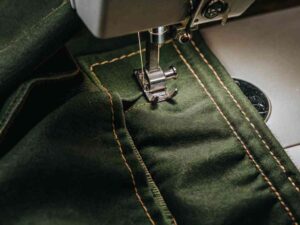 Precision Stitching Detail
Why Embroidery Beats Screen Printing
- Texture & Dimension – Stitches create shadows prints cannot.
- Wash Resistance – Thread holds color after 50+ cycles.
- Perceived Value – Buyers link embroidery with craftsmanship.
Trending Segments for 2025
| Segment | Reason for Using Embroidery | Avg. Order Size |
|---|---|---|
| Streetwear Drops | Limited runs, collector feel | 200–500 pcs |
| Lifestyle Brands | Long-term brand recall | 300–800 pcs |
| Music Merch | Premium upsell tier | 100–300 pcs |
How Is the Embroidery Process Done on Sweatshirts?
Watching a multi-head machine dance feels hypnotic. Yet success starts long before the hoop clicks shut.
Embroidery begins with digitizing your logo into stitch paths, choosing thread colors, testing tension on scrap, then running flat, 3D puff, or applique on the garment. Fabric weight and fiber blend decide needle size and speed, so fleece needs slower passes than jersey.

Main Techniques
- Flat Stitch – Smooth, low-profile for fine detail.
- 3D Puff – Foam underlay creates raised letters.
- Applique – Fabric patches stitched on top for bold blocks.
Step-by-Step Flow
- Digitize artwork (DST file).
- Mock-up placement on a blank.
- Thread & Needle selection.
- Hoop garment, adjust tension.
- Run Sample, inspect pull lines.
- Bulk Production after approval.
Fabric Impact Table
| Fabric Blend | Needle Size | Max Stitch Density | Comment |
|---|---|---|---|
| 80/20 Cotton/Poly | 75/11 | 72 spm | Standard fleece hoodies |
| French Terry | 75/11 | 68 spm | Loops need backing |
| Heavy 100 % Cotton | 80/12 | 64 spm | Slower speed, crisp edge |
Which Sweatshirt Styles Are Best for Custom Embroidery?
If it has a chest panel, we can hoop it. Yet some cuts show stitches better.
Crewnecks and heavyweight hoodies take embroidery best. Oversized fits give more canvas, while cropped styles spotlight small chest art. Fleece-lined 320–380 gsm cotton-poly blends resist puckering and hold 3D foam shapes.
Style Guide 2025
| Style | Embroidery Hot-Spot | Trend Note |
|---|---|---|
| Classic Crewneck | Center chest, sleeve | Vintage revival |
| Oversized Hoodie | Center chest, pocket | Gender-neutral appeal |
| Cropped Hoodie | Small chest, cuff | Gen-Z street style |
| Zip-Up Jacket | Left chest, back | Athleisure layering |
Fabric & Fit Tips
- French Terry for mid-season drops.
- Heavy Fleece for premium winter lines.
- Keep seam allowance wide on cropped cuts to avoid hoop clash.
Do You Need a Logo or Design Ready to Start Embroidery?
I have transformed napkin doodles into merch that sold out in hours.
A high-resolution PNG, AI, or EPS file speeds digitizing, but factories can trace clean sketches. Place logos at least 6 cm from seams to avoid distortion. Embroidery shines on teamwear, limited fan merch, and lifestyle capsules that need texture.
File Format Checklist
| Format | Best Use | Note |
|---|---|---|
| AI/EPS | Vector paths | Infinite scaling |
| PNG | Quick mock-up | Use 300 dpi min |
| DST | Production | Factory converts for you |
Placement Hacks
- Sleeve icons under 60 mm stay sharp.
- Back graphics need heavier backing paper.
- Align art with collar seam for balance.
Is It Expensive to Order Custom Embroidered Sweatshirts?
Cost lives in stitches, not fabric alone.
Price climbs with stitch count, thread changes, and hoodie weight. A 10 k-stitch chest logo on a 320 gsm hoodie can land at \$12 for 500 units; jump to \$18 for 100 units. Embroidery costs more than print up front but outlasts it by years.
Cost Breakdown
| Factor | Low Impact | High Impact |
|---|---|---|
| Stitch Count | 5 k | 20 k+ |
| Thread Colors | ≤ 3 | 6+ |
| Hoodie Weight | 280 gsm | 400 gsm |
| Order Volume | 1 k+ pcs | 50 pcs |
Embroidery vs Printing
- Embroidery: Higher unit cost, lasts 50+ washes.
- Screen Print: Cheaper, fades around 20 washes.
- DTG: Good for photo art, but cracks sooner.
How Long Does It Take to Produce Embroidered Sweatshirts?
Speed rules trends, yet needles move slower than squeegees.
Allow 3 days for digitizing and sample, 1 day for your approval, 7–15 days for bulk under 1 k units. Add 5 days air freight or 25 days sea. Quick approvals and fixed color codes cut loops.
Timeline Chart
| Stage | Days |
|---|---|
| Digitize Logo | 1 |
| Sample Stitch | 2 |
| Client Approval | 1 |
| Bulk Sew | 7–12 |
| Finishing & QC | 2 |
| Packing | 1 |
Approve sample photos on video call to skip shipping a physical swatch if time is tight.
Are There Quality Differences Between Embroidered Sweatshirt Manufacturers?
Two hoodies can look alike online yet age very differently.
High-tier factories keep tight tension, use colorfast thread, and run in-line QC every 50 pieces. Low-tier shops leave loose bobbin loops that snag. Experience and certifications—like ISO 9001 at Modaknits—signal steady quality.
Quality Markers
- Stitch Density ≥ 64 spi for chest logos.
- Thread Grade = 40 wt polyester for colorfastness.
- Back-side Tidy: No bird-nests or long trims.
| Red Flag | What It Means |
|---|---|
| Visible puckering | Wrong tension or backing |
| Color bleed after wash | Low-grade dye on thread |
| No QC photos provided | Hiding defects |
What Should You Ask Before Choosing an Embroidered Apparel Supplier?
Sharp questions save weeks.
Ask MOQs per color, stitch count price steps, and revision policy. Check fabric sources, thread brand, and lab-wash test results. Lock lead times and confirm if they keep digitized files for reorders.
Supplier Vetting Checklist
| Question | Good Answer Example |
|---|---|
| MOQ per Color | 50 pcs or flexible |
| Sample Time | 3 days including digitizing |
| Revision Fee | One free change |
| Thread Brand | Madeira Polyneon |
| QC Process | In-line + final AQL 2.5 |
| Shipping Support | DDP to USA options |
My Rule
If a factory dodges any tech question, I move on. Transparency today saves rework tomorrow.
Conclusion
Ordering custom embroidered sweatshirts1 feels simple, yet perfect stitches need clear art, right fabric, and a factory with proven tension control. Follow the checklists, test early, and lock timelines—you will launch durable pieces that elevate your brand and thrill customers for seasons.
-
Explore the advantages of custom embroidered sweatshirts, including their durability and premium appeal, to enhance your brand’s visibility. ↩