 Skip to content
Yoga pants are everywhere—from fitness studios to coffee shops to office-appropriate outfits. They’re soft, stretchy, and surprisingly durable. But what exactly are they made of? And what’s the name of the material that gives yoga pants their signature comfort and flexibility?
Yoga pants are typically made from performance fabric1 blends such as nylon-spandex2 or polyester-spandex. These blends are sometimes referred to as "stretch jersey," "technical knit," or "activewear fabric." The key is the presence of spandex (also known as elastane or Lycra), which gives yoga pants their stretch and shape retention.
Let’s explore what yoga pants material is called, how each type performs, and how to choose the best one for your practice or lifestyle.
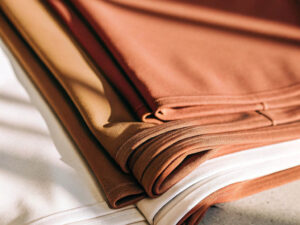
What are the main materials used in yoga pants?
Yoga pants aren’t made from a single fiber—they’re made from a blend.
The core materials used in yoga pants are synthetic fibers like nylon and polyester, blended with spandex2 to create a stretchy, sweat-friendly, and comfortable fabric.
Common Yoga Pant Materials:
| Fabric Name | Also Known As | Key Features |
|---|---|---|
| Nylon + Spandex | Technical jersey, performance knit | Smooth, stretchy, durable |
| Polyester + Spandex | Activewear fabric | Moisture-wicking, colorfast |
| Cotton + Spandex | Stretch cotton jersey | Soft, breathable, less durable |
| Modal or Bamboo + Spandex | Luxury knit, eco stretch | Ultra-soft, eco-friendly |
The fabric’s name may vary by brand, but it’s the blend that determines how it feels and performs.
What is “technical fabric” or “performance knit”?
This is the industry term behind many yoga fabrics.
“Technical fabric” refers to textiles engineered for physical activity—meaning they stretch, breathe, wick sweat, and hold shape. Most yoga pants fall into this category.
Performance Fabric Traits:
✔ 4-way stretch
✔ Sweat-wicking (moisture management)
✔ Quick-drying
✔ Anti-pilling or abrasion-resistant
✔ Long-lasting elasticity
When you see descriptions like “PowerHold,” “Airbrush,” “Align,” or “PowerSoft,” these are all marketing names for specific types of technical fabric blends.

What’s the difference between nylon-spandex and polyester-spandex?
They look similar but feel and perform slightly differently.
Nylon-Spandex
✔ Smoother, softer, more “buttery” feel
✔ High stretch and shape recovery
✔ More breathable, good for intense flows
✔ Slightly more expensive
Best For: Vinyasa, power yoga, all-day wear
Polyester-Spandex
✔ More structured and compressive
✔ Excellent color retention
✔ Moisture-wicking and fast-drying
✔ Slightly more durable in sweat-heavy sessions
Best For: Hot yoga, HIIT, gym-to-street styles
Choose nylon if you prefer a soft, flexible feel. Choose polyester for a drier, more performance-driven experience.
What is spandex—and why is it essential?
Spandex is the magic ingredient.
Spandex (also known as elastane or Lycra) is a synthetic fiber that can stretch up to 500% of its original length and return to shape. It’s what gives yoga pants their incredible flexibility.
Spandex Details:
✔ Blended into fabric (usually 10–25%)
✔ Adds bounce-back and support
✔ Prevents bagging or sagging
✔ Allows full mobility without restriction
No spandex = no yoga pants. It’s what turns basic knit into activewear.
What about cotton or bamboo yoga pants?
They offer softness—but may fall short in performance.
Cotton-Spandex Blends:
✔ Breathable and natural
✔ Great for lounging or gentle flows
✘ Retains moisture—less ideal for sweaty practice
✘ Prone to stretching out over time
Bamboo or Modal-Spandex:
✔ Ultra-soft and eco-conscious
✔ Antibacterial and moisture-absorbing
✔ Great for sensitive skin
✘ Can pill or wear out faster
✘ Less compressive and shape-holding
These materials feel amazing but are best for light activity or off-mat use.

What is “compression fabric” in yoga pants?
Compression isn’t a material—it’s how the material is knitted and blended.
Compression yoga pants use denser weaves of nylon or polyester with higher spandex content to sculpt the body and provide extra support.
Compression Benefits:
✔ Smooths and lifts
✔ Reduces muscle fatigue during workouts
✔ Feels supportive, like a gentle hug
✔ Often labeled “sculpt,” “train,” or “power”
These pants are popular for gym sessions or studio-to-street transitions.
How can you tell if the fabric is good quality?
Look, touch, stretch—and move.
Fabric Quality Checklist:
✔ Doesn’t turn sheer when stretched
✔ Bounces back when pulled
✔ Smooth texture, no pilling
✔ Feels cool and breathable on skin
✔ Retains shape after multiple washes
High-quality yoga fabric should feel like a second skin—not something you’re constantly adjusting.
What fabric names do big brands use?
Each brand names their material differently—even if it’s similar in composition.
| Brand | Material Name | Real Composition |
|---|---|---|
| Lululemon | Align (Nulu), Wunder Train | Nylon + Lycra |
| Alo Yoga | Airbrush, Alosoft | Nylon/Poly + Spandex |
| Athleta | Powervita, Salutation | Nylon + Lycra |
| Fabletics | PowerHold, Motion365 | Polyester/Nylon + Spandex |
| Old Navy | PowerSoft, Elevate | Poly-spandex blends |
Knowing the marketing name helps you shop for the feel and function you like.
What’s the best yoga pants material for different needs?
Your yoga pants should match your movement.
Material by Use:
| Purpose | Ideal Fabric |
|---|---|
| Hot Yoga | Polyester-spandex, sweat-wicking |
| Vinyasa / Flow | Nylon-spandex, soft and stretchy |
| Gentle Yoga / Meditation | Cotton-bamboo blend |
| Gym or Cross-training | Compression poly-spandex |
| Casual / Travel | Modal-spandex or brushed knits |
The more active the session, the more technical the fabric should be.
Conclusion
Yoga pants are made from high-performance materials like nylon-spandex or polyester-spandex blends, often referred to as stretch jersey, performance knit, or activewear fabric. The inclusion of spandex (elastane) is what gives them their signature stretch and shape retention. Whether you’re sweating through a power flow or lounging at home, knowing the fabric helps you choose the best yoga pants for every move.












