Skip to content
The Philippines is known for its rich textile heritage, including traditional handwoven fabrics and luxury materials. But what is the most expensive fabric found in the Philippines?
The most expensive fabric in the Philippines is Piña fabric. Made from the delicate fibers of pineapple leaves, it is highly valued for its lightweight, translucent appearance and intricate handwoven designs. Its labor-intensive production process and cultural significance contribute to its high price.
Let’s explore why Piña fabric is so expensive, its unique qualities, and how it compares to other luxurious fabrics in the Philippines.
Why is Piña fabric so expensive?
Piña fabric is known for its elegance and exclusivity, but why does it come with such a high price tag?
Piña fabric is expensive because it is made from hand-extracted fibers of pineapple leaves, a labor-intensive and time-consuming process. Weaving the delicate fibers requires exceptional skill, and each piece is crafted by hand, resulting in limited production and high demand.
This artisanal craftsmanship and scarcity make Piña fabric one of the most luxurious textiles in the Philippines.
How is Piña fabric made?
The process of making Piña fabric involves several meticulous steps:
- Fiber Extraction: The fibers are manually stripped from pineapple leaves using a shell or blade.
- Cleaning and Knotting: The fibers are cleaned, knotted together, and spun into threads by hand.
- Weaving: The threads are handwoven on traditional wooden looms, often with intricate patterns.
- Embroidering: Many Piña fabrics feature hand-embroidered floral designs for added elegance.
Why is the production process so time-consuming?
The delicate nature of the pineapple fibers makes them challenging to weave, requiring high skill and patience. A single piece of Piña fabric can take weeks or even months to complete, depending on the complexity of the design.
Is Piña fabric rare?
Yes, Piña fabric is rare because of its labor-intensive production and the limited availability of pineapple leaves suitable for weaving. It is mainly produced in Aklan, a province in the Philippines known for its skilled artisans.
What makes Piña fabric unique?
Piña fabric is not only expensive but also unique in its appearance and characteristics.
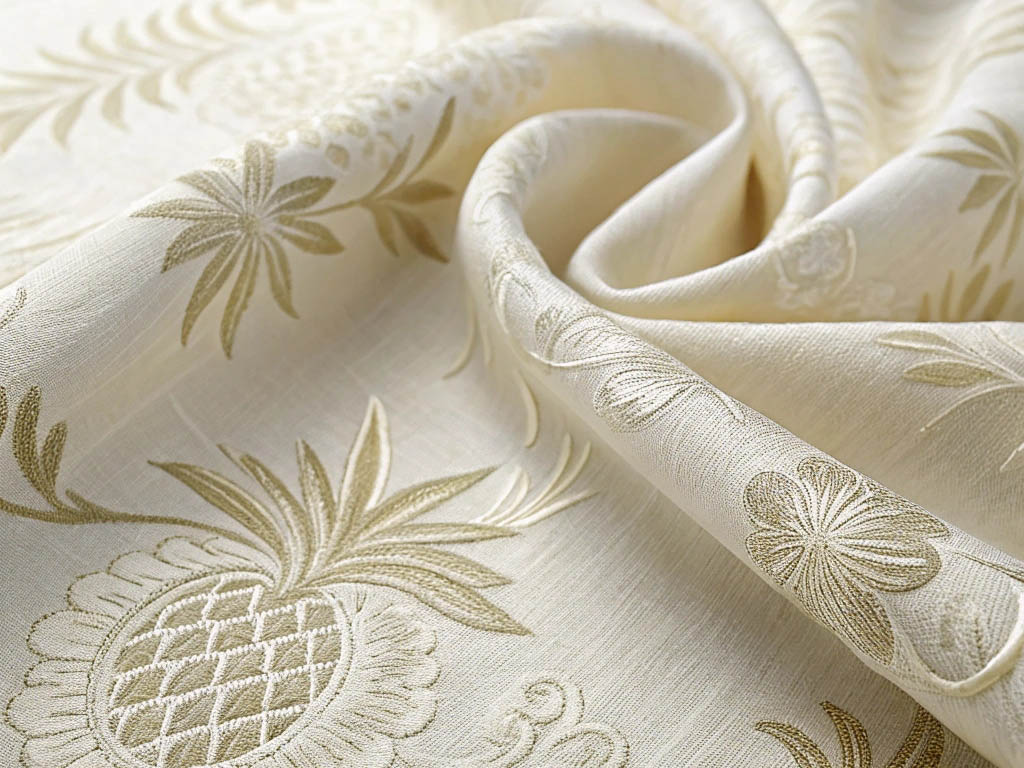
Piña fabric is lightweight, translucent, and has a silky, glossy finish. Its delicate texture and intricate handwoven patterns make it stand out from other luxury fabrics. It is also eco-friendly, as it is made from natural pineapple fibers.
These distinctive qualities contribute to its high value and cultural significance.
Why is Piña fabric so delicate?
The fibers of Piña fabric are extremely fine and soft, giving it a delicate and airy texture. This makes it suitable for lightweight, elegant clothing but also requires careful handling and maintenance.
Is Piña fabric breathable?
Yes, Piña fabric is highly breathable due to its lightweight and loosely woven structure. It is perfect for tropical climates, providing comfort and ventilation.
How does Piña fabric look?
Piña fabric has a glossy, slightly translucent appearance that gives it an ethereal and elegant look. It is often used for formal wear, such as Barong Tagalog and wedding gowns.

| Characteristic | Description |
|---|---|
| Texture | Soft, delicate, and silky |
| Appearance | Glossy, translucent, and elegant |
| Weight | Lightweight and breathable |
| Eco-Friendliness | Made from natural pineapple fibers |
How is Piña fabric used in Philippine clothing?
Piña fabric is deeply rooted in Philippine culture and is often associated with traditional and formal wear.
Piña fabric is widely used for Barong Tagalog (the national dress for men), Filipiniana gowns, wedding dresses, and other formal attire. Its lightweight and elegant appearance make it perfect for special occasions and cultural events.
This cultural significance adds to its value and prestige.
Why is Piña fabric popular for Barong Tagalog?
The lightweight and breathable nature of Piña fabric makes it ideal for Barong Tagalog, which is traditionally worn untucked over an undershirt. Its translucent appearance showcases the intricate embroidery and adds a formal, elegant touch.
Is Piña fabric used in modern fashion?
Yes, Piña fabric is increasingly being incorporated into modern fashion designs, including evening gowns, blouses, and accessories. Designers blend Piña with other fabrics like silk or cotton for a contemporary twist.
Are there different types of Piña fabric?
Yes, there are different variations of Piña fabric, including:
- Piña Seda: A blend of Piña and silk, giving it a softer and shinier finish.
- Piña Jusi: A combination of Piña and abaca fibers, making it more durable but less delicate.
- Pure Piña: Made entirely from pineapple fibers, known for its sheer and glossy appearance.
| Type of Piña Fabric | Characteristics | Usage |
|---|---|---|
| Pure Piña | Lightweight, glossy, delicate | Barong Tagalog, wedding gowns |
| Piña Seda | Softer, shinier | Formal wear, evening gowns |
| Piña Jusi | More durable, less delicate | Casual wear, accessories |
How does Piña fabric compare to other luxury fabrics in the Philippines?
While Piña fabric is the most expensive, the Philippines is also known for other luxurious textiles.
Other luxury fabrics in the Philippines include Abel Iloko, T’nalak, and Hablon. These are handwoven using traditional methods and natural fibers, but Piña fabric remains the most exclusive due to its delicate production process and cultural significance.
Understanding these comparisons highlights Piña’s unique value.

What is Abel Iloko?
Abel Iloko is a traditional fabric from the Ilocos region, known for its vibrant colors and geometric patterns. It is handwoven from cotton fibers and is durable but not as delicate as Piña.
How does T’nalak differ from Piña?
T’nalak is a traditional fabric made by the T’boli tribe from abaca fibers. It features intricate, symbolic patterns but is thicker and less translucent than Piña.
Is Hablon as expensive as Piña?
No, Hablon is more affordable than Piña. It is handwoven from cotton or polyester blends and is known for its vibrant colors and striped patterns, commonly used for casual wear and accessories.
| Luxury Fabric | Origin | Material | Cost Level |
|---|---|---|---|
| Piña | Aklan, Philippines | Pineapple fibers | Very High |
| Abel Iloko | Ilocos, Philippines | Cotton | High |
| T’nalak | Mindanao, Philippines | Abaca fibers | High |
| Hablon | Visayas, Philippines | Cotton or polyester blends | Moderate |
Where can you buy authentic Piña fabric?
Buying authentic Piña fabric requires careful selection to ensure quality and authenticity.
You can buy authentic Piña fabric in the Philippines at local markets in Aklan, specialized boutiques, or through reputable online stores. Always check for authenticity and quality, as counterfeit versions made from synthetic fibers are common.
Choosing trusted sources guarantees genuine and high-quality Piña fabric.
Is Aklan the best place to buy Piña fabric?
Yes, Aklan is known as the “Piña Capital” of the Philippines, producing the finest Piña fabrics. Visiting local markets or workshops ensures authenticity and supports local artisans.
Can you buy Piña fabric online?
Yes, reputable online stores and platforms like Kultura or local e-commerce sites offer authentic Piña fabric. Ensure the seller is verified and has positive customer reviews.
How to identify authentic Piña fabric?
Authentic Piña fabric has a delicate, glossy finish and a slightly coarse texture due to its natural fibers. It is lightweight and translucent, unlike synthetic imitations.
Conclusion
Piña fabric is the most expensive and luxurious fabric in the Philippines, known for its delicate texture, glossy finish, and cultural significance. Its labor-intensive production and rarity contribute to its high price. While other luxury fabrics like Abel Iloko and T’nalak are also valued, Piña remains the most exclusive. Choosing authentic Piña fabric supports local craftsmanship and showcases the rich textile heritage of the Philippines.