Skip to content
Shirt or t-shirt? Sounds simple, but in men’s fashion, the difference goes far beyond sleeves. Each piece plays a unique role in how we dress—casually, professionally, and everything in between.
The main difference between a shirt and a t-shirt lies in structure: shirts have collars, buttons, and tailored cuts, while t-shirts are collarless, pullover garments with a relaxed fit.
I’ve worked with dozens of brands designing both. Clients often ask when to choose one over the other—especially when building collections or planning seasonal looks. Here’s a full breakdown to clear the confusion.
What Defines a "Shirt" vs. a "T-Shirt" in Men’s Fashion?
It starts with structure. Each garment is designed with a different intent—from comfort to formality.
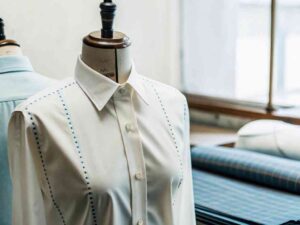
A shirt typically includes a structured collar1, button placket, cuffs, and often darts or seams for shaping. A t-shirt is a soft, collarless knit made for easy wear.
 Bespoke Fit Draft
How do fabric, cut, and collar styles differ between shirts and t-shirts?
| Feature | Shirt | T-Shirt |
|---|---|---|
| Fabric | Woven (poplin, oxford, twill) | Knit (jersey, interlock) |
| Collar | Stand-up or spread | Crewneck, V-neck, or scoop |
| Fit | Tailored or relaxed | Relaxed or slim-fit |
| Structure | Stiff, pressed, often layered | Soft, unstructured |
Shirts hold form; t-shirts follow the body.
Is a polo shirt closer to a shirt or a t-shirt in fashion terms?
A polo shirt is a hybrid—it borrows the collar from shirts and the knit fabric from t-shirts, making it ideal for smart-casual2 looks.
Use it when you want comfort and polish.
When Should You Wear a Shirt vs. a T-Shirt?
Your outfit choice speaks before you do. The setting matters.
Wear shirts for formal, business, or smart-casual events; t-shirts suit relaxed or creative settings. The rule is comfort + appropriateness.
What occasions call for a shirt instead of a t-shirt?
**Shirts work best for:
- Job interviews
- Business meetings
- Weddings or formal events
- Dinner at upscale venues**
T-shirts? Keep them for:
- Casual Fridays
- Beach trips
- Concerts or creative spaces
Let the setting set the tone.
How does dress code (casual, smart-casual, business) influence the choice?
| Dress Code | Recommended Top |
|---|---|
| Casual | T-shirt or relaxed polo |
| Smart-Casual | Button-down shirt or polo |
| Business Casual | Crisp shirt, tucked in |
| Formal | Dress shirt with blazer/tie |
A crisp white tee under a jacket can work—but only with the right fit.
What Are the Main Style Differences Between Shirts and T-Shirts?
Each garment brings a unique aesthetic. Choosing the right one sets the vibe.
Shirts offer variety in tailoring, cuff and collar options, while t-shirts lean minimalist with subtle variations in necklines and fit.
How do sleeve types, fits, and patterns vary?
Shirts:
- Long sleeves with buttoned cuffs
- Rolled-sleeve tab options
- Patterns: checks, stripes, florals
T-Shirts:
- Short sleeves (occasionally long)
- Set-in or raglan sleeves
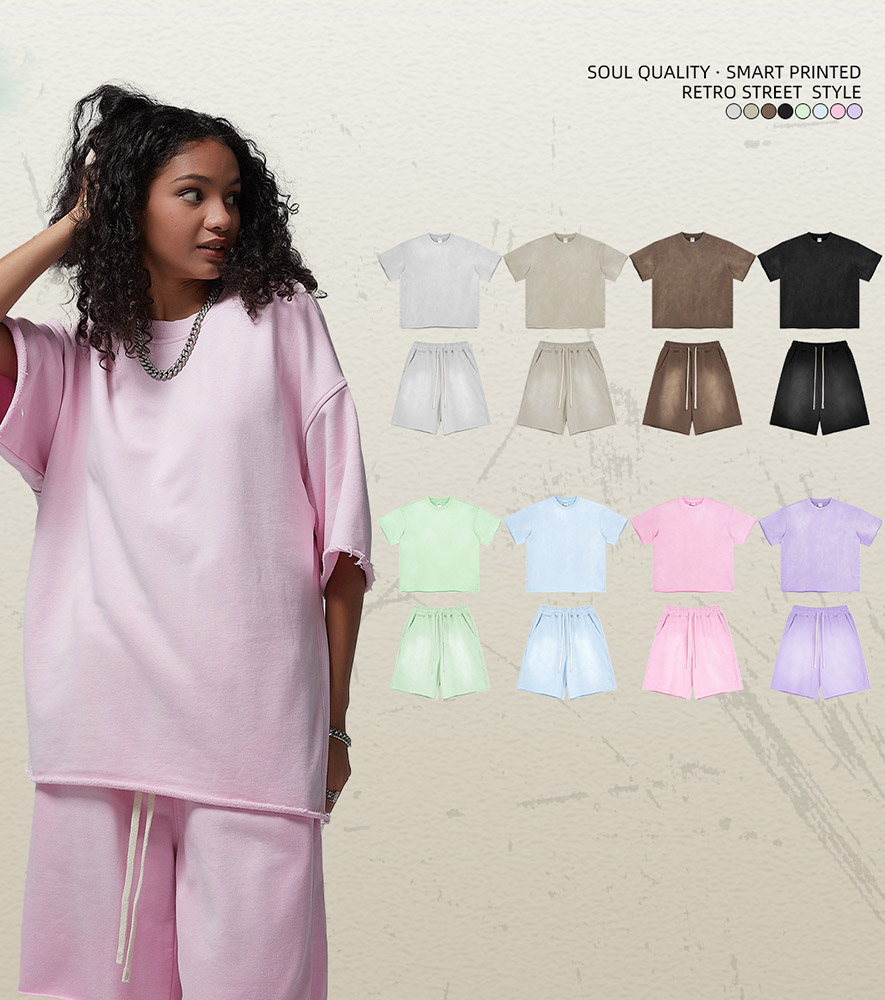
- Mostly solids or graphic prints
If you want to experiment with fit—start with t-shirts. If you want to play with prints—try shirts.

Can t-shirts ever be formal—or shirts be dressed down?
T-shirts can look sharp under suits (think: luxury cotton, tailored jacket), while shirts can go casual when unbuttoned or layered over tees.
Examples:
- Smart tee: Crew neck + tailored blazer + chinos
- Casual shirt: Linen button-down + rolled sleeves + shorts
It’s all about pairing and proportions.
How Do Shirt and T-Shirt Materials Affect Comfort and Appearance?
The feel on skin and breathability vary a lot between these two.
Shirts use woven fabrics, which are less stretchy but crisp. T-shirts use knitted fabrics, which are stretchy, soft, and cling to the body more naturally.
What fabrics are commonly used for each, and how do they feel?
| Garment | Common Fabrics | Feel & Functionality |
|---|---|---|
| Shirt | Cotton poplin, linen, twill | Crisp, structured, breathable |
| T-Shirt | Jersey, interlock, tri-blend | Soft, stretchy, lightweight |
Woven = structured. Knit = cozy.
Which is better for hot weather or layering?
T-shirts are better for layering and heat due to breathability and light weight. Shirts are great as outer layers when unbuttoned.
Go for:
- Linen shirts in heat
- Lightweight cotton tees as a base layer
- Layering a tee under a shirt for casual polish
Which One Offers More Styling Flexibility in 2025 Fashion Clothing?
Fashion in 2025 is about function and fluidity. But some garments go further.
T-shirts dominate in casual wear and layering. Shirts offer more elevation and variety across smart-casual and formal styles. Both have a place in a modern wardrobe.
How can you build a capsule wardrobe3 with both?
Use 2–3 premium tees and 2–3 versatile shirts as anchors. Rotate based on setting, weather, and outfit goals.
Must-haves:
- White tee (everyday base)
- Black tee (evening or layered)
- Chambray or Oxford shirt (goes with jeans or trousers)
- White button-down (formal and smart-casual)
Mix and match to suit your lifestyle.

Which piece offers more longevity in fashion trends?
T-shirts are evergreen in streetwear and casualwear. Shirts hold stronger in workwear and evolving menswear silhouettes.
Both endure—but styling and fabric choices will keep them modern.
Conclusion
The difference between a shirt and a t-shirt isn’t just technical—it’s about intent, style, and context. Knowing when and how to wear each unlocks confidence and versatility in any wardrobe.
-
Understanding structured collars can enhance your style choices, making your outfits more polished and appropriate for various occasions. ↩
-
Exploring smart-casual styles can help you navigate dress codes effectively, ensuring you look sharp in any setting. ↩
-
Learning about capsule wardrobes can simplify your fashion choices, making it easier to mix and match outfits for any occasion. ↩