Skip to content
Choosing the wrong fabric for your gym T-shirt can ruin your workout experience, causing discomfort, overheating, and even irritation. High-quality workout materials designed specifically for women’s gym wear are essential to ensure comfort, peak performance, and durability during exercise.
The best workout fabrics for women’s gym T-shirts include polyester for moisture-wicking1 performance, nylon-spandex blends2 for flexibility and compression, bamboo for eco-friendly breathability, and cotton blends for softness during lighter activities. Selecting the right fabric depends on your workout intensity, comfort preference, and performance needs.
At Modaknits, we frequently guide brands to pick the right materials for women’s activewear to maximize consumer satisfaction. Let’s delve deeper into these top-performing fabrics.
What Women Need Most in Gym T-Shirt Materials
Women’s gym T-shirts must prioritize comfort, moisture management, breathability, stretch, and softness to support different workout demands effectively.
Moisture-wicking is crucial for intense workouts, keeping skin dry and preventing irritation. Breathability and stretch ensure unrestricted movement, while softness enhances overall comfort and reduces skin irritation. Ideal gym T-shirt fabrics effectively combine these properties.
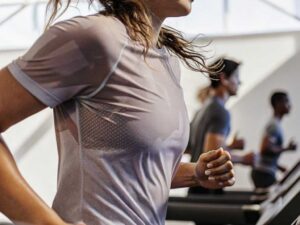 Treadmill Mesh Tee
Is moisture-wicking the #1 priority for intense workouts?
Yes, moisture-wicking is critical for intense activities. It quickly pulls sweat from your skin, keeping you dry, comfortable, and preventing chafing or overheating during high-intensity sessions like HIIT or cardio.
Moisture management is vital because prolonged wetness leads to discomfort, skin irritation, and decreased performance. Fabrics like polyester effectively wick moisture away, allowing quick evaporation and ensuring you remain comfortable throughout intense exercise.
| Fabric Property | Importance Level | Best Fabrics |
|---|---|---|
| Moisture-Wicking | High | Polyester, Nylon |
| Stretch | Medium-High | Spandex, Elastane blends |
| Breathability | Medium-High | Polyester, Bamboo |
How do breathability, stretch, and softness affect workout comfort?
Breathability keeps you cool, stretch ensures full range of motion, and softness prevents skin irritation. Together, these properties significantly enhance comfort, allowing you to focus fully on your workout performance.
Breathability allows air circulation, preventing overheating. Stretch fabric ensures garments move naturally with your body, essential for yoga or dynamic exercises. Softness reduces irritation, making workouts more enjoyable, particularly for sensitive skin or prolonged sessions.
| Comfort Factor | Benefit during Exercise |
|---|---|
| Breathability | Prevents overheating and maintains coolness |
| Stretch | Supports dynamic, unrestricted movement |
| Softness | Enhances comfort, reduces irritation |
Top Fabric Types Used in Women’s Gym T-Shirts
Several fabrics stand out for their unique performance characteristics, making them ideal choices for women’s gym wear.
Polyester excels in moisture control; nylon-spandex blends provide superior flexibility; bamboo is breathable and eco-friendly; cotton blends deliver comfort suitable for casual activities. Each material serves specific performance demands.

Why is polyester a go-to for activewear performance?
Polyester is a favorite due to its exceptional moisture-wicking capabilities, durability, and cost-effectiveness. It rapidly removes sweat from the skin, dries quickly, and maintains shape even after frequent use.
Polyester’s synthetic fibers swiftly wick moisture away, making it ideal for sweaty workouts. Its durability and resistance to shrinking or fading after numerous washes make polyester a practical choice, though it often needs anti-odor treatments to combat bacteria buildup.
How do nylon and spandex blends support movement and fit?
Nylon-spandex blends offer excellent elasticity, compression, and shape retention. These properties ensure garments closely follow body movements, providing essential support and flexibility during dynamic activities.
Nylon’s high elasticity and tensile strength combined with spandex’s stretch properties deliver optimal performance in compression garments, enhancing muscle support and circulation. This combination significantly boosts comfort, flexibility, and durability, ideal for intense, repetitive motions.
| Blend Composition | Stretch & Support | Typical Uses |
|---|---|---|
| Nylon-Spandex | Excellent | Yoga, HIIT, running |
| Polyester-Spandex | Good | General workouts |
Is bamboo fabric a good option for eco-friendly and sweat-control?
Yes, bamboo fabric3 offers excellent breathability, moisture absorption, natural odor resistance, and eco-friendly benefits. It’s ideal for moderate workouts or for athletes prioritizing sustainability.
Bamboo fibers have microscopic holes that enhance moisture absorption, keeping the skin dry and cool. Its natural antimicrobial properties control odor effectively. Bamboo’s sustainability credentials appeal to eco-conscious consumers seeking comfort and ethical production.
Are cotton blends suitable for light workouts or casual athleisure?
Cotton blends provide superior softness and breathability, making them ideal for casual workouts, yoga, or leisure activities. However, they absorb moisture, making them less suitable for intense, sweaty workouts.
Cotton blends offer unmatched comfort and softness for low-intensity activities or casual wear. For workouts involving high sweat production, cotton’s slower drying times can cause discomfort, making synthetic blends better suited for intensive sessions.
| Activity Type | Recommended Fabrics |
|---|---|
| High-Intensity | Polyester, Nylon blends |
| Moderate/Low-Intensity | Cotton blends, Bamboo |
Best Material by Workout Type: Yoga, HIIT, Cardio, and Beyond
Matching fabric type to specific workouts optimizes comfort and performance.
Yoga demands flexibility (nylon-spandex), cardio prioritizes moisture control (polyester), and HIIT requires a balance of stretch, breathability, and durability (polyester-spandex blends). Selecting fabrics according to workout specifics maximizes effectiveness.
Which fabrics give maximum range of motion for yoga and pilates?
Nylon-spandex or polyester-spandex blends offer maximum range of motion, providing excellent elasticity, shape retention, and comfort necessary for yoga and Pilates.
Yoga requires unrestricted stretching capabilities. Nylon-spandex blends give superior elasticity, essential for poses demanding extensive flexibility. Polyester-spandex blends provide balanced comfort and moisture control, ideal for hot yoga or extended sessions.

What materials help prevent chafing and overheating during cardio?
Polyester-based fabrics significantly reduce chafing and overheating by efficiently managing moisture and allowing rapid evaporation during cardio exercises.
During cardio, sweat buildup can cause chafing. Polyester quickly removes moisture, reducing friction. Mesh inserts, lightweight weaves, and polyester-spandex blends enhance cooling, ensuring maximum comfort and performance in high-intensity cardio.
| Workout Type | Ideal Fabrics | Benefits |
|---|---|---|
| Cardio/HIIT | Polyester, Mesh blends | Moisture control, breathability |
| Yoga/Pilates | Nylon-Spandex blends | Flexibility, muscle support |
Care Tips to Prolong the Life of Your Gym T-Shirt Fabric
Proper care extends garment life, retaining its technical properties and appearance over prolonged usage.
Wash gym shirts in cold water with gentle detergents, avoid fabric softeners and hot drying. Air drying preserves elasticity, color vibrancy, and moisture management properties, extending overall lifespan.
What detergents and wash settings protect fabric elasticity and color?
Use mild detergents designed specifically for activewear, washing garments in cold water on gentle cycles. This protects fabric elasticity, preserves color, and prevents fiber damage.
Harsh detergents strip fabric coatings and weaken fibers, reducing elasticity and color integrity. Specialized activewear detergents maintain fabric performance without harsh chemicals. Cold washes prevent heat-induced fiber damage, significantly prolonging garment durability.
Should you avoid tumble drying or ironing high-performance materials?
Absolutely. Avoid tumble drying or ironing technical fabrics, as heat severely degrades elasticity, shape, and moisture-wicking capabilities.
Heat exposure in tumble drying or ironing quickly deteriorates synthetic fibers like polyester and spandex, causing permanent damage and loss of performance. Air drying preserves original shape, elasticity, and fabric integrity, ensuring optimal long-term performance.
| Care Method | Fabric Impact |
|---|---|
| Air Drying | Excellent; maintains elasticity |
| Tumble Drying/Ironing | Poor; damages fibers & performance |
Conclusion
Choosing the right fabric significantly impacts comfort, performance, and durability in women’s gym T-shirts. Polyester excels for intense moisture control, nylon-spandex provides excellent stretch, bamboo balances eco-friendly comfort, and cotton blends suit lower-intensity activities.Proper fabric care extends garment life, ensuring consistent performance and comfort over time.
-
Explore how moisture-wicking fabrics enhance workout comfort and performance, keeping you dry and irritation-free during intense activities. ↩
-
Learn about the advantages of nylon-spandex blends in activewear, providing flexibility and support for dynamic movements during workouts. ↩
-
Discover the eco-friendly benefits of bamboo fabric in activewear, offering breathability and comfort while being kind to the planet. ↩