Skip to content
The apparel industry1 is vast and dynamic, with manufacturers playing a pivotal role in bringing fashion to life. But what exactly is the apparel industry called, and how do manufacturers fit into this landscape?
The apparel industry, often referred to as the fashion or clothing industry, encompasses the production and distribution of garments. Manufacturers in this field create the products that are designed, marketed, and sold by brands.
To understand the apparel industry, it’s important to explore what "manufacturer apparel2" means and how manufacturers impact the production of fashion items. Let’s dive deeper.
What Does "Manufacturer Apparel" Mean in the Fashion Industry?
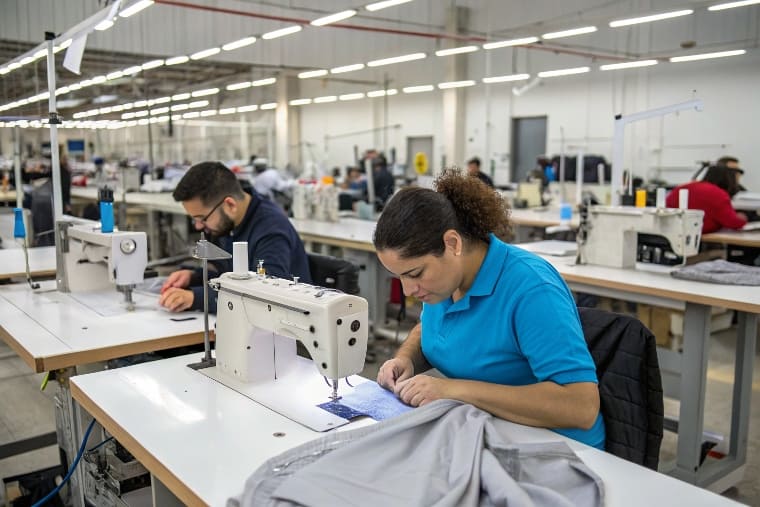
Garment sewing in production
"Manufacturer apparel" refers to clothing produced by companies that specialize in the design, fabrication, and assembly of garments. These manufacturers are critical players in the fashion ecosystem.
Manufacturer apparel includes garments produced by factories or companies who handle production for brands. This term refers to the bulk production of clothes for both domestic and international markets.
"Manufacturer apparel" extends beyond simple garment creation. It includes a wide spectrum of processes such as design, sourcing materials, pattern making, production lines, and quality control. Apparel manufacturers often collaborate with designers to bring specific concepts to life. As a result, these manufacturers play a crucial role in shaping fashion trends, ensuring product consistency, and adhering to deadlines that align with seasonal fashion cycles.
Furthermore, manufacturers can be categorized as either OEM (Original Equipment Manufacturer) or ODM (Original Design Manufacturer). OEMs focus on manufacturing garments based on client specifications, while ODMs handle both design and production. This flexibility allows manufacturers to cater to the unique needs of fashion brands.
Common types of manufacturer apparel include:
| Type of Manufacturer | Role |
|---|---|
| OEM | Focuses on manufacturing based on specific designs provided by the brand |
| ODM | Offers design and manufacturing services, often providing a complete apparel solution |
| Private Label | Produces apparel for specific brands, which can then be marketed as the brand’s own |
How Does the Apparel Manufacturing Process Work?
Understanding the apparel manufacturing process is essential for anyone working in fashion or seeking to develop their own brand. Let’s take a closer look at how the process unfolds from start to finish.
The apparel manufacturing process involves stages such as design, fabric sourcing, pattern making, production, and quality control. These stages ensure the final product meets design specifications and quality standards.
The manufacturing process begins with design and ends with finished garments ready for distribution. Let’s break down the key stages:
Key Stages of Apparel Manufacturing:
- Design: Designers create the concept and sketch the garments.
- Sourcing Materials: Fabric and trims are sourced based on design specifications.
- Pattern Making: Patterns are created for each garment style, ensuring proper fit and sizing.
- Sampling: Prototype samples are produced for evaluation and adjustments.
- Production: Mass production occurs after the sample is approved.
- Quality Control: Inspections are performed to ensure that all garments meet the required standards.
Quality control plays a key role at every stage, ensuring that fabric, stitching, and finishing are up to standards. Many apparel manufacturers invest in technology such as Automated Cutting Machines (ACM) to improve precision and reduce waste.
How Apparel Manufacturers Ensure Product Quality:
Quality assurance (QA) is essential in apparel manufacturing. Leading manufacturers often implement strict quality control protocols throughout production. They conduct routine checks at every stage—from the raw material sourcing to the final inspection before shipment. Additionally, manufacturers may use industry certifications like ISO 9001 or OEKO-TEX to validate their adherence to global quality standards.

Who Are the Major Apparel Manufacturers in the Industry?
The apparel manufacturing industry is home to several major players who not only lead in production but also influence the global fashion landscape. Let’s take a closer look at the key companies and their impact.
Major apparel manufacturers include companies like Nike, Adidas, H&M, and Inditex (Zara’s parent company). These companies lead in production and innovation, driving global fashion trends.
Major manufacturers often set trends by working with high-profile designers or introducing innovative technologies into their production processes. Companies like Nike and Adidas are not just apparel producers; they heavily invest in research and development to create new, cutting-edge fabrics and performance-enhancing materials. These innovations are often seen across sports and activewear lines, making them influential in both fashion and function.
Meanwhile, companies like Inditex, the parent company of Zara, use a strategy of fast fashion, allowing them to quickly respond to the latest fashion trends. Their ability to bring garments from concept to store in as little as 15 days has revolutionized the apparel industry, setting a new benchmark for speed and efficiency.
Leading Apparel Manufacturing Companies Worldwide:
| Company Name | Focus Area | Key Strength |
|---|---|---|
| Nike | Sportswear & Activewear | Innovation, R&D |
| Adidas | Sportswear & Performance Apparel | Sustainable Practices |
| Inditex (Zara) | Fast Fashion | Speed & Flexibility |
| H&M | Affordable Fashion | Global Reach |
What Are the Benefits of Working with Apparel Manufacturers?
Partnering with a reliable apparel manufacturer can significantly benefit fashion brands. Let’s explore the advantages of such partnerships and what businesses should consider when selecting a manufacturer.
Working with apparel manufacturers provides cost savings, access to industry expertise, and faster time to market. It allows brands to focus on design and marketing while leaving production to professionals.
How Partnering with Apparel Manufacturers Can Improve Your Brand:
Working with experienced apparel manufacturers provides brands with access to expertise in fabric sourcing, design, and production. By outsourcing manufacturing, brands can focus on other aspects such as marketing, distribution, and retailing, knowing that the production process is in capable hands. Furthermore, manufacturers can offer scale production, ensuring that brands meet demand without worrying about production capacity.
What to Look for When Choosing an Apparel Manufacturer:
When selecting an apparel manufacturer, businesses should prioritize factors like:
- Production capacity: Can they handle your orders at the required volume?
- Quality control: Do they maintain high standards throughout the production process?
- Ethical production: Are they committed to sustainability and fair labor practices?
Manufacturers with strong track records in these areas can help brands grow while maintaining high standards.

How Has Technology Transformed Apparel Manufacturing?
Technology has revolutionized the apparel manufacturing process. From automation to data analytics, let’s explore how innovation is reshaping the future of the industry.
Technology has enabled greater automation, precision, and sustainability in apparel manufacturing. Innovations such as 3D printing and AI-driven design are changing the way garments are made.
Innovations Shaping the Future of Apparel Manufacturing:
Some of the latest technological advancements in apparel manufacturing include:
- Automated Cutting Machines (ACM): Enhance precision and reduce fabric waste.
- 3D Printing: Allows for prototyping and even the creation of entire garments.
- AI Design Software: Uses data analytics to predict trends, creating garments that are more likely to succeed in the market.
These technologies help manufacturers increase efficiency, reduce costs, and deliver products faster to consumers.
How Are Apparel Manufacturers Adopting Sustainable Practices?
Sustainability has become a major focus for the apparel industry, with many manufacturers adopting eco-friendly practices such as using recycled materials, reducing water usage, and switching to renewable energy sources. Companies are increasingly expected to prove their commitment to sustainability through certifications like Global Recycle Standard (GRS) or OEKO-TEX Standard 100.
Conclusion
The apparel industry is a dynamic and ever-evolving sector. By understanding how manufacturers play a key role in this landscape, brands can make more informed decisions about their production processes. Whether you’re looking for cutting-edge technology or sustainable practices, partnering with the right apparel manufacturer can propel your brand to success.