Skip to content
As a T shirt brand or bulk buyer, choosing the right printing method is just as important as selecting the fabric. A great design printed with the wrong technique can fade, crack, or peel — hurting your brand image.
The three most common methods — screen printing1, heat transfer2, and direct-to-garment (DTG)3 — offer different benefits depending on your T shirt fabric, quantity, and design complexity.
This guide will help you choose the right method based on fabric type, project size, durability needs, and budget.
Screen Printing — The Classic Method
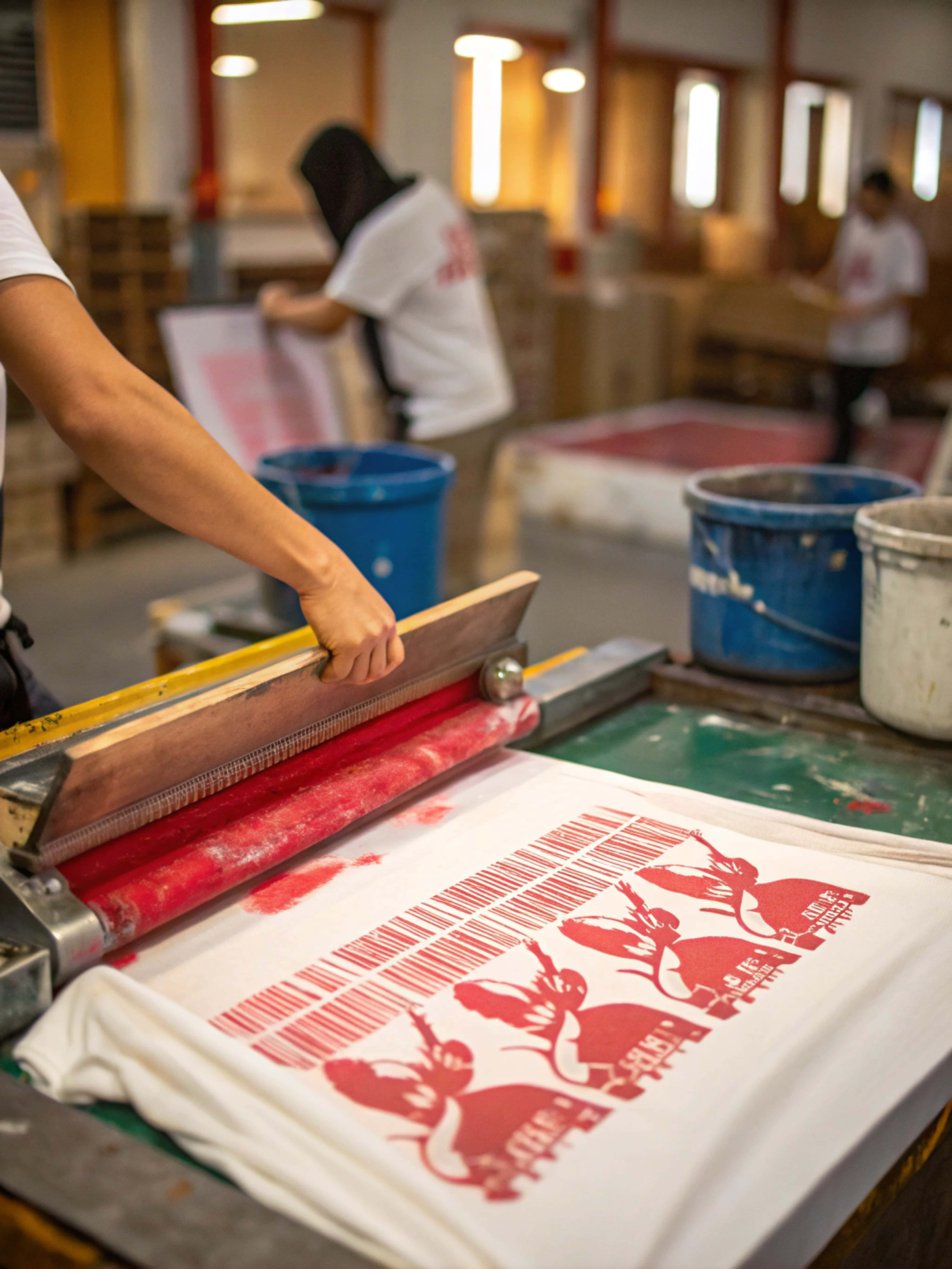
Screen Printing Screen printing is the oldest and still the most popular commercial T shirt printing method, especially for high-volume orders.
It uses mesh screens, squeegees, and thick ink to apply the design layer by layer onto fabric.
Why Is Screen Printing Best for Bulk Orders on Cotton T Shirt Fabric?
Screen printing works best when:
- You have one to three solid colors
- Your shirts are 100% cotton or cotton-heavy blends
- You’re printing over 100 pieces
Advantages:
- Highly durable — lasts 50+ washes
- Excellent ink vibrancy and opacity on cotton
- Lower cost per unit in large quantities
- Works well with discharge inks4, puff inks, or metallic inks
Use cases:
- Event T shirts
- Uniforms
- Band merch
- Logo-based fashion tees
How Does Screen Printing Perform on Polyester or Blended Fabrics?
You can screen print on polyester5 or blends, but it’s more complex.
Challenges with polyester:
- Dye migration — fabric dye may bleed into the ink
- Heat sensitivity — can scorch under high temp curing
- Stretch — ink may crack on highly elastic fabrics
Solutions:
- Use low-cure plastisol inks
- Apply poly-blocker base layer
- Always test print before production
Blended fabrics (e.g. 60/40 cotton-poly) are generally safer, but may still require ink adjustments.
Heat Transfer Printing — Ideal for Custom and Small Runs
Heat transfer uses pressure and heat to transfer printed graphics from a special sheet to the shirt.
Great for personalization, small batches, and full-color designs with photographic detail.
Can Heat Transfer Work on All Types of T Shirt Fabric?
Yes, but fabric type affects finish, comfort, and longevity.
| Fabric Type | Performance | Notes |
|---|---|---|
| Cotton | ✅ Excellent | Soft feel, vivid colors |
| Cotton-Poly Blend | ✅ Good | Durable, ideal for sports uniforms |
| Polyester | ⚠️ Requires care | May warp or fade under excess heat |
| Stretchy/Elastane | ⚠️ Limited | Transfer may crack on high-stretch zones |
Pro tip: Use sublimation printing instead of heat transfer for full-polyester athletic shirts.
How Long Do Heat Transfer Prints Last After Washing?
Durability depends on the type of transfer and wash care.
- Standard digital transfer: 30–40 washes
- Vinyl or polyurethane transfer: up to 60 washes
- Poor adhesion or over-heat: causes peeling or cracking
How to make them last longer:
- Wash inside out
- Avoid dryers
- Don’t iron directly over the print
Heat transfer is ideal when you need fast turnaround for small orders or unique names/numbers on each shirt.
Direct-to-Garment (DTG) Printing — The Digital Revolution
DTG works like an inkjet printer but for garments. It sprays water-based inks directly into the shirt’s fibers.
It’s perfect for complex, full-color artwork and short runs.
Which T Shirt Fabric Works Best for DTG Printing?
DTG works best on:
- 100% combed cotton (180–240 GSM)
- Tightly woven, smooth-surface fabrics
- Light-colored shirts (no underbase needed)
Dark garments require pre-treatment, which adds cost and production time.
Not ideal for:
- Polyester
- Rough or textured fabrics
- Ribbed knits or fleece

Why Is DTG Perfect for Complex Designs and Small Orders?
DTG printing enables unlimited creativity.
Advantages:
- No setup cost — print even 1 piece profitably
- Full-color gradients, shadows, and photographs
- Perfect for eCommerce, samples, or artist merch
- Soft, breathable feel — ink sits within the fibers, not on top
Limitations:
- Higher cost per unit than screen printing
- Longer print time per shirt (3–5 mins)
- Shorter lifespan (20–30 washes without fading)
Comparing the Three Printing Methods for Different Fabrics
Here’s how the three methods compare for different business needs.
| Criteria | Screen Printing | Heat Transfer | DTG Printing |
|---|---|---|---|
| Best for | Bulk cotton orders | Small runs, personalization | Low MOQ, full-color art |
| Setup cost | High | Low | None |
| Minimum order | 100+ pcs (recommended) | 1–50 pcs | 1+ pcs |
| Cost per unit | Low for large orders | Moderate | High |
| Fabric compatibility | Cotton, blends | Cotton, poly, blends | Cotton only |
| Color complexity | Limited (per screen) | Unlimited | Unlimited |
| Wash durability | 50+ washes | 30–40 washes | 25–30 washes |
| Finish feel | Slightly raised | Layered or rubbery | Soft and natural |
Which Printing Method Is Most Cost-Effective for Cotton vs. Polyester?
For Cotton:
- Screen printing = Best for bulk
- DTG = Best for small, full-color runs
- Heat transfer = Good for personalization
For Polyester:
- Heat transfer = Safer and faster for small runs
- Screen = OK with special inks
- DTG = Not recommended
How to Choose the Right Printing Technique Based on Fabric and Order Size?
Ask these questions before choosing:
- What is your fabric — cotton, blend, or polyester?
- How many pieces do you need?
- How complex is the design?
- What is your timeline?
- How many washes should it last?
Example scenarios:
- 500 cotton tees for an event → Screen printing
- 50 poly tees for a running club → Heat transfer
- 10 shirts with a full-color photo print → DTG
Future Trends in T Shirt Printing Technology
The T shirt printing industry is evolving rapidly with more eco-conscious buyers and smarter tech.
Will Eco-Friendly Inks and Fabrics Redefine Printing Methods?
Yes. Brands are now demanding:
- Water-based, non-toxic inks
- GOTS or OEKO-TEX certified fabrics
- Low-impact dyeing processes
- Biodegradable transfer sheets
Factories are responding with:
- Hybrid water-based screen printing
- Sustainable heat press films
- Digital workflows to reduce waste
If you serve eco-minded markets like Europe or North America, offering green print options is a must.

How Will AI and Automation Change the Printing Process?
We’re already seeing:
- AI-generated design previews
- Automated RIP software for DTG
- Smart print queues and batching
- Cloud-based order tracking with print files linked
In the future:
- Factories will print only when orders come in (on-demand)
- AI will recommend the best printing method based on fabric, artwork, and deadline
- Automation will enable 1-day turnarounds even on small custom orders
Conclusion
Each T shirt printing method has its strengths:
- Screen printing is unbeatable for bulk and long-lasting prints on cotton.
- Heat transfer gives flexibility and personalization for small, fast runs.
- DTG enables stunning full-color prints with no minimums.
Your final decision should consider fabric type, order volume, design complexity, and the buyer’s expectations. By choosing the right match, you’ll get the best results in print quality, durability, and customer satisfaction.
-
Explore the advantages of screen printing, especially for bulk orders, to enhance your T shirt production. ↩
-
Learn about heat transfer printing’s benefits for small runs and customization, perfect for unique designs. ↩
-
Discover how DTG printing revolutionizes T shirt design with full-color capabilities and no minimum orders. ↩
-
Find out how discharge inks can enhance the vibrancy and feel of your T shirt prints. ↩
-
Explore the complexities of printing on polyester and how to overcome them for better results. ↩