Skip to content
Silk screen printing1 has stood the test of time in the custom apparel world. It’s trusted by brands, bands, and streetwear labels for a reason—it delivers bold, long-lasting designs.
Custom silk screen t-shirts2 are made using a printing method where ink is pushed through a mesh screen and onto fabric using a stencil. This technique allows for vibrant, durable prints and is especially efficient for bulk production.
So how exactly does this process work? What tools and materials are involved? Let’s take a closer look at what goes into making a screen-printed shirt.
How Does the Silk Screen Printing Process Work?
Many people wear screen-printed shirts daily without knowing how they’re made. It’s both an art and a science.
Silk screen printing involves four key components: a mesh screen, a stencil, special textile ink, and heat setting. Ink is pushed through the screen onto the fabric, then cured to create a lasting print.
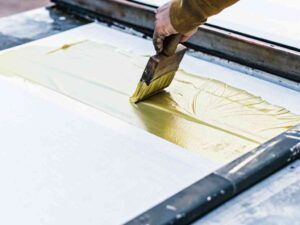 Ink Application Technique
Silk Screen Printing Process at a Glance
| Step | Description |
|---|---|
| Screen Preparation | A mesh screen is coated with emulsion and exposed to UV light with the design |
| Stencil Creation | The emulsion hardens, creating a stencil for ink to pass through |
| Inking & Printing | Ink is pressed through the screen onto the fabric using a squeegee |
| Heat Curing | Printed fabric is dried and cured at high heat for durability |
The type of mesh used affects the level of detail—finer mesh for detailed logos, wider mesh for bold designs. Ink choice matters too: plastisol is thick and vibrant, while water-based ink offers a softer feel. After printing, shirts must go through heat curing—usually 160°C (320°F)—to set the ink.
This step is crucial for wash durability. While it sounds simple, precision is everything. Each color requires a separate screen, and alignment must be perfect. That’s why working with experienced manufacturers makes a huge difference.
Why Is Silk Screen Printing Ideal for Custom T-Shirts?
Not all print methods are equal. When it comes to color impact and long-term quality, silk screen printing is hard to beat.
Silk screen printing is ideal for custom t-shirts due to its bright colors, long-lasting results, and cost-efficiency in bulk. It’s perfect for retail, merch, and uniform production.

Screen Printing vs Other Methods
| Method | Vibrancy | Durability | Best For |
|---|---|---|---|
| Screen Printing | ✅ High | ✅ High | Bulk orders, logos, merch |
| DTG | ✅ Medium | ❌ Lower | Small batches, photo prints |
| Heat Transfer | ❌ Low | ❌ Lower | Fast, low-cost printing |
| Sublimation | ✅ High | ✅ High | Polyester garments |
Streetwear brands love screen printing because the colors pop—even on dark garments. Music merch relies on it for consistent quality over thousands of units. Corporate teams choose it for polished logos on uniforms.
It’s also great for influencer drops where brand image is everything. While DTG and transfer methods are improving, they often can’t match screen printing’s bold finish and texture. That’s especially true for thick designs or limited palettes.
Which Fabrics Work Best for Silk Screen T-Shirt Printing?
Not all fabrics hold ink the same way. The success of your print depends heavily on the material underneath.
100% cotton is the gold standard for silk screen printing, but blends like cotton/poly and bamboo also perform well. Texture, weave, and color all impact ink absorption and print clarity.
Recommended Fabrics for Screen Printing
| Fabric Type | Print Quality | Notes |
|---|---|---|
| 100% Cotton | ✅ Excellent | Ideal for bright inks and smooth finishes |
| Cotton/Poly Blends | ✅ Good | More durable, slightly less ink absorption |
| Bamboo/Cotton | ✅ Good | Soft hand-feel, eco-friendly |
Darker fabrics need heavier ink coverage or an underbase layer to keep colors vibrant. A smoother weave allows sharper details, while textured knits can distort small fonts or fine graphics.
Bamboo blends are gaining traction for their sustainability and softness, but they require special ink adjustment. Brands should test different fabrics early in sampling to see how their designs behave across materials.
How Do You Design a Custom T-Shirt for Silk Screen Printing?
Screen printing has unique rules. A great digital design doesn’t always print well without the right prep.
When designing for silk screen printing, you need to separate colors, keep resolution high, and choose the right file format. Simpler designs often look better and cost less to print.
Design Prep Tips for Silk Screen Printing
| Factor | Why It Matters |
|---|---|
| Color Separation | Each ink color needs a separate screen |
| Resolution | Minimum 300 DPI for clear printing |
| File Type | Use vector files (AI, EPS, PDF) for best results |
Designs with too many colors raise production costs because each screen adds setup time and ink. If you’re using halftones (dot patterns to simulate gradients), make sure your manufacturer can handle them cleanly—this is a pro-level skill.

Most brands keep it to 1–3 colors for simplicity and budget. At Modaknits, we help clients simplify their designs without losing impact, and we provide free digital mockups for review.
Is Silk Screen Printing Cost-Effective for Small Orders or Low MOQ?
Screen printing is known for bulk runs—but can it work for small batches too?
Yes, low-MOQ silk screen printing3 is now possible thanks to improved automation. Manufacturers like Modaknits offer small runs with optimized setup to support startups and special projects.
How to Reduce Costs with Low MOQ Orders
| Tip | Benefit |
|---|---|
| Fewer Ink Colors | Lower screen setup costs |
| Standard Sizes/Fits | Easier inventory and faster turnaround |
| Use Pre-Dyed Blanks | Avoid custom dyeing charges |
| Partner with Experts | Avoid costly reprints and setup errors |
Traditional screen printing involved costly prep, making small orders uneconomical. But today’s factories—like ours—use reusable screens and digital setups to lower entry costs.
That means you can print 50–100 units without breaking the bank. This is perfect for artist merch, early-stage fashion brands, and short-run promotions. Plus, with faster sampling (5–7 days at Modaknits), small businesses can launch collections quickly and adjust based on feedback.
What Should You Look for in a Silk Screen T-Shirt Manufacturer?
Not all manufacturers deliver the same results. The right partner will make or break your product.
A top-tier silk screen manufacturer ensures print alignment, ink curing, fabric quality, and fast, responsive communication. Look for sample support and proven experience in bulk runs.
Manufacturer Evaluation Checklist
| Criteria | What to Check For |
|---|---|
| Print Precision | Sharp lines, accurate placement |
| Curing & Wash Tests | Inks must hold after multiple washes |
| Sampling Support | Free or low-cost samples with clear mockups |
| Lead Time | 15–30 days production turnaround |
A reliable manufacturer should offer sample transparency—meaning the product you see in sampling is what you get in bulk. Look out for over-promising on MOQ or print detail. Ask for previous print examples or test wash reports.
Overseas suppliers must also have strong communication skills. Delays or misprints often stem from unclear expectations. At Modaknits, we offer bilingual support and visual confirmations at every stage to prevent mistakes.
Are Custom Silk Screen T-Shirts Suitable for Branding and Retail?
If your t-shirt carries your brand name, it needs to make a statement. Screen printing delivers that power.
Screen-printed t-shirts are perfect for branding. They offer high visual impact, durability, and premium texture—making them ideal for merch drops, retail shelves, or corporate visibility.
Real-World Use Cases
| Brand Type | Example Use Case |
|---|---|
| Music Merch | Tour shirts with bold logos and dates |
| Influencers | Limited drops with signature graphics |
| Startups | Launch merch that builds community |
| Retail Brands | Branded collections with premium finish |
Brands like Supreme, Obey, and Stüssy built entire empires using screen printing. Why? Because screen-printed graphics feel deliberate, not disposable. The process also allows for a layered, tactile quality that feels high-end—something DTG can’t easily replicate.
You can pair this quality with bulk efficiency to scale quickly without sacrificing brand perception. Screen-printed tees are also less likely to fade or peel, helping your brand stay in customers’ closets longer.
Conclusion
Custom silk screen t-shirts offer unmatched vibrancy, durability, and branding power. Whether you’re launching your first merch line or expanding a retail collection, screen printing delivers professional results that last. And with modern low-MOQ solutions, even small brands can take advantage of this premium technique.
-
Learn about the silk screen printing process, its components, and why it’s favored for custom apparel. ↩
-
Explore the advantages of custom silk screen t-shirts for vibrant designs and durability, perfect for branding and retail. ↩
-
Discover how low-MOQ silk screen printing can make custom apparel accessible for small businesses and startups. ↩