You see a beautiful sweater with a $120 price tag. It fits like a dream, feels like a cloud—but your inner voice whispers, "Is it really worth it?" You’re not alone. We’ve all faced this dilemma.
Yes, some sweaters and shirts priced over $100 are absolutely worth it—but only when they offer superior materials, ethical production1, and long-term wearability. It’s not just about the brand—it’s about value.
I used to avoid anything over $60. But after seeing how long my $130 sweater lasted compared to my fast fashion picks, I started to see the cost differently. Let’s break it all down together.
Why Do Some Sweaters and Shirts Cost Over $100?
Not all expensive clothes are overpriced—sometimes, the cost reflects the care behind them.
Higher price tags often reflect premium materials2, ethical labor, and smaller production runs—not just designer logos.
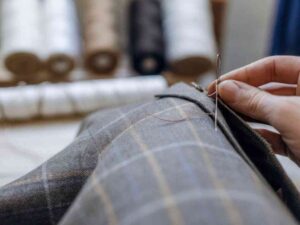 Hand-sewing plaid
Is it about the brand or the quality?
It depends on the brand—and your expectations.
While branding does influence pricing, truly high-quality items justify their cost through better fabrics, construction, and durability.
Many heritage or luxury brands invest in craftsmanship. But some fast fashion chains inflate prices using trend-driven hype. The trick is learning to tell the difference.
How do materials like cashmere or organic cotton affect the price?
Better materials cost more—because they last longer and feel better.
Premium fabrics like Grade A cashmere or certified organic cotton significantly increase production costs, but they also boost comfort, longevity, and environmental impact.
Quick Fabric Comparison Table
| Fabric | Cost | Feel | Longevity | Eco-Impact |
|---|---|---|---|---|
| Polyester | Low | Synthetic | Short | High |
| Cotton | Moderate | Breathable | Medium | Medium |
| Organic Cotton | Higher | Softer | Medium-High | Low |
| Cashmere | High | Ultra-soft | Long | Low (if responsibly sourced) |
When Is It Okay to Spend More Than $100 on One Clothing Item?
Sometimes the splurge is the smartest choice you can make.
It’s okay to invest over $100 in clothing when it fits your lifestyle, is versatile, and offers long-term value.
Is it an investment piece or a fashion statement?
What’s the purpose behind the purchase?
Investment pieces serve your wardrobe long-term, while statement pieces offer bold style moments. Both can be worth the price—but for different reasons.
A neutral, high-quality crewneck sweater can serve you for years. A bold, trend-driven print shirt might wow today and sit in your closet tomorrow. Ask yourself: Will I wear this next season?

What’s the cost-per-wear3 rule and does it justify the price?
The math doesn’t lie.
Cost-per-wear (CPW) helps justify an expensive item by dividing its price by how often you’ll wear it. Lower CPW means better value.
CPW Example:
- $30 shirt worn 5 times = $6 per wear
- $120 sweater worn 50 times = $2.40 per wear
That $30 shirt actually costs more in the long run.
Luxury vs Fast Fashion: What’s the Real Value?
It’s not just price—it’s purpose, performance, and principles.
Luxury offers quality and longevity, while fast fashion offers affordability and trend turnover. Understanding your values helps you decide which offers real value.
Do expensive clothes last longer and save money long-term?
In many cases, yes.
Well-made clothing from reputable brands typically lasts longer due to better stitching, reinforced seams, and durable fabrics.
Of course, care matters too. Wash it right, store it well, and a $120 shirt might outlast three $30 ones.
How do ethical production and sustainability play a role?
Sometimes you pay for peace of mind.
Ethically made clothing costs more because it reflects fair wages, better working conditions, and environmentally responsible sourcing.
Fast fashion cuts costs through mass production and low wages. Supporting ethical fashion sends your money where your values are.
How to Tell If an Expensive Shirt or Sweater Is Actually Worth It
Price isn’t always the best indicator. Look closer.
True value lies in construction, fit, materials, and brand transparency—not just the label or marketing.
What are the signs of high-quality construction and materials?
Start with touch and finish.
Signs of quality include double stitching, seamless shoulders, natural fibers, strong hems, and a solid feel in the hand.
Quality Checklist
- ✅ Stitching: Straight and reinforced
- ✅ Labels: Clear fiber content and care instructions
- ✅ Fabric: Feels weighty, soft, not scratchy
- ✅ Stretch: Bounces back without warping
- ✅ Details: Real shell buttons, no loose threads
How do I know if I’m paying for craftsmanship or just hype?
Look beyond the logo.
Craftsmanship shows up in consistent fit, hand-finished details, and honest brand messaging—not just influencer hype or celebrity collabs.
Do a quick brand background check. Does the brand share how and where their clothes are made? If not, it might just be marketing noise.
Where to Find High-Quality Shirts & Sweaters Without Overpaying
You don’t need to blow your budget to buy better.
Look for brands focused on transparency, value-for-money, and craftsmanship—many offer luxury quality at mid-tier prices.
What are the best affordable luxury brands right now?
You don’t have to shop designer to get quality.
Brands like Everlane, Quince, and Uniqlo U offer excellent quality at surprisingly reasonable prices.
| Brand | Known For | Price Range |
|---|---|---|
| Everlane | Ethical basics | $40–$150 |
| Quince | Affordable cashmere | $30–$100 |
| Uniqlo U | Design-forward essentials | $30–$90 |
| COS | Minimalist premium feel | $50–$200 |
Can you get $300 quality for under $100? Here’s how.
Absolutely—if you shop smart.
To get top-tier quality at budget prices, buy off-season, shop secondhand, or explore direct-to-consumer (DTC) brands that skip retail markups.
Insider Tips:
- Shop Off-Season: Buy sweaters in summer and shirts in winter.
- Thrift & Vintage: Hidden gems in great condition.
- DTC Brands: Brands like ASKET and Naadam cut the middleman.
- Factory Outlets: Look for clearance on last-season staples.
Conclusion
Spending over $100 on a shirt or sweater isn’t always a splurge—it can be a smart decision. If the piece fits your style, lasts for years, and reflects your values, then yes—it’s worth every penny.
-
Exploring ethical production can reveal the true value behind clothing costs and the importance of supporting responsible brands. ↩
-
Learning about premium materials can enhance your appreciation for quality clothing and help you make informed buying decisions. ↩
-
Understanding the cost-per-wear rule can help you make smarter clothing purchases and justify higher prices for quality items. ↩