Skip to content
Most people hesitate before paying nearly $80 for a long sleeve shirt. It feels steep—until you dig into what you’re actually paying for.
A $78 shirt can be worth the price if it’s made with quality fabrics, ethical labor, and designed to last—but it depends on what the buyer values most.
I’ve had these same questions myself. As a manufacturer, I see both sides: how much goes into making one good shirt, and how consumers decide if it’s worth it. Let’s unpack the full story.
How Does $78 Compare to Average Prices for Long Sleeve Shirts?
Many people think $78 sounds like a luxury price, but is it really that far off?
In 2025, the average price for a well-made long sleeve shirt falls between $35 and $120, depending on brand and build.
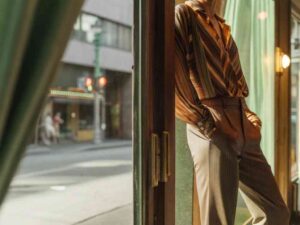 Stylish Window Pose
What’s the typical price range for long sleeve shirts in 2025?
Mass-market brands offer basic long sleeve shirts for as low as $25. Mid-range labels usually price them between $45–$85. Premium or fashion-forward brands go from $90 to well over $150.
| Brand Tier | Price Range (USD) | Example |
|---|---|---|
| Fast Fashion | $20 – $40 | H&M, Uniqlo |
| Mid-Tier | $45 – $85 | Everlane, Banana Republic |
| Premium | $90 – $150+ | Theory, A.P.C., Rag & Bone |
Are designer or branded shirts skewing the average price?
Yes, they are. Designer labels often inflate prices not just for materials but also for marketing, runway costs, and exclusivity. This pulls the average price higher—even if the materials used aren’t always better.
What Factors Make a Long Sleeve Shirt Worth $78 or More?
Not all shirts are made the same, and price reflects that.
Shirts that cost $78+ typically have higher-grade fabric, complex construction, and ethical production1 processes.
Does fabric quality really justify the higher cost?
Absolutely. Higher-end shirts often use organic cotton, Supima, or blended performance fibers. These are softer, last longer, and feel more luxurious. Better fabric also drapes better on the body, which matters for style and comfort.
| Fabric Type | Cost Impact | Benefits |
|---|---|---|
| Organic Cotton | High | Breathable, soft, chemical-free |
| Modal/Tencel | Moderate | Silky, durable, eco-friendly |
| Polyester Blends | Low | Affordable, moisture-wicking |
Are ethical production and sustainability adding to the price?
Yes, and rightly so. Factories that ensure fair wages, safe conditions, and lower environmental impact usually have higher production costs. That gets reflected in retail prices—but also in peace of mind.
How Do Consumers Perceive Value in Clothing Today?
What shoppers look for in a $78 shirt isn’t just durability—it’s identity, ethics, and story.
Modern consumers weigh not just price, but also brand values, quality, and how long the item will last.

Do younger shoppers value brand over price?
Many do, but not always in the traditional sense. Gen Z and younger millennials lean into niche or values-driven brands. If the shirt aligns with their aesthetics or ethics, they’ll pay a premium—even if it’s not a big-name logo.
Are people willing to pay more for “slow fashion” items?
Yes, the slow fashion2 movement has changed the game. More people are opting to buy fewer pieces that last longer, even if the initial cost is higher. Quality and longevity are replacing quantity in their closets.
Are There Better Alternatives to a $78 Long Sleeve Shirt?
Yes—and no. It depends on what you’re willing to compromise on.
There are cheaper alternatives, but they often cut corners on fabric, fit, or ethics.
Where can you find stylish and affordable long sleeve shirts?
Look into mid-tier direct-to-consumer brands like Quince or Asket. They focus on transparent pricing and good design. You might not get runway style, but you’ll get value.
| Brand | Price | Strength |
|---|---|---|
| Quince | ~$40 | High-quality basics |
| Asket | ~$75 | Full traceability and fit options |
| Everlane | ~$50 | Clean design and ethical sourcing |
Is it smarter to wait for sales or buy second-hand?
Definitely. Sales can slash prices by 30-50%, especially off-season. And second-hand platforms like Grailed or ThredUp offer designer pieces at a fraction of the cost. You can score a $100 shirt for $30—if you’re patient.
When Is Spending $78 on a Shirt Actually a Good Investment?
Sometimes $78 is expensive. Other times, it’s a smart buy that saves money in the long run.
A $78 shirt is worth it when it lasts for years, fits you perfectly, and you actually wear it often.

How long should a $78 shirt last with proper care?
If made well, and if you follow care instructions, a $78 shirt should last 3–5 years. That’s assuming weekly wear, gentle washing, and proper storage. Natural fabrics age well, too—they often look better over time.
Can cost-per-wear3 justify the upfront price?
Yes. If you wear that shirt 100 times, you’re paying $0.78 per wear. That’s cheaper than buying five $20 shirts that wear out after 10 uses. Long-term thinking makes the price tag easier to swallow.
Conclusion
A $78 long sleeve shirt isn’t always overpriced—it depends on what it offers. If it’s built to last, ethically made, and fits your lifestyle, then it’s not just fashion. It’s an investment.
-
Understanding ethical production can help you appreciate the value of higher-priced clothing and its impact on society. ↩
-
Exploring slow fashion can provide insights into sustainable practices and the benefits of investing in quality over quantity. ↩
-
Learning about cost-per-wear can change your perspective on clothing investments and help you make smarter buying decisions. ↩