Skip to content
Most people think a hoodie brand starts with a logo, a mockup, and an Instagram page. In reality, that is usually the easiest part. The harder part is building a hoodie that people actually want to wear more than once. A real hoodie brand is not created by graphics alone. It is built through fit, fabric, construction, pricing, delivery, and consistency. That is why many new brands look good online for a few weeks, but struggle when it is time to sample, place production, control quality, and restock the same product again. If the hoodie feels average, fits awkwardly, pills after washing, or arrives too late, the brand loses trust fast.
To start a hoodie brand the right way, you need to make clear decisions in order. First define your market and product direction. Then build a hoodie plan around fit, fabric, price, and order quantity. After that, turn the idea into a production-ready design, test samples, choose the right factory, and launch with a realistic inventory strategy. The strongest brands usually begin with fewer products, better clarity, and a supply chain that can support repeat orders.
Think of a hoodie brand as a long-term product system, not a one-time drop. The first hoodie is not only there to sell. It is there to prove that your brand can deliver quality, consistency, and a reason for people to come back.
What Is a Hoodie Brand?

A hoodie brand is not simply a brand that happens to sell hoodies. It is a brand that uses the hoodie as a core product to build identity, customer trust, and repeat sales. In practical terms, this means the hoodie is not treated like a side item or a quick promotional product. It becomes one of the main reasons customers know the brand, remember the brand, and come back to buy again.
This matters because hoodies sit in a very different place from trend-driven fashion items. A hoodie is usually a repeat-use garment. People wear it at home, on the street, during travel, while commuting, on casual workdays, before and after workouts, and on weekends. In many wardrobes, a hoodie is not an occasional purchase. It is part of a person’s real weekly routine. Because of that, customers judge a hoodie more seriously than many new founders expect. They do not only look at color or logo. They pay attention to comfort, fit, weight, softness, shape retention, wash performance, and whether the hoodie still feels good after multiple wears.
That is why a hoodie brand should be understood as a product business first and a visual brand second. If the product is weak, the branding cannot carry it very far. A nice logo may help somebody click once, but it does not make them wear the hoodie ten times. A strong hoodie brand usually wins because the product solves real customer needs better than a generic alternative.
Those needs often include:
- a fit that feels modern and flattering
- fabric that feels worth the price
- enough warmth without feeling bulky
- a hood shape that looks good and sits well
- cuffs and hem that keep their structure
- stable sizing across repeat orders
- decoration that still looks clean after washing
- color options that work in daily life
For many customers, the hoodie market is crowded. They already have access to cheap hoodies, merch hoodies, sports hoodies, streetwear hoodies, luxury hoodies, and mass retail basics. So the real question is not whether people need a hoodie. The question is why they should choose your hoodie.
A real hoodie brand answers that question clearly.
It may answer through silhouette. For example, the brand may focus on oversized heavyweight hoodies that give a stronger streetwear shape. It may answer through comfort, offering softer daily basics that work from morning to night. It may answer through premium blank quality, where customers care more about fabric and fit than graphics. Or it may answer through small-batch creator drops, where community identity matters, but the hoodie still needs enough quality to feel like more than disposable merch.
The clearer the answer, the stronger the brand becomes.
A useful way to understand a hoodie brand is to compare it with a general apparel startup. A general apparel startup may sell tees, hoodies, joggers, caps, and jackets all at once without a strong product center. A hoodie brand usually has a tighter focus. It uses the hoodie as the anchor product and builds trust from there. That trust can later expand into zip hoodies, sweatpants, T-shirts, or matching sets, but the hoodie remains one of the products that defines the brand.
Here is a practical comparison:
| Brand Type | Main Product Logic | Customer Expectation | Common Risk |
|---|---|---|---|
| General clothing startup | Broad product mix | Variety | Weak product identity |
| Graphic merch brand | Design or audience-led | Quick emotional purchase | Low repeat wear if quality is weak |
| Hoodie brand | Hoodie as core product | Better feel, fit, and repeatability | Fails if product quality feels generic |
| Premium basics brand | Daily staple focus | Consistency and comfort | Fails if pricing and product value do not match |
A hoodie brand also needs to think more seriously about product details than many people assume. Customers may not always use technical language, but they notice technical problems very quickly.
For example, they notice when:
- the fleece feels rough instead of soft
- the hoodie body feels too long or too narrow
- the shoulder line sits awkwardly
- the hood looks flat or collapses badly
- the rib loses recovery after wear
- the inside sheds too much fluff
- the print cracks early
- the garment twists after washing
In real customer terms, those problems often sound like this:
- “It looked better online.”
- “The fit is weird.”
- “It feels cheap for the price.”
- “It shrank too much.”
- “The hood does not sit right.”
- “The second one I ordered feels different.”
This is exactly why a hoodie brand needs a stronger product foundation than many people expect. The hoodie is simple in appearance, but difficult to get truly right. Small differences in fabric weight, pattern shape, sewing quality, and finishing can create a big difference in customer satisfaction.
Below is a simple view of what customers often care about most when judging a hoodie:
| Product Area | What Customers Notice |
|---|---|
| Fabric weight | Whether it feels light, balanced, or substantial |
| Handfeel | Whether it feels soft, smooth, dry, or rough |
| Fit | Whether it feels boxy, clean, relaxed, or awkward |
| Hood shape | Whether it looks full, flat, or oversized |
| Rib quality | Whether cuffs and hem hold their shape |
| Construction | Whether seams feel clean and durable |
| Decoration | Whether embroidery or print looks sharp |
| Wash result | Whether size, shape, and surface stay stable |
For many new brands, one of the biggest mistakes is thinking the hoodie itself is “basic,” so the product can be built quickly. In reality, the hoodie is basic only on the surface. From a development point of view, it is a product where customers notice value very fast. That is why many strong hoodie brands build their reputation around one or two hoodies first instead of launching too many styles too early.
A hoodie brand also depends heavily on repeat behavior. In many product categories, a customer may buy once because of novelty. Hoodies are different. A customer who likes the first hoodie may come back for another color, a second piece for colder weather, a gift purchase, or matching sweatpants. That means a hoodie brand has more room for long-term customer value if the first product experience is strong.
This is one reason why consistency matters so much. If the first hoodie feels great, but the second batch feels thinner or fits differently, the customer notices immediately. For brands that want to grow, hoodie quality is not only about first sales. It is about whether the same product can be trusted again later.
A practical hoodie brand usually builds around three layers:
| Layer | What It Means |
|---|---|
| Product layer | Fit, fabric, construction, comfort, wash performance |
| Brand layer | Visual identity, message, audience, presentation |
| Supply layer | Sampling, production, quality control, restock consistency |
If one of these layers is weak, the brand becomes unstable. A beautiful brand with poor product quality struggles to hold customers. A strong product with poor presentation may struggle to get attention. A good launch with weak production support often runs into problems during restock.
That is why a hoodie brand should be seen as a system, not just a design idea.
For founders and growing apparel businesses, this changes the way the product should be planned. Instead of asking only, “What graphic should we put on the hoodie?” it is more useful to ask:
- What type of hoodie do we want to be known for?
- What customer problem are we solving?
- What level of fabric and fit does our price need to support?
- Will this hoodie still feel strong after repeated wear and wash?
- Can this product be sampled, produced, and reordered consistently?
- Can the same hoodie become the base for growth later?
Those questions lead to better business decisions because they connect the brand story with the actual garment.
For example, a startup hoodie brand with a low budget may be tempted to launch five colors, two fits, and several print ideas. But if the product quality is average and the fit is not well developed, that variety does not help much. A better strategy is often to start with one well-defined hoodie and make sure the core product is right.
That first hoodie may serve as:
- the brand’s hero product
- the base for customer feedback
- the standard for future restocks
- the model for future product expansion
- the proof that the brand can deliver quality, not just ideas
This is especially important for brands that want to work with manufacturers on custom development. A true hoodie brand usually benefits more from a focused, well-developed product than from a broad but weak first range. The more seriously the brand treats fit, fabric, and consistency, the easier it becomes to build trust and scale later.
So, what is a hoodie brand in simple terms?
It is a brand that uses the hoodie as a core product to build a lasting business. It does that by offering a hoodie with a clear product identity, a real reason for customers to choose it, and enough quality and consistency to support repeat sales over time.
That is the difference between a hoodie that gets attention once and a hoodie brand that can actually grow.
How Do You Plan a Hoodie Brand?
Planning a hoodie brand means deciding what you are going to sell, who it is for, how much it should cost, how many pieces you should start with, and what kind of factory setup can support that plan without putting too much pressure on your cash flow. This part is less exciting than naming a brand or posting launch photos, but it is where many hoodie businesses either become workable or become expensive very quickly.
A lot of new founders make the same early mistake. They think planning means collecting visual references and choosing colors. In reality, planning is about control. It is about making sure the first hoodie is clear enough to develop, affordable enough to produce, and specific enough to attract the right customer. When planning is weak, the first launch often becomes too broad, too costly, too slow, or too inconsistent to build on.
A hoodie brand plan usually needs to answer six practical questions:
- What exact type of hoodie are we starting with?
- Who is most likely to buy it first?
- What price range can the market accept?
- What cost range can the product support?
- How many pieces should be ordered in the first run?
- What production path gives enough flexibility if the product works?
These questions are connected. If you want a premium heavyweight hoodie, your fabric cost will rise. If your target customer is price-sensitive, you may need to simplify decoration or narrow your color range. If your budget is limited, you may need to launch with one core style instead of a full collection. Good planning is not about making the brand smaller. It is about making the first move sharper.
A practical hoodie brand plan usually includes these five layers:
| Planning Layer | What Needs to Be Decided |
|---|---|
| Product | Fit, fabric, style, decoration, color range |
| Customer | Lifestyle, budget, use case, purchase trigger |
| Financial | Sampling budget, unit cost target, retail price, margin |
| Inventory | First order quantity, size ratio, color ratio, reorder timing |
| Supply chain | Factory type, MOQ, lead time, quality control, shipping |
When these layers are planned together, the brand starts to feel realistic. When they are handled separately, problems show up fast. A founder may choose a strong-looking hoodie design, then realize it is too expensive to produce at the intended selling price. Or they may find a low-cost factory, then discover the factory cannot support the fit quality or repeatability the brand needs.
A more useful approach is to plan the hoodie brand from the product outward.
How Do You Name a Hoodie Brand?
The name of a hoodie brand should be easy to remember, easy to pronounce, and easy to place on a label, website, and product page. That sounds simple, but the name affects more than people think. It shapes first impressions, helps or hurts word-of-mouth, and can even influence whether the brand feels clear or confusing before the customer has seen the hoodie in person.
A strong hoodie brand name usually does four things well:
- it is easy to read
- it is easy to say out loud
- it looks clean in small formats
- it matches the product tone
For example, if the brand is built around clean premium basics, a chaotic or overly aggressive name may feel mismatched. If the product is streetwear-led, the name can carry more attitude, but it still needs to feel usable across packaging, social media, neck labels, and search.
When checking a brand name, it helps to test it across real-world uses:
| Brand Touchpoint | What to Check |
|---|---|
| Website URL | Easy to type and not easily confused |
| Social handle | Short enough to remember |
| Neck label | Looks clear at small size |
| Hangtag | Feels aligned with product mood |
| Product page | Easy to read beside style names |
A weak name often creates friction in simple ways. Customers may forget how to spell it. Retailers may hesitate to repeat it. It may look crowded on labels. It may sound too generic to build memory. That does not mean the name has to be highly creative or abstract. In many cases, the strongest names are simple, stable, and easy to own.
Planning also means avoiding names that trap the brand too early. A name that only fits one visual trend may feel limiting later when the product line expands. A more flexible name gives room to grow from hoodies into sweatpants, T-shirts, zip hoodies, and other knit basics without feeling out of place.
What Should a Hoodie Brand Sell First?

Most new hoodie brands should not start with too many products. The first launch usually works best when it is built around one strong hoodie or, at most, two controlled hoodie styles. This is one of the most important planning decisions because it affects cost, development time, inventory pressure, and how clearly the customer understands the brand.
A narrow first product range creates several advantages:
- lower sample cost
- easier fit correction
- more focused fabric buying
- cleaner product photography
- simpler size planning
- clearer customer feedback
- easier restocking if one style performs well
Many first-time founders think a larger launch makes the brand look more complete. In practice, it often does the opposite. If the budget is spread across too many styles, each one gets less attention. Fabric quality may drop. Fit development may become rushed. Inventory gets split too thinly. A strong first product usually helps more than a wide but uneven first range.
A sensible starting structure may look like this:
| Launch Type | Product Count | Why It Works |
|---|---|---|
| Single hero hoodie | 1 | Best for product focus and lower risk |
| Core hoodie + one variation | 2 | Useful if budget allows a second clear option |
| Hoodie + matching bottoms | 2–3 | Works if the brand already has strong styling direction |
| Full range launch | 4+ | Higher complexity and higher inventory pressure |
If the brand is new, the first hoodie should usually be one of these:
- oversized heavyweight pullover
- relaxed everyday pullover
- clean premium blank hoodie
- creator-ready custom hoodie
- zip hoodie only if the brand has a clear reason for it
The first product should be easy to explain. A customer should understand in one sentence what makes it worth considering. For example:
- a heavyweight oversized hoodie with a strong streetwear shape
- a clean daily hoodie built for comfort and repeat wear
- a premium blank hoodie with stable fit and better fabric
- a custom hoodie designed for creator drops and small-batch launches
That kind of clarity helps with nearly everything later: tech pack writing, factory sourcing, pricing, photography, and customer messaging.
How Do You Price a Hoodie Brand?
Pricing a hoodie brand correctly means working backward from the customer’s expected value and forward from your real costs. It is not enough to look at what competitors charge. Two hoodies may both sell for $60, but one may have much stronger fabric, better fit development, cleaner construction, and more room for brand operations. The other may be overpricing a generic product.
A practical hoodie pricing plan should include the full cost chain, not just sewing cost.
| Cost Category | Common Items Included |
|---|---|
| Development | Samples, revisions, courier fees |
| Materials | Fabric, rib, drawcord, labels, packaging |
| Production | Cutting, sewing, finishing, pressing |
| Decoration | Print, embroidery, patch, washing |
| Logistics | Freight, customs, local delivery, warehousing |
| Sales expenses | Payment fees, platform fees, returns |
| Operating margin | Profit, reinvestment, customer acquisition room |
A lot of new brands underestimate how much the non-garment costs matter. They focus only on what the factory quotes for the hoodie body itself. But if sample revisions, shipping, payment fees, and packaging are not included in the planning, the final margin may end up too tight to support the business.
Here is a simple example of how hoodie cost planning may look:
| Item | Example Cost |
|---|---|
| Hoodie manufacturing cost | $13.50 |
| Decoration | $2.50 |
| Labels and packaging | $1.20 |
| Freight allocation | $2.80 |
| Development allocation | $1.50 |
| Total landed cost | $21.50 |
If the retail price is set at $39, the business may struggle once discounts, transaction fees, and returns are considered. If the retail price is set at $68, then the hoodie needs to feel strong enough in hand, on body, and in presentation to justify that level.
Pricing should also reflect the product type. Different hoodie categories often support different customer expectations:
| Hoodie Positioning | Common Retail Logic |
|---|---|
| Entry-level custom hoodie | Price-sensitive, simpler build |
| Mid-range daily hoodie | Value through comfort and consistency |
| Heavyweight streetwear hoodie | Higher price expected if shape and fabric support it |
| Premium blank hoodie | Higher price depends on handfeel, fit, and stability |
| Creator hoodie | Must feel better than ordinary merch to justify price |
A useful pricing question is not only “What can we charge?” but also “What must the customer receive at this price?” That question keeps the product honest. If the retail target is high, the fit, fabric, and finishing need to support it. If the budget does not support that level of hoodie, it is often better to simplify the product than to overpromise.
How Do You Plan Your Hoodie Budget?
A hoodie brand budget should cover more than first production. It should include development, sampling, packaging, content preparation, shipping, and enough reserve for corrections or a second order. One of the most common startup mistakes is putting most of the budget into inventory and leaving too little room for testing, presentation, and restocking.
A practical first-phase hoodie budget may include:
- sample development
- fabric and trim sourcing
- first production order
- shipping and import-related costs
- packaging materials
- photography or content creation
- website setup
- reserve cash for adjustments or quick reorder
A simple budget structure may look like this:
| Budget Area | Why It Matters |
|---|---|
| Sampling | Needed to correct fit and confirm quality |
| First order | Main stock investment |
| Packaging | Affects first impression and operational readiness |
| Shipping | Can shift total cost more than expected |
| Content | Necessary to explain and sell the product |
| Reserve | Protects against mistakes and delays |
For smaller startup brands, it is often safer to launch with a lower stock quantity and keep reserve cash available than to put every dollar into a large first run. That reserve helps if:
- a certain size sells faster than expected
- customers ask for another color
- a second sample is needed
- shipping costs rise unexpectedly
- small corrections are needed before the next run
This is why low MOQ production often fits early hoodie brands well. The unit cost may be a little higher, but the business gains flexibility. Flexibility matters when the brand is still learning what customers actually want.
How Many Hoodies Should You Order First?
The first order should be large enough to make the launch meaningful, but small enough to keep risk under control. There is no single number that works for every brand, because order size depends on budget, selling price, audience size, and factory minimums. But planning should always be based on realistic demand, not only on hope.
When deciding first order quantity, think about:
- size of your audience
- confidence in product-market fit
- retail price level
- factory MOQ
- shipping method
- how quickly you can reorder
- how much cash you can safely tie up in stock
A first-order planning table can help:
| Brand Situation | Safer First Order Approach |
|---|---|
| New brand with no sales history | Smaller test order |
| Creator with active audience | Small to medium order based on actual engagement |
| Existing apparel brand adding hoodies | Moderate order based on past category performance |
| Wholesale-focused startup | More cautious until repeat demand is proven |
Many early brands do better with a test-first model. For example:
- 50–150 pieces for a very cautious small launch
- 150–300 pieces for a more prepared direct-to-consumer test
- 300+ pieces when there is proven audience demand or stronger capital support
The order should also be planned by size ratio, not only total quantity. A hoodie brand can lose money if the size mix is wrong, even when the total number is reasonable.
Here is a basic example of size-ratio planning for a unisex hoodie:
| Size | Example Ratio |
|---|---|
| S | 15% |
| M | 30% |
| L | 30% |
| XL | 20% |
| XXL | 5% |
This ratio should be adjusted based on actual audience profile. A streetwear brand with a more oversized customer base may sell more L and XL. A women-focused relaxed hoodie may need a different distribution. Planning size ratio carefully helps reduce dead stock.
How Do You Choose Colors and Variants?
Color planning is often underestimated. Too many colors increase inventory complexity. Too few colors may limit appeal if the product depends heavily on visual style. The right choice depends on the type of hoodie brand you are building.
For many first launches, 2–4 colors work well. That is enough to create choice without overcomplicating stock. Core colors usually perform more reliably because they fit daily wear and reduce hesitation.
Common starter colors include:
- black
- heather gray
- navy
- off-white
- washed charcoal
- olive
Color planning should be linked to the brand direction. A premium basics hoodie may do well with stable neutrals. A streetwear hoodie may benefit from deeper or more fashion-led shades. A creator drop may work better with one signature color plus one easy staple.
A practical first-color plan may look like this:
| Brand Direction | Safer Starting Color Logic |
|---|---|
| Premium basics | Black, gray, cream |
| Streetwear | Black, charcoal, faded olive |
| Creator drop | Signature brand color + black + gray |
| Athletic casual | Black, navy, heather gray |
Each additional color increases:
- inventory splitting
- fabric management
- stockholding pressure
- photography needs
- reorder complexity
That is why a smaller, stronger color set usually helps early planning. It also makes it easier to identify which colors deserve restock later.
How Do You Choose the Right Factory Plan?
Planning a hoodie brand also means choosing the right production path. The factory plan should match your current stage and leave room for growth if the hoodie performs well. A mismatch here creates many avoidable problems.
A brand with limited budget and untested demand usually needs:
- sample support
- low MOQ options
- clear communication
- manageable lead times
- ability to repeat the same hoodie later
A brand with stronger demand may need:
- larger production capacity
- faster replenishment support
- stronger quality control systems
- multi-color and multi-size coordination
- shipment flexibility
This is why choosing a factory is not only about price per piece. The better question is whether the factory can support your brand at the stage you are in now, while still being usable when the brand grows.
A planning comparison may look like this:
| Factory Type | Best For | Main Limitation |
|---|---|---|
| Very small workshop | Very low-volume custom work | May struggle with consistency or scaling |
| General apparel supplier | Broad product access | May lack hoodie-specific depth |
| Knitwear-focused manufacturer | Hoodies, sweats, basics | Usually the better long-term fit |
| Large-volume factory only | Established brands with bigger runs | Often less flexible for small starts |
For many hoodie startups, the best production path is not the cheapest quote. It is the one that balances three things:
- product quality
- low enough starting risk
- ability to reorder smoothly
That is especially important when building a hoodie brand that wants to move from first sample to small batch, then to larger production without changing the entire supply setup.
How Do You Build a Realistic Launch Timeline?
Time planning matters more than many founders expect. A hoodie launch is not only about production days. It includes product planning, sample correction, content preparation, website setup, packaging readiness, and shipping. If the timeline is too tight, pressure builds fast and mistakes become more likely.
A simple hoodie launch timeline often includes:
| Stage | Common Time Range |
|---|---|
| Product planning | 1–2 weeks |
| Tech pack and sample request | 1 week |
| Sampling and revisions | 2–5 weeks |
| Production confirmation | 1 week |
| Bulk production | 2–5 weeks |
| Shipping and receiving | 1–5 weeks depending on method |
| Content and launch prep | Parallel with production |
This shows why planning should start earlier than many people think. A brand that wants to launch in a specific month often needs to start product development much earlier, especially if the hoodie is custom rather than based on an existing blank.
A realistic timeline also protects the customer experience. It helps avoid rushed photography, unclear delivery messages, and disappointing delays. Customers are usually more accepting of a clear timeline than a confusing one.
Why Does Planning Matter So Much for a Hoodie Brand?
Planning matters because a hoodie looks simple but carries many hidden decisions. Fabric weight, fit balance, color choice, size ratio, order quantity, pricing, and factory selection all affect whether the first launch creates momentum or creates expensive lessons.
A well-planned hoodie brand usually has:
- a clearer first product
- a more realistic budget
- lower inventory risk
- more useful customer feedback
- better restock potential
- stronger factory communication
- better chance of long-term consistency
In simple terms, planning turns a hoodie idea into a business that can actually function.
For founders who want to build a serious hoodie brand, the goal should not be to launch the biggest range possible. The goal should be to launch a hoodie that is clear, wearable, well-priced, and possible to repeat. When the first product is planned carefully, everything after that becomes easier: design, sampling, production, launch, and growth.
That is what good hoodie planning really does. It reduces unnecessary risk and gives the brand a much stronger foundation from the beginning.
How Do You Design a Hoodie Brand?
Designing a hoodie brand means turning a rough idea into a product that people will actually want to wear, buy again, and recommend to others. This is the stage where many brands stop being just “a concept” and start becoming a real product business. A hoodie may look good in a mood board or mockup, but if the fit feels off, the fleece feels cheap, the hood collapses badly, or the size grading is inconsistent, customers notice very quickly.
A lot of first-time founders think hoodie design is mainly about graphics, logos, or color selection. Those things matter, but they are not the foundation. In real customer terms, hoodie design is mostly about four things:
- how it fits on the body
- how the fabric feels in the hand
- how it performs after repeated wear and washing
- whether the details feel worth the price
This is why strong hoodie design has to be both visual and technical. The hoodie should look right online, but it also has to feel right in person. Customers often decide very fast whether a hoodie feels premium, average, too thin, too stiff, too short, too wide, or simply not worth the money. That judgment is usually based on small design decisions that were made much earlier in development.
A well-designed hoodie usually gives customers clear answers to practical questions:
- Does it feel heavy enough for the price?
- Does the silhouette match current taste?
- Is it soft, structured, or balanced in the right way?
- Does the hood look full and wearable?
- Is the pocket placed naturally?
- Do the cuffs and hem keep shape?
- Does it still look good after washing?
That is why hoodie design should be treated as product engineering with style, not styling alone.
A good hoodie design process usually covers these five areas:
| Design Area | What It Controls |
|---|---|
| Silhouette | Overall shape and visual identity |
| Fabric | Feel, warmth, drape, weight, and durability |
| Fit and sizing | Comfort, proportion, and repeat purchase confidence |
| Construction details | Hood, pocket, rib, seams, and finishing quality |
| Tech pack and samples | Whether the factory can build the hoodie correctly |
If these parts are handled clearly, the hoodie becomes easier to sample, easier to price, easier to produce, and much easier to restock later.
What Hoodie Styles Fit Your Hoodie Brand?

The first design decision is not color or print. It is shape. Before anything else, you need to decide what kind of hoodie you want people to recognize your brand for.
A hoodie style should match both the brand direction and the customer’s real wearing habits. If the customer wants a modern oversized hoodie, a narrow body and short hood will immediately feel wrong. If the brand is meant to feel clean and versatile, an exaggerated streetwear shape may not support the product story.
Most hoodie brands usually begin from one of these style directions:
| Hoodie Style | Main Visual Feeling | Common Customer Use |
|---|---|---|
| Oversized heavyweight | Bold, boxy, street-led | Streetwear, styling, statement wear |
| Relaxed everyday | Soft, easy, casual | Daily wear, travel, weekend use |
| Regular fit basic | Balanced, familiar, practical | Broad audience, entry product |
| Premium blank | Clean, refined, minimal | Layering, resale, quiet basics |
| Athletic casual | Light, mobile, easy | Warm-up, travel, active lifestyle |
Each style direction affects all later decisions. For example, an oversized hoodie often needs:
- wider chest measurement
- dropped shoulder
- deeper hood
- fuller sleeve
- stronger rib
- heavier or more structured fabric
A daily basics hoodie may need:
- slightly cleaner body width
- easier shoulder line
- smoother drape
- moderate hood size
- softer handfeel
- more flexible all-season weight
This is why copying visual inspiration without understanding the shape logic often causes problems. A founder may like the appearance of a luxury hoodie, the proportions of a streetwear hoodie, and the softness of a casual fleece hoodie, then try to combine all three without a clear product direction. The result often feels confused.
It helps to define the silhouette in very plain language first:
- boxy or straight
- cropped or standard length
- regular shoulder or dropped shoulder
- roomy sleeve or controlled sleeve
- compact hood or oversized hood
- tight hem or relaxed hem
These are simple words, but they are the real building blocks of hoodie identity.
A useful design approach is to imagine how the hoodie should look from three distances:
- from far away, the overall shape should make sense
- from medium distance, the proportions should feel intentional
- from close up, the details should feel finished and believable
That is often what separates a strong hoodie from a generic one. The shape reads clearly before the customer even touches the product.
Which Fabric Works Best for a Hoodie Brand?
Fabric is one of the biggest reasons customers decide whether a hoodie feels cheap, decent, or premium. A hoodie can have a good shape, but if the fabric feels flat, thin, rough, or unstable, the product loses value quickly.
When choosing hoodie fabric, there are four main things to think about:
- weight
- composition
- surface feel
- long-term stability
Weight is usually measured in GSM. In practical hoodie development, fabric weight often shapes the customer’s first impression more than almost anything else.
A simple hoodie fabric range may look like this:
| GSM Range | General Feel | Common Use |
|---|---|---|
| 240–280 GSM | Light to midweight | Mild weather, low-cost basics |
| 280–320 GSM | Balanced midweight | Everyday hoodies, broad-market use |
| 320–380 GSM | Mid-heavy | Better structure, stronger value feel |
| 380–450 GSM | Heavyweight | Streetwear, premium casualwear |
| 450+ GSM | Extra heavy | Niche premium, strong silhouette focus |
For many new brands, 300–380 GSM is often a practical zone. It gives enough substance to feel intentional without becoming too heavy for a broad audience. For more streetwear-driven brands, 380 GSM and above may help create the shape and handfeel customers expect.
But GSM alone does not tell the whole story. Two hoodies with the same GSM can still feel very different because of composition and finishing.
Here are some common hoodie fabric directions:
| Fabric Type | Strength | Common Limitation |
|---|---|---|
| 100% cotton fleece | Natural feel, premium touch | May need better shrinkage control |
| Cotton-poly fleece | More stable, cost-efficient | Can feel less natural if quality is weak |
| French terry | Good for lighter layering | Less warm than brushed fleece |
| Brushed fleece | Soft and cozy inside | Needs pilling control |
| Washed or garment-dyed fleece | More character and softness | May add complexity and cost |
Customers rarely ask for fabric composition in technical language, but they respond strongly to what the fabric does. They notice whether it feels dry or soft, floppy or structured, cozy or flat, breathable or too dense.
Fabric also affects these real customer concerns:
- whether the hoodie feels warm enough
- whether it drapes well or stands away from the body
- whether the inside feels pleasant on bare skin
- whether the fabric pills after wear
- whether the garment shrinks too much
- whether the fleece sheds too much
- whether the hoodie twists after washing
That is why fabric choice should always connect back to the brand’s intended use. A hoodie designed for urban daily wear may need a softer, more balanced handfeel. A hoodie meant for stronger streetwear identity may need more body and stiffness. A creator hoodie designed for broad audience sales may need a safer middle ground: comfortable, durable, and easy to wear across many body types.
How Do You Build a Hoodie Brand Tech Pack?
A hoodie tech pack is the working document that turns your product idea into something a factory can actually produce correctly. Without it, too much is left open to interpretation. That usually creates longer sampling cycles, inaccurate quotations, and avoidable mistakes.
A lot of founders hear “tech pack” and think of a complicated fashion-industry file full of hard-to-read codes. It does not have to be like that. A good tech pack is simply clear, specific, and complete enough that the factory understands the hoodie you want to build.
A strong hoodie tech pack should normally include:
| Section | What It Should Show |
|---|---|
| Style overview | Product name, category, intended fit |
| Sketches | Front, back, and important detail views |
| Measurements | Full spec chart by size |
| Fabric notes | Composition, GSM, finish |
| Construction notes | Hood, pocket, rib, seam, topstitching details |
| Decoration notes | Print, embroidery, patch size and placement |
| Color references | Body, rib, trims, thread |
| Label notes | Neck label, care label, hangtag |
| Packaging notes | Fold method, polybag, size sticker, carton notes |
The measurement section is especially important. If you only write “oversized fit,” that is still too vague. One factory may interpret that as 62 cm chest width, another may build 68 cm. That is a big difference on body.
A simplified size chart example may look like this:
| Point of Measure | S | M | L | XL |
|---|---|---|---|---|
| Chest width | 60 cm | 63 cm | 66 cm | 69 cm |
| Body length | 66 cm | 68 cm | 70 cm | 72 cm |
| Shoulder width | 61 cm | 64 cm | 67 cm | 70 cm |
| Sleeve length | 54 cm | 56 cm | 58 cm | 60 cm |
| Bottom hem width | 48 cm | 50 cm | 52 cm | 54 cm |
| Hood height | 37 cm | 38 cm | 39 cm | 40 cm |
These numbers are only an example, but they show why real measurements matter. A hoodie’s visual identity depends on measurable proportions.
A useful tech pack should also explain fit intent in plain language. For example:
- body should feel boxy, not long
- hem should sit slightly cropped on average height customer
- hood should look full when worn down
- sleeve volume should feel relaxed, not slim
- cuff should hold shape without feeling tight
Those comments help the factory understand not only the numbers, but the purpose behind the numbers.
The clearer the tech pack, the easier it becomes to compare sample versions, fix issues, and keep the hoodie stable in future production.
How Do You Decide Fit, Size, and Details?
Fit is one of the biggest reasons a customer keeps, returns, or reorders a hoodie. A hoodie can have good branding and decent fabric, but if the fit feels awkward, the customer experience drops fast.
In hoodie development, fit planning usually includes three levels:
- base shape
- size grading
- detail balance
Base shape is the overall silhouette. Size grading is how that silhouette changes from S to XL or beyond. Detail balance is how smaller parts like the hood, cuff, and pocket support the full garment.
A lot of fit problems come from imbalance. For example:
- body too wide but sleeve too slim
- shoulder too dropped but hood too small
- body too long for the intended streetwear look
- cuff too loose for a heavy fleece
- pocket too high or too small for the garment scale
These issues may sound small, but customers notice them immediately because hoodies are simple garments. There is nowhere for poor proportions to hide.
Here are some fit areas that deserve close attention:
| Fit Element | Why It Matters |
|---|---|
| Chest width | Controls overall room and silhouette |
| Body length | Strongly affects modern vs generic look |
| Shoulder width | Changes how relaxed or sharp it feels |
| Sleeve shape | Affects both comfort and visual volume |
| Hood size | Affects appearance from front and side |
| Pocket placement | Changes both function and balance |
| Hem width | Influences shape retention and body line |
| Cuff opening | Affects comfort and recovery |
For many brands, hood shape is one of the most overlooked details. Customers notice the hood more than founders often expect. A hood that is too small can make the hoodie feel cheap. A hood that is too shallow may collapse badly. A hood that is too large without enough structure can look sloppy. Good hood design depends on both pattern shape and fabric behavior.
Pocket design also matters more than people think. A kangaroo pocket that is too high can feel unnatural. One that is too low can distort the body shape. Pocket opening size affects comfort, especially in colder weather when customers actually use it.
Then there is rib quality. Rib may look like a small trim, but it controls a lot of the garment’s finished feel. Good rib helps the cuff recover after stretching, helps the hem keep shape, and gives the hoodie a cleaner appearance over time. Weak rib can make the hoodie feel tired very quickly.
Sizing should also be planned around the real customer, not only standard charts. If your brand is more streetwear-led, your customers may expect a naturally larger silhouette. If your audience is broader and more casual, a slightly cleaner fit may be safer. The important point is consistency. Customers should understand whether the hoodie runs true to size, relaxed, or oversized, and the actual garment should match that message.
Do You Need Samples Before Bulk Production?
Yes. In almost every serious hoodie project, sampling is necessary. A sample is not just for checking whether the hoodie exists. It is for checking whether it works.
Even a clear tech pack cannot fully show:
- fabric handfeel in real life
- how the hood stands or falls
- whether the sleeve balance feels right
- how the fleece behaves after washing
- whether the body length looks correct on actual people
- whether the rib is strong enough
- whether the print or embroidery sits properly on the garment
That is why sampling is a core part of hoodie design, not an optional extra.
A practical sample process often looks like this:
| Sample Stage | Main Goal |
|---|---|
| First development sample | Check overall build, fabric, and fit direction |
| Revised sample | Fix issues found in first round |
| Size set or fit review | Confirm grading or key sizes if needed |
| Pre-production sample | Final confirmation before bulk |
During the sample stage, brands should review the hoodie in a structured way. Instead of saying “make it better,” it helps to comment on very specific points.
Examples of useful hoodie sample comments:
- body length too long by 2 cm
- sleeve opening slightly too wide
- hood needs more height and depth
- pocket opening too narrow for hand comfort
- fleece feels flatter than expected
- rib recovery too weak after stretching
- shoulder line should drop more naturally
- embroidery placement sits too high
This level of clarity saves time and reduces miscommunication.
It also helps to test the sample in real use. That means more than just looking at it on a hanger. The hoodie should be:
- worn on body
- checked across movement
- compared against reference products
- washed if possible
- reviewed in natural light
- photographed from multiple angles
That process often reveals the real issues. Some hoodies look fine flat but feel strange when worn. Others feel good before washing but lose shape afterward. A sample helps catch those problems before they become hundreds of pieces.
How Do You Make the Hoodie Feel Worth the Price?
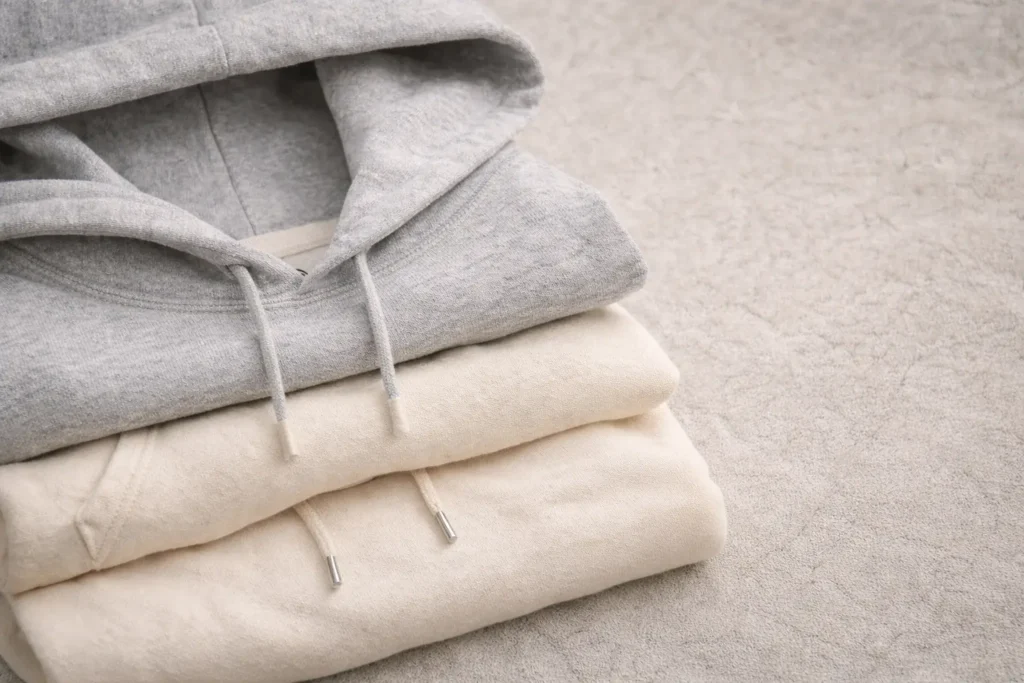
One of the hardest parts of hoodie design is making sure the final product feels aligned with the retail price. Customers may not know the exact GSM, seam type, or production path, but they quickly sense whether the hoodie feels “worth it.”
That feeling usually comes from several design elements working together:
- fabric weight and touch
- fit confidence
- hood fullness
- rib quality
- stitching cleanliness
- print or embroidery sharpness
- color depth
- packaging and presentation
A hoodie often feels underpriced in a good way when it has more substance and better fit than expected. It feels overpriced when one or more key areas fall short.
A simple value-perception table may help:
| Product Signal | Customer Reaction |
|---|---|
| Strong fabric handfeel | “This feels better than expected” |
| Clean silhouette | “This fits more intentionally” |
| Good hood shape | “This looks more premium on body” |
| Stable rib and seams | “This seems durable” |
| Clear size consistency | “I’d buy this again” |
| Sharp decoration | “This feels well-made” |
This is why some low-cost hoodies still feel acceptable, while some higher-priced hoodies disappoint. The customer is not reacting to cost sheet logic. They are reacting to the final product experience.
So when designing a hoodie brand, the goal is not just to make the hoodie look nice in photos. The goal is to make the customer feel that the hoodie has been thought through. That it fits with purpose. That it wears well. That it holds up. That it deserves space in their wardrobe.
Why Does Hoodie Design Matter So Much?
Hoodie design matters because the hoodie is a simple garment with very visible standards. Customers wear hoodies often. They compare them against many other hoodies. They can tell when one feels better, fits better, or lasts better.
A strong hoodie design gives a brand several real advantages:
- easier customer trust
- stronger reviews
- lower return risk
- better repeat purchase potential
- clearer restock logic
- stronger long-term product identity
In practical terms, good hoodie design reduces friction. It makes the product easier to explain, easier to sample, easier to produce, and easier to sell again after the first batch.
That is why designing a hoodie brand should never be treated as just styling. It is the process of building a product customers can actually believe in. When the silhouette is clear, the fabric feels right, the fit works, the details are balanced, and the sample confirms the product direction, the hoodie stops being just an idea. It becomes something real enough to build a brand on.
How Do You Produce a Hoodie Brand?
Producing a hoodie brand means taking an approved hoodie idea and turning it into real, repeatable inventory that customers can trust. This stage includes more than sewing garments. It covers sample approval, material confirmation, production planning, cutting, sewing, decoration, finishing, inspection, packing, and shipping. If this process is handled loosely, even a good hoodie design can fail in bulk. If it is handled well, the brand gains something much more valuable than one finished order: it gains a product system that can be repeated.
A lot of first-time founders assume production starts when they send a design file to a factory. In practice, production starts earlier. It starts when the hoodie is defined clearly enough that the factory can build the same product over and over with minimal guesswork. That means the hoodie should already have:
- a confirmed fit direction
- an approved sample
- a measurement chart
- a confirmed fabric choice
- clear trim and label instructions
- decoration details
- packaging requirements
- an order quantity and size breakdown
When those points are still unclear, production usually becomes slower, more expensive, and less stable.
A practical hoodie production process usually follows this path:
| Production Stage | What Happens |
|---|---|
| Sample approval | Hoodie shape, fit, and fabric direction are confirmed |
| Order confirmation | Quantity, color, size ratio, trims, price, and lead time are locked |
| Material preparation | Fabric, rib, labels, drawcords, and packaging are sourced or prepared |
| Cutting and sewing | Garment panels are cut and assembled |
| Decoration and finishing | Print, embroidery, washing, pressing, trimming |
| Quality control | Measurements, stitching, shade, decoration, labels, packaging checked |
| Packing and shipment | Goods are folded, bagged, cartoned, and prepared for delivery |
The more structured this path is, the easier it becomes to control outcome. For hoodie brands, production is not only about getting goods made. It is about protecting the fit, fabric feel, and overall product promise that customers expect.
What Happens After Sample Approval?
Once the hoodie sample is approved, the product moves into production planning. This is the point where the factory and the brand need to lock the product standard. A lot of avoidable mistakes happen here because people assume the sample itself is enough. It is not. The sample is a reference, but bulk production still needs written confirmation.
After sample approval, these details should normally be confirmed:
- final measurement chart
- approved fabric composition and weight
- color references
- approved trims and labels
- decoration method and placement
- order quantity by size and color
- packaging format
- lead time
- payment terms
- shipping method
A simple production confirmation sheet may look like this:
| Item | Example |
|---|---|
| Style | Oversized pullover hoodie |
| Fabric | 380 GSM cotton-poly fleece |
| Rib | Matching 2×2 rib |
| Colors | Black, Heather Gray |
| Sizes | S, M, L, XL |
| Decoration | Left chest embroidery |
| Neck label | Woven label |
| Care label | Side seam satin label |
| Packaging | Folded with polybag and size sticker |
| Order quantity | 300 pcs |
| Lead time | 25 days ex-factory |
This step matters because bulk production is less flexible than sample development. If the body length still feels uncertain, or the hood shape is still not right, production should not start yet. Once cutting begins, fixing problems becomes much more costly.
It is also important to confirm whether the hoodie will be produced from ready fabric or newly sourced fabric. Ready stock fabric may shorten the timeline. Fresh dyeing or custom development usually adds time. The same is true for custom labels, special drawcords, zipper pulls, or garment wash processes.
For many brands, this stage is where the real production calendar becomes clearer. Instead of thinking only in terms of “sample done,” you are now working with actual production variables: raw material readiness, line availability, decoration scheduling, inspection timing, and shipment planning.
How Do You Confirm Fabrics, Trims, and Colors?
Before bulk production starts, the materials should be checked carefully. A hoodie can look similar on paper while feeling very different in reality depending on the exact fleece, rib, label, and color lot used.
This is why brands should confirm the full material package, not only the main fabric.
The key material areas usually include:
- body fabric
- rib for cuff and hem
- hood lining if used
- drawcord
- eyelets or aglets if used
- zipper if it is a zip hoodie
- neck label
- care label
- hangtag
- polybag and carton details
A material confirmation table may look like this:
| Material | What to Confirm |
|---|---|
| Main fleece | Composition, GSM, handfeel, shrinkage risk, color |
| Rib | Stretch, recovery, color match |
| Drawcord | Thickness, color, finish, length |
| Label | Material, print clarity, fold style |
| Embroidery thread | Color accuracy and durability |
| Polybag | Size, thickness, warning print if needed |
| Carton | Count per carton, carton marks, strength |
Color confirmation matters more than many new brands expect. Black is not always the same black. Gray is not always the same gray. Small shade differences may look minor in a swatch but become obvious across full garments. This is especially important if the brand plans future reorders. If the first batch is a cool charcoal black and the second batch shifts warmer, customers may notice.
For this reason, it helps to keep:
- fabric swatches from approved sample stage
- color codes or lab dips where possible
- trim references
- decoration color references
- approved garment photos in natural light
These records give the brand something concrete to compare against during later production and restock planning.
How Is a Hoodie Actually Made in Production?
Once materials are ready, the hoodie moves into bulk production. At a simple level, hoodie manufacturing usually includes cutting, sewing, decoration, finishing, and packing. But each of those stages includes several smaller decisions that affect quality and consistency.
A typical cut-and-sew hoodie production flow may look like this:
| Step | Main Action |
|---|---|
| Fabric relaxation | Fabric is left to rest before cutting if needed |
| Pattern marking | Marker prepared for efficient cutting |
| Cutting | Body, sleeves, hood, pocket, rib pieces cut |
| Panel preparation | Pocket attached, embroidery or print on panels if required |
| Sewing assembly | Body, sleeves, hood, rib, pocket joined |
| Decoration | Printing, embroidery, patches, washing, depending on style |
| Trimming and pressing | Loose threads removed, shape cleaned |
| Inspection | Quality checks completed |
| Packing | Folding, bagging, carton packing |
In hoodie production, some operations happen before full garment assembly and others happen after. For example, embroidery is often cleaner when placed on a flat panel before the hoodie is fully sewn. Certain wash treatments, on the other hand, may happen after assembly.
The exact production order depends on the hoodie design. A plain pullover hoodie with minimal decoration is simpler. A garment-dyed hoodie with embroidery, patches, and custom trims takes more steps and needs tighter control.
From a customer’s point of view, these are the areas where production quality shows most clearly:
- whether seams are clean and even
- whether the hood sits correctly
- whether the pocket is centered
- whether the cuffs and hem feel balanced
- whether the body panels line up properly
- whether print or embroidery placement is consistent
- whether color and fleece feel match across the order
Even if customers never see the production line, they feel the result of each decision when they wear the hoodie.
How Long Does Bulk Hoodie Production Take?
Bulk production time depends on order size, material readiness, garment complexity, factory scheduling, and decoration method. There is no one timeline that fits every hoodie project, but brands should plan using realistic ranges rather than best-case guesses.
A broad hoodie timeline may look like this:
| Stage | Common Time Range |
|---|---|
| Fabric and trims preparation | 5–15 days |
| Bulk cutting and sewing | 7–20 days |
| Decoration and finishing | 3–10 days |
| Inspection and packing | 2–5 days |
That means a relatively simple hoodie order may move in about 15–25 days after materials are ready, while a more custom order may need 25–40 days or more.
Below is a practical range by order type:
| Order Type | General Lead Time |
|---|---|
| Small repeat order with stock fabric | 7–15 days |
| Small custom hoodie order | 15–25 days |
| Medium bulk custom order | 20–35 days |
| Complex order with special wash or trims | 30–45+ days |
Several things can extend production time:
- custom-dyed fleece
- special rib matching
- custom zipper sourcing
- embroidery-heavy designs
- wash treatments
- holiday scheduling
- higher order volume
- multiple colors and multiple sizes
- packaging complexity
This is why good brands do not build launch timing around the most optimistic production estimate. They leave room for correction, inspection, and shipping. A launch that depends on an unrealistically tight factory schedule often creates rushed approval decisions and customer delays.
For brands that need flexibility, smaller runs can sometimes move faster and create less stock pressure. For brands preparing larger sales campaigns, booking production earlier usually helps protect both quality and timeline.
How Do You Manage Hoodie MOQ and Order Quantities?
MOQ, or minimum order quantity, is one of the most important production questions for a hoodie brand because it affects cash flow, unit cost, inventory risk, and how much room the brand has to test before scaling.
Different factories work with different MOQ structures. Some quote MOQ by style, some by color, and some by total order value. This is why founders should not only ask “What is your MOQ?” but also ask how that MOQ is calculated.
A practical MOQ comparison may look like this:
| MOQ Structure | What It Means |
|---|---|
| Per style | Total quantity needed for one hoodie design |
| Per color | Minimum quantity required for each color |
| Per size set | Small flexible runs but limited ratio freedom |
| Per fabric lot | MOQ tied to how much fabric needs to be made or dyed |
Low MOQ production is helpful for early hoodie brands because it allows product testing without forcing a large stock position. The trade-off is that unit cost may be higher. Higher MOQ production may lower per-piece cost, but it increases financial risk if sales are uncertain.
A simple comparison:
| Order Strategy | Main Benefit | Main Risk |
|---|---|---|
| Low MOQ test run | Lower inventory risk | Higher unit cost |
| Medium custom order | Better balance | Still needs decent sales planning |
| Large bulk order | Lower unit cost at scale | High stock pressure |
For many new hoodie brands, a safer first production path may look like this:
- 1 main hoodie style
- 2–3 core colors
- limited size range based on target customer
- one decoration method
- manageable first quantity
- quick reorder plan if sales are strong
This is often much healthier than trying to lower cost by ordering too many units before customer demand is proven.
How Do You Control Quality During Production?

Quality control is one of the most important parts of hoodie production because customers notice errors quickly. A loose thread may not seem serious inside the factory, but repeated loose finishing, poor embroidery placement, uneven rib, or inconsistent measurements will damage the brand in the customer’s eyes.
A strong quality process should not begin only after everything is packed. It should happen at different points during production.
In practice, hoodie quality control often includes:
- material check before production
- in-line sewing checks during assembly
- decoration checks
- measurement checks
- final inspection before packing
- carton and packing checks before shipment
A hoodie quality checklist may include:
| Inspection Area | What to Check |
|---|---|
| Measurements | Chest, length, sleeve, shoulder, cuff, hem, hood |
| Fabric quality | No holes, streaks, contamination, major defects |
| Color consistency | Shade match across the order |
| Stitching | No skipped stitches, open seams, uneven topstitch |
| Symmetry and position | |
| Hood | Balanced shape and correct attachment |
| Rib | Recovery and correct tension |
| Decoration | Placement, clean finish, color accuracy |
| Labels | Correct content, position, and size |
| Packaging | Correct fold, bag, sticker, carton quantity |
It also helps to define acceptable tolerance ranges before production begins. For example:
| Point | Common Practical Tolerance Example |
|---|---|
| Body length | +/- 1 cm |
| Chest width | +/- 1 cm |
| Sleeve length | +/- 1 cm |
| Decoration placement | +/- 0.5 to 1 cm depending on method |
The exact tolerance depends on product type and factory agreement, but the key point is that these rules should be agreed in advance. If the acceptable range is never discussed, later disputes become more difficult.
For brands that want stronger control, keeping an approved sample on hand during inspection is very useful. That sample becomes the real-world reference for:
- shape
- construction standard
- decoration position
- hood look
- fabric feel
- overall finishing level
This is especially important for hoodies because so much of the product experience comes from balance. A hoodie can technically “match the chart” and still feel wrong if the hood collapses badly, the rib is too soft, or the body drapes differently from the approved sample.
How Do You Check Measurements, Fit, and Consistency in Bulk?
Measurement control is critical in hoodie production because fit is one of the main reasons customers are satisfied or disappointed. If the hoodie measures inconsistently from one piece to another, returns and complaints increase.
Bulk measurement control should normally include:
- checking multiple pieces from each size
- comparing measurements with the approved spec chart
- watching for unusual variation across colors
- checking whether heavy fleece or washing affects final size
- making sure grading remains balanced across the size range
A simple measurement control sheet might include:
| Point of Measure | Spec M | Tolerance | Bulk Check Result |
|---|---|---|---|
| Chest width | 63 cm | +/- 1 cm | 63.2 cm |
| Body length | 68 cm | +/- 1 cm | 67.6 cm |
| Shoulder width | 64 cm | +/- 1 cm | 64.1 cm |
| Sleeve length | 56 cm | +/- 1 cm | 55.8 cm |
| Bottom hem width | 50 cm | +/- 1 cm | 49.9 cm |
This level of checking helps catch issues before the goods are fully packed.
Consistency is just as important as accuracy. Customers do not only compare the hoodie against your website. They also compare one piece against another. If black size M fits well but gray size M feels narrower, the product loses trust. This is why size and color consistency should always be part of production review.
What Problems Should You Avoid Before Shipping?
Many expensive production problems show up right before shipment because details were not checked early enough. By that stage, time is tighter and correction options are more limited.
Common pre-shipment problems include:
- wrong size ratio packed
- wrong labels attached
- embroidery position drifting between units
- color variation between cartons
- mixed colors in incorrect cartons
- missing polybags or stickers
- inaccurate carton counts
- loose thread trimming not completed
- print cracking or poor curing
- damaged garments from pressing or handling
A final shipment readiness check can reduce these risks:
| Shipment Checkpoint | What Should Be Confirmed |
|---|---|
| Total quantity | Matches purchase order |
| Size ratio | Matches approved breakdown |
| Color ratio | Matches approved breakdown |
| Quality status | Final inspection passed |
| Labels | Correct and complete |
| Packing | Correct fold and bagging |
| Cartons | Correct carton number and marks |
| Documents | Invoice, packing list, other required files ready |
| Shipping method | Courier, air, or sea booking confirmed |
This final step matters because mistakes at packing stage create bigger downstream problems. A wrong size sticker can cause warehouse errors. A wrong carton mark can delay fulfillment. Missing care labels can cause compliance issues. The cleaner the shipment stage, the smoother the product handoff becomes.
How Do You Choose the Right Shipping Method?
Shipping is part of production planning because it affects both cost and launch timing. A hoodie brand should choose the shipping method based on urgency, order size, and total landed cost.
The three main options are usually:
| Shipping Method | Common Transit Range | Best For |
|---|---|---|
| Express courier | 3–5 days | Samples, very urgent small orders |
| Air freight | 5–10 days | Medium orders needing faster delivery |
| Sea freight | 20–35+ days | Larger bulk orders where cost matters more |
Each option changes the financial picture. Express is fastest but most expensive per piece. Sea is often more cost-efficient at scale, but it requires earlier planning. Air sits in the middle.
For hoodie brands, shipping should be planned together with production, not after production. If the factory finishes on time but shipping was not booked well, the brand can still miss launch or restock timing. That is why brands usually benefit from deciding shipping logic early:
- urgent sample stage uses express
- test orders may use express or air depending on volume
- larger inventory orders often move by sea if timing allows
- split shipment may be useful in some cases, with small urgent quantity by air and the rest by sea
The right shipping plan depends on both sales goals and cash flow. Fast delivery helps, but not if it destroys margin unnecessarily.
How Do You Choose the Right Factory for Hoodie Production?
The right factory for hoodie production is not automatically the cheapest one or the largest one. It is the one that can make your hoodie well, communicate clearly, support your order size, and repeat the same product standard later.
A hoodie-focused factory should ideally be strong in these areas:
- knit casualwear experience
- fleece and rib handling
- sample development ability
- fit correction support
- decoration coordination
- low MOQ or scalable MOQ options
- stable quality control
- repeat-order consistency
A factory comparison table may help:
| Factory Capability | Why It Matters for Hoodies |
|---|---|
| Sample room support | Speeds up corrections and development |
| Pattern knowledge | Helps fit and silhouette quality |
| Fleece experience | Affects shape, sewing, and finish |
| Decoration support | Important for prints, embroidery, patches |
| Quality systems | Protects consistency |
| Production capacity | Supports later growth |
| Shipping coordination | Helps launch planning |
This is especially important for new brands. A factory that treats small runs seriously, communicates clearly, and can scale later often gives more long-term value than a cheaper supplier that only focuses on immediate cost.
For many hoodie brands, the best manufacturing partner is one that can support several stages:
- first sample
- revised sample
- low-risk first order
- repeat production
- larger volume as demand grows
That kind of setup makes the hoodie easier to improve and easier to grow.
Why Does Production Matter So Much for a Hoodie Brand?
Production matters because this is the stage where the brand either keeps or loses what it built during planning and design. A hoodie may begin with a good idea, but customers only experience the finished product. They judge what arrives in the package, not what the brand intended.
A well-managed production process gives the brand several real advantages:
- better fit consistency
- more stable fabric feel
- lower defect risk
- stronger customer trust
- easier restocking
- better margin protection through fewer errors
- a clearer path from first order to larger scale
In simple terms, production is where a hoodie brand becomes real. It is where fit, fabric, shape, and detail stop being a sample-room idea and become something hundreds or thousands of customers can wear.
That is why hoodie production should never be treated as just “placing an order.” It is the part of the business that protects quality, repeatability, and long-term growth. When materials are confirmed carefully, measurements are controlled, sewing is checked, finishing is clean, and shipment is handled properly, the hoodie arrives closer to what the brand promised.
How Do You Grow a Hoodie Brand?

Growing a hoodie brand goes beyond selling a few units—it’s about building repeatable systems, maintaining consistent product quality, and creating a loyal customer base. Growth is measured by the ability to restock, expand product lines, and scale production without losing the original product identity. Many new brands experience early success with one release but fail to retain customers or reproduce quality consistently. Sustainable growth requires careful planning in product, operations, and customer engagement.
A hoodie brand scales when it achieves:
- consistent product quality across batches
- predictable repeat purchase behavior
- reliable production and supply chain management
- an expanding but focused product line
- clear brand identity that customers recognize
Early growth is most effective when you focus on one or two core hoodie products and expand strategically. This prevents dilution of product quality, maintains clarity for the customer, and allows for operational learning that reduces risk in future batches.
How Do You Launch Effectively?
A strong launch is not about producing the largest inventory but about clarity, consistency, and customer trust. For a hoodie brand, a successful first launch focuses on:
- one or two core hoodie styles
- 2–4 well-chosen colors
- a limited size range to manage inventory efficiently
- precise product messaging that communicates fit, fabric, and use case
This approach allows brands to test the market while maintaining operational control. Tracking sales, returns, and customer feedback during this period informs future production and product adjustments.
A typical launch performance table might look like this:
| Metric | Target | Why It Matters |
|---|---|---|
| Units sold | 80–100% of first batch | Indicates market acceptance |
| Return rate | <5% | Confirms product fit and quality |
| Color sell-through | 70%+ | Shows customer preference and guides restock |
| Customer feedback | Collect 20–30 reviews | Informs design and fit improvements |
| Reorder potential | At least 50% first batch | Tests viability of scaling |
By carefully managing launch variables, a brand can create meaningful insights without overcommitting inventory or capital.
How Do You Plan Restocks?
Restocking is where long-term brand trust is established. Customers return if the product they liked remains consistent in fit, fabric, and feel. Restock planning requires:
- accurate size ratio tracking from first orders
- consistent fabric sourcing or swatches for color match
- clear tech pack updates reflecting minor fit adjustments
- scheduling production ahead of demand to avoid stockouts
A practical restock schedule may look like:
| Size | First Batch Sold | Next Batch Quantity |
|---|---|---|
| S | 40 | 50 |
| M | 120 | 150 |
| L | 100 | 130 |
| XL | 80 | 100 |
| XXL | 20 | 30 |
By analyzing size performance and sales velocity, the brand can optimize inventory for maximum sales and minimal waste.
How Do You Expand Product Lines?
After stabilizing one hoodie product, expansion should be incremental. Consider:
- introducing new colors based on best-sellers
- launching complementary products like zip hoodies, sweatpants, or matching sets
- adding seasonal variations like heavyweight fleece for winter or lighter weight for spring
Expansion should be guided by data:
| Expansion Option | Launch Consideration | Benefit |
|---|---|---|
| New colors | Only if initial batch sold >70% | Meets customer demand without overstocking |
| Zip hoodie variant | Test limited SKU | Broadens style offering while controlling risk |
| Sweatpants/sweatshirts | Maintain brand identity | Completes product ecosystem for repeat purchase |
| Seasonal variation | Align with climate demand | Keeps customers engaged year-round |
Careful expansion ensures the brand grows while maintaining the core product standards that established trust.
How Do You Maintain Quality at Scale?
Quality control is critical as production volume increases. Scaling without strong QC leads to inconsistent fit, fabric feel, or finishing issues, which damages brand credibility. To maintain quality:
- retain approved samples for reference
- inspect production in multiple stages (cutting, sewing, finishing)
- monitor decoration consistency (print, embroidery, patches)
- enforce measurement tolerances across all sizes
A quality tracking example:
| QC Point | Tolerance | Batch Result |
|---|---|---|
| Chest width | ±1 cm | Within range |
| Sleeve length | ±1 cm | Within range |
| Hood height | ±0.5 cm | Slight variation noted |
| Embroidery placement | ±0.5 cm | Consistent |
| Color shade | ±5% | Slight variation in gray |
Routine QC and batch documentation ensure repeatable product quality and reduce the risk of returns or complaints during scaling.
How Do You Grow Repeat Purchase and Customer Loyalty?
Repeat purchase is the strongest growth driver for a hoodie brand. Customers are more likely to return when:
- the hoodie remains consistent across batches
- core sizes and colors are restocked predictably
- fit and fabric meet or exceed expectations
- clear guidance is provided for sizing, care, and styling
To facilitate repeat purchases:
- track top-selling colors and sizes for restock
- offer limited variations of successful styles
- use post-purchase communication to promote new colors or complementary items
A repeat purchase tracking table may include:
| SKU | First Purchase Units | Repeat Purchase Units | Repeat Rate (%) |
|---|---|---|---|
| Pullover Hoodie Black | 200 | 60 | 30% |
| Pullover Hoodie Gray | 150 | 40 | 27% |
| Zip Hoodie Olive | 100 | 20 | 20% |
This data informs inventory planning, marketing priorities, and future product development to maximize customer lifetime value.
By focusing on consistent product quality, controlled restock, and thoughtful expansion, a hoodie brand can grow from a single product into a recognizable, scalable line that builds long-term customer loyalty.
Conclusion
Starting a hoodie brand is not about launching the biggest collection or chasing short-term attention. It is about building one hoodie clearly enough that customers understand it, trust it, and want to wear it again. The brands that last are usually the ones that get the fundamentals right early: a clear product direction, the right fabric and fit, a realistic pricing structure, careful sampling, stable production, and a restock plan that protects consistency.
When those pieces work together, a hoodie stops being just another item for sale and becomes a real brand asset. For new and growing brands, the smartest path is often to begin with a focused product, test the market with discipline, learn from real customer response, and then scale with stronger control. That is how a hoodie brand moves from idea to repeatable growth. And when the time comes to turn that plan into an actual product, working with a manufacturer that can support sampling, low-MOQ testing, bulk production, and long-term consistency can make the entire process far more practical and far less risky.