Skip to content
Everlane claims they make premium-quality t-shirts for just $7. In an industry flooded with markups and murky sourcing, this number feels almost unbelievable. So, how do they do it?
Everlane’s $7 t-shirts are possible through efficient supply chain management, offshore production, and a direct-to-consumer model—combined with their philosophy of radical transparency1.
I’ve worked with many factories across Asia. I’ve seen how prices get inflated—not always by cost, but by layers of middlemen. Everlane’s model flips that. Let’s pull back the curtain on how it all works.
What Makes Everlane’s $7 T-Shirts Possible in the Clothing Industry?
$7 sounds too low for a well-made t-shirt—until you understand how the costs are cut without cutting corners.
Everlane’s low price point is made possible by direct-to-consumer sales, bulk production, lean operations, and partnerships with efficient overseas factories.
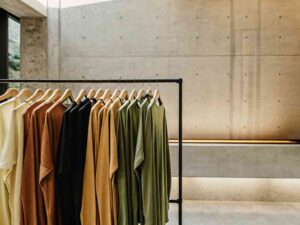 Tee Rack Display
How do production costs2 break down for a $7 t-shirt?
The $7 cost typically includes $2–$3 for materials, $1.50–$2.50 for labor, and the rest for transport, packaging, and quality control.
Here’s a typical cost breakdown:
| Category | Estimated Cost |
|---|---|
| Fabric (cotton) | $2.00 |
| Sewing Labor | $1.75 |
| Trims & Tags | $0.50 |
| Packaging | $0.25 |
| Freight & Duties | $1.25 |
| Quality Control | $0.25 |
| Total | $6.75–$7.00 |
Everlane trims marketing and retail costs to keep consumer prices low.
What regions or factories does Everlane use to achieve low costs?
Everlane sources mainly from factories in Vietnam, China, Sri Lanka, and India—where labor is affordable and manufacturing is advanced.
Each factory is vetted for:
- Ethical working conditions
- Compliance certifications
- Efficient production workflows
They often use vertically integrated suppliers, reducing overhead.
Is Everlane’s Radical Transparency Model Changing the Fashion Clothing Game?
Everlane doesn’t just sell basics—they sell truth. Their business model is part retail, part report card.
Radical transparency means Everlane discloses the exact cost of every product, including materials, labor, transport, and markup.
What does “radical transparency” mean in the context of clothing?
It means revealing each element of the cost structure and the sourcing process to customers—no hidden markups, no vague storytelling.
Everlane showcases:
- Factory locations with photos
- Cost breakdowns beside product pages
- Markup comparisons with traditional retail
This transparency builds trust—and curiosity.

How do consumers respond to cost transparency in fashion?
Consumers, especially younger ones, respond positively to transparency—they feel more control and connection to their purchases.
According to surveys:
- Gen Z shoppers are 2x more likely to trust transparent brands
- Many say transparency influences brand loyalty
- Social media praises “honest brands” with clear sourcing
Transparency is no longer optional—it’s expected.
How Does Everlane Balance Price, Quality, and Ethical Sourcing?
It’s not just about cheap. Everlane claims to be ethical and sustainable too—without raising prices. Is it possible?
Everlane balances the triangle by choosing fewer product SKUs, investing in long-term factory relationships, and maintaining tight control over the design-to-delivery process.
Are $7 t-shirts sustainable and ethically made?
Partially—Everlane uses sustainable cotton and dyes in select lines, but cost limits full sustainability on every SKU. They aim for “better, not perfect.”
Their t-shirts:
- Often use certified organic cotton
- Avoid harmful dyeing methods
- Are produced in WRAP- or SA8000-certified factories
But $7 leaves less room for:
- Regenerative farming
- Full lifecycle analysis
- Living wages everywhere
How does Everlane ensure fair wages and factory conditions?
Everlane audits every factory, publishes scorecards, and visits facilities regularly to ensure safe conditions and fair pay.
They focus on:
- Long-term partnerships over price bidding
- Third-party audits with shared results
- Offering bonuses and training to workers
Still, ethical sourcing3 is complex—and the brand isn’t perfect.
How Do Everlane’s Costs Compare with Other Fashion Clothing Brands?
Compared to fast fashion giants or premium basics startups, Everlane sits in a unique sweet spot.
While H&M or Uniqlo may have similar base costs, Everlane’s margin is lower because they skip traditional retail and marketing expenses.
What are typical production costs for t-shirts at H&M, Zara, and Uniqlo?
| Brand | Avg. Retail Price | Estimated Cost to Make |
|---|---|---|
| H&M | $9.99 | $3–$4 |
| Zara | $19.99 | $4–$6 |
| Uniqlo | $14.90 | $5–$7 |
| Everlane | $18 (retail) | $7 |
Most brands mark up by 3x–6x. Everlane keeps it around 2x.
Does Everlane’s model truly offer better value or just smarter marketing?
It offers better value through transparency and quality—but storytelling is part of the model, and marketing leans hard into ethics.
While others rely on aspirational branding, Everlane says, “Here’s what it really costs.”
For many consumers, that honesty is the brand.
What Can Other Clothing Brands Learn from Everlane’s Pricing Strategy?
Everlane’s playbook is tempting—but not easy to copy. Still, there’s plenty to learn.
Fashion brands can learn to simplify product lines, cut out middlemen, and communicate value honestly—without racing to the bottom.
Can fashion startups replicate Everlane’s transparent pricing model?
Yes, but it takes lean operations, trusted factories, and a committed brand story. Smaller brands need to build direct relationships and stay focused.
Keys to replicating:
- Limited SKUs, max 5–10 to start
- Transparent cost sheets in every product
- Partner factories that scale with you
What tools or technologies help brands reduce production costs?
Modern brands use PLM software, digital sampling, AI-driven demand forecasting, and vertical integration to trim waste and speed up timelines.
Tools include:
- WFX & Centric for product lifecycle management
- Techpacker for digital tech packs
- Alibaba & Panjiva for supplier scouting
- On-demand printing to reduce inventory risks
Technology makes transparency easier—and cheaper.
Conclusion
Everlane’s $7 t-shirts are a case study in modern fashion economics. With the right factories, honest pricing, and a simple product focus, they prove it’s possible to build quality—and trust—without inflated costs.
-
Explore how radical transparency reshapes consumer trust and brand loyalty in the fashion industry. ↩
-
Understanding production costs can help consumers make informed choices about pricing and quality in fashion. ↩
-
Learn about the practices and challenges of ethical sourcing in fashion, crucial for sustainable consumer choices. ↩