T-shirts are a wardrobe essential found in closets worldwide. But have you ever wondered how a simple T-shirt goes from a piece of fabric to a finished product? The T-shirt manufacturing process1 involves multiple steps, including fabric selection, cutting, sewing, printing, and finishing.
The T-shirt production process includes fabric selection, pattern creation, cutting, stitching, printing, quality control, and packaging. Each step ensures durability, comfort, and design precision, making T-shirts one of the most versatile garments globally.
Let’s go through the step-by-step process of how T-shirts are made, from raw materials to the final product.
Step 1: Choosing the fabric for the T-shirt
The first step in making a T-shirt is selecting the right fabric. Different fabrics impact the comfort, durability, and printing quality of the T-shirt.
The most common T-shirt fabrics include cotton, polyester, and cotton-poly blends, each offering unique benefits.
Best fabrics for T-shirts:
| Fabric Type | Features | Best For |
|---|---|---|
| 100% Cotton | Soft, breathable, absorbs ink well | Everyday wear, screen printing |
| Cotton-Poly Blend | Less shrinkage, durable, soft texture | Fashion T-shirts, DTG printing |
| 100% Polyester | Moisture-wicking, lightweight | Sportswear, sublimation printing |
| Tri-Blend (Cotton/Poly/Rayon) | Soft, vintage feel, stretchable | Premium, fashion-focused T-shirts |
Once the fabric is chosen, it is treated, pre-shrunk, and prepared for cutting.
Step 2: Creating the T-shirt pattern
After selecting the fabric, the next step is to create a pattern, which serves as a template for cutting the fabric into different parts of the T-shirt.
How is a T-shirt pattern made?
✔ Designers use software like Gerber or Optitex2 to create precise patterns.
✔ Patterns are graded to fit different sizes (S, M, L, XL).
✔ The pattern is printed or laser-cut onto fabric before production.
A well-designed pattern ensures that the T-shirt fits properly and maintains consistency across all sizes.
Step 3: Cutting the fabric
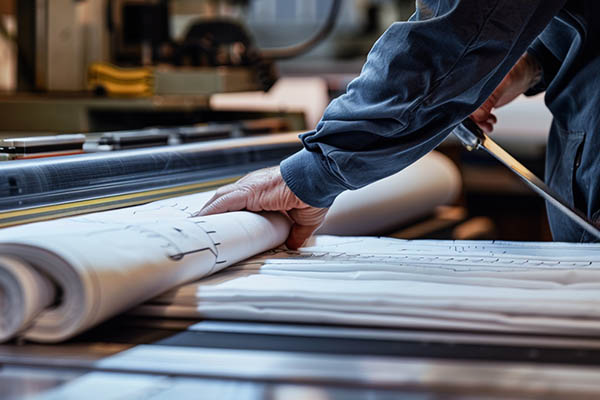
Once the pattern is finalized, the fabric is cut into panels that make up the T-shirt.
Industrial cutting machines are used to slice fabric layers efficiently.

Key steps in fabric cutting:
| Step | Description |
|---|---|
| Spreading | Large rolls of fabric are spread evenly on cutting tables. |
| Cutting | Automated or manual cutting tools slice fabric panels. |
| Sorting & Labeling | Cut pieces are grouped by size and design. |
This step ensures accuracy and consistency before the sewing process begins.
Step 4: Sewing and stitching the T-shirt
After the fabric is cut, the pieces are sewn together to form the final T-shirt.
Industrial sewing machines3 are used to stitch the sleeves, neckline, and body panels.
Common T-shirt stitching techniques:
| Stitch Type | Purpose |
|---|---|
| Overlock Stitch | Prevents fabric edges from fraying. |
| Flatlock Stitch | Creates a smooth, seamless look. |
| Coverstitch | Strengthens hems and sleeve edges. |
A well-sewn T-shirt maintains its shape and durability even after multiple washes.
Step 5: Printing and embellishment
Once the T-shirt is sewn, it can be customized with printing, embroidery, or other decorations.
Best printing methods for T-shirts:
| Printing Method | Best For | Features |
|---|---|---|
| Screen Printing | Bulk orders, simple designs | Durable, cost-effective for large runs. |
| DTG (Direct-to-Garment) | Small orders, detailed prints | High-quality, full-color designs. |
| Heat Transfer (DTF, Vinyl) | Small-batch customization | Great for sports jerseys, logos. |
| Sublimation | Polyester shirts, all-over prints | Vibrant, permanent prints. |
For long-lasting designs, screen printing and sublimation4 are the most durable options.
Step 6: Quality control and inspection
Before a T-shirt is shipped, it undergoes strict quality control checks.

What is checked in T-shirt quality control?
✔ Stitching accuracy – No loose threads or misaligned seams.
✔ Print alignment – Ensures logos and graphics are correctly placed.
✔ Fabric consistency – No holes, defects, or shrinkage issues.
✔ Size accuracy – Each size is measured against the pattern.
Only T-shirts that pass inspection move on to the final stage.
Step 7: Packaging and shipping
After quality control, the T-shirts are folded, packaged, and prepared for shipping.
Common packaging options:
| Packaging Type | Features |
|---|---|
| Poly Bags | Cost-effective, protects from dust. |
| Eco-Friendly Packaging | Biodegradable and sustainable. |
| Branded Boxes | Premium presentation for high-end brands. |
T-shirts are shipped via sea freight for bulk orders or air courier for fast delivery.
How long does it take to manufacture a T-shirt?
The production timeline varies based on order size and customization.
T-shirt production timeline:
| Production Step | Time Required |
|---|---|
| Fabric Selection & Prepping | 1–3 days |
| Pattern Creation & Cutting | 2–5 days |
| Sewing & Stitching | 3–7 days |
| Printing & Customization | 2–6 days |
| Quality Control & Packaging | 1–3 days |
| Total Production Time | 7–20 days |
For bulk orders, production time may take 2–4 weeks.
Conclusion
T-shirt production involves multiple steps, from fabric selection to final packaging.
- Fabric selection impacts comfort and durability.
- Pattern-making and cutting ensure accurate sizing.
- Sewing and stitching provide structure and longevity.
- Printing adds custom designs and branding.
- Quality control ensures defect-free T-shirts.
By understanding the T-shirt manufacturing process, businesses can choose high-quality materials and efficient production methods to create durable, stylish garments.