Skip to content
Custom T-shirts are everywhere—from fashion brands to business promotions. But have you ever wondered how designs are printed onto T-shirts? The process involves different printing and embroidery techniques, each offering unique durability, color vibrancy, and texture.
Designs are applied to T-shirts using various methods, including screen printing1, heat transfer, DTG (Direct-to-Garment)2, sublimation printing3, and embroidery. Each technique differs in cost, durability, and print quality, making some better suited for bulk production and others for detailed, high-quality designs.
Let’s explore the most common ways to put designs on T-shirts, how each method works, and which one is best for different needs.
What are the most common methods for printing designs on T-shirts?
The best printing method depends on the fabric, design complexity, and production volume.
Overview of T-shirt printing methods:
| Printing Method | Best For | Durability | Cost |
|---|---|---|---|
| Screen Printing | Bulk orders, bold designs | ✅ High | 💲 Low (for large orders) |
| DTG (Direct-to-Garment) | Small batches, detailed prints | ✅ Medium | 💲💲 High |
| Heat Transfer (Vinyl, DTF4, HTV5) | Personalized, one-off shirts | ✅ Medium-High | 💲💲 Moderate |
| Sublimation Printing | Polyester shirts, all-over prints | ✅✅ Permanent | 💲💲💲 High |
| Embroidery | Logos, premium branding | ✅✅ Very High | 💲💲💲 High |
Now, let’s break down how each method works and its advantages.
Screen Printing: Best for bulk T-shirt printing
Screen printing (or silk screen printing1) is the most common method used for large-volume T-shirt printing.
How does screen printing work?
✔ A stencil (screen) is created for each color in the design.
✔ Ink is pushed through the stencil onto the T-shirt.
✔ The design is cured with heat to set the ink.
Pros and cons of screen printing:
| Pros | Cons |
|---|---|
| ✅ Extremely durable, long-lasting | ❌ Not ideal for small orders |
| ✅ Vibrant colors | ❌ Expensive for multi-color designs |
| ✅ Works well on cotton fabrics | ❌ Requires setup time |
If you need 100+ T-shirts with bold designs, screen printing is the best choice.
DTG (Direct-to-Garment) Printing: Best for detailed designs
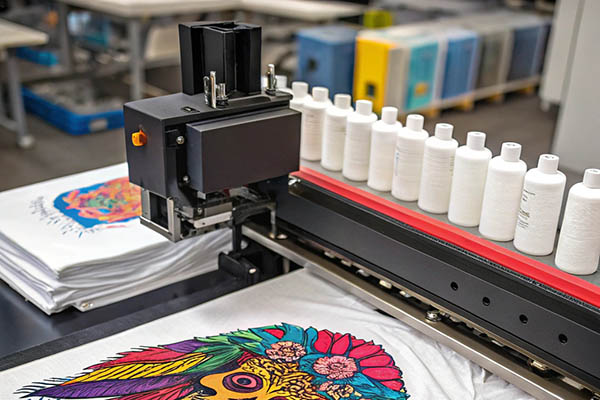
DTG printing is like using a digital inkjet printer, but for T-shirts. It’s ideal for complex, full-color designs.
How does DTG printing work?
✔ The T-shirt is placed on a flatbed printer.
✔ The printer sprays ink directly onto the fabric.
✔ A heat press cures the ink for durability.
Pros and cons of DTG printing:
| Pros | Cons |
|---|---|
| ✅ Great for detailed, full-color designs | ❌ More expensive per shirt |
| ✅ No setup required | ❌ Not as durable as screen printing |
| ✅ Works on cotton and cotton blends | ❌ Slower production time |
For small-batch, high-detail designs, DTG is a great option.
Heat Transfer Printing: Best for custom, one-off T-shirts
Heat transfer methods include vinyl transfer, DTF (Direct-to-Film)4, and HTV (Heat Transfer Vinyl)5.
How does heat transfer printing work?
✔ A design is printed onto transfer paper.
✔ The design is placed on the T-shirt and pressed with heat.
✔ The backing paper is removed, leaving the design on the shirt.
Best types of heat transfer printing:
| Method | Best For | Features |
|---|---|---|
| DTF | Multi-color, durable prints | Vibrant, flexible design application |
| HTV | Simple logos, sports jerseys | Textured, cut-out vinyl designs |
| Sublimation Transfer | Polyester fabrics | Long-lasting, full-color designs |
Pros and cons of heat transfer printing:
| Pros | Cons |
|---|---|
| ✅ Good for small-batch or one-off designs | ❌ Less durable than screen printing |
| ✅ Works on different fabrics | ❌ Can peel or crack over time |
| ✅ Affordable for low-volume orders | ❌ Some transfer papers leave a plastic feel |
For customized T-shirts with names or logos, heat transfer is a cost-effective option.
Sublimation Printing: Best for polyester and all-over designs
Sublimation printing is a high-quality method3 for permanent, full-color prints on polyester fabrics.
How does sublimation printing work?
✔ A special sublimation ink is printed onto transfer paper.
✔ The transfer paper is heat-pressed onto a polyester shirt.
✔ The ink turns into gas and bonds with the fabric.
Pros and cons of sublimation printing:
| Pros | Cons |
|---|---|
| ✅ Permanent, high-quality prints | ❌ Only works on polyester fabrics |
| ✅ Colors never fade or peel | ❌ More expensive setup |
| ✅ Great for sportswear and fashion T-shirts | ❌ White/light-colored shirts only |
If you need vibrant, all-over prints on polyester shirts, sublimation is the best method.
Unlike printing, embroidery stitches designs onto fabric using thread.
How does embroidery work?
✔ A digital embroidery file is loaded into a machine.
✔ Threads are selected and stitched onto the shirt.
✔ The finished embroidery is trimmed and cleaned.
Pros and cons of embroidery:
| Pros | Cons |
|---|---|
| ✅ Long-lasting, premium look | ❌ More expensive than printing |
| ✅ Doesn’t fade or wash out | ❌ Limited to logos and small designs |
| ✅ Best for corporate and high-end shirts | ❌ Not ideal for large, colorful designs |
For business uniforms and professional branding, embroidery is the top choice.
What is the best method for printing custom T-shirts?
The best method depends on your design, budget, and order size.
Which printing method should you choose?
| Need | Best Printing Method |
|---|---|
| Best for bulk orders | Screen Printing |
| Best for detailed designs | DTG Printing |
| Best for sportswear | Sublimation |
| Best for personal customization | Heat Transfer |
| Best for logos and branding | Embroidery |
For businesses selling printed T-shirts, screen printing or DTG2 is the best investment.
Conclusion
There are many ways to put designs on T-shirts, each with unique benefits.
- Screen printing is best for bold, high-volume prints.
- DTG printing works well for detailed, multi-color designs.
- Heat transfer is great for personalized, small-batch printing.
- Sublimation is the top choice for polyester sportswear.
- Embroidery adds a professional touch to business shirts.
Choosing the right printing method ensures high-quality, durable, and stylish custom T-shirts.
-
It helps clarify the pros and cons of each method for complex images. ↩ ↩
-
Provides steps to convert artwork into machine-readable embroidery files. ↩ ↩
-
Offers guidelines on setup, ink usage, and temperature for sublimation. ↩ ↩
-
Compares these popular methods to find the ideal solution for each project. ↩ ↩
-
Explains which vinyl to pick and how to apply it effectively. ↩ ↩