| Fabric name | Elastane |
| Fabric also known as | Spandex, Lycra |
| Fabric composition | Polyether-polyurea copolymer |
| Commonly used in | Tights, socks, competitive athletic wear, cycling wear, leggings, shorts, yoga pants, motion capture suits, underwear, bras |
| Fabric breathabilityn | High breathability |
| Moisture-wicking abilities | High |
| Heat retention abilities | Low |
| Stretchability (give) | Exceptionally high |
| Prone to pilling/bubbling | High |
| Country where fabric was first produced | United States |
| Biggest exporting/producing country today | China |
| Recommended washing temperatures | Warm or cold |
What is Elastane Fabric?
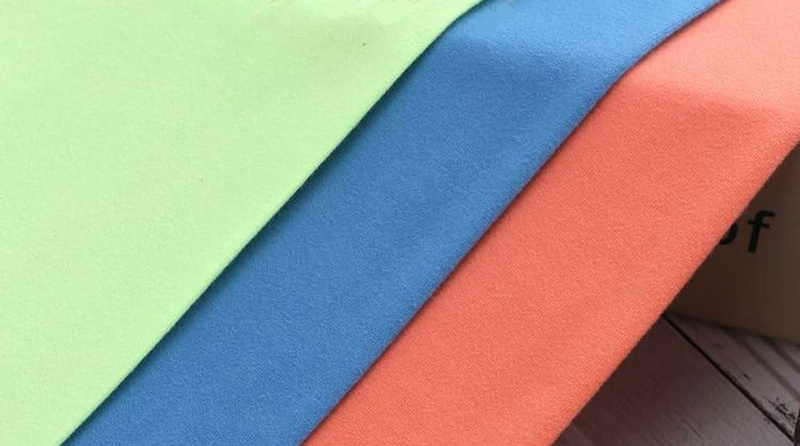
Elastane fabric, commonly known as spandex or Lycra, is a highly elastic synthetic fiber made from polyurethane. Known for its exceptional stretch and recovery, elastane is widely used in a variety of applications, including sportswear, swimwear, and activewear.
Origin and Source of Elastane Fibers
Elastane is produced from polyurethane, a polymer derived from petroleum-based products. The production process involves synthesizing this polymer from polyols and diisocyanates, creating fibers that can stretch extensively and return to their original shape.
Historical Significance and Modern Usage
Developed by DuPont in the late 1950s, elastane revolutionized the textile industry with its superior elasticity and durability. Originally intended to replace rubber in corsetry, it quickly gained popularity in sportswear and fashion for its performance benefits. Today, elastane is widely used across various sectors, including medical and industrial applications.

Elastane Fabric Today
Modern production of elastane is expanding, with significant contributions from the United States, China, and South Korea.
At Modaknits, we leverage advanced technology and sustainable practices to manufacture premium elastane apparel, ensuring we meet the diverse needs of our clients.
What Makes Elastane Fabric Unique?
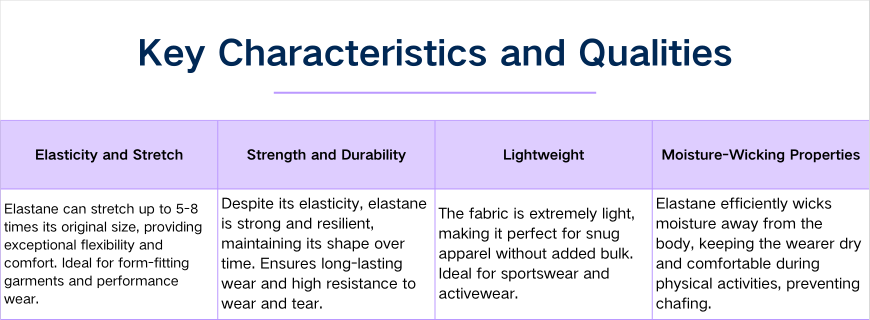
1. Elasticity and Stretch: Elastane can stretch up to 5-8 times its original length, offering exceptional flexibility and comfort. This significant stretchability makes it ideal for form-fitting garments and performance wear.
2. Strength and Durability: Despite its remarkable elasticity, elastane is strong and resilient, maintaining its shape and performance over time. This durability ensures long-lasting wear and high resistance to wear and tear.
3. Lightweight: Elastane is incredibly light, making it perfect for apparel that requires a snug fit without adding bulk. This feature is particularly beneficial in sportswear and activewear.
4. Moisture-Wicking Properties: Elastane effectively wicks moisture away from the body, keeping the wearer dry and comfortable during physical activities. This moisture management is crucial for maintaining comfort and preventing chafing.
Comparison with Other Fabrics
Elastane vs Cotton
Elastane offers significantly more elasticity and faster drying than cotton, making it more suitable for activewear. While cotton is soft and breathable, it lacks the stretch and recovery that elastane provides.
Elastane vs Nylon
Although nylon is durable and lightweight, it does not provide the same level of stretch and recovery as elastane. Elastane offers a better fit and greater flexibility.
Elastane vs Polyester
Polyester is durable and cost-effective, but elastane offers superior fit, flexibility, and moisture management. Adding spandex fibers to polyester blends enhances their flexibility and fit.
How is Elastane Fabric Made?
Elastane fabric, known for its exceptional elasticity and durability, undergoes a meticulous production process to ensure its superior performance and versatility. Here’s an overview of how elastane is made, focusing on its unique manufacturing methods:
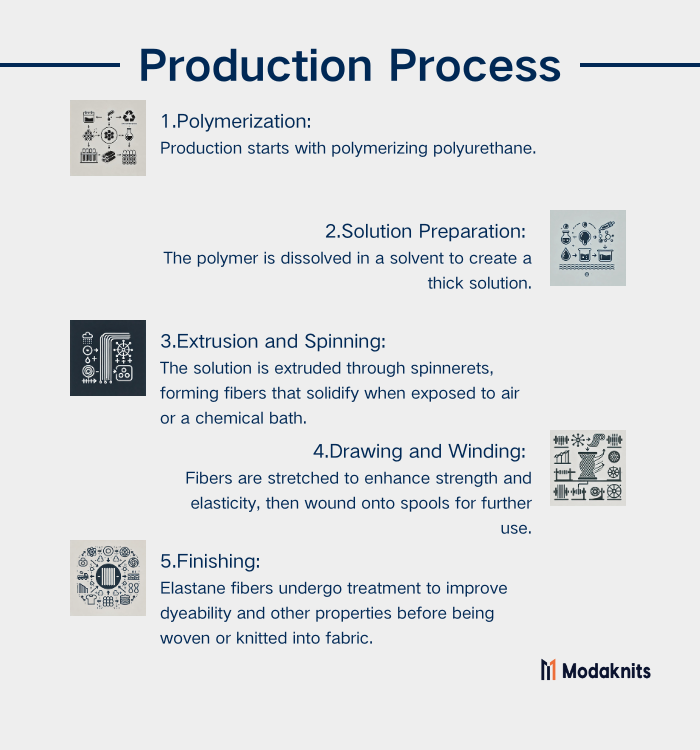
Production Process
- Polymerization: The production begins with the polymerization of polyurethane, where polyols and diisocyanates are combined to create long polymer chains that form the base material for elastane fibers.
- Solution Preparation: The polymer is dissolved in a solvent, typically dimethylacetamide (DMAc), to create a thick, viscous solution. This step is essential for transforming the solid polymer into a spinnable liquid.
- Extrusion and Spinning: The viscous solution is extruded through spinnerets, forming thin fibers that solidify when exposed to air or a chemical bath. This process gives the fibers their initial strength and elasticity.
- Drawing and Winding: The fibers are stretched to several times their original length to enhance their strength and elasticity. They are then wound onto spools, ready for further processing.
- Finishing: The elastane fibers undergo finishing treatments to improve their dyeability and other properties, such as resistance to chlorine and UV light. These treatments ensure the fabric meets specific performance requirements before being woven or knitted into final products.
Regions Known for Elastane Production
- United States: The U.S. is a significant producer of elastane, with advanced production facilities focusing on innovation and sustainability.
- China: Leading in large-scale elastane production, China utilizes advanced technology and efficient manufacturing processes, making it a key player in the elastane market.
- South Korea: Known for high-quality elastane production, South Korea emphasizes technological advancements and strict quality control measures.
These regions contribute significantly to the global supply of elastane, each bringing unique technological advancements and sustainable practices to ensure the fabric’s high quality and versatility.
What are the Types of Elastane Fabric?
Elastane fabric, also known as spandex or Lycra (a trademarked name by DuPont), can be categorized based on its applications and blending with other fibers. Despite different production methods, the end result is chemically the same. However, confusion can arise due to the various terms used to describe this fabric:
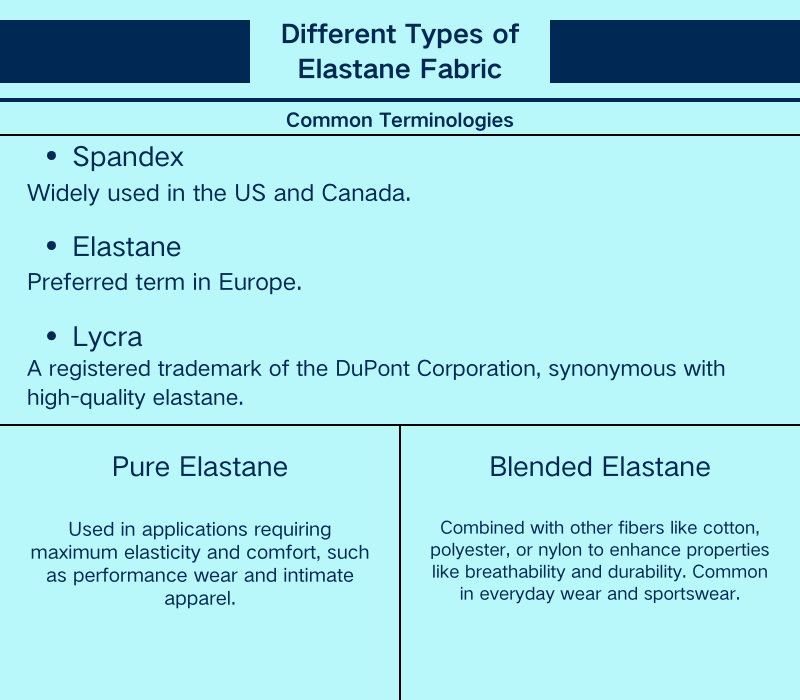
Common Terminologies
- Spandex: This term is not a trademark but an anagram of “expands.” It was never intended to be the primary term for elastane fabric, but it stuck in the consumer mind, especially in the United States and Canada.
- Elastane: This term is commonly used in Europe to refer to this type of fabric. Elastane is the most chemically correct name for this fabric.
- Lycra: A registered trademark of the DuPont Corporation. Only spandex made by DuPont can be called Lycra, but it is chemically identical to fabrics referred to as spandex or elastane.
Types and Their Applications
- Pure Elastane: Pure elastane is used in applications that require maximum elasticity and comfort. This type of elastane is often used in products like compression garments, medical bandages, and high-performance sportswear where stretch and recovery are crucial.
- Blended Elastane: Blended elastane combines elastane fibers with other materials like cotton, polyester, or nylon. These blends enhance specific properties such as breathability, moisture-wicking, and durability, making the fabric more versatile and suitable for a wide range of applications.
These types of elastane fabric demonstrate its versatility and essential role in enhancing the functionality and comfort of various textile products.
How is Elastane Fabric Used?
Elastane fabric’s remarkable stretchability, strength, and lightweight nature make it ideal for various applications, from activewear to industrial uses.
Apparel Applications
Activewear: Elastane is crucial in activewear, offering the flexibility and comfort needed for high-intensity activities.
- Leggings: Provide excellent stretch and recovery, perfect for yoga, running, and fitness routines.
- Sports Bras: Ensure a secure fit and robust support, essential for vigorous workouts.
- Compression Garments: Improve blood circulation and muscle support, commonly used by athletes and in physical therapy.
Swimwear: Elastane’s quick-drying and chlorine-resistant properties make it suitable for swimwear.
- Swimsuits: Offer a snug fit and freedom of movement, vital for swimming and water sports.
- Rash Guards: Protect the skin from UV rays and abrasions while maintaining flexibility in the water.
Everyday Wear: Elastane is frequently blended with other fibers to enhance everyday clothing items.
- Jeans: Add stretch for better fit and comfort.
- Underwear: Provide a snug fit and ease of movement.
- Fitted Shirts: Maintain shape and a close fit without restricting movement.
Medical Applications
- Compression Bandages and Stockings: Provide necessary stretch and support for medical applications.
- Support Garments: Used in therapeutic clothing for improved blood circulation and muscle support.
Industrial Applications
- Automotive Textiles: Used in seat covers and interior fabrics to provide elasticity and durability, enhancing comfort and longevity in automotive interiors.
- Medical Textiles: Utilized in compression stockings and support bandages, elastane offers the necessary stretch and support for medical applications.
- Cleaning Products: Incorporated into cleaning cloths and wipes, elastane provides durability and elasticity, making these products more effective and long-lasting.
Elastane fabric’s applications across these sectors underscore its versatility and performance, making it a preferred choice for both manufacturers and consumers.
How Much Does Elastane Fabric Cost?
The cost of elastane fabric varies based on factors like fiber quality, weave type, and the region of production. Here are the typical price ranges for different qualities of elastane fabric, with prices based on the US market:
Cost Implications
- Basic Elastane Fabric: Generally priced between $5 to $10 per yard. This category is suitable for casual clothing and basic activewear that require moderate elasticity.
- High-Quality Elastane Fabric: Premium elastane, featuring finer fibers and a smoother texture, typically ranges from $15 to $30 per yard. This fabric is used in luxury garments, high-performance activewear, and designer products.
- Specialty Elastane Fabric: Advanced or blended elastane fabrics can exceed $30 per yard. These are often utilized in high-fashion clothing, upscale home decor, and specialized applications requiring superior elasticity and durability.
Elastane Fabric Costs in China
In China, the average price for elastane fabric is generally more affordable due to lower production and labor costs. High-quality elastane fabric in China can range from $3 to $10 per yard, providing a significant cost advantage for brands looking to source this versatile material.
At Modaknits, we leverage this cost advantage to offer competitive pricing without compromising on quality. Our extensive network of suppliers and commitment to sustainable practices ensure that our clients receive the best value for their investment.
Understanding these price ranges and quality indicators will help you select the best elastane fabric for your specific needs, whether for everyday use or high-end applications.
How Does Elastane Fabric Impact the Environment?
Elastane fabric, prized for its exceptional stretch and durability, poses several environmental challenges. Understanding these impacts is essential for making informed choices about its production and use.
Environmental Considerations
Production Impact:
- Impact: The production of elastane involves energy-intensive synthetic processes that rely on petroleum-based raw materials. This process generates significant chemical waste, which can harm the environment if not properly managed.
- Result: The dependence on non-renewable resources and potential for pollution make elastane production less eco-friendly compared to natural fibers.
Biodegradability:
- Impact: Elastane is not biodegradable. Unlike natural fibers such as cotton or wool, elastane does not break down easily, contributing to long-term waste in landfills.
- Result: The non-biodegradable nature of elastane means it can persist in the environment for many years, posing challenges for waste management and environmental sustainability.
Recycling Initiatives:
- Impact: Efforts to recycle elastane and improve sustainable production methods are ongoing. Innovations in textile recycling aim to reduce the environmental footprint of elastane by recovering and reusing fibers from discarded garments.
- Result: While still in the early stages, these recycling initiatives show promise in making elastane production more sustainable. Enhanced recycling processes could help mitigate some of the environmental impacts associated with elastane.
Innovations in Sustainable Production
Advances in Eco-Friendly Production:
- Description: Research and development focus on reducing the environmental impact of elastane production through the use of eco-friendly solvents and energy-efficient processes.
- Benefit: These advances aim to lower the carbon footprint and reduce chemical waste, making elastane production more sustainable.
Use of Sustainable Blends:
- Description: Blending elastane with other sustainable fibers such as organic cotton or recycled polyester can reduce the overall environmental impact of the fabric.
- Benefit: These sustainable blends combine the desirable properties of elastane with the eco-friendly attributes of other fibers, resulting in more environmentally responsible textiles.
Modaknits’ Commitment to Sustainability
At Modaknits, we are committed to implementing and promoting sustainable practices in our elastane apparel manufacturing. Our collaboration with ethical suppliers and the use of eco-friendly production methods significantly reduce our environmental impact. We support humane labor practices, sustainable sourcing, and the use of certified sustainable materials.
Our Practices Include:
- Premium Materials: Sourcing high-quality elastane fibers to create durable and comfortable garments.
- Eco-Friendly Manufacturing: Utilizing environmentally responsible methods to minimize waste and resource consumption.
- Commitment to Quality and Sustainability: Ensuring that our products meet the highest standards for both quality and environmental responsibility.
By prioritizing these values, we aim to produce high-quality elastane garments that meet the demands of our customers and contribute positively to the environment.
We invite brands to collaborate with Modaknits to create innovative, eco-friendly elastane apparel.
Certifications and Quality Indicators for Elastane Fabric
When purchasing elastane fabric, understanding key quality indicators and verifying authenticity through recognized certifications is crucial.
Quality Indicators
Stretch and Recovery:
- Description: High-quality elastane should maintain its shape and elasticity after stretching.
- Importance: Ensures the fabric remains comfortable and form-fitting over time, making it ideal for activewear and performance garments.
Durability:
- Description: The fabric should withstand wear and tear, maintaining its elasticity and integrity through repeated use.
- Importance: Essential for garments that experience frequent movement and stretching, ensuring long-lasting performance.

Certifications and Authenticity
OEKO-TEX® Standard 100:
- Description: Certifies that the fabric is free from harmful substances and safe for human use.
- Importance: Provides confidence that the elastane fabric meets high safety and environmental standards, making it suitable for sensitive skin and prolonged wear.
Global Recycled Standard (GRS):
- Description: Ensures that recycled content in elastane meets specific environmental and social criteria.
- Importance: Supports sustainable practices by verifying the authenticity and quality of recycled elastane fibers.
Modaknits’ Commitment to Quality
At Modaknits, we excel in crafting high-quality elastane apparel using cutting-edge technology and sustainable practices.
Our dedication to excellence ensures that every garment is made from premium elastane fibers, providing unmatched comfort and durability. We prioritize eco-friendly methods to meet the growing demand for sustainable fashion.
We welcome brands to collaborate with Modaknits in producing top-tier elastane apparel. For more information or to request our product catalog, please contact us.
Let’s innovate and create something extraordinary together.