Skip to content
Zara1 is one of the biggest names in the global fast-fashion industry2, with thousands of new styles released every year. Many shoppers often wonder: does Zara make its clothes in India? The short answer is yes. India, with its robust textile industry3 and skilled workforce, plays an important role in Zara’s global supply chain.
Yes, Zara sources a wide range of garments from India, including premium woven products, embellished dresses4, and artisanal styles5. Apparel manufacturers in Delhi are at the center of this strategy, providing expertise in fashion-forward garments and value-added production.
I’ve worked with manufacturers in Delhi, and it’s clear why brands like Zara look to India for certain product categories. Let’s dive deep into Zara’s sourcing model and see how Indian factories fit into this global ecosystem.
Does Zara Source Clothing from India?
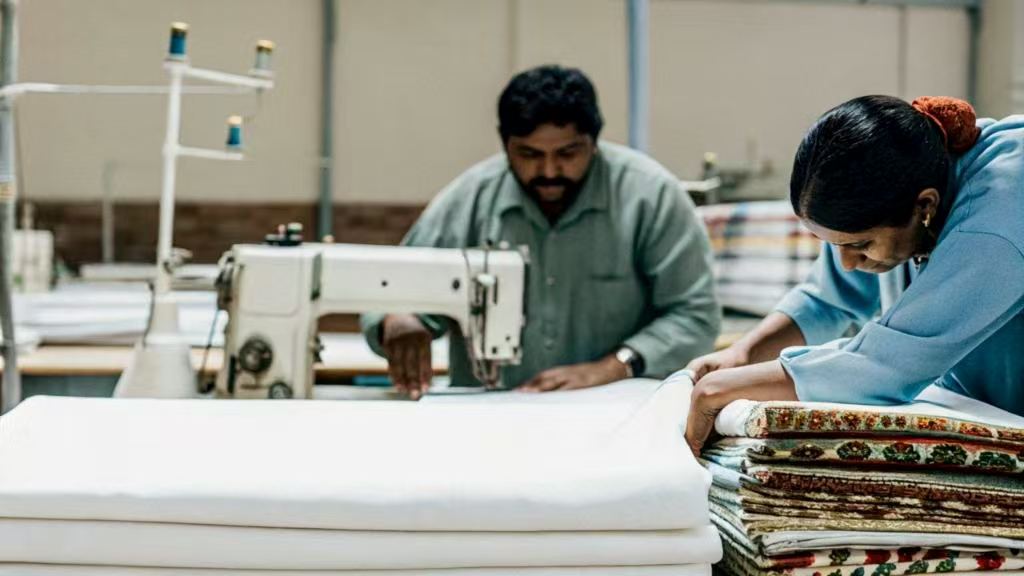
Fabric Cutting Process
India is one of Zara’s top sourcing markets outside Europe. While the brand’s core fast-moving basics are made near Spain, India supports Zara with products that require special attention to detail.
Zara sources fashion garments, embellished pieces, and ethnic-inspired designs from Indian factories. These products complement Zara’s European production model and allow the brand to offer unique, trend-driven collections worldwide.
How Does Zara’s Global Supply Chain Include Indian Manufacturers?
Zara follows a hybrid sourcing strategy:
- Proximity sourcing (Spain, Portugal, Morocco) for quick-turn products.
- Long-distance sourcing (India, Bangladesh, Vietnam) for complex, cost-efficient, and value-added garments.
India accounts for 5–7% of Zara’s total sourcing, based on industry estimates. While Zara’s speed-to-market focus keeps most production near its headquarters, India provides:
- High-quality wovens and embellished garments.
- Seasonal collections that require embroidery or artisanal techniques.
- Accessories and scarves in natural fibers.
Global Sourcing Split (Approx.):
| Region | Role in Zara Supply Chain |
|---|---|
| Spain/Morocco | Basics, fast fashion, short runs |
| India | Embellished garments, woven dresses |
| Bangladesh | High-volume basics, cost-sensitive |
| China/Vietnam | Outerwear, technical garments |
What Types of Garments Does Zara Typically Source from India?
India’s strength lies in:
- Women’s apparel – Dresses, skirts, blouses.
- Embellished garments – Hand embroidery, sequins, prints.
- Scarves and wraps – Using fine cotton and silk blends.
Why India?
- Access to artisanal skills.
- Competitive pricing for value-added apparel.
- Ability to produce small-to-mid runs for premium collections.
Zara relies on India for pieces that require craftsmanship and detailing, which Europe cannot produce at scale, and Asia (Bangladesh/Vietnam) cannot produce with the same quality at low quantities. Delhi factories, in particular, specialize in fashion garments that combine machine and handwork, giving Zara a competitive edge in premium lines.
What Role Do Apparel Manufacturers in Delhi Play in Zara’s Production?
Delhi and NCR (including Noida and Gurgaon) are home to some of India’s top exporters, many of which produce for Zara and similar brands like Mango and H&M.
Delhi factories excel in premium woven garments and provide flexibility for Zara’s fashion-forward lines, especially those requiring low MOQ and quick development.
How Do Delhi-Based Factories Support Zara and Other International Brands?
Factories in Delhi offer:
- Full-service solutions – Design, sampling, and bulk production.
- Expertise in embellishments – Sequins, embroidery, beadwork.
- Strong compliance – Meeting strict social and environmental standards.
Most Delhi exporters operate vertically integrated facilities with:
- In-house pattern development and CAD teams.
- Dedicated quality control departments.
- Sourcing offices for trims and accessories.
This integrated approach makes Delhi factories a preferred partner for Zara’s limited-edition collections and premium products.
What Are the Advantages of Manufacturing in Delhi for Global Retailers?
- Skilled workforce for detailed, high-fashion products.
- Easy access to trims, fabrics, and accessories from local markets.
- Proximity to Indira Gandhi International Airport for fast exports.
Delhi vs Other Indian Hubs
| Factor | Delhi NCR | Tirupur (South India) |
|---|---|---|
| Product Focus | Woven, fashionwear | Knitwear, basics |
| Value Addition | High | Medium |
| Lead Time | Moderate | Faster for basics |
Delhi’s ecosystem suits Zara’s strategy for quality-oriented, artisanal fashion pieces. In contrast, Tirupur dominates in high-volume basics for brands like Decathlon. For Zara, Delhi’s capability to combine creativity with compliance makes it a better fit for select product lines.
How Does Zara Ensure Quality and Compliance with Indian Suppliers?
Zara enforces strict quality and compliance measures for all suppliers globally.
Indian factories producing for Zara must pass multiple audits and maintain certifications related to labor, safety, and sustainability.
What Standards and Audits Are Required by Zara for Apparel Manufacturers in India?
- Inditex Code of Conduct – Ethical labor practices.
- Third-party audits – BSCI, Sedex, WRAP.
- Environmental certifications – OEKO-TEX, GOTS for organic fabrics.
Factories undergo social audits (covering wages, working hours), technical audits (product quality), and environmental assessments (wastewater treatment, chemical management). Failure to comply means immediate blacklisting.
How Does Zara Oversee Ethical and Sustainable Production in Its Supply Chain?
Zara has pledged:
- 100% sustainable cotton, linen, and polyester by 2025.
- Carbon-neutral supply chain by 2040.
- Complete elimination of hazardous chemicals.
Delhi factories now invest in:
- Water recycling plants.
- Renewable energy systems (solar panels).
- Digital monitoring tools for traceability.
Some leading suppliers in Delhi publish annual sustainability reports aligned with Inditex’s environmental goals, ensuring continuous improvement and transparency.

How Can Indian Apparel Manufacturers Become Suppliers for Global Brands Like Zara?
Working with Zara is highly competitive and requires significant investment in compliance, technology, and infrastructure.
Suppliers must demonstrate capacity, financial stability, and advanced capabilities to meet fast-fashion timelines.
What Criteria Must Factories Meet to Work with Major International Retailers?
- Minimum five years of export experience.
- Strong financial health and scalability.
- Certifications: BSCI, GOTS, OEKO-TEX.
Key Capabilities Zara Looks For:
- Fast sampling and tech packs within 7 days.
- Flexible MOQs for limited collections.
- Advanced fabric sourcing networks.
Factories that integrate digital systems (ERP, CAD) and adopt lean manufacturing are more likely to win Zara contracts, as these tools improve speed and accuracy.
How Can Delhi Apparel Manufacturers Attract and Retain Global Clients?
- Build a reputation for quality and reliability.
- Offer innovation in fabrics and finishes.
- Maintain transparent communication.
Checklist for Success:
- Dedicated compliance and merchandising teams.
- Competitive pricing without sacrificing quality.
- Investment in sustainability and automation.
What Are the Latest Trends in Apparel Manufacturing in Delhi?
Delhi’s apparel sector is evolving with new technology and sustainability initiatives.
How Is Technology Transforming the Apparel Industry in Delhi?
- 3D Virtual Sampling – Reduces approval timelines.
- AI-driven demand forecasting – Minimizes overproduction.
- Automated cutting machines – Improves precision and reduces waste.
Factories adopting digital platforms for buyer interaction see higher retention rates. These platforms allow real-time production tracking and instant approvals.
What Opportunities Exist for Export-Oriented Factories in India’s Capital?
- Rising global demand for eco-friendly apparel.
- Growth in athleisure and luxury fashion segments.
- Partnerships with e-commerce private labels.
With Zara and similar brands focusing on speed and sustainability, Delhi factories with modern infrastructure and green practices can attract top-tier clients.
India vs Bangladesh vs China in Zara’s Supply Chain
| Factor | India | Bangladesh | China |
|---|---|---|---|
| Strengths | Value-added garments | High-volume basics | Technical outerwear |
| Lead Time | Moderate | Longer | Fast |
| Sustainability | Improving | Moderate | Strong compliance |
Conclusion
Yes, Zara does source garments from India, with Delhi playing a critical role in producing high-fashion, embellished, and value-added apparel. For factories in Delhi, the opportunity to work with Zara requires investment in compliance, technology, and sustainability. Those who adapt will secure a strong position in the global fashion supply chain.
-
Explore Zara’s sourcing strategy to understand how they integrate global supply chains. ↩
-
Learn about the fast-fashion industry and its impact on global retail and consumer behavior. ↩
-
Discover the role of the textile industry in shaping fashion trends and production. ↩
-
Explore the trends and popularity of embellished dresses in contemporary fashion. ↩
-
Learn about artisanal styles and their unique appeal in the fashion market. ↩