Skip to content
Most people assume a size “M” is universal. But buyers and brands quickly learn it’s far from the truth. This inconsistency leads to returns, poor customer reviews, and lost sales.
T-shirt sizing varies because of inconsistent standards, fabric behavior1, brand identity, and production issues. To avoid misfit disasters, brands must take control with testing, communication, and the right manufacturer.
I’ve seen too many brands suffer because their garments don’t fit like customers expect. Let’s dig into where sizing breaks down—and what you can do to get it right.
Understanding the Root Causes of Size Inconsistency?
There’s no single reason why sizes differ from one brand—or one region—to another. It’s a layered issue with deep roots.
The biggest sizing issues come from lack of global sizing standards2, unpredictable fabric behavior, brand-specific fit choices, and inconsistent manufacturing controls.
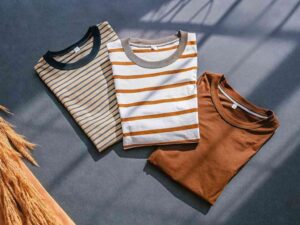 Striped Tees
Lack of Global Standardization (EU, US, Asia)
Different markets follow different sizing systems. A “Large” in China often fits like a “Medium” in the US. These mismatches confuse international buyers and frustrate customers.
| Region | Chest (cm) for M | Typical Height (cm) |
|---|---|---|
| USA | 96–101 | 170–180 |
| EU | 94–99 | 172–182 |
| Asia | 90–95 | 165–175 |
Brands exporting globally must decide: adapt per region or stick to one sizing philosophy.
Fabric Behavior – Shrinkage, Stretch, Wash Impact
Some fabrics shrink 3-7% after washing. Others stretch with wear. Without proper preshrink treatments and wash tests, your size chart becomes a guessing game.
Even cotton from different mills reacts differently. A supplier might cut an accurate size, but post-production effects can make it off by one full size.
Brand Positioning – Slim Fit vs Oversized vs Classic Cut
Style choices matter. A streetwear brand’s “M” may feel two sizes larger than a premium label’s slim-cut “M”. And they’re both correct—in their own context.
If your brand shifts between fits without a clear naming system (e.g. boxy, relaxed, athletic), customers get confused.
Manufacturing Tolerances and QC Gaps
Even with perfect specs, human error and machinery variation can lead to size differences. If factories lack tight QC or don’t follow tolerance guidelines (typically ±1–2cm), your fit won’t stay consistent.
Sizing in the Supply Chain – Where It Can Go Wrong?
Fit issues don’t always start at the design table. They often happen mid-supply chain, where technical translation breaks down.
Sizing errors often occur during pattern grading, sample stages, or misinterpretation of spec sheets by factories.
Pattern Grading Misalignments
Pattern grading scales one size into many. But if the grade rules aren’t brand-specific—or poorly executed—the fit falls apart outside the base size.
For example: if a Small is perfect, but XXL feels off, the grading likely didn’t respect real body proportions.
Sampling Rounds That Don’t Reflect Final Production
Brands sometimes approve samples made by senior technicians or special sample lines. But bulk is made differently—with different workers or machines.
That’s how you end up with “perfect” sample fits and disappointing bulk deliveries.
Miscommunication in Tech Packs or Spec Sheets
Tech packs can be misunderstood. If there’s no visual fit reference, local factory teams might guess your intent. That’s risky.
Clear annotations, reference photos, and fit comments are essential—especially when working across language barriers.
How Different Brands Approach T-Shirt Sizing?
Each brand sets its own sizing strategy based on its audience, positioning, and operational model.
Fast fashion pushes speed over precision. Premium brands invest in fit tests. Streetwear brands often redefine fit rules entirely.

Fast Fashion vs Premium vs Streetwear
| Brand Type | Sizing Approach | Risk Factor |
|---|---|---|
| Fast Fashion | Prioritize speed, looser QC | Inconsistent sizing |
| Premium | Focus on consistent fit & feel | Higher sampling cost |
| Streetwear | Intentional oversized/sizing play | Less standardization |
Streetwear isn’t "off-size" by mistake. It’s on-brand. But you need to own that sizing logic and communicate it well.
Size Inclusivity vs Streamlined Fit Charts
More brands now expand to 2XL, 3XL, or even 6XL. But that means more grading, more sampling, and more margin for error.
Some brands simplify and offer XS–XL only to streamline production and avoid fit issues. It’s a strategic choice.
Case Study: Why a Zara Medium ≠ Everlane Medium
Zara’s Medium is cut for fashion-forward, often younger audiences with a slimmer silhouette. Everlane’s Medium is more classic and body-neutral.
This isn’t right or wrong—it’s brand positioning. But for customers, this mismatch leads to constant return headaches.
Solutions for Fashion Brands?
So what can you do? It starts with knowing your customer, testing across all sizes, and working tightly with your manufacturer.
To improve size accuracy, brands should define fit goals, test across the full range, and maintain strong communication with factories.
Define Your Target Customer’s Body Type & Fit Preferences
Before making size charts, define who you’re dressing. Athletic build? Petite? Plus size? This shapes your pattern and grade rules.
Create fit personas with clear body measurement ranges. This makes development decisions easier—and clearer for your factory.
Run Fit Tests Across Sizes (Not Just Base Size)
Most brands fit-test size M. But problems often appear in XS or XL. If you don’t fit-test every size bracket, you’re flying blind.
Include at least one sample each from small, mid, and large size tiers in every fitting round.
Communicate Clearly with Manufacturers on Fit Goals
Use annotated photos, videos, and comments—not just numbers. Explain how you want a tee to feel: snug on chest, loose at hem, etc.
Better yet, send a perfect-fitting garment as a reference.
How We Help Clients Maintain Consistent Sizing?
At Modaknits, consistent sizing isn’t optional—it’s a system. From digital tools to fit libraries and layered approvals, we’ve built processes that work.
We help brands with digital grading tools, strict approval processes, and real-wear body testing to ensure sizing stays stable from sample to bulk.

Grading Libraries & Digital Fit Tools
We maintain digital grading libraries, customized per client. This ensures consistency across styles and seasons.
For clients who work with multiple styles or silhouettes, we match grading logic to each fit strategy.
Strict Sampling & Fit Approval Workflow
No sample moves forward unless it passes our fit criteria—not just in appearance but in real-wear functionality.
Our workflow includes:
- Cross-size fittings
- Client sign-off on multiple fit samples
- Pattern adjustments logged per revision
Optional Body Measurement Charts & Wear Tests
We can test fits on live models matching your customer profile. You also get optional measurement charts showing body-to-garment ratios.
This helps brands communicate sizing confidently to end customers.
Final Thoughts?
Consistency isn’t just about reducing returns—it’s about building trust.
A well-fitting T-shirt brings customers back. An inconsistent one sends them away. Fit is loyalty, and the right manufacturer makes that possible.
Why Consistency Builds Loyalty
When customers know what to expect, they return. Fit reliability reduces returns, increases satisfaction, and boosts reviews.
A Good Manufacturer is Your Best Fit Partner
Fit problems often trace back to production. Choose a partner that understands not just sewing, but sizing philosophy. That’s how brands grow—and last.