Skip to content
Ironing a Polo shirt1 can feel risky—press too hard and you might shine the fabric, use the wrong heat and you’ll warp the collar. But skipping the iron makes it look sloppy.
To safely iron a Polo shirt, use medium heat, steam or dampness, and always follow fabric-specific care instructions to avoid shine, stretching, or damage.
I once scorched a favorite Polo by cranking up the heat without checking the tag. Since then, I’ve learned the right steps to keep my shirts crisp, clean, and long-lasting—let’s walk through them together.
What’s the Best Way to Prep a Polo Shirt Before Ironing?
Getting it right before you even pick up the iron can save your shirt.
For best results, lightly dampen the Polo and check the care label2 to know the exact fabric blend and recommended heat settings.
Should you iron a polo shirt while it’s still slightly damp?
Yes, that’s the secret to a smooth finish.
Ironing a Polo shirt while it’s slightly damp helps release wrinkles faster and reduces the risk of fabric damage from excessive dry heat.
You can also mist it lightly with a spray bottle if it’s already dry.
Do you need to check the care label before applying heat?
Absolutely, every time.
The care label tells you the correct temperature and ironing method based on the shirt’s material—cotton, polyester, or blends all react differently to heat.
Look for these symbols:
- 🧼 Iron symbol with dots = heat level
- 🚫 Crossed iron = do not iron
- 🌫️ Steam icon = safe to use steam
How to Properly Iron a Polo Shirt Step-by-Step
Here’s the technique that works for me every single time.
Use a clean ironing board, set your iron to the correct fabric setting, and move in sections—starting with the collar, then sleeves, then body. Press, don’t drag.
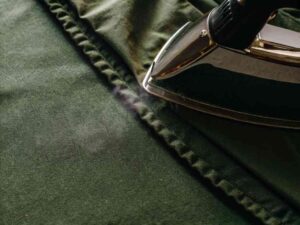 Ironing Green Fabric
What heat setting is safe for cotton, polyester, or pique fabric?
Not all Polos are created equal.
Use medium to high heat (with steam) for 100% cotton or pique. For polyester or blends, switch to low or medium heat without steam unless the tag allows it.
| Fabric Type | Heat Level | Steam Safe? | Notes |
|---|---|---|---|
| Cotton Piqué | Medium-High | ✅ Yes | Use pressing cloth if needed |
| Polyester | Low | ⚠️ Sometimes | Avoid shine, test a hidden area first |
| Cotton Blend | Medium | ✅ Yes | Best of both worlds |
How do you iron the collar, sleeves, and placket without stretching them?
Treat each area with care—this is where structure matters.
Start with the collar flat and inside-out, press from edge to center. For sleeves, fold along the seam, press gently. Use the tip of the iron for the placket and avoid pulling.
Pro Tip:
- Press gently and avoid pushing the iron.
- Let the fabric cool in place before moving it to lock in the shape.
How to Prevent Shine or Damage on Polo Shirts While Ironing?
Heat and pressure can ruin the texture or finish of some Polo shirts.
To protect the fabric, iron inside-out or place a clean cotton cloth between the iron and the shirt—especially for darker colors or delicate materials.
Should you use a pressing cloth or iron inside-out?
Yes, especially for dark or synthetic fabrics.
A pressing cloth prevents heat from directly touching the fabric, reducing shine and heat marks. Ironing inside-out works similarly and is a safer bet for synthetic Polos.
You can use a thin cotton towel, handkerchief, or even a clean pillowcase as a pressing cloth.

Can steam ironing3 help reduce wrinkles without flattening the fabric?
Yes, and it’s safer than dry ironing.
Steam helps loosen wrinkles while maintaining the natural texture and volume of pique or knit Polos. Just make sure you don’t over-soak the fabric.
Hold the iron a few centimeters above the fabric and use steam bursts for tough creases.
Is It Better to Steam or Iron a Polo Shirt?
Both methods work—but it depends on the situation and fabric type.
Steaming is gentler and great for quick touch-ups, while ironing gives a crisp, structured finish that’s ideal for polished outfits or professional settings.
When should you use a handheld steamer instead of an iron?
When time or fabric sensitivity is a concern.
Use a steamer if you’re traveling, short on time, or working with synthetic blends or delicate Polos. It’s fast, safe, and helps freshen the garment.
Just hang the shirt and steam downward slowly. No need for a board.
Do delicate women’s polo shirts respond better to steaming?
Yes, especially ones with stretch or knit blends.
Women’s Polo shirts with finer knits or trims tend to respond better to gentle steaming, which avoids flattening delicate collars or hems.
In our factory, we often finish women’s Polos with steam to protect fabric softness.

Extra Tips to Keep Polo Shirts Looking Fresh and Stylish
How you treat them after ironing matters just as much.
Hang Polos on wide hangers immediately after ironing to maintain shape. When packing, use gentle folds and keep shirts at the top to avoid deep creases.
Should you hang or fold polo shirts after ironing?
Hanging is better, especially short-term.
Hang freshly ironed Polo shirts to preserve the collar shape and avoid wrinkles. If folding, do it loosely and avoid sharp creases.
Avoid thin wire hangers—they stretch out the shoulders.
How to avoid creases during travel or packing?
It’s all about smart placement.
Roll Polo shirts instead of folding them flat for travel. Or, place tissue paper between folds to prevent deep creases.
Packing Tips:
- Pack Polos last, on top
- Use garment bags for formal trips
- Steam lightly once you arrive
Conclusion
Ironing a Polo shirt doesn’t have to feel like a gamble. Prep the fabric, use the right settings, and go step-by-step. With a little care, you’ll keep your Polos crisp, stylish, and long-lasting—just like new.
-
Explore expert tips on ironing Polo shirts to maintain their quality and avoid damage, ensuring a polished look every time. ↩
-
Understanding the care label is crucial for preserving fabric integrity; learn why it matters for your garments. ↩
-
Discover the advantages of steam ironing for delicate fabrics and how it can enhance your ironing routine. ↩