Skip to content
Ever wondered why some T-shirts feel premium and luxurious while others feel rough or wear out quickly? Many brands overlook fabric choice, missing a chance to impress customers. How can choosing combed cotton1, OE cotton2, or long-staple cotton3 significantly impact the premium feel of your T-shirts?
Combed cotton undergoes special processing, resulting in softer, smoother fabrics. OE cotton (Open-End) is coarser, cheaper, and less durable. Long-staple cotton has longer fibers, making it extremely soft, durable, and luxurious, ideal for high-end apparel.
At Modaknits, choosing the right cotton type has always been key to our success. Let’s explore these fabrics clearly and practically.
What are combed cotton, OE cotton, and long-staple cotton? What are the core differences between the three?
Choosing the right cotton type significantly affects the comfort, durability, and overall appeal of your T-shirts. But what’s the exact difference among combed cotton, OE cotton, and long-staple cotton?
Combed cotton is carefully processed, removing impurities for softness. OE cotton is a faster-produced, lower-cost yarn with shorter fibers. Long-staple cotton uses longer fibers, providing exceptional softness, durability, and premium feel.
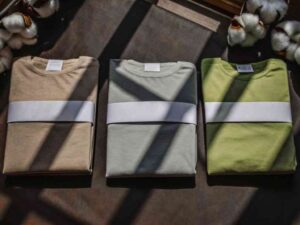
What is the difference in the craftsmanship of combed cotton and OE cotton? Does it have a big impact on the quality of T-shirts?
| Cotton Type | Spinning Method | Fiber Quality | Fabric Result |
|---|---|---|---|
| Combed Cotton | Ring spinning; impurities removed | Higher; longer fibers | Soft, smooth, durable |
| OE Cotton | Open-end spinning; quick and rough | Lower; shorter fibers | Rougher, less durable |
Combed cotton involves removing short fibers, resulting in superior softness and durability. OE cotton, produced quickly without fiber sorting, is rougher, less durable, and prone to pilling.
Why is long-staple cotton called "the noble of cotton"? What is so high-end about it?
Long-staple cotton earns its premium reputation due to exceptionally long fibers (usually above 34mm), providing luxurious softness, impressive strength, and smooth texture. It creates fabrics that maintain softness and quality even after prolonged use.
| Feature | Long-Staple Cotton |
|---|---|
| Fiber Length | Long (34mm+) |
| Softness | Exceptional |
| Durability | Excellent |
| Price | High (Premium) |
Its rarity and superior quality justify the "noble" reputation, making it preferred for luxury brands.
How do different cotton materials perform in T-shirts? A comprehensive comparison of comfort, durability, and drape
Different cotton types influence the comfort, durability, and overall drape of T-shirts, shaping customer satisfaction significantly. Let’s dive deeper into their practical differences.
Long-staple cotton provides unmatched softness and durability, ideal for luxury comfort. Combed cotton offers balanced softness and durability, perfect for premium everyday wear. OE cotton, cheaper and rougher, is suitable for budget-friendly products.
Which cotton material T-shirt is softer and skin-friendly, suitable for close-fitting wear?
| Cotton Type | Softness | Skin-friendliness | Ideal for Close-fit |
|---|---|---|---|
| Long-staple | Highest | Excellent | Highly recommended |
| Combed Cotton | High | Very good | Recommended |
| OE Cotton | Moderate | Average | Less recommended |
Long-staple cotton provides superior softness and comfort for close-fitting wear. Combed cotton is also soft and highly comfortable, suitable for daily close wear.
Are OE cotton T-shirts really easy to pilling and deform? How is the durability comparison?
OE cotton has shorter fibers and looser yarn structure, making it more prone to pilling, deformation, and loss of shape after washing.
| Cotton Type | Durability | Pilling | Shape Retention |
|---|---|---|---|
| OE Cotton | Low | High | Poor |
| Combed | High | Low | Good |
| Long-staple | Very High | Minimal | Excellent |
OE cotton is less durable compared to combed and long-staple cotton, making it suitable for lower-end, disposable products rather than premium apparel.
Which cotton do high-end T-shirt brands prefer? Material selection trends from Uniqlo to Supreme
Understanding cotton preferences among premium brands helps you strategically select fabrics aligning with your brand positioning.
Brands like Uniqlo and MUJI favor combed cotton for its softness, durability, and affordability. Supreme and other luxury brands often choose long-staple cotton, leveraging its premium quality and luxurious texture to justify higher pricing and premium positioning.

Why do brands such as Uniqlo and MUJI use a lot of combed cotton?
Combed cotton is popular among brands like Uniqlo and MUJI because it offers excellent softness, durability, and consistent quality at accessible prices.
| Brand | Preferred Cotton | Reason |
|---|---|---|
| Uniqlo | Combed Cotton | Balance of quality, comfort, price |
| MUJI | Combed Cotton | Simplicity, durability, affordability |
These brands achieve consistent quality, comfort, and affordability, matching their market positioning.
Do high-end designer brands prefer long-staple cotton? Why?
Yes, designer brands often select long-staple cotton because it provides unparalleled softness, durability, and luxurious feel, enabling brands to differentiate clearly in premium markets.
| Brand Segment | Preferred Cotton | Reason |
|---|---|---|
| High-end | Long-staple Cotton | Luxury, softness, brand premium |
| Streetwear Luxury (Supreme) | Long-staple Cotton | Quality perception, higher pricing |
Long-staple cotton helps premium brands reinforce their high-end identity, attracting discerning consumers willing to pay premium prices.
As a T-shirt brand, how to choose the right cotton material according to the positioning?
Matching cotton materials with your brand’s market positioning ensures product alignment with customer expectations, balancing cost and quality clearly.
OE cotton suits entry-level, budget-focused brands due to low costs. Combed cotton fits mid-range brands aiming for good quality and affordability. Long-staple cotton is ideal for premium or luxury brand positioning, emphasizing superior quality and comfort.
Is OE cotton suitable for entry-level products? How to balance cost and quality?
OE cotton is practical for entry-level products due to low costs but limited durability and softness.
| Product Level | Recommended Cotton | Balance Strategy |
|---|---|---|
| Entry-level | OE Cotton | Lower costs, clear communication of value |
| Mid-tier | Combed Cotton | Balance quality and moderate price |
To balance cost and quality, consider blending OE with combed cotton to moderately improve fabric quality without significantly increasing costs.
Is combed cotton or long-staple cotton more suitable for brand upgrade? What is the key to user perception?
Combed cotton provides an excellent mid-level upgrade, significantly improving softness and durability. Long-staple cotton signals luxury, strongly enhancing brand perception and premium identity.
| Brand Goal | Recommended Cotton | Key User Perception |
|---|---|---|
| Quality Upgrade | Combed Cotton | Noticeably better comfort, reasonable price |
| Premium Identity | Long-staple Cotton | Luxury feel, superior softness, high-end |
Clearly communicate fabric choice to educate customers and enhance brand trust.
How to convey the brand awareness of "good fabric = high quality" to consumers?
Clearly expressing premium fabric quality to customers builds trust, justifies pricing, and enhances brand value.
Accurate, descriptive copywriting and clearly labeled fabric details on tags and packaging directly communicate premium quality to consumers, boosting perceived value and justifying higher pricing.
How can the copywriting accurately express the high-end feeling of "combed cotton" and "long-staple cotton"?
- Combed cotton: “Ultra-soft, meticulously crafted combed cotton, bringing ultimate comfort and lasting quality.”
- Long-staple cotton: “Premium long-staple cotton—luxuriously soft, exceptionally durable, unmatched quality for elevated everyday wear.”
Yes. Clearly indicating fabric type (e.g., "100% Combed Cotton" or "Premium Long-staple Cotton") enhances transparency, highlights value, and boosts consumer trust, directly improving perceived product quality.
Conclusion
Selecting the right cotton—whether combed, OE, or long-staple—is essential to your brand’s success. Understanding each cotton type helps your brand match market positioning, clearly communicate value, and deliver the quality customers expect. Choose wisely and watch your brand’s reputation flourish.
-
Explore the advantages of combed cotton for T-shirts, including its softness and durability, to enhance your fabric knowledge. ↩
-
Learn about the limitations of OE cotton, including its rough texture and lower durability, to make informed fabric choices. ↩
-
Discover why long-staple cotton is favored for luxury T-shirts, offering unmatched softness and durability for high-end apparel. ↩