 Skip to content
Yoga pants have become a daily go-to for more than just yoga—they’re a staple for workouts, errands, and even casual office days. But not all yoga pants feel or perform the same, and the difference starts with one crucial element: the fabric.
Most yoga pants are made from blends of synthetic fibers like polyester or nylon combined with spandex (elastane) for stretch. These materials offer the right balance of flexibility, moisture-wicking, and durability. Some yoga pants also include natural fibers1 like cotton or bamboo for softness and breathability.
Let’s break down what fabrics are used in yoga pants, how each one performs, and how to choose the best material for your movement style and comfort needs.
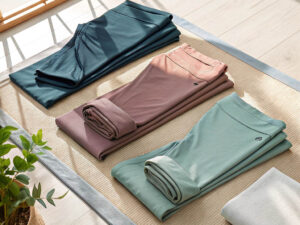
Why is fabric important in yoga pants?
It’s not just about how they look—it’s about how they move with you.
Yoga pants need to stretch, stay in place, wick sweat, and provide support without restricting movement. The fabric determines all of that.
What Makes a Good Yoga Pant Fabric:
✔ 4-way stretch – Follows your body in every pose
✔ Moisture-wicking – Keeps you dry and comfortable
✔ Durability – Resists pilling, tearing, and losing shape
✔ Breathability – Prevents overheating during flow
✔ Soft hand-feel – Feels like a second skin
Whether you’re doing hot yoga or lounging at home, the fabric makes or breaks your experience.
What synthetic fabrics are most common in yoga pants?
The majority of yoga pants today use performance-focused synthetics.
Polyester
✔ Strong and moisture-wicking
✔ Dries fast and resists wrinkles
✔ Holds color well
✘ Slightly less soft than nylon
✘ May retain odors if untreated
Best For: Hot yoga, intense flows, gym-to-street wear
Nylon
✔ Smooth, soft, and durable
✔ Excellent stretch and recovery
✔ Feels luxurious on the skin
✘ Slightly more expensive
✘ Can snag more easily
Best For: High-end leggings, seamless styles, second-skin comfort

Spandex (Elastane / Lycra)
✔ Adds stretch and bounce-back
✔ Blended with polyester or nylon (usually 10–25%)
✔ Helps maintain fit and contour
✘ Sensitive to heat and over-washing
Essential For: All yoga pants that require flexibility and shape retention
These fabrics are almost always blended together for the best performance-to-comfort ratio.
What natural fibers are used in yoga pants?
Natural fibers are softer and more breathable—but they’re often blended with synthetics for durability.
Cotton
✔ Soft and breathable
✔ Comfortable for lounging or gentle movement
✘ Absorbs moisture—doesn’t wick sweat
✘ May lose shape over time
Best For: Yin yoga, stretching, casual wear
Bamboo (Viscose from Bamboo)
✔ Sustainable and naturally antibacterial
✔ Silky and breathable
✔ Regulates temperature
✘ May pill without proper care
✘ Less supportive when unblended
Best For: Eco-conscious buyers, restorative yoga, layering
Modal
✔ Smooth, drapey, and ultra-soft
✔ Made from beech tree pulp
✔ Lightweight and breathable
✘ Less moisture-wicking
✘ Can stretch out over time if not blended
Best For: Lounge-to-yoga transitions, everyday comfort
What are the best fabric blends for yoga pants?
No fabric is perfect on its own—so brands create blends to balance performance and feel.

Common Blends:
| Fabric Blend | Feel | Best Use |
|---|---|---|
| Polyester + Spandex (85/15) | Sleek, structured | Hot/power yoga |
| Nylon + Spandex (80/20) | Soft, second-skin | Vinyasa, Pilates |
| Cotton + Spandex (90/10) | Natural, soft | Restorative, lounge |
| Bamboo + Spandex | Light, breathable | Gentle yoga, eco wear |
| Modal + Polyester + Spandex | Smooth and stretchy | Studio-to-street looks |
Check fabric tags before buying—anything with at least 10% spandex will offer solid stretch and recovery.
Which fabric is best for hot yoga?
In high-heat sessions, moisture-wicking is everything.
For hot yoga, opt for polyester-spandex blends. They pull sweat away from your skin, dry quickly, and help regulate body temperature.
Features to Prioritize:
✔ Lightweight and breathable
✔ Quick-drying performance knit
✔ Compression fit to stay in place
✔ Flat seams or seamless designs to avoid chafing
Avoid cotton-based fabrics—they’ll absorb sweat and stay wet.
What about yoga pants for cold weather?
When it’s cold, go thicker and warmer.
For winter or cooler studios, choose mid- to heavyweight nylon-spandex blends, or lined yoga pants made with fleece-backed fabric.
Look For:
✔ Brushed interior for warmth
✔ Tighter weave to block wind
✔ High-rise waistband for coverage
✔ Full length instead of 7/8 or cropped
Layer with a long top or jacket to seal in body heat.
How do sustainable fabrics compare?
More brands are embracing eco-friendly materials—and they’re getting better every year.
Top Sustainable Yoga Fabrics:
| Material | Benefit |
|---|---|
| Recycled Polyester (rPET) | Reduces plastic waste, performs like virgin poly |
| Organic Cotton | Grown without harmful chemicals |
| Bamboo Viscose | Renewable, soft, naturally odor-resistant |
| Tencel (Lyocell) | Made from sustainably harvested wood pulp |
Look for certifications like GOTS, OEKO-TEX, or Bluesign to confirm eco standards.
How to tell if the fabric is high quality?
Here are some things to check before buying:
Fabric Quality Checklist:
✔ Stretch test – Fabric should return to its original shape easily
✔ Opacity – Do the squat test—no see-through
✔ Hand feel – Soft, smooth, and supportive
✔ Weight – Not too thin, not too stiff
✔ Finish – Flat seams, no pilling, and good stitching
Higher fabric density and better yarn quality = longer-lasting leggings.
Conclusion
Yoga pants are typically made from a blend of synthetic fibers2 like polyester or nylon with spandex, designed for stretch, sweat-wicking, and durability. Natural fibers like cotton, bamboo, and modal offer softness and breathability but perform best when blended. Choose your fabric based on how you move, sweat, and want your yoga pants to feel—and they’ll support you through every pose, stretch, and stride.












