Skip to content
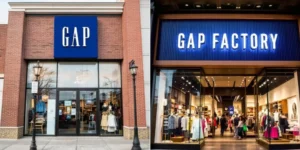
You might’ve seen two versions of the same brand when shopping—Gap and Gap Factory. The logos look similar, the clothes seem almost identical, and the styles overlap. So what’s the real difference between them?
The main difference is that Gap sells full-priced, premium collections often found in malls, while Gap Factory1 offers lower-priced, outlet-specific versions designed to be more affordable. The quality, design details, and materials often vary between the two.
Let’s explore the key distinctions in product, pricing, shopping experience, and who each version of Gap is best for.
Are Gap and Gap Factory the same company?
Yes, but they serve different purposes within the same brand family.
Gap and Gap Factory are both owned by Gap Inc., but they target different market segments. Gap is the flagship brand, while Gap Factory is the outlet/off-price division.
What Each Brand Represents:
| Brand | Purpose | Where Sold |
|---|---|---|
| Gap | Full-price retail | Mall stores, online (gap.com) |
| Gap Factory | Discount outlet line | Outlet malls, online (gapfactory.com) |
Although both sell casual basics like chinos, jeans, and tees, the way those products are sourced, priced, and designed is quite different.
Is there a quality difference between Gap and Gap Factory2?
This is where the biggest contrast lies.
Yes, Gap products are typically made with higher-quality materials, more detailed construction, and refined finishes, while Gap Factory items are created using cost-saving materials and simplified designs.
Quality Comparison:
| Feature | Gap | Gap Factory |
|---|---|---|
| Fabric | Higher-grade cotton, performance blends | Standard or lower-cost cotton |
| Stitching | Finer, more reinforced | Basic or minimal |
| Fit & Finish | More refined, tailored cuts | Slightly looser or boxier fits |
| Durability | Lasts longer with better fabric retention | May fade or stretch faster |
Gap Factory clothes are made to hit a lower price point, which naturally impacts longevity and feel.
Are the styles and designs the same?
Not exactly, even if they look similar at first glance.
Gap and Gap Factory may share the same aesthetic—clean, casual American classics—but the designs are made independently, and Factory collections are created specifically for outlet pricing.

Design Differences:
✔ Gap Factory makes outlet-exclusive styles
✔ Patterns and cuts may look similar but differ in detail
✔ Factory versions may have fewer buttons, lighter stitching, or simpler trims
✔ Some items mimic Gap’s popular lines but are not the same product
You might see a similar pair of chinos at both stores—but they’re likely different in both construction and material.
Why are prices lower at Gap Factory?
Lower prices don’t just happen—they’re planned.
Gap Factory items are designed from the start to be cheaper by using more affordable fabrics, simplified patterns, and mass production in high volume.
What Affects Pricing:
✔ Materials sourced at lower cost
✔ No premium detailing (e.g. reinforced seams, branded zippers)
✔ Made for outlet sale—not marked down from full retail
✔ Seasonless designs—fewer trendy, time-sensitive collections
Gap items might cost more up front, but they’re often built to last longer than Factory versions.
Does Gap Factory sell leftover Gap items?
It’s a common myth—but it’s not usually true.
Gap Factory doesn’t sell leftover or discounted inventory from Gap stores. Instead, it creates its own product lines specifically for the outlet market.
Factory Inventory Facts:
- ❌ Not the same products marked down
- ✅ Designed with cost in mind from day one
- ✅ Labeled differently—tags usually say “Factory” or “Made for Gap Factory”
- ✅ Uses different product codes/SKUs
If you’re hoping to score last season’s Gap items at a discount, Gap sale events (not Factory) are the better place to look.
How do shopping experiences differ between Gap and Gap Factory3?
From store layout to product variety, the experience can feel quite different.
Gap stores often offer a curated, styled presentation with seasonal launches, while Gap Factory emphasizes volume, discounts, and simplified shopping.

In-Store Experience:
| Experience | Gap | Gap Factory |
|---|---|---|
| Merchandising | Stylized displays, curated outfits | Bulk displays, bargain-focused |
| Store Location | Malls, shopping centers | Outlet malls, discount plazas |
| Price Tags | Full price, with occasional promos | Price already reduced year-round |
| Online Experience | More storytelling and brand focus | More deals, clearance-style presentation |
Both are easy to shop—but serve different goals: style curation vs. price accessibility.
Who should shop at Gap vs. Gap Factory?
It depends on what you value more—price or premium feel.
Gap is better for customers who want longer-lasting, better-fitted pieces, while Gap Factory suits budget-conscious shoppers or families needing volume at a lower price.
Which Is Right for You?
| Situation | Best Option |
|---|---|
| Looking for a wardrobe staple that lasts | Gap |
| Shopping on a budget or buying for kids | Gap Factory |
| Need something for work or casual Friday | Gap (better fit/detail) |
| Just need basics like tees and joggers | Gap Factory |
| Want on-trend seasonal style | Gap (more updated collections) |
Some shoppers even use both—Gap for essential pieces, Factory for filler basics.
Are returns and warranties the same?
Policies are similar, but handled separately.
Gap and Gap Factory have similar return policies, but you must return items to the location where you bought them (you can’t return Gap Factory items to a regular Gap store).
Return Policy Overview:
✔ Standard return window: 30–60 days (varies by promo)
✔ Online returns: must use the correct website
✔ In-store returns: must go to same division (Gap or Gap Factory)
✔ No cross-brand returns
Always check receipts and tags for specific instructions.
How can you tell the difference when shopping online?
Look closely at the product page and web address.
Gap sells through gap.com, while Gap Factory uses gapfactory.com. Product tags and descriptions also make the difference clear.
Online Shopping Tips:
✔ Check the website name
✔ Look for “Factory” in the product title
✔ Compare the fabric breakdown and pricing
✔ Read reviews—Factory items often note differences in quality or fit
If in doubt, always search for the product on both sites—you might find a version that better suits your needs.
Conclusion
The difference between Gap and Gap Factory comes down to quality, pricing, and purpose. Gap offers better construction, refined design, and longer-lasting materials. Gap Factory creates budget-friendly versions that look similar but are built to hit a lower price point. Both have their place—it just depends on whether you prioritize durability or savings.
-
Explore this link to understand the unique offerings of Gap Factory and how it caters to budget-conscious shoppers. ↩
-
Discover insights on the quality differences between Gap and Gap Factory to make informed shopping choices. ↩
-
Learn about the distinct shopping experiences at Gap and Gap Factory to find the best fit for your shopping style. ↩