Skip to content
Hoodies are a wardrobe staple for both men and women, but sometimes it’s hard to tell which gender they’re designed for. Are hoodies truly unisex, or are there subtle differences between male and female styles?
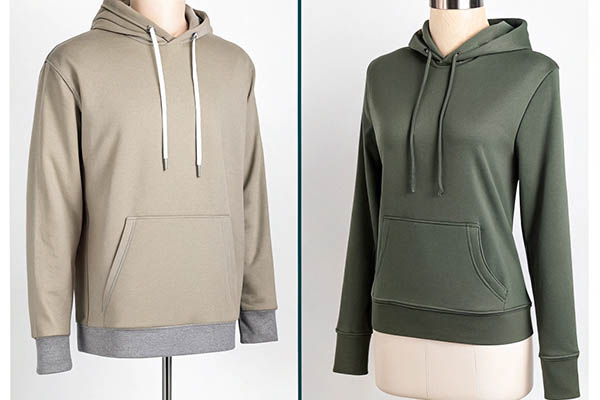
You can tell if a hoodie is male or female by looking at the fit, size, style, and design details. Men’s hoodies are usually boxier with longer sleeves, while women’s hoodies1 are more fitted and may have feminine design elements.
Let’s explore the key differences and how to identify them.
What Are the Key Differences Between Men’s and Women’s Hoodies?
Although many hoodies are marketed as unisex, there are distinct design differences between male and female versions.
Men’s hoodies typically have a straighter, boxier fit, while women’s hoodies2 are more tailored with a slightly tapered waist.
Key Differences to Look For:
-
Fit and Cut
- Men’s Hoodies: Straight cut with broader shoulders and longer sleeves.
- Women’s Hoodies: Slightly tapered at the waist and narrower at the shoulders.
-
Length and Sleeve Size
- Men’s Hoodies: Longer torso and sleeve length.
- Women’s Hoodies: Shorter torso and sleeves, sometimes with a cropped fit.
-
Design Elements
- Men’s Hoodies: Often feature bold logos, neutral colors, and minimalist designs.
- Women’s Hoodies: May include softer colors, slimmer silhouettes, or feminine details like crop tops or off-shoulder cuts.
-
Sizing Labels
- Men’s sizes are typically labeled as S, M, L, XL, while women’s sizes may include XS and tend to run smaller.
| Feature | Men’s Hoodie | Women’s Hoodie |
|---|---|---|
| Fit | Straight, boxy | Slightly tapered waist |
| Shoulders | Broader | Narrower |
| Length | Longer torso and sleeves | Shorter, sometimes cropped |
| Design Style | Bold, minimalist | Feminine, colorful options |
| Sizing Labels | S, M, L, XL | XS, S, M, L, XL |
How to Identify a Men’s Hoodie?
Men’s hoodies are designed with a boxy fit and longer proportions.
Look for a straight cut, broader shoulders, longer sleeves, and neutral, minimalist designs.
Signs of a Men’s Hoodie:
1. Boxy, Straight Cut
- No tapering at the waist.
- Designed for a relaxed, roomy fit.
2. Broader Shoulders and Longer Sleeves
- Shoulders are wider, and sleeves extend past the wrist.
- Torso length is generally longer.

3. Neutral Colors and Bold Logos
- Basic colors like black, gray, navy, or white.
- Bold logos, sports team designs, or minimal branding.
4. Simple Design and Details
- No decorative elements like rhinestones or floral prints.
- Typically features a kangaroo pocket and standard drawstring hood.
| Feature | Men’s Hoodie Design |
|---|---|
| Fit | Boxy, straight cut |
| Shoulders | Broad |
| Sleeve Length | Longer |
| Color Palette | Neutral, bold logos |
| Design Details | Minimalist, functional |
How to Identify a Women’s Hoodie?
Women’s hoodies emphasize a more tailored fit and often include feminine design elements.
Look for a slightly tapered waist, narrower shoulders, colorful designs, and style variations like cropped or fitted silhouettes.
Signs of a Women’s Hoodie:
1. Tapered Fit and Shorter Length
- Slightly fitted at the waist for a more feminine silhouette.
- Shorter torso length compared to men’s hoodies.
2. Narrower Shoulders and Slimmer Sleeves
- Designed to fit more snugly on the shoulders and arms.
3. Stylish Designs and Color Variations
- Often available in pastels, bright colors, or floral prints.
- May include rhinestones, glitter accents, or other decorative elements.
4. Fashion-Forward Cuts
- Options for cropped hoodies, off-shoulder styles, or fitted zip-up designs.
| Feature | Women’s Hoodie Design |
|---|---|
| Fit | Tapered waist, feminine cut |
| Shoulders | Narrower |
| Color Palette | Bright, pastel, or printed |
| Design Details | Rhinestones, crop tops |
| Style Options | Fitted, cropped, off-shoulder |
Can Hoodies Be Truly Unisex?
Yes! Many hoodies are designed as unisex, suitable for all genders.
Unisex hoodies typically have a relaxed, oversized fit with neutral colors and minimalist designs.

Characteristics of Unisex Hoodies:
-
Relaxed, Boxy Fit
- Straight cut with no tapering, making them comfortable for all body types.
-
Neutral Colors and Minimalistic Design
- Basic colors like gray, black, white, and navy.
- Minimal logos or graphics for a gender-neutral look.
-
Flexible Sizing
- Labeled as XS to XXL, without specifying men’s or women’s categories.
How to Style Unisex Hoodies:
- For a Casual Look: Pair with jeans or joggers.
- For Streetwear Vibes: Go for an oversized fit with cargo pants and sneakers.
- For Layering: Wear under a denim or bomber jacket.
| Feature | Unisex Hoodie Design |
|---|---|
| Fit | Relaxed, boxy |
| Colors | Neutral, minimalist |
| Sizing | XS to XXL |
| Style | Basic, versatile |
| Best For | Casual, streetwear, layering |
Should You Care About Gender Labels on Hoodies?
Not necessarily! Fashion is becoming more gender-fluid, and hoodies are among the most versatile pieces of clothing.
Focus on fit, style, and comfort rather than gender labels. If it looks good and feels good, wear it!
Tips for Choosing the Right Hoodie:
- Ignore Gender Labels – Choose based on your style and comfort preferences.
- Focus on Fit and Size – Check size charts and try different fits to find your favorite style.
- Experiment with Styles – Oversized for streetwear, cropped for a trendy look, or slim-fit for layering.
- Mix and Match – Pair with jeans, skirts, joggers, or shorts for versatile styling.
| Shopping Tip | Why It Matters |
|---|---|
| Ignore Labels | Breaks gender norms |
| Focus on Fit | Ensures comfort and confidence |
| Try Different Styles | Discover personal style |
| Mix and Match | Versatile outfit options |
Conclusion
You can tell if a hoodie is male or female by looking at fit, design, and style details. Men’s hoodies are boxier with longer sleeves, while women’s versions are more tailored with tapered waists. However, many hoodies are designed as unisex, featuring neutral colors and relaxed fits suitable for everyone. Ultimately, the best way to choose a hoodie is to focus on your style and comfort preferences, ignoring traditional gender labels.