Skip to content
T-shirts are one of the most widely worn and produced garments in the world. From basic white tees to high-end designer versions, they are manufactured in massive quantities across various countries. But where exactly are most T-shirts made, and which countries dominate global production?
Most T-shirts are manufactured in countries with well-established textile industries, such as China1, Bangladesh2, India3, and Vietnam4. These nations offer low production costs, skilled labor, and advanced manufacturing facilities, making them key players in global T-shirt production.
In this article, we’ll explore where T-shirts are commonly made, which country produces the most, and what factors influence manufacturing locations.
Where Are T-Shirts Commonly Made?
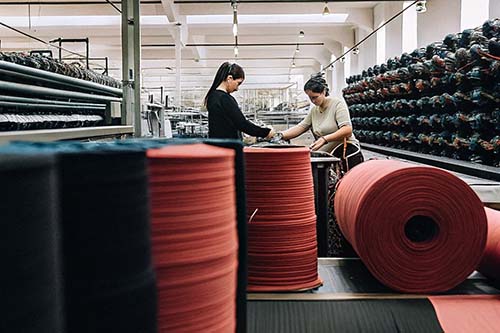
T-shirt manufacturing is a complex process that requires fabric production, cutting, sewing, printing, and finishing. While many countries contribute to the industry, a few stand out as major hubs for T-shirt manufacturing.
1. China: The Global Leader
China has been the dominant force in textile and apparel manufacturing for decades.
Why China Leads in T-Shirt Production:
- Largest Textile Industry: China has a well-developed supply chain, from fabric production to finished garments.
- Low Production Costs: While wages have increased, costs remain competitive.
- Advanced Technology: Many factories use automated cutting, sewing, and printing machines for efficiency.
- Export Powerhouse: China supplies T-shirts to brands and retailers worldwide.
Major Manufacturing Hubs: Guangdong, Zhejiang, Jiangsu, and Fujian provinces.
2. Bangladesh: The Fastest-Growing Producer
Bangladesh is one of the top exporters of T-shirts, particularly for budget-conscious brands.
Why Bangladesh Excels:
- Low Labor Costs: Wages in Bangladesh are among the lowest in the garment industry.
- Large Workforce: Millions of skilled garment workers contribute to mass production.
- Major Exporter: Bangladesh exports billions of dollars’ worth of T-shirts annually, especially to the U.S. and Europe.
Major Manufacturing Hubs: Dhaka, Chittagong, Gazipur.
3. India: A Major Player in Cotton T-Shirts
India has a long history in textiles and is a major supplier of cotton-based T-shirts.
Why India is a Key Manufacturer:
- Abundant Cotton Supply: India is one of the world’s largest cotton producers.
- Strong Textile Infrastructure: The country has numerous mills and garment factories.
- Competitive Pricing: While labor costs are higher than Bangladesh, India remains cost-effective.
Major Manufacturing Hubs: Tiruppur (often called the "T-shirt capital of the world"), Mumbai, Delhi, Kolkata.

4. Vietnam: High-Quality Production
Vietnam has gained a strong reputation for producing high-quality T-shirts.
Why Brands Choose Vietnam:
- Skilled Workforce: Vietnamese garment workers are known for their precision and expertise.
- Free Trade Agreements: Vietnam has trade agreements with the U.S. and the EU, reducing tariffs.
- Focus on Sustainability: Many Vietnamese factories use eco-friendly materials and processes.
Major Manufacturing Hubs: Ho Chi Minh City, Hanoi, Da Nang.
5. Other Notable T-Shirt Manufacturing Countries
While China, Bangladesh, India, and Vietnam dominate, other countries also play a significant role in T-shirt production.
| Country | Why It’s Important |
|---|---|
| Turkey | High-quality cotton T-shirts, close to Europe. |
| Pakistan | Major cotton producer, competitive pricing. |
| Indonesia | Growing textile industry, strong exports. |
| Mexico | Supplies T-shirts to the U.S. market. |
| Portugal | Specializes in premium, sustainable T-shirts. |
Which Country Makes the Most T-Shirts?
While multiple countries contribute to global T-shirt production, China remains the largest producer.
China’s Dominance in T-Shirt Production
- Massive Output: China produces billions of T-shirts annually.
- Integrated Supply Chain: Everything from cotton farming to fabric weaving and garment assembly is done domestically.
- Export Market: China exports T-shirts to nearly every major market, including North America and Europe.
However, other countries like Bangladesh and India are quickly catching up, especially in budget-friendly and sustainable production.

Why Are T-Shirts Manufactured in These Countries?
Several factors determine where T-shirts are manufactured:
1. Labor Costs
- Countries like Bangladesh, India, and Vietnam offer lower wages, making them attractive for large-scale production.
2. Raw Material Availability
- India and Pakistan have abundant cotton, reducing costs for cotton-based T-shirts.
- China and Vietnam import high-quality fabrics to produce premium T-shirts.
3. Manufacturing Infrastructure
- China, India, and Turkey have well-developed textile industries with large factories capable of mass production.
4. Trade Agreements and Export Benefits
- Vietnam’s trade agreements with the U.S. and Europe make it a cost-effective alternative to China.
- Mexico benefits from proximity to the U.S., reducing shipping costs.
5. Sustainability and Ethical Concerns
- Brands looking for eco-friendly options prefer Portugal and Turkey, where sustainable fabrics and ethical labor practices are prioritized.
Future Trends in T-Shirt Manufacturing
The global T-shirt industry continues to evolve, with new trends shaping production.
1. Shift to Sustainable Production
- Recycled Fabrics: More brands are using organic cotton and recycled polyester.
- Eco-Friendly Factories: Countries like Portugal and Vietnam are investing in green manufacturing.
2. Automation in Manufacturing
- China and Turkey are increasing the use of AI-powered machines5 to reduce labor costs and improve efficiency.
3. Nearshoring for Faster Production
- U.S. brands are shifting some production to Mexico for quicker delivery times.
- European brands are investing more in Turkey and Portugal to reduce supply chain risks.
How to Choose a T-Shirt Manufacturer for Your Business
If you’re looking to source T-shirts for your brand, consider the following factors:
| Factor | Best for Budget-Friendly Production | Best for Premium Production |
|---|---|---|
| Cost | Bangladesh, India | Portugal, Turkey |
| Quality | Vietnam, China | Portugal, Turkey |
| Sustainability | India, Vietnam | Portugal, Turkey |
| Speed of Production | China, Mexico | Portugal, Turkey |
Tip: If cost is a priority, Bangladesh and India are excellent choices. For high-end or sustainable production, Portugal and Turkey offer premium options.
Conclusion
T-shirts are primarily manufactured in China, Bangladesh, India, and Vietnam due to their strong textile industries, low production costs, and skilled workforce. China remains the largest producer, but other countries like Bangladesh and India are quickly expanding their market share.
As sustainability and automation become more important in fashion manufacturing, we can expect shifts in production trends. Whether you’re a consumer or a business owner, understanding where T-shirts come from can help you make informed purchasing and sourcing decisions.
-
Highlights China’s current position in global textile exports. ↩
-
Reveals how quickly Bangladesh’s apparel sector expands and captures market share. ↩
-
Explains India’s cotton production advantages and garment industry. ↩
-
Shows how free trade deals influence Vietnam’s competitiveness in T-shirt exports. ↩
-
Explains the rise of automated processes that reduce labor costs and increase output. ↩