Skip to content
A serger, also known as an overlock machine1, is a specialized sewing machine designed to create professional finishes on fabric edges. It’s an essential tool for anyone looking to produce high-quality garments or textiles with clean seams, stretchy finishes, and fray-resistant edges.
A serger trims, stitches, and finishes fabric edges all at once, making it faster and more efficient than a standard sewing machine for specific tasks like seam finishing and working with stretch fabrics.
This article explores what makes a serger unique, how it works, and why it’s an invaluable addition to your sewing arsenal.
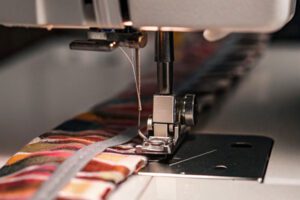
How Does a Serger Work?
A serger operates differently from a traditional sewing machine, performing multiple functions simultaneously to produce clean and durable seams.
A serger works by combining multiple threads (usually three to five), loopers, and a cutting blade to create an overlock stitch that trims fabric edges and prevents fraying.
Key Components of a Serger
-
Loopers
- Instead of a traditional bobbin, a serger uses loopers to form overlock stitches.
- Loopers carry the threads over the fabric edge, creating a secure and stretchy seam.
-
Cutting Blade
- Sergers have a built-in blade that trims fabric edges as they pass through the machine.
- This ensures even seam allowances and eliminates the need for manual trimming.
-
- The differential feed adjusts the way fabric feeds through the machine, preventing puckering on lightweight fabrics or stretching on knits.
How It Stitches
- Step 1: Threading
- Multiple threads (usually three to five) are threaded through the loopers and needles.
- Step 2: Feeding Fabric
- The fabric is guided under the presser foot, where the cutting blade trims excess material.
- Step 3: Stitch Formation
- The loopers and needles work together to create an overlock stitch, encasing the raw edges in thread.
| Component | Function |
|---|---|
| Loopers | Carry threads to form overlock stitches |
| Cutting Blade | Trims excess fabric for clean edges |
| Differential Feed | Prevents puckering or stretching of fabric |
This process makes a serger faster and more efficient than a regular sewing machine for edge finishing and seam construction.
What Are the Benefits of Using a Serger?
While a standard sewing machine can handle most sewing tasks, a serger offers unique advantages that make it indispensable for certain projects.
1. Clean, Professional Finishes
- How It Helps:
- A serger trims and finishes fabric edges in one step, leaving a clean and polished seam.
- Why It Matters:
- This is especially important for garments like t-shirts or activewear, where frayed edges are unacceptable.
2. Stretchy and Durable Seams
- How It Helps:
- Why It Matters:
- Stretchy seams prevent threads from breaking during movement or wear.
3. Saves Time
- How It Helps:
- By trimming, stitching, and finishing in one pass, a serger significantly speeds up the sewing process.
- Why It Matters:
- This is invaluable for high-volume sewing or when working on projects with long seams, like curtains or tablecloths.
| Benefit | Why It’s Important |
|---|---|
| Clean Finishes | Creates professional-quality garments |
| Stretchy Seams | Ideal for knits and activewear |
| Time Efficiency | Combines multiple tasks into one step |

What Are the Limitations of a Serger?
While sergers are incredibly useful, they’re not a replacement for a sewing machine.
1. Limited Stitch Options
- What It Lacks:
- Sergers cannot perform standard stitches like straight stitching, zigzag stitching, or buttonholes.
- Solution:
- Use a serger alongside a sewing machine to complement its capabilities.
2. Complexity in Setup
- Challenge:
- Threading a serger can be intimidating for beginners due to the multiple threads and loopers involved.
- Solution:
- Many modern sergers come with automatic threading features4 to simplify the process.
3. Higher Cost
- Challenge:
- Sergers are more expensive than basic sewing machines, making them a significant investment.
- Solution:
- Start with an entry-level serger or consider a second-hand model to reduce costs.
| Limitation | How to Overcome |
|---|---|
| Limited Stitch Options | Use a sewing machine for other functions |
| Complex Setup | Practice or choose a machine with automation |
| Higher Cost | Look for budget-friendly models |
Projects Best Suited for a Serger
A serger excels in specific types of sewing projects where clean edges and stretchy seams are essential.
1. Garment Construction
- Best For:
- T-shirts, dresses, and other apparel made from knits or stretchy fabrics.
- Why Use a Serger:
- It ensures strong, flexible seams that won’t fray or break.
2. Home Décor
- Best For:
- Curtains, tablecloths, and pillowcases.
- Why Use a Serger:
- The overlock stitch creates neat edges, even on large fabric pieces.
3. Decorative Finishes
- Best For:
- Rolled hems5 on napkins or decorative edges on scarves.
- Why Use a Serger:
- It adds a polished, professional touch to your projects.
| Project Type | Why a Serger Excels |
|---|---|
| Garment Construction | Strong seams and fray-free edges |
| Home Décor | Clean finishes on large fabric pieces |
| Decorative Finishes | Adds elegance with rolled hems and edges |

Innovations in Modern Sergers
Modern sergers include advanced features that make them more user-friendly and versatile.
1. Automatic Threading
- What It Does:
- Simplifies the threading process, saving time and frustration.
2. Differential Feed
- What It Does:
- Prevents puckering or stretching, ensuring smooth seams on various fabrics.
3. Multiple Thread Options
- What It Offers:
- Sergers can use three to five threads, allowing for a range of stitches, from narrow rolled hems to wide, durable seams.
| Feature | Benefit |
|---|---|
| Automatic Threading | Easier setup for beginners |
| Differential Feed | Smooth seams on tricky fabrics |
| Multiple Thread Options | Versatility in stitch types |
Conclusion
A serger is an invaluable tool for anyone looking to elevate their sewing projects with professional finishes, durable seams, and faster production times. While it’s not a replacement for a sewing machine, its ability to trim, stitch, and finish edges in one step makes it indispensable for garment construction, home décor, and decorative sewing.
With modern innovations like automatic threading and differential feed, sergers are now more accessible and versatile than ever. Whether you’re a hobbyist or a professional, adding a serger to your sewing toolkit is a step toward creating high-quality, polished projects.
-
Discover comprehensive details for truly professional overlock finishes. ↩
-
Find reliable guidelines on adjusting serger differential feed. ↩
-
Explore expert methods for securing seams on knit fabrics. ↩
-
Gain useful insights into convenient serger threading automation. ↩
-
Uncover trusted techniques for achieving flawless rolled hems. ↩