Not all T shirts are created equal — and the fabric you choose can make or break your final printed product.
Different fabrics react differently to printing methods, affecting how sharp the design looks, how it feels to wear, and how long it lasts after washing.
Whether you’re launching a fashion line or sourcing bulk merchandise, this guide will help you choose the best fabric for your project, printing method, and target customer.
Why Fabric Choice Matters for Printed T Shirts
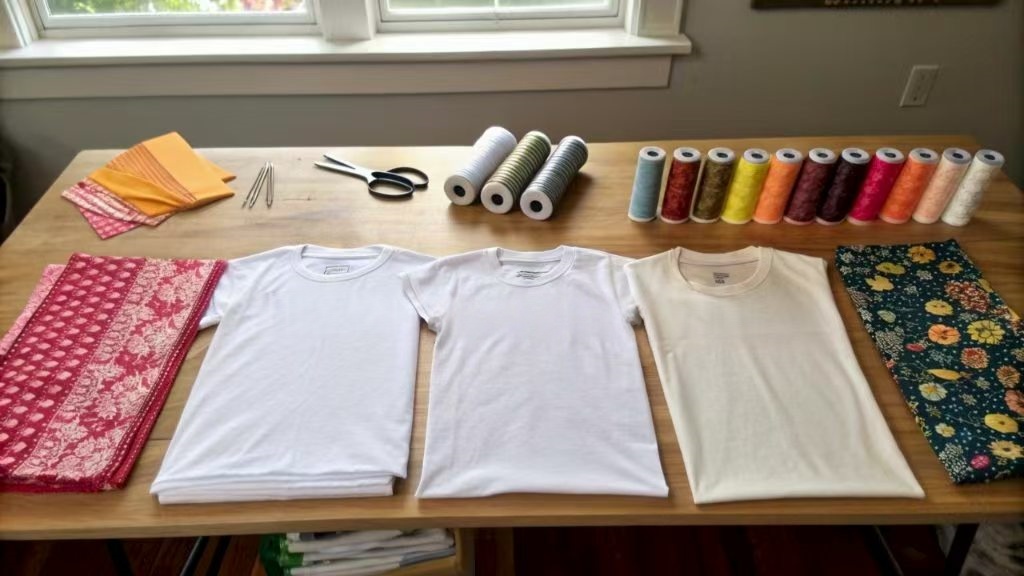 DIY T-Shirt Setup[/caption]
Fabric isn’t just about comfort — it’s the foundation of the printing result.
The surface texture, fiber content, and absorbency of a T shirt fabric directly impact how ink settles, spreads, and stays over time.
How Does T Shirt Fabric Affect Print Durability and Vibrancy?
A good design needs a receptive fabric to shine.
- Natural fibers like cotton1 allow ink to be absorbed into the fiber, creating a long-lasting bond.
- Synthetic fibers like polyester2 resist water-based inks, which can lead to cracking, fading, or poor adhesion without the right technique.
- Blends3 may offer middle-ground results, but ink behavior can vary depending on fiber ratio.
In short, printing on the wrong fabric often leads to:
- Blurry or inconsistent designs
- Washed-out colors after a few washes
- Prints that peel, crack, or fade too early
Why Do Some Fabrics Hold Colors Better Than Others?
Several factors determine how well a fabric holds color:
- Fiber structure4: Tight-knit, smooth-surface fabrics (like combed cotton) offer better print clarity
- Absorbency5: Cotton soaks up ink; polyester repels it unless sublimation is used
- Chemical treatment: Pre-treated fabrics bond better with digital inks
- Heat resistance: Some materials can’t handle high heat needed for curing
Understanding these properties helps you choose the right combo of fabric and print.
Best T Shirt Fabrics for Printing
When choosing fabric, think about more than feel — consider print clarity, stretch, price, and intended use.
Why 100% Cotton Is the Most Popular Fabric for Printed T Shirts?
100% cotton remains the gold standard for most printing methods.
Pros:
- Soft and breathable — feels good for daily wear
- High absorbency — great for screen and DTG inks
- Available in various textures (e.g. combed, ringspun, open-end)
- Compatible with eco-friendly inks and treatments
- Cost-effective, especially in developing markets like India, China, Bangladesh

Best used for:
- Fashion retail tees
- Band and merch T shirts
- Brand promotions
- Personalized gifts
- Print-on-demand stores
Are Polyester and Blended Fabrics Good for Logo or Graphic Prints?
They can be — with the right method.
100% Polyester:
- Strong and quick-drying
- Resistant to wrinkles and shrinkage
- Requires sublimation or heat transfer, not screen or DTG
- Best for sportswear and uniforms
Blended fabrics (e.g. 60% cotton / 40% polyester):
- Combine cotton’s softness with poly’s durability
- Can be screen printed or heat transferred
- Print clarity depends on cotton content
- Shrinks less and lasts longer than pure cotton
These are ideal for:
- Activewear
- Corporate uniforms
- Promotional apparel
- Low-maintenance fashion
Comparing Fabric Types for Different Printing Methods
Let’s break down which fabric works best with which printing technique.
Which T Shirt Fabric Works Best for Screen Printing?
Screen printing is compatible with:
- 100% cotton — absorbs plastisol ink evenly
- Cotton-poly blends — with adjusted inks (e.g. low bleed inks)
- Heavier-weight shirts — better print coverage and longevity
Tips for best results:
- Use tight-knit cotton for sharper edges
- Avoid loose weaves that allow ink to bleed
- Use plastisol for bold colors and longevity
- For darker fabrics, apply a white base layer

Screen printing is less suitable for stretch fabrics or complex color gradients.
Is DTG Printing More Effective on Cotton or Blends?
DTG (Direct-to-Garment) is highly sensitive to fabric quality.
- Works best on 100% combed cotton
- Prefers light-colored fabric to avoid pretreatment
- Avoid 100% polyester — water-based DTG inks won’t bond
- Cotton-poly blends may work if cotton content is above 70%
Use DTG when:
- You need short runs or personalized orders
- Designs include full color, gradients, or photographic detail
- Your target market values soft, retail-style prints
For dark or blended fabrics, always test before full production.
Sustainable and Eco-Friendly T Shirt Fabrics
Sustainability is no longer optional — it’s a purchase driver for many modern consumers.
Are Organic Cotton T Shirts More Durable for Printing?
Yes, and they appeal to eco-conscious buyers.
Benefits of organic cotton:
- Grown without pesticides or toxic chemicals
- Usually processed with fewer harsh treatments, making it ideal for water-based inks
- Compatible with GOTS-certified printing methods
- Offers same print durability as regular cotton if fabric is pre-treated properly
Watch out for:
- Slightly rougher texture on some organic varieties
- Slightly higher cost per unit
Use organic cotton for:
- Premium fashion brands
- European markets (especially Germany, UK, Netherlands)
- Sustainable merchandise or events
Can Recycled Fabrics Provide the Same Print Quality as Traditional Fabrics?
In many cases — yes, but it depends on the fiber blend.
Recycled polyester (rPET):
- Good for sublimation and heat transfer
- Helps brands meet sustainability goals
- Performs similar to virgin polyester if spun well
Recycled cotton:
- Often blended with virgin fibers for strength
- Surface texture can be slightly inconsistent — test prints are recommended
- Great for awareness campaigns, NGOs, or limited edition projects
These fabrics help brands reduce carbon footprint while still offering printable surfaces.
Tips for Choosing the Right T Shirt Fabric for Your Project
Choosing fabric involves balancing print quality, cost, durability, and end-user experience.
How to Match Printing Technique with T Shirt Fabric?
| Fabric | Best Printing Methods | Comments |
|---|---|---|
| 100% Cotton | Screen, DTG, Heat Transfer | Ideal for fashion, merch, POD |
| Cotton-Poly Blend | Screen, Heat Transfer | Versatile for sports or workwear |
| 100% Polyester | Sublimation, Heat Transfer | Best for performance wear |
| Organic Cotton | DTG, Water-based screen | Suited for sustainable collections |
| Recycled Polyester | Sublimation | Great for eco-friendly activewear |
| Tri-blends (Cotton/Poly/Rayon) | Screen, Heat Transfer | Very soft, lightweight, fashionable |
Pro Tip:
Always request fabric swatches before printing — feel, thickness, and tightness of the knit matter more than specs alone.
Which Fabric Offers the Best Balance of Comfort, Cost, and Print Longevity?
If your goal is to balance all three factors, here are some options:
- Best for softness and print clarity: 100% combed cotton
- Best for budget-conscious bulk buyers: 65/35 cotton-poly blend
- Best for color vibrancy: Light-colored cotton or sublimation-ready polyester
- Best for eco lines: GOTS-certified organic cotton
- Best all-rounder for brands: 60/40 combed cotton/poly blend (medium weight)
Comfort + durability + print quality = repeat buyers.
Conclusion
The best T shirt fabric for printing depends on what matters most to your business — print quality, eco-appeal, cost, or all three. Cotton is still the most versatile and print-friendly option, but polyester and blends play an important role in durability and performance.
For any fabric, the key is understanding how it interacts with ink and which printing method suits it best. Match them wisely, and your prints will look better, last longer, and sell faster.
-
Explore how natural fibers enhance print quality and durability, making them ideal for T shirt production. ↩
-
Learn about the challenges and advantages of using synthetic fibers in T shirt printing. ↩
-
Discover how blends can offer a balance of comfort and durability for printed T shirts. ↩
-
Understand the importance of fiber structure in achieving vibrant and clear prints. ↩
-
Find out how absorbency affects ink adhesion and print longevity on T shirts. ↩