
 Skip to content
 Definition, Design Features, and Everyday Function
Men’s hoodies are defined by their hooded construction, casual silhouette, and practical everyday usability.
Originally developed for athletic and workwear contexts, hoodies have evolved into versatile garments widely used in modern menswear.
Their continued relevance comes from a balance of comfort, functional design, and adaptability within casual wardrobes.
The hoodie has transitioned from specialized clothing into a widely accepted everyday garment.
This evolution reflects broader shifts in modern menswear toward comfort, practicality, and relaxed silhouettes.
Understanding this transition explains why hoodies occupy a central place in contemporary wardrobes.
Hoodies originally developed within athletic and workwear environments.
Early hooded sweatshirts were designed to provide warmth and protection for athletes and laborers working in cooler conditions. The hood offered practical coverage while the knit fabric allowed flexibility during movement.
Over time, these practical qualities made hoodies suitable for broader casual wear. As dress codes became more relaxed in many environments, hoodies gradually transitioned from functional sportswear to everyday garments.
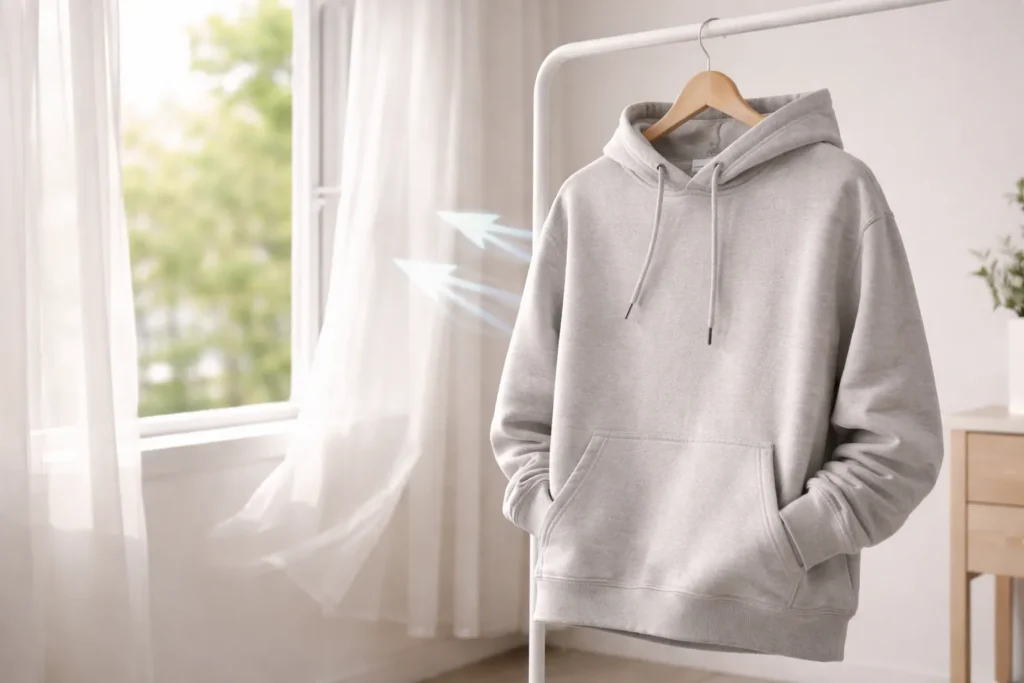

Today, hoodies function as standard casual clothing items.
Their relaxed structure and comfortable fabrics allow them to integrate easily into everyday outfits. Many people rely on hoodies for commuting, casual social activities, and relaxed work environments.
Because they combine warmth, comfort, and simplicity, hoodies often become frequently worn pieces in modern wardrobes.
Comfort has become a central priority in contemporary clothing design.
Modern menswear increasingly emphasizes garments that support movement and long-term wear. Hoodies align with this shift through their soft knit fabrics and relaxed silhouettes.
As clothing systems adapt to modern lifestyles, comfort-driven garments like hoodies naturally gain wider acceptance.

Although hoodies and sweatshirts share similar fabrics and silhouettes, they differ in one key structural feature.
Understanding this distinction clarifies the boundary between the two garment categories.
The presence of a hood defines the hoodie category.

The hood distinguishes hoodies from other sweatshirts.
A hoodie includes an attached hood designed to cover the head and neck. This feature adds both visual identity and functional protection against wind or cool temperatures.
Without this hooded element, the garment falls into the sweatshirt category rather than the hoodie category.
The hood introduces additional functionality.
In addition to providing warmth, the hood can offer protection from light weather conditions and add insulation around the neck area. These features expand the garment’s practical applications.
This structural difference explains why hoodies often serve as outer layers in casual outfits.


The hood improves garment adaptability.
When weather conditions change, the hood can be used to provide additional warmth or protection. At other times, it can rest on the back without affecting the garment’s comfort.
This flexibility makes hoodies particularly useful in everyday environments.
Modern hoodies share several structural components.
These design elements determine both the appearance and functionality of the garment.
Understanding these components clarifies how hoodies are constructed.
The hood is the central structural element of the garment.
A well-designed hood maintains balanced proportions with the rest of the hoodie. It should provide coverage without becoming overly large or heavy.
Proper hood construction also ensures the garment remains comfortable when the hood is worn or resting on the back.


Many hoodies include front pockets for practical use.
The most common configuration is the kangaroo pocket positioned at the front of the garment. This pocket provides convenient storage and a place to warm hands.
Pocket placement also contributes to the overall visual balance of the hoodie.
Ribbed edges help stabilize hoodie structure.
Cuffs and hems are often constructed with ribbed knit fabrics that provide elasticity. This elasticity allows the garment to retain its shape while accommodating movement.
These structural details contribute to both comfort and durability.

Hoodies are widely used because they support everyday activities effectively.
Their combination of comfort, warmth, and flexibility makes them practical for many situations.
This functionality explains their lasting presence in modern wardrobes.
Hoodies are designed to support natural movement.
Soft knit fabrics and relaxed silhouettes allow the garment to move with the body. This flexibility improves comfort during walking, commuting, or casual daily activities.
Because the hoodie does not restrict movement, it remains suitable for extended wear.
Many everyday environments allow relaxed clothing.
Casual workplaces, universities, and urban social settings often accept comfortable garments that emphasize practicality rather than formal appearance.
Hoodies integrate easily into these environments due to their balanced design.
Hoodies provide moderate insulation.
Their fabric thickness offers warmth in cooler conditions while remaining breathable enough for indoor wear. The hood also adds optional coverage for the head and neck.
These qualities make hoodies practical garments for daily use.
Social expectations influence clothing choices.
In many modern environments, hoodies are widely accepted as casual garments.
Understanding these contexts helps clarify when hoodies are appropriate.
Informal social settings often encourage comfortable clothing.
Meeting friends, attending casual gatherings, or visiting cafés typically allows garments that prioritize comfort and practicality.
Hoodies fit naturally within these relaxed social contexts.
Some workplaces maintain relaxed dress expectations.
Creative industries, technology companies, and academic environments often allow casual clothing styles. In such settings, hoodies may appear appropriate and common.
These environments emphasize practicality and comfort over strict formality.
Urban culture often embraces casual clothing styles.
In many cities, casual garments such as hoodies have become normalized within everyday fashion. Their simplicity and practicality align with contemporary urban lifestyles.
This cultural acceptance reinforces their widespread use.
Not all hoodies provide the same level of performance.
Several characteristics determine whether a hoodie is well-made.
These qualities influence comfort, durability, and long-term usability.
Fabric quality determines long-term wearability.
Strong knit fabrics resist stretching, pilling, and thinning over time. Durable materials allow the garment to maintain its structure after repeated wear and washing.
Reliable fabric construction is therefore essential for long-term use.
Balanced design supports visual stability.
A well-designed hoodie maintains clear proportions between the hood, torso, sleeves, and ribbed edges. This balance prevents the garment from appearing oversized or poorly structured.
Clean design also improves versatility.
Comfort must remain consistent throughout repeated use.
High-quality hoodies maintain softness and shape even after extended wear. Stable construction prevents the garment from sagging or losing its silhouette.
Long-term comfort supports repeated daily use.
Hoodies remain relevant in wardrobes for several reasons.
Their design balances simplicity, practicality, and adaptability.
These characteristics allow them to remain useful across changing fashion cycles.
Simple garments tend to remain relevant longer.
Hoodies typically feature minimal decoration and straightforward silhouettes. This restrained design avoids strong associations with specific fashion trends.
As a result, hoodies remain wearable across many seasons.
Versatile garments integrate easily with other clothing pieces.
Hoodies combine naturally with jeans, casual trousers, sneakers, and layered outerwear. This compatibility allows them to function in many everyday outfits.
Versatility strengthens their value as wardrobe staples.
Hoodies adapt to multiple seasons through layering.
They can function as standalone garments during mild weather or as mid-layers beneath coats during colder conditions. This adaptability increases their usefulness throughout the year.
Seasonal flexibility contributes to their long-term relevance.
Misunderstandings about hoodies often arise from confusing fashion trends with the core garment category.
Clarifying these misconceptions helps define what a modern everyday hoodie actually represents.
Some hoodies prioritize fashion trends over practicality.
Highly decorative designs, exaggerated silhouettes, or unusual materials may reflect short-term fashion movements rather than everyday functionality.
These garments do not necessarily represent the core hoodie category.
Low-quality hoodies may deteriorate quickly.
Weak stitching, thin fabrics, or poorly balanced construction can cause garments to stretch or lose shape after limited wear.
Quality construction remains essential for reliable everyday use.
Excessive decoration can reduce versatility.
Large graphics or elaborate detailing may limit the situations in which the hoodie appears appropriate. Minimal designs typically provide greater adaptability within everyday wardrobes.
Understanding this distinction helps evaluate hoodie suitability.
Identifying a modern everyday hoodie requires evaluating several key characteristics.
These characteristics reflect both the structural design and practical usability of the garment.
A simple framework can help confirm whether a hoodie fits the category.
1.Structural design check
2.Comfort and practicality check
3.Everyday usability check
4.Long-term wardrobe relevance check
Includes a functional hood attached to the neckline
Constructed from soft knit fabric suitable for casual wear
Designed with ribbed cuffs and hem for structural stability
Often includes practical pockets such as a kangaroo pocket
Provides moderate warmth and comfortable movement
Integrates easily into everyday casual outfits
Maintains simple, versatile design
Men’s hoodies are defined by their hooded construction, relaxed silhouette, and everyday practicality.
Originally developed for sportswear, they have evolved into versatile casual garments widely used in modern menswear.
Their continued relevance comes from balanced comfort, functional design, and adaptability within everyday wardrobes.
We’ll get back to you within 24 hours. Attach your logo/design if needed.
💡 1 . Share your logo, fabric, and quantity for T-shirts, hoodies, and more.
📐 2. We’ll prepare samples for your approval.
🚚 3. Bulk production starts after deposit.
✅ We value your privacy. Your information is 100% safe and confidential.
📦 Need help? Chat with us via WhatsApp anytime!

Note: Your email information will be kept strictly confidential.
Note: Your email information will be kept strictly confidential.
Request a quote, discuss MOQ, lead time, fabrics & QC.
Visit our brand store: Modaknitswear
Retail orders (and dropshipping options) are available on Modaknitswear.