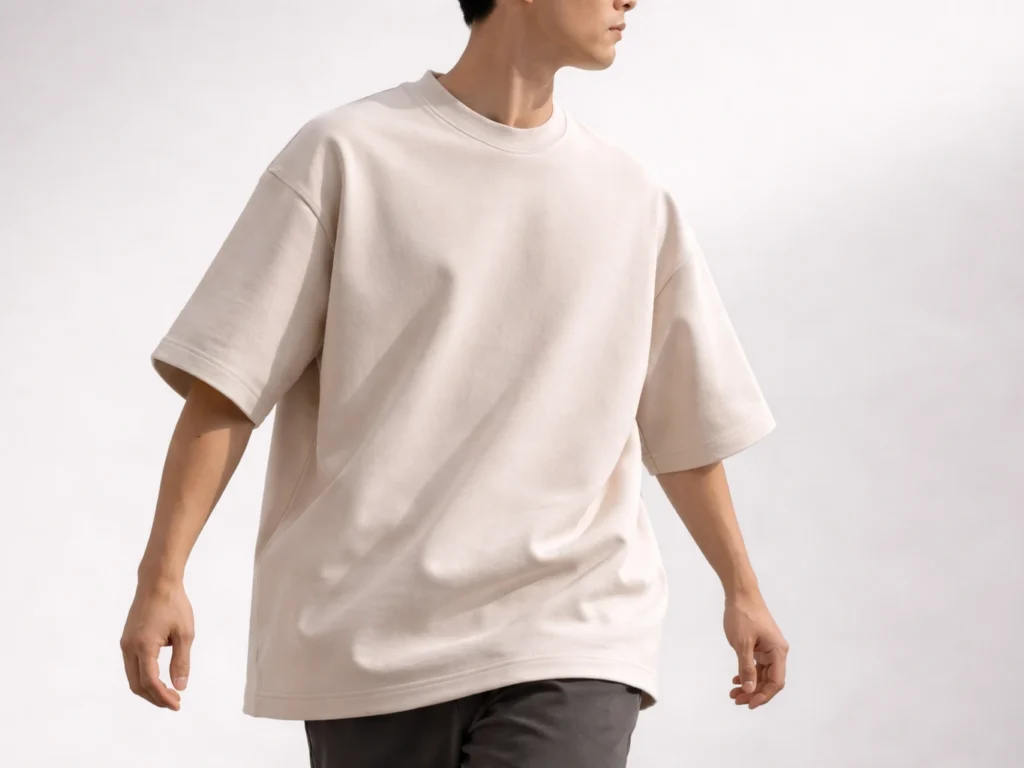
What Defines a Heavyweight Oversized T-Shirt in Modern Urban Wear
Material Standards, Structural Criteria, and Urban Relevance
“Heavyweight oversized” is often used as a marketing phrase rather than a structural classification.
In reality, heavyweight status must be defined by measurable textile weight, density integrity, and silhouette support within an oversized structure.
This page establishes objective standards for what qualifies as a heavyweight oversized T-shirt in modern urban wardrobes.
Reframing the Term “Heavyweight”
Heavyweight does not simply mean thick or substantial to the touch.
It refers to measurable fabric mass and structural behavior under oversized conditions.
This section separates marketing language from textile reality.
Marketing use vs measurable textile standards
“Heavyweight” is frequently used without numeric backing.
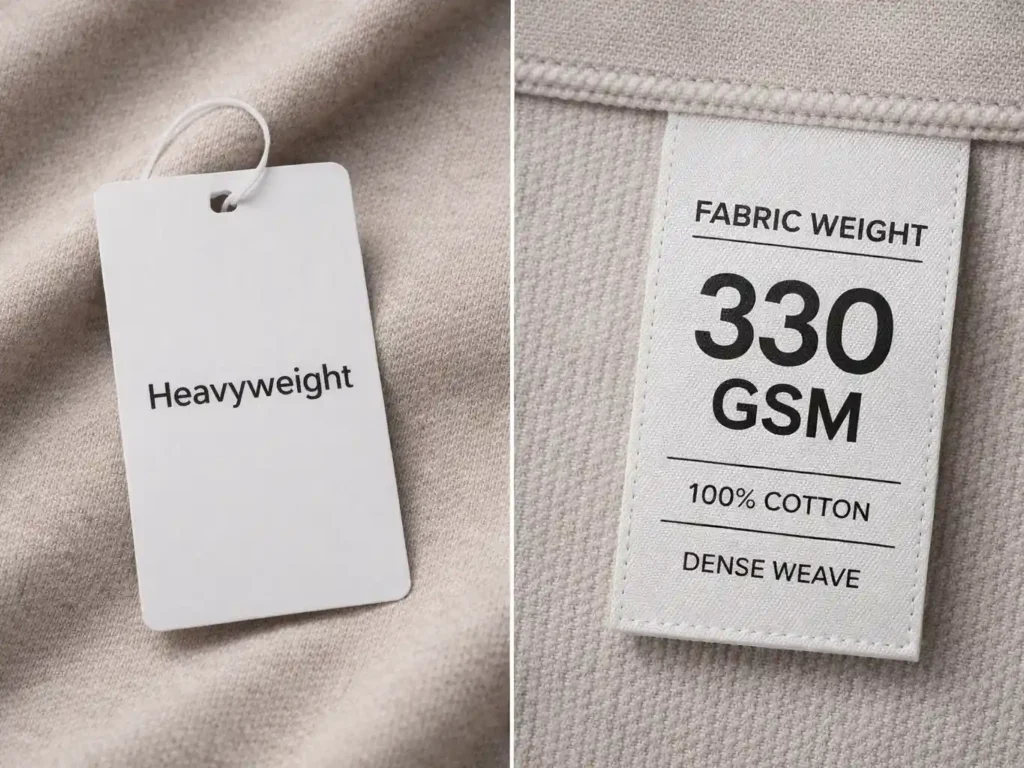
In textile manufacturing, weight is measured in GSM (grams per square meter), not by hand feel alone. A shirt may feel thick due to surface brushing or loose knitting while still falling below heavyweight thresholds.
To judge authenticity, look for declared GSM ranges and compare them to established T-shirt categories. Without measurable weight disclosure, “heavyweight” remains a claim, not a standard.
Because oversized T-shirts introduce additional volume, lightweight fabrics are more prone to collapse, distortion, and uneven drape. This raises the minimum viable fabric weight for structural integrity.
To qualify as heavyweight in an oversized context, the material must support expanded proportions without losing edge clarity.
Fabric density vs perceived heaviness
Density determines structure more than thickness alone.
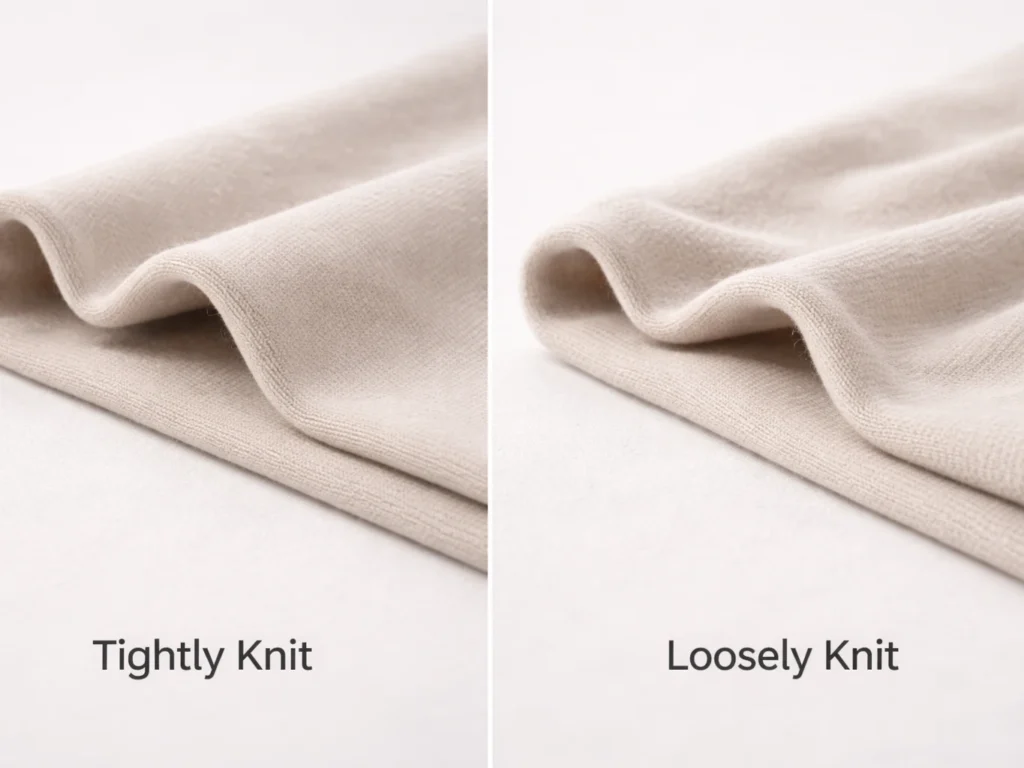
Two fabrics can share similar GSM but differ in knit tightness. A loosely knit heavy fabric may feel soft yet lack silhouette control.
To evaluate density, observe whether the fabric holds shape when lifted or folded. Structural firmness indicates density integrity beyond surface thickness.
This section defines measurable standards within modern categories.
GSM benchmarks in modern T-shirt categories
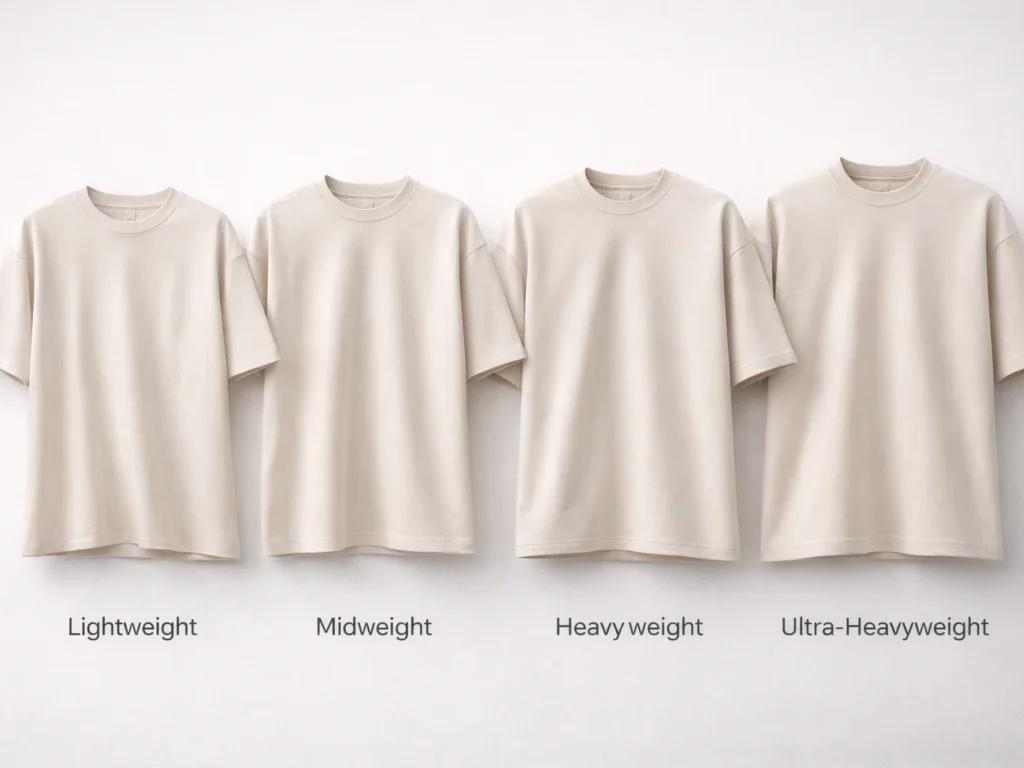
Modern T-shirt categories typically fall into these ranges:
Lightweight: 120–160 GSM
Midweight: 160–220 GSM
Upper midweight: 220–260 GSM
Heavyweight: 260–320 GSM
Ultra-heavyweight: 320+ GSM
For oversized T-shirts, practical heavyweight classification generally begins around 260 GSM, depending on knit density.
Where midweight ends and heavyweight begins
The functional transition from midweight to heavyweight occurs when fabric begins to visibly support structure.
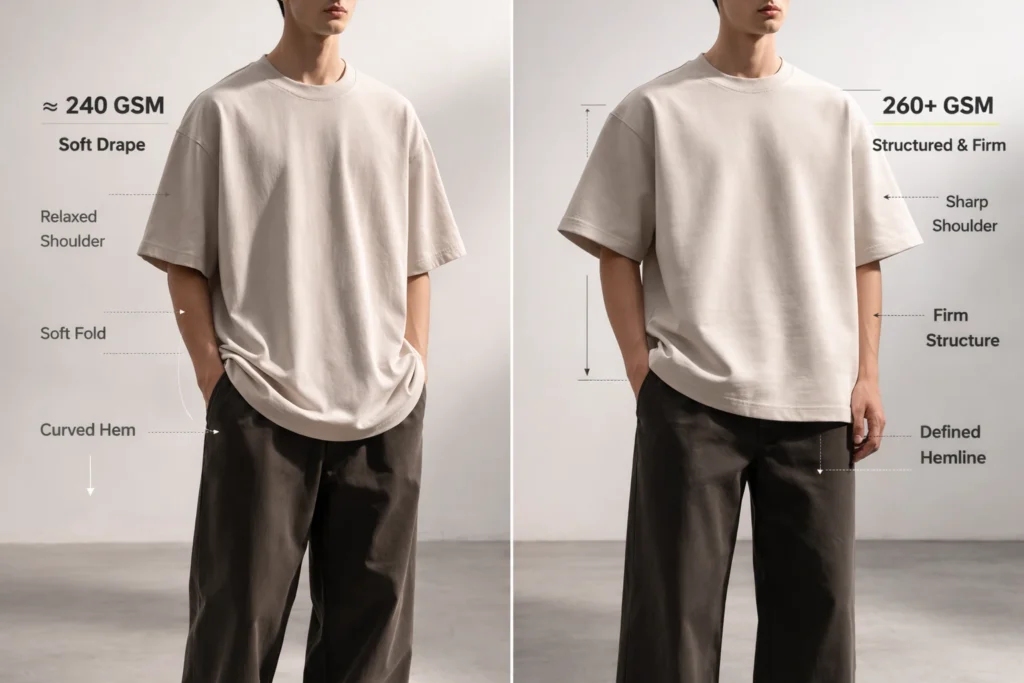
Below roughly 240–250 GSM, oversized garments tend to drape softly. Above 260 GSM, the fabric contributes to silhouette definition.
The boundary is not only numeric but behavioral: the shirt must maintain edge clarity when worn.
Why oversized designs shift the acceptable weight range upward
Oversized garments require more material stability.
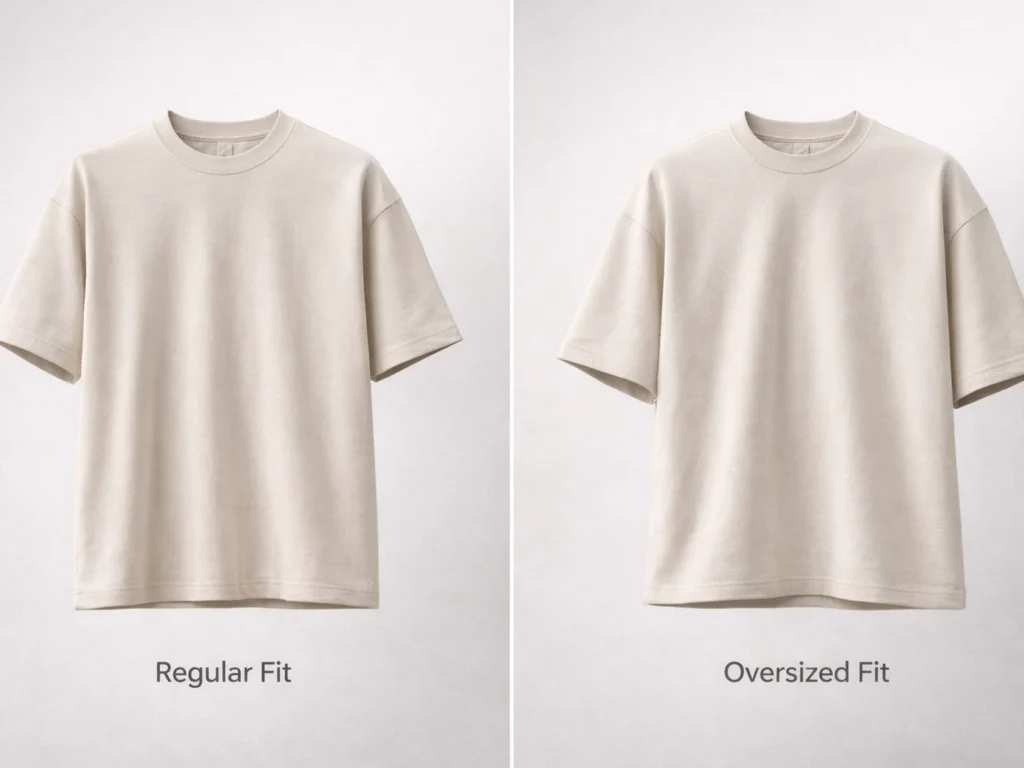
Because the body width and sleeve volume increase, the risk of sagging grows. As a result, oversized T-shirts often require higher GSM to achieve the same structural performance as regular fits.
This is why a 240 GSM fabric may function adequately in a regular fit but feel insufficient in an oversized cut.
Thickness vs Structure
Thickness is not synonymous with structural support.
Heavyweight must provide density without stiffness. This section clarifies the distinction.
Thickness that supports silhouette
Effective thickness reinforces edges and hems.
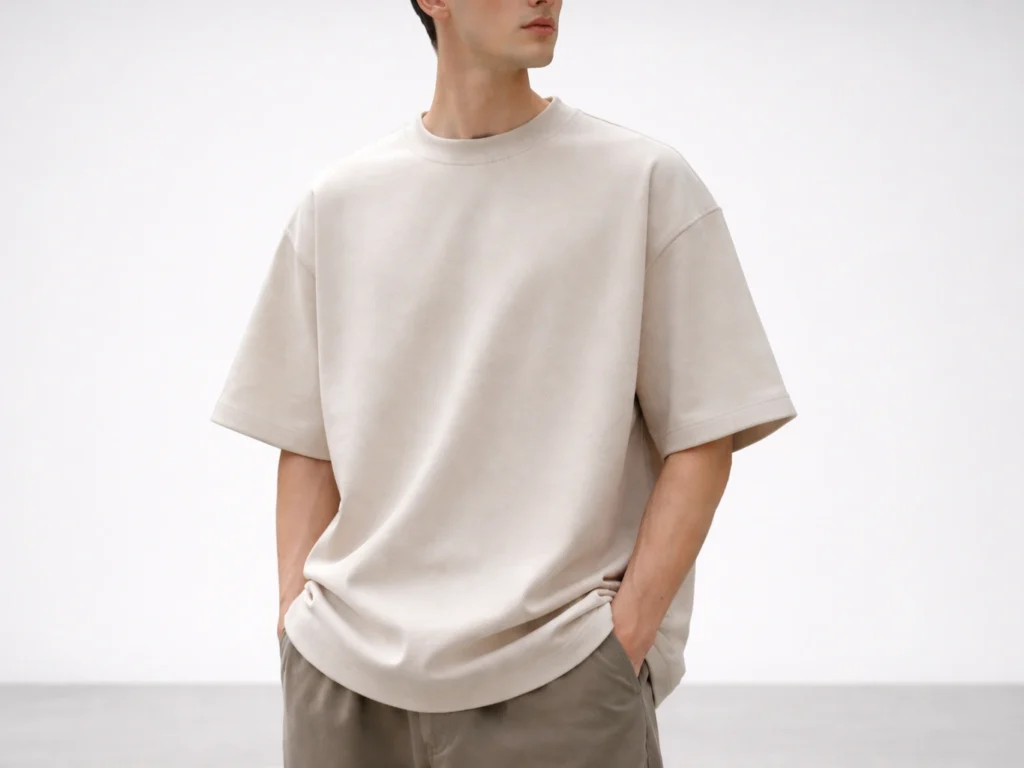
A proper heavyweight oversized T-shirt maintains clean sleeve openings and stable shoulder lines.
Judge support by whether the fabric holds its outline without external reinforcement.
Overly rigid fabric and loss of natural drape
Excessive rigidity undermines wearability.
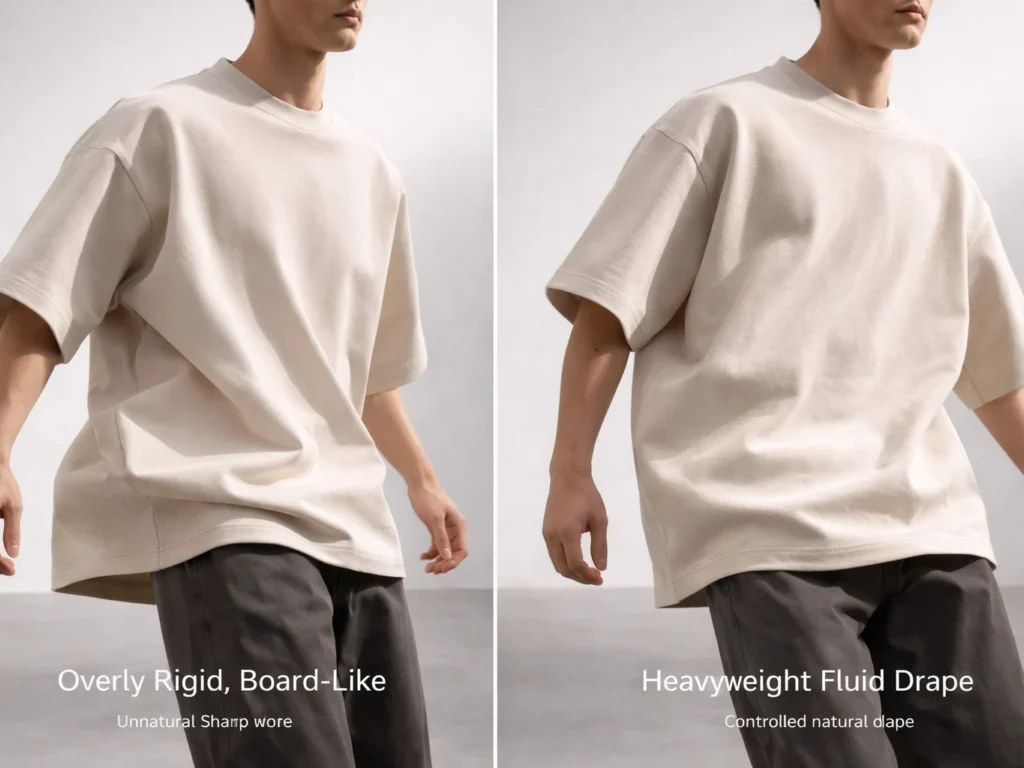
If fabric becomes board-like, movement appears restricted and unnatural.
Heavyweight should enhance presence, not eliminate fluidity.
The balance point between density and movement
The ideal heavyweight fabric supports volume while allowing motion.
This balance is achieved when the shirt feels substantial but still responds naturally to movement.
Silhouette stability should not come at the cost of comfort.
Structural Integrity in Oversized Form
Heavyweight matters more in oversized construction than in standard cuts.
Volume amplifies weaknesses.
This section explains why.
Volume amplification and fabric collapse risk
Oversized garments increase surface area.
More surface area means more gravitational pull. Lightweight fabrics struggle under this expanded load.
Heavyweight fabrics counteract collapse by resisting downward stretch.
Why lightweight oversized often loses shape
Lightweight oversized T-shirts tend to sag at the shoulders and hem.
Without sufficient mass and density, volume disperses unevenly.
The result is visual softness rather than intentional structure.
Loosely knit heavy fabrics can feel substantial but fail under stress.
Density integrity must accompany mass.
Heavy but structurally unstable cotton
Weight alone does not equal resilience.
Poorly spun cotton can stretch despite high GSM.
Fiber quality and knit tightness matter equally.
Weight claims without density integrity
Numeric claims require behavioral confirmation.
If a garment labeled 280 GSM still collapses easily, density or construction is compromised.
Structural behavior verifies authenticity.
Heavyweight Qualification Checklist
Qualification requires measurable and observable criteria. This framework provides objective evaluation steps. Use it before accepting “heavyweight” claims.
1.GSM and measurable fabric weight check
Confirm declared GSM.
For oversized T-shirts, verify weight at or above approximately 260 GSM for true heavyweight classification.
2.Density and structural firmness check
Assess knit tightness and firmness.
The fabric should resist collapse when held horizontally and maintain edge clarity when worn.
3.Silhouette support and recovery check
Observe recovery after movement and washing.
A true heavyweight oversized T-shirt returns to its intended shape without visible sagging.
Quick Checklist — Is This Truly a Heavyweight Oversized T-Shirt?