The design of a garment is never complete without considering the sleeves. The types of sleeves used in fashion can dramatically influence the style, comfort, and overall silhouette of clothing. From simple set-in sleeves to more decorative puff or bell sleeves, each variation serves a unique purpose, shaping how the garment looks and feels.
In this Part 1 of our complete guide to 18 different types of sleeves, we’ll introduce some of the most essential and popular sleeve designs. This breakdown will help you understand their structure, key features, and where each sleeve type is most commonly used—whether in jackets, dresses, or everyday casual wear.
By learning these sleeve types, you’ll gain a stronger foundation in fashion design and garment construction. Whether you’re a designer, a student of fashion, or simply someone curious about style details, this guide will help you recognize sleeve variations at a glance and make better choices when selecting or creating garments.
Set-in Sleeve
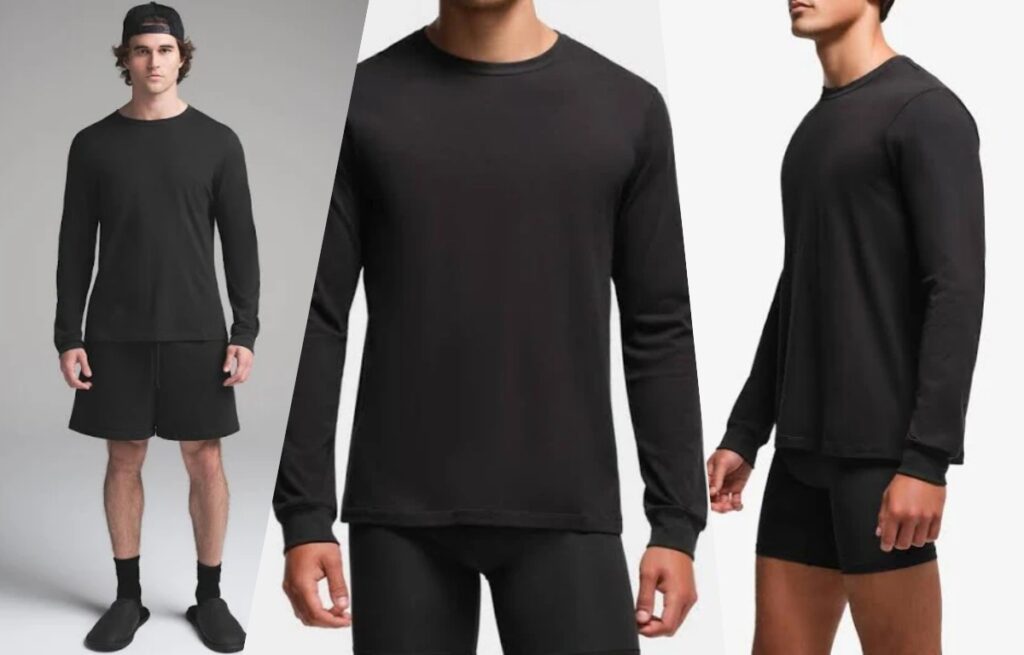
Not all sleeves are created equal. One small design detail can change the comfort, fit, and even the overall silhouette of a garment. That’s why sleeve construction matters more than you think.
A set-in sleeve is a separate sleeve sewn into the armhole of a garment, creating a distinct shoulder seam. It is the most common sleeve type used in everything from T-shirts to tailored blazers, offering a clean, classic silhouette and balanced structure.
Set-in sleeves are more than just “standard.” They’re a technical foundation for most of fashion’s best-selling garments.
What Is a Set-in Sleeve and Why Is It the Industry Standard?
The set-in sleeve is cut separately from the bodice and then sewn around the armhole (or armscye). It’s usually attached after the main body has been constructed.
This sleeve type allows better shaping and tailoring around the shoulder, resulting in a more structured and formal appearance. That’s why it’s the default for businesswear, dress shirts, and outerwear jackets.
Construction Overview
| Feature | Description |
|---|---|
| Sleeve Cut | Separate piece (single or two-piece) |
| Insertion Point | Sewn into a finished armhole |
| Fit Characteristics | Tailored, defined shoulder line |
| Common Use | Formal wear, suits, structured jackets |
Why Set-in Sleeves Dominate Fashion Design
Set-in sleeves are the most versatile and customizable type among all sleeves. Their popularity isn’t accidental—it’s built on decades of technical efficiency, cost-effectiveness, and body-contouring logic.
Tailoring Precision and Fit
Set-in sleeves allow designers to control sleeve pitch, armhole size, and overall shoulder profile independently.
- Pitch Control: Adjusting the angle at which the sleeve hangs impacts posture and comfort.
- Shoulder Shaping: Pads or canvas can be inserted to create formal structure.
- Sleeve Cap Height: Affects the volume and ease around the upper arm.
This is why set-in sleeves are preferred in suits, uniforms, and fitted dresses.
Manufacturing Flexibility
From a production perspective, set-in sleeves simplify mass manufacturing and style variation:
- Factories can use the same bodice block with different sleeve types.
- Sleeves can be sewn in flat (in casualwear) or in the round (in formalwear), depending on labor skill and desired finish.
- Adjustments are easier in bulk production since sleeve and body patterns are independent.
Versatility Across Fabric Types
Set-in sleeves can work with nearly all fabric types—from soft knits to stiff wools.
| Fabric Type | Sleeve Behavior | Notes |
|---|---|---|
| Cotton Jersey | Drapes smoothly | Common in casual T-shirts |
| Wool Suiting | Structured and crisp | Ideal for tailored jackets |
| Silk or Rayon | Needs interfacing | Used for fitted blouses |
| Denim or Canvas | Holds shape well | Great for utility jackets |
Aesthetic and Style Control
Designers favor set-in sleeves when they want:
- Sharp shoulder definition
- Clean armhole lines
- Layering control (e.g., sleeve fitting over shirts or sweaters)
- Fashion flexibility—can be short, long, puffed, flared, ruched, etc.
Set-in vs. Other Sleeve Type
| Feature | Set-in Sleeve | Raglan Sleeve | Kimono Sleeve |
|---|---|---|---|
| Shoulder Seam | Yes, clearly defined | Seam runs from collar to underarm | No seam, cut with bodice |
| Fit | Structured and fitted | Casual and relaxed | Loose and flowing |
| Best for | Formal, tailored, versatile wear | Sportswear, loungewear | Kimonos, robes, boho looks |
| Production Complexity | Medium to high | Medium | Low (but fabric-intensive) |
Raglan Sleeve
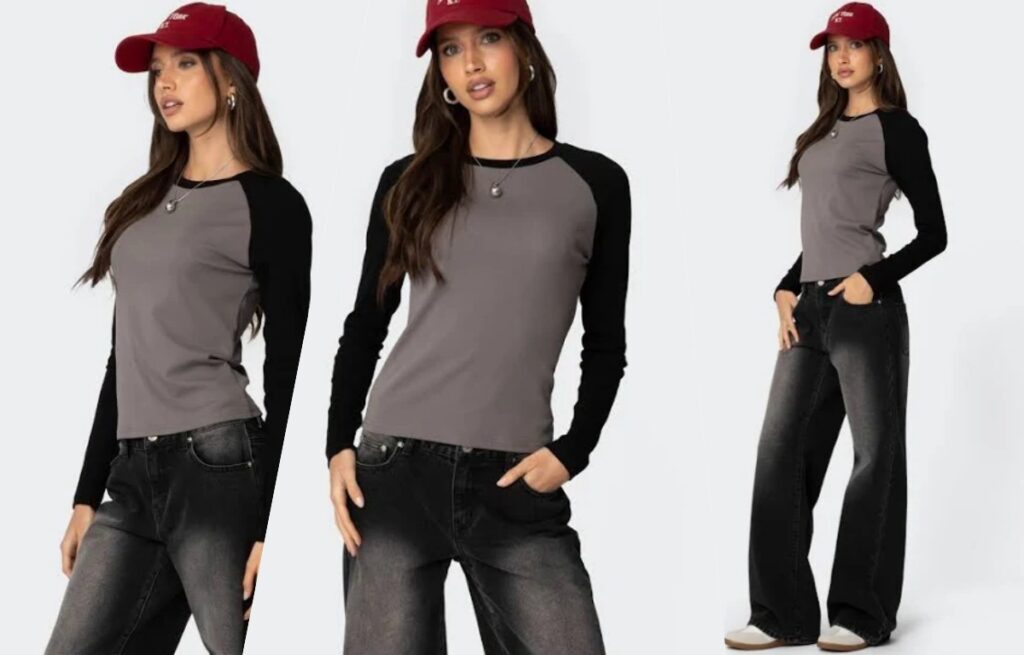
What Is a Raglan Sleeve and Why Is It Ideal for Movement?
Some sleeves feel stiff and tight around the shoulders—others flow with your every move. If you’ve ever worn a baseball tee or a lightweight jacket that lets your arms move freely, you’ve likely experienced the comfort of a raglan sleeve.
A raglan sleeve extends in one piece from the collar to the underarm, eliminating the shoulder seam. This unique design offers a relaxed fit and unrestricted movement, making it popular in sportswear, outerwear, and casual clothing.
Its flexibility and visual lines make it both functional and stylish for dynamic lifestyles.
Construction Overview
| Feature | Description |
|---|---|
| Sleeve Cut | One continuous piece with diagonal seam |
| Seam Position | Runs from neckline to underarm |
| Fit Characteristics | Loose at shoulders, more movement-friendly |
| Common Use | Sweatshirts, baseball tees, bomber jackets |
Dive Deeper: The Functionality Behind Raglan Sleeves
Designed for Movement
Unlike set-in sleeves, raglan sleeves eliminate the armhole seam and replace it with a diagonal seam running from the neckline. This allows the garment to:
- Reduce seam stress during arm motion
- Distribute pressure evenly across the shoulder
- Offer better mobility and range of motion
This is why athletic wear and active jackets often use this design—it doesn’t restrict you when reaching, stretching, or lifting.
Fabric Behavior and Visual Lines
Because the sleeve extends into the neckline, the seam lines become a visible style element.
- In color-blocked designs, the diagonal seam enhances contrast.
- In single-color garments, it creates a subtle, elongated shoulder line.
- The visual break softens the shoulder, which flatters various body types.
This makes raglan sleeves not just a functional choice but a deliberate aesthetic decision.
Manufacturing Advantages and Trade-offs
| Advantage | Consideration |
|---|---|
| Fewer seam intersections | Easier to sew on stretchy fabrics |
| Minimal pattern pieces | But requires more fabric per sleeve |
| Works well for unisex sizing | Can appear too casual in formalwear |
| Allows freedom in arm movement | Less structure and shoulder shaping |
Raglan sleeves are easier to produce in bulk for relaxed or sporty styles. However, they may lack the crisp, tailored look needed for formal garments.
Applications Across Fashion Categories
| Category | Raglan Application Example |
|---|---|
| Sportswear | Baseball tees, track jackets, hoodies |
| Streetwear | Oversized sweatshirts, bomber jackets, layering pieces |
| Outdoor Gear | Raincoats, windbreakers, technical softshells |
| Loungewear | Jersey robes, fleece pullovers |
You’ll find raglan sleeves in garments that require ease, comfort, and fluidity. When styled with modern silhouettes and performance fabrics, they balance fashion and function perfectly.
Raglan vs. Set-in Sleeve Comparison
| Feature | Raglan Sleeve | Set-in Sleeve |
|---|---|---|
| Shoulder Seam | No traditional shoulder seam | Clearly defined shoulder seam |
| Fit | Looser and more flexible | Structured and fitted |
| Best Use | Casual, active, unstructured clothing | Formalwear, tailored pieces |
| Style | Sporty, dynamic | Classic, professional |
Two-piece Sleeve
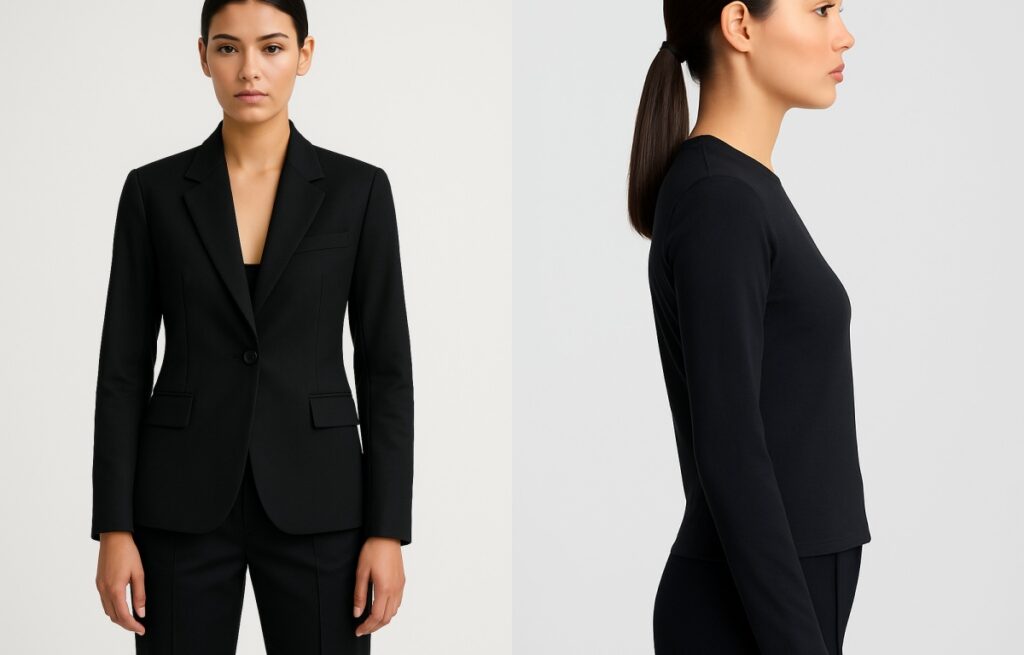
Some jackets curve naturally with your arm’s movement, while others feel boxy or stiff. That smooth, contoured feel is usually the result of a two-piece sleeve, an advanced sleeve construction used in professional tailoring.
A two-piece sleeve is made of two separate fabric panels—typically called the upper and under sleeve—sewn together to create a curved, anatomical shape. This structure enhances both fit and flexibility, making it a staple in suits, blazers, and high-end outerwear.
It’s all about achieving a refined silhouette without sacrificing comfort.
Construction Overview
| Element | Description |
|---|---|
| Number of Panels | Two: upper sleeve + under sleeve |
| Curvature | Built-in natural bend at the elbow |
| Seam Lines | Typically two vertical seams |
| Common Use | Formal jackets, trench coats, uniforms |
Why the Two-Piece Sleeve Is a Tailoring Standard
Better Arm Mobility Through Shaping
A two-piece sleeve is not just about looks—it’s engineered for movement. The dual panels allow the sleeve to follow the natural arc of the human arm, especially when bent. This allows for:
- Less pulling when bending the elbow
- Smoother drape along the outer arm
- Reduced strain on the fabric at the shoulder and elbow
It offers a tailored look that moves with you, not against you.
Improved Fit and Balance
Compared to one-piece sleeves, two-piece sleeves can be customized more precisely to a garment’s overall cut.
- The upper sleeve can be adjusted to fit the armhole without distortion.
- The under sleeve allows for adjustments in elbow ease or wrist tapering.
- Seam placement gives control over sleeve pitch (forward or backward rotation).
This added control makes the two-piece sleeve ideal for bespoke tailoring and premium garment production.
Style and Versatilit
| Feature | Benefit |
|---|---|
| Vertical seam lines | Visual slimming effect on the arm |
| Optional topstitching | Adds decorative or functional detailing |
| Hidden elbow darts possible | Enhances bend and motion subtly |
| Compatible with lining | Makes it suitable for structured garments |
This structure gives designers more surface to add features like buttons, epaulets, vents, or elbow patches, especially in military and heritage-inspired garments.
Manufacturing and Design Considerations
| Advantages | Challenges |
|---|---|
| Elegant, curved fit | Requires precise pattern drafting |
| Ideal for structured fabrics | More seams mean more sewing time |
| Enhances high-end garment appearance | Not ideal for stretchy or casual materials |
Because of its complexity, two-piece sleeves are typically reserved for tailored garments where quality and structure are non-negotiable.
Two-Piece vs One-Piece Sleeve Comparison
| Feature | Two-Piece Sleeve | One-Piece Sleeve |
|---|---|---|
| Shape | Anatomical, curved | Straight, less fitted |
| Construction | Two fabric panels, more seams | One fabric panel, simpler |
| Ideal Use | Tailored jackets, suits | Casual shirts, simple coats |
| Flexibility | High (customized shape) | Moderate to low |
| Visual Complexity | Allows topstitching and accents | Clean but limited detail options |
One-piece Sleeve
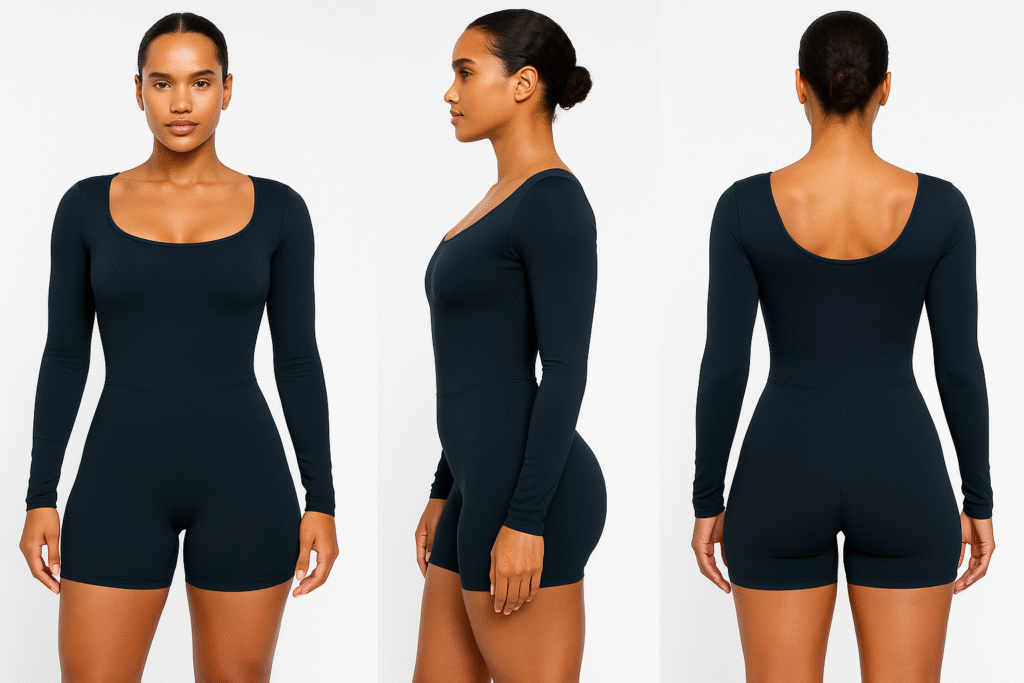
What Is a One-Piece Sleeve and How Does It Differ from Other Sleeve Types?
If you’ve ever worn a simple coat or shirt with a straight sleeve and minimal seams, chances are it used a one-piece sleeve. This is the most basic sleeve type used widely in fashion and uniform design.
A one-piece sleeve is constructed from a single panel of fabric shaped and sewn into the armhole. It’s easy to manufacture, cost-effective, and suitable for both casual and some semi-formal garments.
Its simplicity makes it versatile—but also comes with some limitations in fit and flexibility.
Construction Overview
| Feature | Description |
|---|---|
| Fabric Pieces | One single panel |
| Seam Placement | One seam along the underarm |
| Shape | Mostly straight or slightly tapered |
| Common Applications | Shirts, coats, uniforms, basic jackets |
The Simplicity and Limitations of One-Piece Sleeves
Efficient for Mass Production
One of the main reasons manufacturers use one-piece sleeves is production speed.
- Fewer pieces = faster cutting and stitching
- Lower labor costs compared to multi-piece sleeves
- Ideal for large-scale uniform or fast fashion production
Because it’s easier to produce, it’s often seen in budget-conscious garments like trench coats, workwear, or basics.
Fit and Comfort Trade-Off
The sleeve is shaped from a single fabric panel with a curve at the sleeve cap. However:
- There’s less room for natural arm movement, especially around the elbow.
- It often creates a more structured or stiff silhouette, unless a stretchy fabric is used.
- In motion, the sleeve can tug at the shoulder if not perfectly aligned.
This makes one-piece sleeves less suitable for athletic or ergonomic designs where flexibility is a priority.
Where Designers Use One-Piece Sleeves Effectively
| Garment Type | Why One-Piece Works |
|---|---|
| Overcoats | Emphasizes clean, long lines |
| Military uniforms | Structured look, easy maintenance |
| Casual shirts | Simplified construction and neat finish |
| Robes / loose fits | Movement not restricted by fit details |
Designers who prioritize minimalism or structure sometimes prefer this sleeve to create garments with straight silhouettes and reduced visual noise.
Customization and Patterning Considerations
| Pros | Cons |
|---|---|
| Less fabric waste | Difficult to add shaping |
| Clean look without excess seams | Limited sleeve pitch control |
| Simplified grading process | Less ergonomic in high-motion areas |
| Works with soft or medium fabrics | Doesn’t follow natural arm curve |
When working with one-piece sleeves, adjustments must be made to the cap height and underarm curve to fit different styles and armhole shapes. It’s not a one-size-fits-all solution—it still requires pattern accuracy.
One-Piece vs Two-Piece Sleeve Comparison
| Feature | One-Piece Sleeve | Two-Piece Sleeve |
|---|---|---|
| Construction | One fabric panel | Two panels: upper + under sleeve |
| Fit | Simplified, less curved | Follows natural arm bend |
| Use Case | Casualwear, uniforms | Tailored coats, suits |
| Comfort | Moderate if cut well | High, even in structured garments |
| Appearance | Clean and minimal | More detailed, allows decorative seams |
Kimono Sleeve
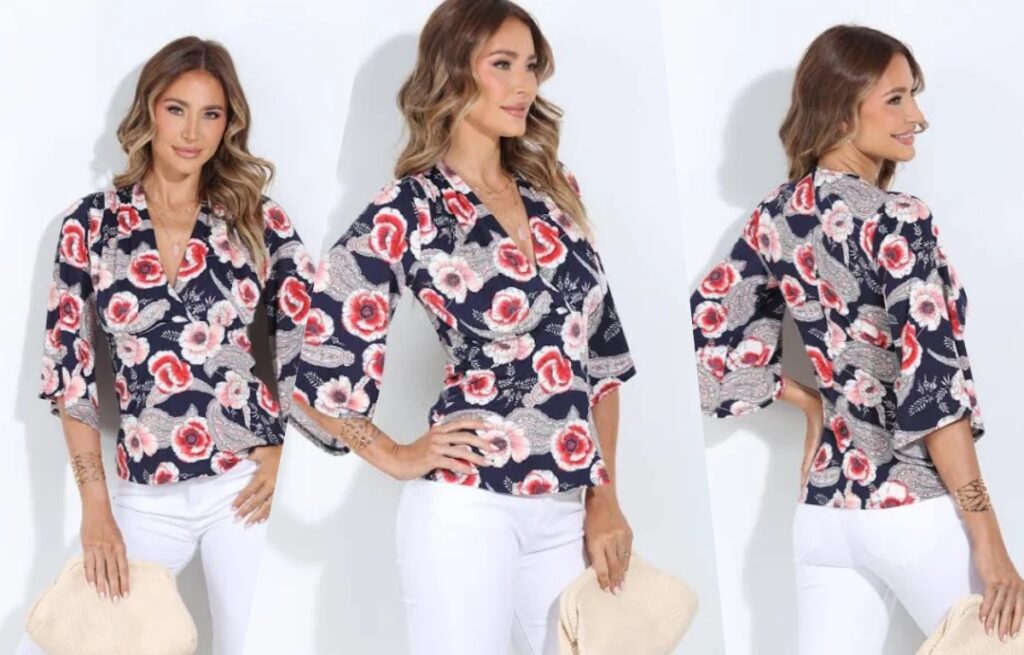
What Is a Kimono Sleeve and Why Is It So Widely Used in Fashion?
When a sleeve flows seamlessly from the body of the garment without any armhole seam, you’re likely looking at a kimono sleeve—a design rooted in traditional Japanese dress but widely adopted in modern fashion.
A kimono sleeve is cut as one continuous piece with the bodice, extending outward in a wide, straight shape. It eliminates the shoulder seam, allowing for a soft drape and generous movement across the upper body.
Designers love it for its comfort, visual drama, and construction simplicity.
Basic Characteristics of a Kimono Sleeve
| Feature | Description |
|---|---|
| Construction Style | Cut-in-one with bodice, no separate sleeve piece |
| Armhole Seam | None |
| Silhouette | Loose, flowing, often wide |
| Fabric Requirement | Higher consumption due to one-piece bodice-sleeve layout |
| Common Garments | Kimonos, robes, blouses, loungewear, and wrap dresses |
What Makes the Kimono Sleeve Unique and How to Use It Right?
Historical Roots and Modern Adaptations
The kimono sleeve traces back to the traditional Japanese kimono, where it symbolized elegance, grace, and movement.
In modern design:
- The silhouette has been streamlined for Western wear.
- It’s often used in resortwear, boho fashion, and oversized styles.
- Modern blouses may include a modified kimono sleeve with added darts for better fit.
While it retains its minimalist appeal, it’s often paired with modern cuts to suit today’s consumers.
Functional Advantages
| Advantage | Explanation |
|---|---|
| Seamless Movement | No underarm seam = fewer restrictions |
| Comfort | Perfect for relaxed, everyday wear |
| Soft Drape | Works beautifully with soft fabrics like rayon, silk, and chiffon |
| Fewer Sewing Steps | Suitable for efficient garment construction |
Kimono sleeves are especially ideal for loungewear, maternity wear, or summer dresses where comfort and breathability matter most.
Design Limitations and Workarounds
Despite its comfort, the kimono sleeve isn’t without its challenges:
- Fit Issues: Because it’s loose, the sleeve may create bunching near the underarm.
- Arm Mobility: While good for downward motion, it restricts overhead movement unless gussets are added.
- Fabric Usage: The layout demands more fabric, increasing cost in large production runs.
Workarounds:
- Add underarm gussets to increase range of motion.
- Use drapey, soft fabrics to reduce bulk.
- Employ back darts or waist shaping to balance the volume of the upper body.
When to Choose Kimono Sleeves
| Design Goal | Is Kimono Sleeve Suitable? |
|---|---|
| Casual, easy-fit style | ✅ Yes |
| Highly tailored garment | ❌ No |
| Comfortable loungewear | ✅ Yes |
| Outerwear with complex lining | ❌ No |
| Minimal seams and natural drape | ✅ Yes |
| Tight underarm fit or mobility | ❌ Unless modified |
Kimono sleeves work best when the goal is fluidity, comfort, or a relaxed aesthetic. They’re less ideal for structured garments where sleeve pitch and fit precision are required.
Kimono vs Dolman vs Raglan: What’s the Difference?
| Feature | Kimono Sleeve | Dolman Sleeve | Raglan Sleeve |
|---|---|---|---|
| Armhole Seam | None | Low, curved underarm seam | Seam runs from neckline to underarm |
| Fit | Loose and straight | Tapered toward wrist | Shaped to shoulder slope |
| Construction | Cut in one with bodice | Two-piece, with wide upper arm curve | Set-in separately |
| Mobility | Moderate (best with gussets) | Moderate | High mobility and sporty look |
| Best For | Robes, dresses, kimonos | Blouses, tunics, relaxed tops | Sweatshirts, jackets, athletic wear |
Batwing Sleeve
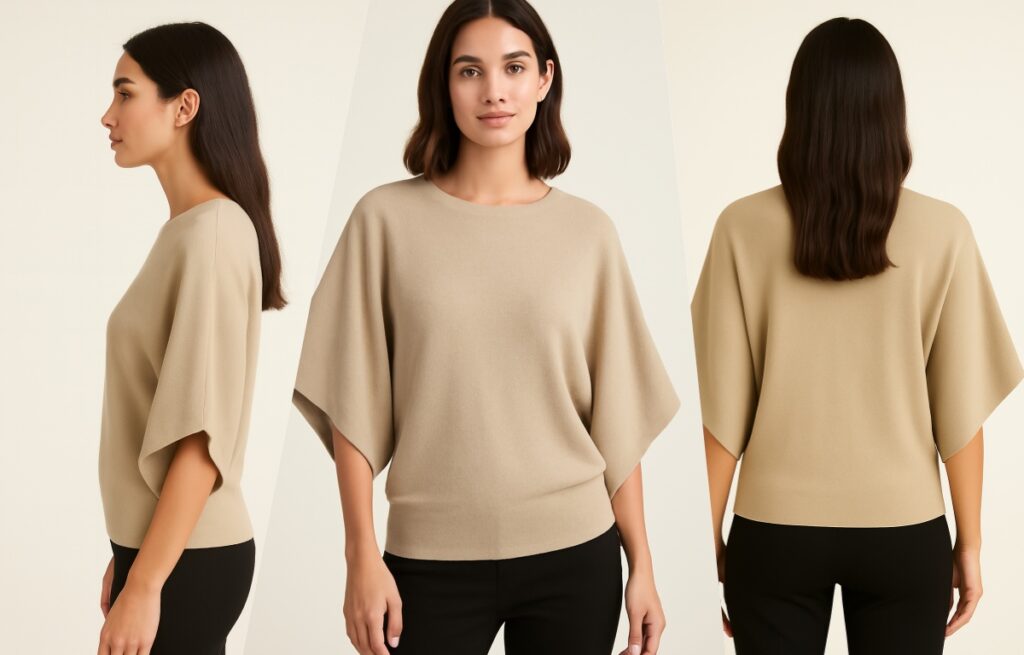
What Is a Batwing Sleeve and How Does It Influence Garment Design?
If you’ve ever seen a top or jacket with sleeves that extend deep into the torso and then taper sharply to the wrist, you were likely looking at a batwing sleeve—a dramatic and distinctive silhouette with bold design impact.
A batwing sleeve is characterized by a deep armhole that starts at the waist or lower chest, extending into a tight wrist cuff—creating a wing-like appearance similar to that of a bat.
This sleeve type is both expressive and comfortable, offering designers visual volume and wearers unrestricted arm movement.
Basic Features of a Batwing Sleeve
| Feature | Description |
|---|---|
| Construction Style | Integrated with bodice or separately constructed with wide curve |
| Armhole Placement | Very low, often near the waistline |
| Silhouette | Voluminous upper arm, fitted at wrist |
| Common Fabrics | Light knits, jerseys, silks for graceful drape |
| Popular Uses | Blouses, capes, jackets, dresses, statement tops |
Why Is the Batwing Sleeve a Statement in Fashion Design?
Structural Design and Its Unique Geometry
The batwing sleeve is a dramatic evolution of the dolman sleeve, but with even deeper armholes and more exaggerated curves.
- Unlike the set-in sleeve or raglan sleeve, the batwing sleeve doesn’t follow the shoulder line.
- It removes the need for armhole seams entirely in some variations.
- In other constructions, the sleeve is cut separately with a wide curve to maintain the exaggerated drape.
Geometric Shape
The batwing sleeve creates a diamond or triangular shape across the upper body. This allows the arms to move freely while creating high visual impact on the silhouette.
Functional Benefits and Aesthetic Advantages
| Benefit | Explanation |
|---|---|
| Comfort | Minimal seam stress under arms and across shoulders |
| Expressive Silhouette | Adds drama and movement to otherwise simple garments |
| Ease of Fit | Ideal for oversized, one-size-fits-all designs |
| Versatile Styling | Can be casual in jersey or luxe in silk and satin |
The batwing sleeve is especially effective in soft, drapey fabrics that flow and accentuate the “wing” form.
Practical Challenges and Solutions
Despite its elegance, the batwing sleeve comes with a few practical concerns:
- Bulk Under the Arm: May create excess fabric that interferes with layering.
- Pattern Complexity: Requires more advanced patternmaking, especially if drafted as a separate sleeve.
- Fabric Usage: Consumes significantly more fabric than a standard sleeve.
Design Solutions:
- Use lightweight, flowy materials to reduce bulk.
- Combine with fitted bodice or waistband to balance volume.
- Consider cutting as one with the bodice to reduce seam visibility.
Styling Use Cases and Examples
| Occasion | Best Application of Batwing Sleeves |
|---|---|
| Formal wear | In luxurious fabrics like silk with sequin embellishments |
| Casual fashion | Oversized jersey tops or knits for a relaxed streetwear look |
| Outerwear | Capes and soft trench coats with flowing batwing construction |
| Resortwear | Kaftans and cover-ups for a breezy aesthetic |
Batwing vs Dolman vs Kimono: What’s the Difference?
| Feature | Batwing Sleeve | Dolman Sleeve | Kimono Sleeve |
|---|---|---|---|
| Armhole Depth | Very low, near waist | Moderate, starts mid-rib | No armhole seam |
| Upper Arm Fit | Very loose, voluminous | Loose | Straight or wide |
| Cuff Fit | Tight at wrist | Varies | Wide or straight |
| Movement | Excellent range | Comfortable, less movement | Moderate without gussets |
| Pattern Design | Complex curve or cut-in-one | Two-piece with a curved underarm | One-piece with bodice |
The batwing sleeve stands out for its drama and flow, whereas dolman and kimono sleeves offer more subtle and minimalist alternatives.
Dolman Sleeve
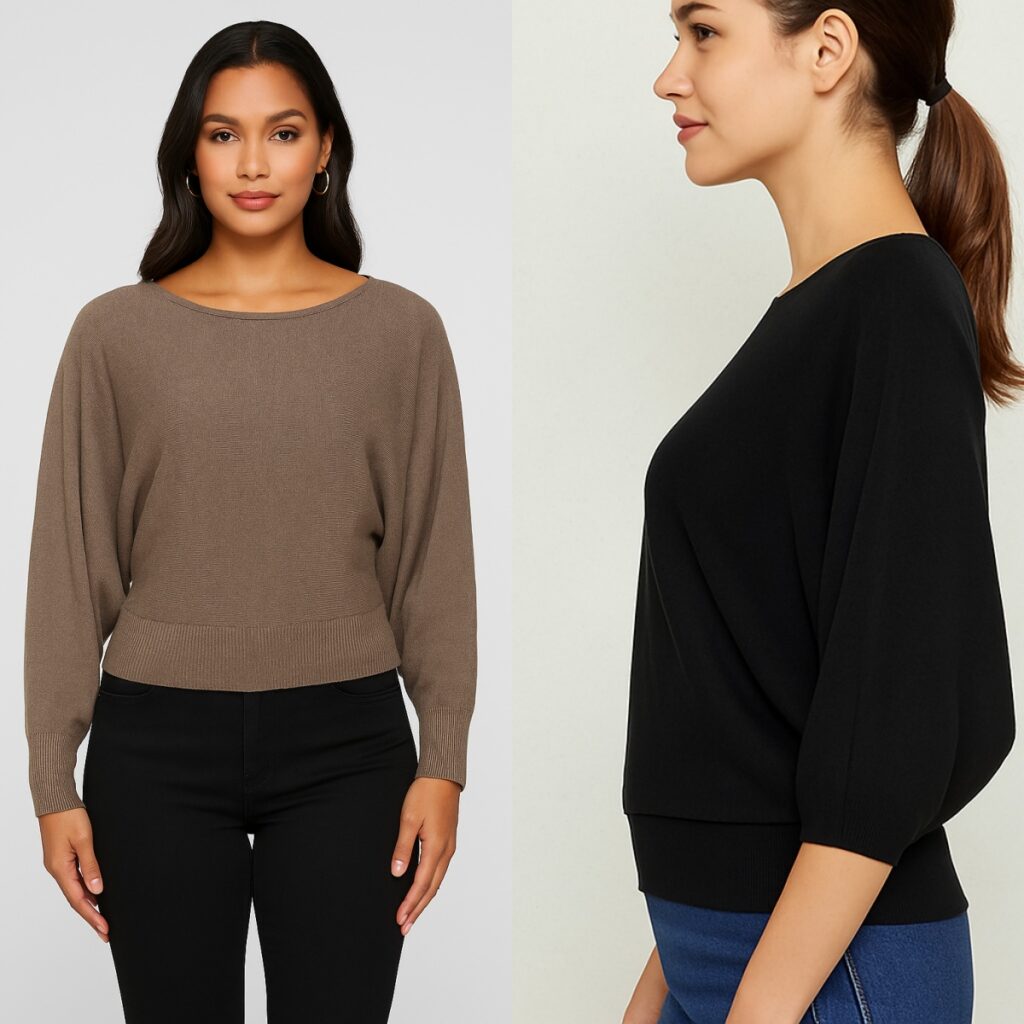
Fashion sleeves are more than fabric—they shape the entire attitude of a garment. When chosen right, they elevate style and comfort at once. This guide helps you decode sleeve types, starting with one of the most fluid and relaxed designs: the Dolman Sleeve.
The dolman sleeve is a wide, one-piece sleeve that extends from the garment’s body, eliminating the need for a separate armhole seam, and is known for its loose fit and elegant drape.
Originally from traditional garments, dolman sleeves now bring softness and ease to modern fashion silhouettes.
What Is a Dolman Sleeve and Why Is It Still Relevant Today?
Dolman sleeves are common in tops, dresses, jackets, and loungewear. Their construction avoids sharp seams and promotes movement.
Dolman sleeves feature deep armholes and a continuous extension from the bodice, often tapering at the wrist, making them ideal for relaxed and flowing styles.
This design is especially loved in womenswear for its forgiving silhouette and ease of wear.
Understanding Dolman Sleeves in Detail
Pattern & Construction Benefits
- No shoulder seam: It’s cut as one with the bodice.
- Efficient in production: Saves sewing time and simplifies pattern-making.
- Fabric-friendly: Best with soft, drapey materials like rayon, viscose, or silk.
| Element | Description |
|---|---|
| Construction | One-piece with bodice, no armhole seam |
| Fit | Loose upper arm, tapered wrist |
| Best Fabrics | Jersey, chiffon, silk, modal, or bamboo blends |
| Style Applications | Casual tops, kaftans, relaxed dresses |
Movement & Wearability
The deep-cut armhole gives freedom of movement and provides a comfortable fit for various body types.
| Feature | Advantage |
|---|---|
| Movement Range | No restriction at shoulder or underarm |
| Fit Flexibility | Adapts to many shapes without tailoring |
| Size Inclusivity | Ideal for oversized or one-size-fits-all designs |
Dolman vs. Batwing vs. Kimono Sleeves
Understanding how dolman sleeves compare to other loose sleeve types helps in design planning.
| Feature | Dolman Sleeve | Batwing Sleeve | Kimono Sleeve |
|---|---|---|---|
| Cut Style | One with bodice | Extended curve underarm | Straight, with no shoulder shaping |
| Volume | Moderate drape | High volume, dramatic look | Balanced structure |
| Fit at Wrist | Usually tapered | Tapered or loose | Typically wide or cropped |
Styling Possibilities
Dolman sleeves can be casual or elegant depending on fabric and silhouette.
| Style Direction | Dolman Sleeve Adaptation |
|---|---|
| Minimalist | Monochrome dolman top with clean lines |
| Resortwear | Flowy maxi dress with dolman sleeves |
| Streetwear | Oversized dolman-cut hoodie |
| Office Look | Structured dolman blouse with slim trousers |
Drop Shoulder Sleeve
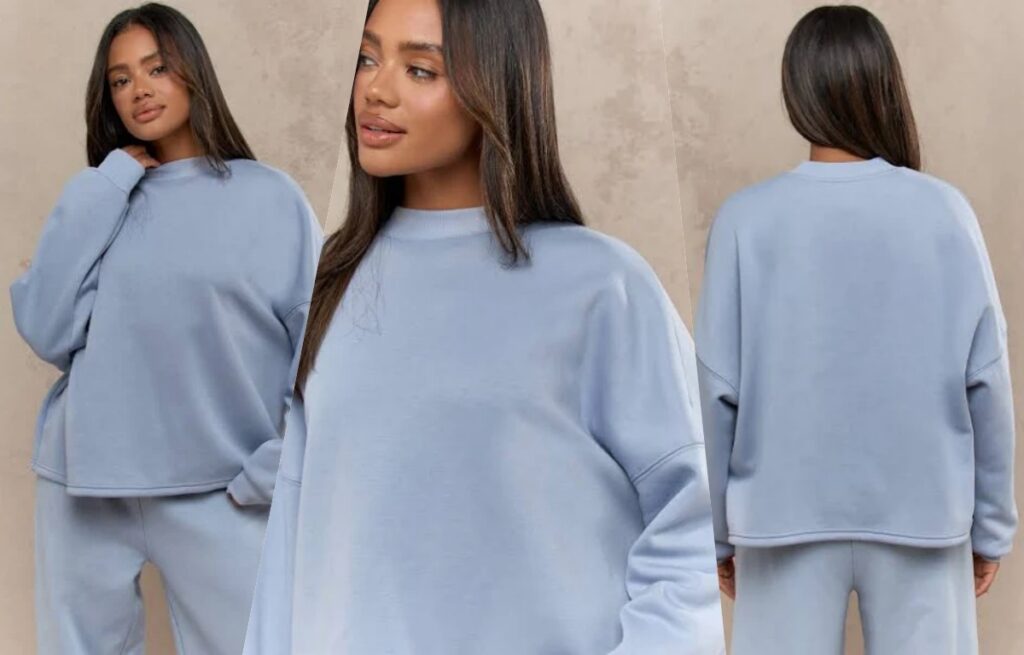
What Is a Drop Shoulder Sleeve and Why Is It Popular in Modern Fashion?
Drop shoulder sleeves are everywhere—from oversized hoodies to designer runway coats. Their casual structure brings an effortlessly relaxed aesthetic that resonates with today’s fashion.
A drop shoulder sleeve is a sleeve style where the seam is set lower than the natural shoulder line, creating a slouchy, relaxed appearance and offering greater ease of movement.
This sleeve has become a go-to for modern unisex, streetwear, and comfort-driven designs.
Why Do Designers Choose Drop Shoulder Sleeves?
The drop shoulder allows garments to drape loosely over the body. It’s versatile, easy to construct, and fits a wide range of body shapes.
Designers choose drop shoulders to create oversized silhouettes, soften structured garments, and appeal to modern minimalism.
This style not only supports creative proportion play but also adds a sense of ease and inclusivity.
Anatomy, Construction, and Styling of Drop Shoulder Sleeves
Sleeve Position and Construction
Unlike traditional set-in sleeves, drop shoulders intentionally place the sleeve seam below the shoulder point, affecting how the fabric falls.
| Feature | Description |
|---|---|
| Seam Position | Below natural shoulder line |
| Ease of Fit | Offers extra room through armhole and chest |
| Pattern Modification | Requires sloping shoulder in bodice pattern |
| Stitching Simplicity | Often used in cut-and-sew knitwear |
Drop Shoulder vs. Set-in Shoulder vs. Raglan
| Feature | Drop Shoulder | Set-in Sleeve | Raglan Sleeve |
|---|---|---|---|
| Shoulder Seam | Below shoulder point | Aligns with shoulder ridge | Extends from neckline |
| Look | Relaxed, oversized | Structured, tailored | Sporty, dynamic |
| Movement | More relaxed | Tailored, limited ease | High mobility |
Ideal Garment Categories for Drop Shoulders
Drop shoulders are widely used across various garment types:
| Garment Type | Why Drop Shoulder Works |
|---|---|
| Sweatshirts & Hoodies | Creates a relaxed, slouchy silhouette |
| T-Shirts | Enhances oversized fit trend |
| Outerwear | Allows for layering and ease of movement |
| Dresses | Adds minimalistic, soft-drape effect |
Fabric Considerations
Heavier or more structured fabrics help emphasize the shoulder line drop, while lighter knits offer more drape.
- Structured fabrics: Enhance the “dropped” shoulder break (e.g., denim, neoprene)
- Soft knits: Provide a seamless flow from neck to wrist (e.g., jersey, modal)
Styling & Trend Analysis
- Streetwear brands like Fear of God and Off-White frequently use drop shoulders to express volume and edge.
- Loungewear and minimalist labels use it to achieve effortless comfort.
- The style contributes to gender-neutral fashion silhouettes due to its loose, boxy form.
Cap Sleeve
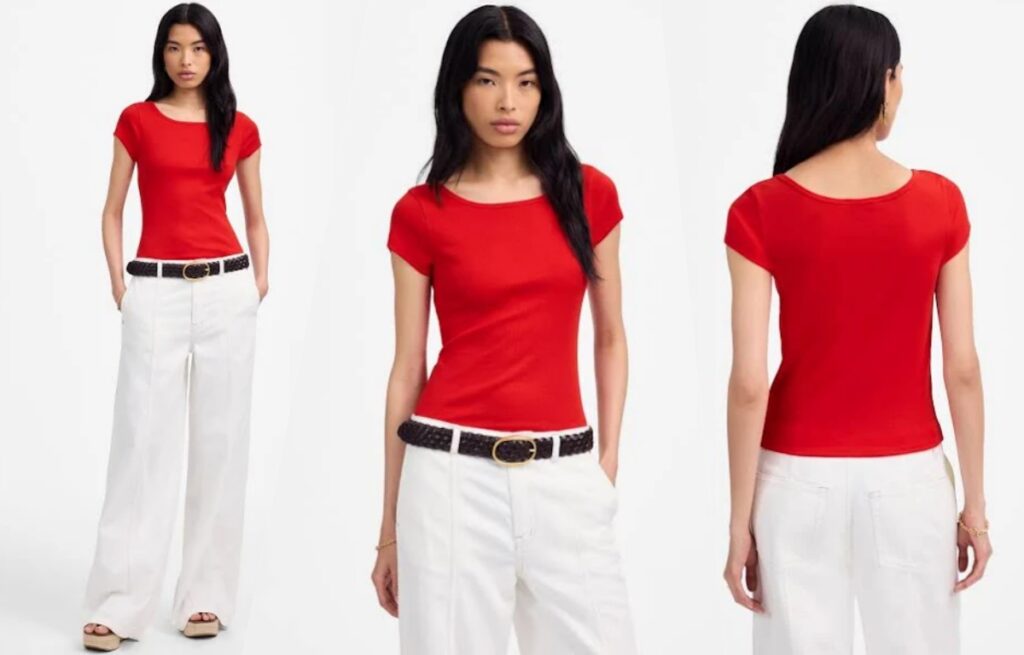
What Is a Cap Sleeve and How Does It Influence Silhouette and Function?
Cap sleeves are a classic design element in women’s tops and dresses, offering minimal coverage while shaping the shoulder line in a refined way. They’re widely favored in warm-weather fashion and feminine tailoring.
A cap sleeve is a short sleeve that covers only the shoulder without extending below the armpit, creating a clean, rounded cap-like silhouette.
Though minimal in size, cap sleeves hold a strong impact on garment aesthetics and wearer perception.
Why Are Cap Sleeves a Go-To Choice in Women’s Fashion?
Cap sleeves blend coverage and exposure. They’re a perfect choice when sleeveless feels too bare but full sleeves are unnecessary.
Designers choose cap sleeves to maintain modesty while highlighting the arms and collarbone, often adding softness and charm to the garment.
They are ideal for spring and summer pieces, especially dresses and blouses that emphasize a delicate, feminine look.
Construction, Visual Effects, and Functional Use of Cap Sleeves
Cap Sleeve Construction and Pattern Features
Cap sleeves are typically cut as an extension of the bodice or inserted with a very shallow sleeve head. They don’t have underarm seams, so they simplify construction.
| Feature | Description |
|---|---|
| Coverage | Minimal; just the shoulder cap |
| Construction Method | Can be one-piece with bodice or set-in with shallow curve |
| Armhole Fit | May require fine tuning for mobility and comfort |
| Edging | Often finished with binding or facing |
Cap Sleeve vs. Sleeveless vs. Short Sleeve
| Feature | Cap Sleeve | Sleeveless | Short Sleeve |
|---|---|---|---|
| Coverage | Shoulder only | Armhole left exposed | Extends midway down upper arm |
| Aesthetic | Soft, feminine, structured | Clean, bold, minimal | Versatile and casual |
| Usage | Dresses, blouses, bridal wear | Sportswear, tanks | T-shirts, polos, uniforms |
Design Functions and Silhouette Control
Cap sleeves influence the perception of shoulder width and arm length:
- Broad shoulders: Cap sleeves visually soften and narrow the frame.
- Narrow shoulders: Certain flared cap sleeve designs can widen the upper body visually.
- Short arms: Cap sleeves can make arms appear longer due to the high-cut shape.
Ideal Fabrics for Cap Sleeves
Because of their minimal structure, cap sleeves work best with light to medium-weight fabrics:
| Fabric Type | Benefits in Cap Sleeve Use |
|---|---|
| Cotton Voile | Crisp but breathable, holds shape well |
| Chiffon | Adds romantic drape and lightness |
| Satin/Silk | Ideal for formalwear, elegant fluid movement |
| Jersey Knit | Provides stretch and comfort for everyday wear |
Common Use in Fashion Categories
Cap sleeves appear in:
- Bridal gowns – modest but elegant shoulder coverage
- Cocktail dresses – adds balance to sleeveless silhouettes
- Blouses and tops – combines office-appropriate coverage with style
Sleeveless Cut-in
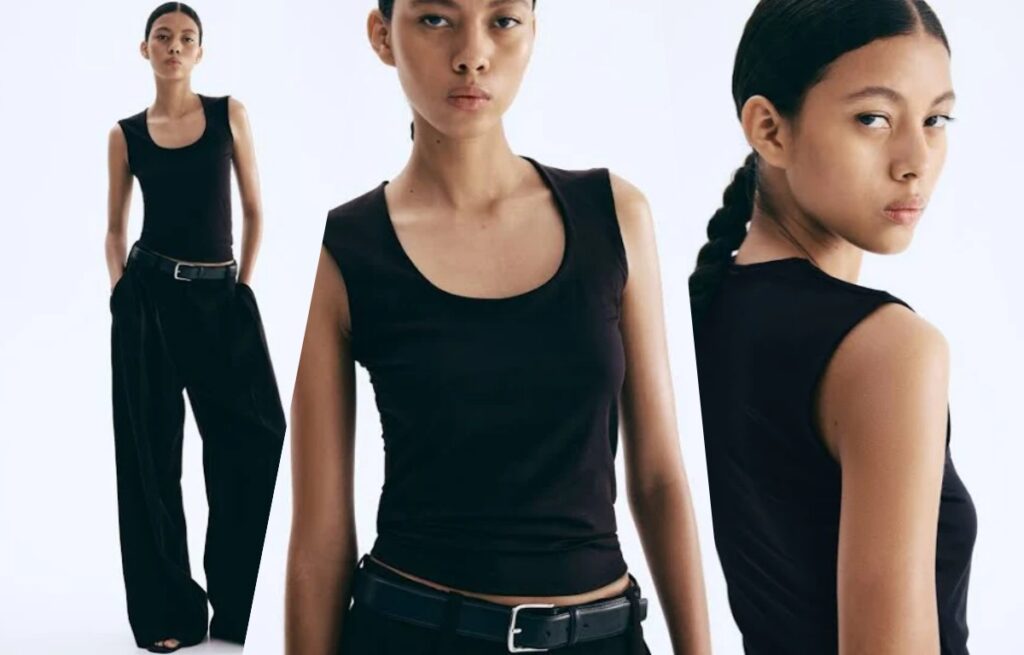
What Is a Sleeveless Cut-In and Why Is It Popular in Contemporary Women’s Fashion?
The sleeveless cut-in is a bold and modern design element commonly seen in women’s dresses, tops, and jumpsuits. It’s especially favored for its ability to emphasize the shoulders and arms, often giving garments a sportier or edgier silhouette.
A sleeveless cut-in refers to a sleeveless armhole that curves inward, exposing more of the shoulder blade and upper arm for a sleek, sculpted look.
This detail is frequently used in modern eveningwear and athleisure-inspired designs.
Why Are Sleeveless Cut-In Designs Favored for Summer and Formal Wear
Sleeveless cut-ins strike a balance between minimalism and high-impact visual design. The cut visually lifts the shoulder area, often making the wearer appear taller and leaner.
Designers favor this cut for warm weather, special occasions, and runway pieces where the goal is to highlight the neck and upper body in a confident way.
It also offers a contemporary alternative to traditional sleeveless or cap sleeve styles.
Pattern Construction, Body Type Matching, and Fashion Function
Sleeveless Cut-In vs. Classic Sleeveless vs. Halter Neck
| Feature | Sleeveless Cut-In | Classic Sleeveless | Halter Neck |
|---|---|---|---|
| Armhole Shape | Curves inward, deep cut | Straight down from shoulder | Wraps around neck |
| Shoulder Exposure | High | Medium | High |
| Aesthetic | Sporty, sleek, modern | Clean, classic | Sexy, dramatic |
| Common Use | Dresses, jumpsuits, tanks | Everyday tops, blouses | Formalwear, beachwear |
Garment Construction Details
- Armhole Finish: Due to the larger cut-in angle, the armhole edge often needs reinforced finishing such as binding, facings, or narrow hems to prevent gaping or distortion.
- Support Consideration: Designers often need to consider bra compatibility or add internal structure (e.g. built-in bras or lining) since regular bra straps may be exposed.
- Bodice Adjustment: Since the cut removes more fabric from the upper chest and shoulder, bust darts and side seams must be well-shaped to avoid fit issues.
Body Type Considerations
| Body Type | Effect of Sleeveless Cut-In |
|---|---|
| Broad Shoulders | May over-emphasize width if not balanced with volume |
| Narrow Shoulders | Enhances and broadens the appearance |
| Athletic Builds | Highlights toned arms and upper body |
| Fuller Bust | Requires careful shaping and bust support |
Ideal Fabrics for Sleeveless Cut-In Styles
These garments often benefit from fabrics with some body and structure to maintain clean edges and shaping.
| Fabric | Benefit |
|---|---|
| Cotton Poplin | Holds shape, breathable, good for daywear |
| Scuba Knit | Stretch and body support, ideal for modern silhouettes |
| Satin / Silk | Drape and fluidity, elegant for eveningwear |
| Ponte Roma | Dense knit with structure, supports form-fitting cuts |
Style Applications in the Fashion Industry
- Evening Gowns & Cocktail Dresses – for an elegant yet edgy neckline
- Activewear & Athleisure – to allow arm mobility and showcase the upper body
- Bridalwear – when combined with illusion mesh or lace for modern romance
- Workwear Jumpsuits – paired with tailoring to balance femininity and strength
Detachable Sleeve
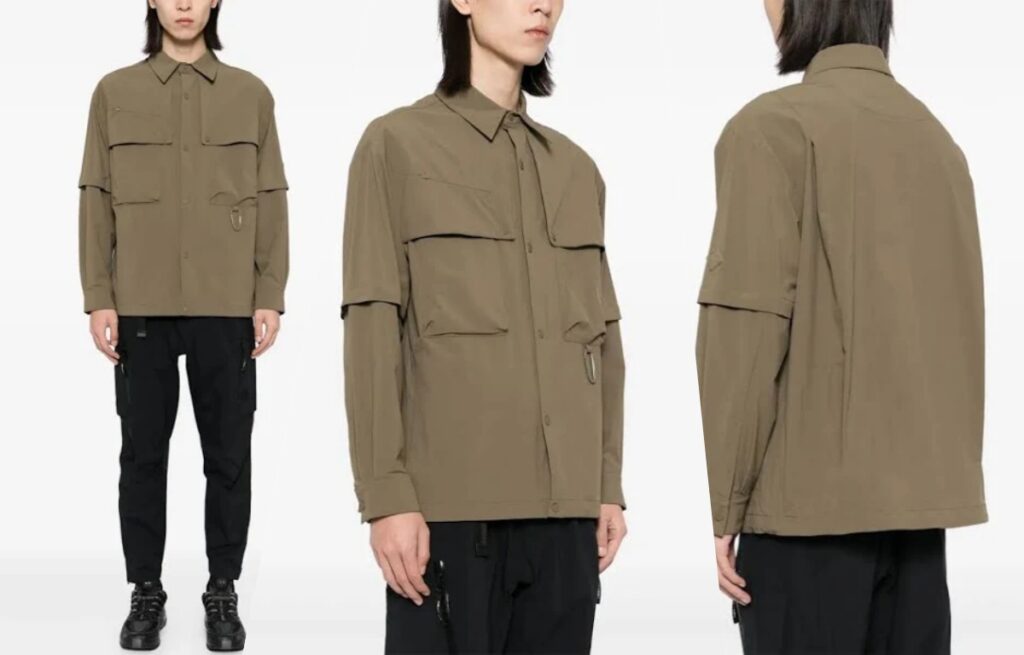
What Is a Detachable Sleeve and Why Is It Gaining Popularity in Modern Apparel?
Fashion demands flexibility—and detachable sleeves provide just that. As wardrobes shift from day to night, work to workout, or casual to formal, garments with detachable sleeves allow wearers to adapt without changing clothes.
A detachable sleeve is a removable sleeve component attached to a garment through buttons, zippers, snaps, or Velcro. This design lets wearers convert long sleeves into sleeveless looks within seconds.
The functionality and styling potential of this sleeve type make it a favorite in performance wear, travel fashion, and streetwear collections.
Why Do Designers Use Detachable Sleeves in Jackets and Dresses?
Detachable sleeves serve both aesthetic and functional purposes. For designers, they offer more versatility in a single garment. For consumers, they add adaptability and layering options without the bulk.
These sleeves are often seen in convertible jackets, military-inspired garments, modular fashion pieces, and runway designs that play with customization and personalization.
They allow for two styles in one, appealing to fashion-forward, sustainability-conscious, and travel-savvy audiences.
Construction, Styling Logic, and Performance Benefits
Types of Detachable Sleeve Fastenings
| Fastening Type | Description | Best Used In |
|---|---|---|
| Zippers | Secure, durable, sporty feel | Outdoor jackets, cargo styles |
| Snaps | Easy to remove and reattach | Utility fashion, casual tops |
| Buttons | More traditional and decorative | Dresses, blouses |
| Velcro | Lightweight and quick | Performance and children’s wear |
Each fastening choice affects the aesthetic and use-case of the sleeve. For example, zippers give a modern utility vibe, while buttons suit elegant or vintage looks.
Key Design Considerations for Detachable Sleeves
- Armhole Reinforcement: The armhole seam must remain visually appealing and structurally sound when sleeves are detached. Bias binding or hidden facings are often used to cleanly finish the edge.
- Weight Balance: Sleeves should not pull down or distort the shoulder seam when worn. Designers must calculate sleeve weight and distribution.
- Matching Fabric Drape: Sleeves and bodices must share similar fabric behavior to ensure visual consistency whether the sleeve is attached or not.
Functional & Market Advantages
| Benefit | Description |
|---|---|
| Seasonal Flexibility | Converts a winter jacket to a spring vest |
| Packing Efficiency | Ideal for travel—one garment, multiple functions |
| Style Versatility | Transforms a day dress into an evening-ready look |
| Sustainable Design Approach | Encourages longer garment life and multiple styling uses |
| Performance Adaptability | Popular in military wear, cycling, hiking gear where quick adjustments help |
Examples of Use in Fashion Segments
- Luxury Streetwear: Brands like Alyx and A-COLD-WALL* use modular detachable sleeves for urban appeal.
- Outdoor Wear: Convertible sleeve jackets dominate hiking, snowboarding, and tactical categories.
- Kids’ Fashion: Detachable sleeves make clothes easier to manage for parents and more fun for kids.
- Bridal and Occasion Wear: Designers now offer wedding gowns with detachable sleeves for ceremony-to-party transitions.
Garment Engineering Tip
If your garment includes lined detachable sleeves, be aware that bulk around the armhole could be a risk. Flat seams and hidden snap-tapes help reduce visible stitch lines. Also, match linings to main fabrics for visual cohesion when detached.
Convertible Sleeve
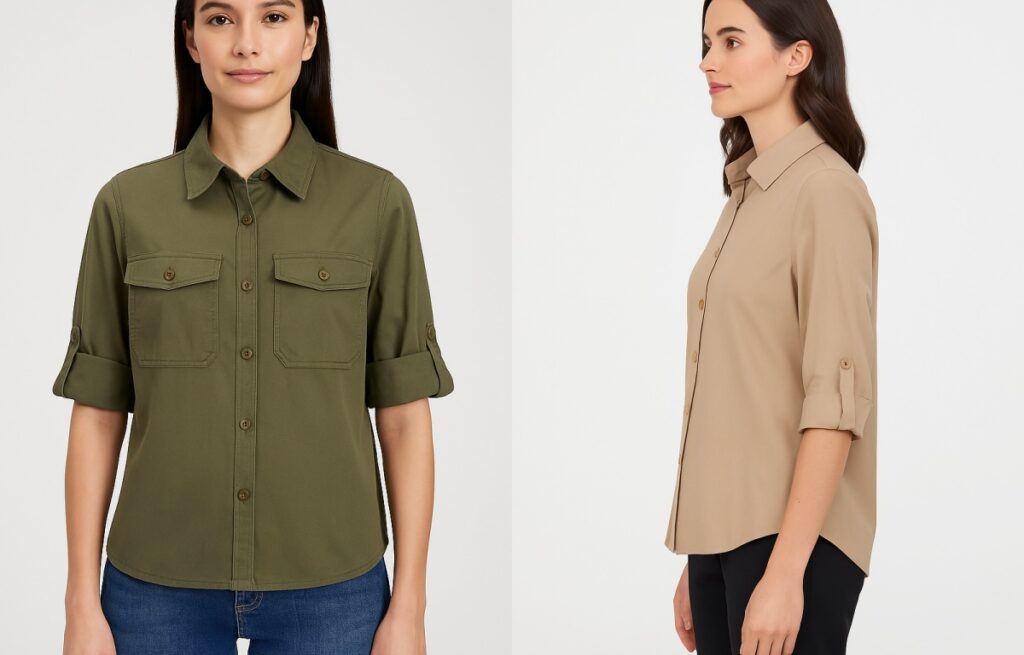
What Is a Convertible Sleeve and How Does It Enhance Garment Versatility?
Convertible sleeves are a clever solution to unpredictable weather and shifting daily schedules. They empower wearers to adapt their look or comfort level instantly—without changing the whole outfit.
A convertible sleeve is a long sleeve that can be altered into a shorter style, usually with a tab and button mechanism or a zip-off feature. It’s designed for adaptability in both style and function.
This type of sleeve is most commonly seen in outerwear, casual shirts, and utility fashion, offering 2-in-1 practicality for modern wardrobes.
Why Are Convertible Sleeves a Smart Choice for Activewear and Travel Fashion?
In today’s dynamic fashion market, functionality is key. Convertible sleeves offer a seamless transition from long to short sleeve without compromising the aesthetic of the garment.
Designers favor them for their ability to make a single item serve multiple purposes, especially in climates or lifestyles that demand flexibility.
These sleeves are particularly useful in outdoor apparel, military garments, adventure wear, and daily commuter fashion.
Construction, Styling, and Use Cases of Convertible SleevesCommon Types of Convertible Sleeve Constructions
| Type | Description | Typical Garments |
|---|---|---|
| Roll-tab with Button | Includes a tab and inner button to secure rolled sleeve | Casual shirts, safari jackets |
| Zip-off Lower Sleeve | Zipper allows entire sleeve portion to be removed | Hiking jackets, convertible outerwear |
| Snap-on Sleeve Extensions | Sleeves added or removed via snaps | Military garments, experimental fashion |
| Hidden Tie/Loop Mechanism | Inner loop holds rolled sleeve without visible tab | Minimalist or designer blouses/jackets |
These constructions vary depending on the brand’s design goals, target customer, and fabric type.
Design Details That Matter
- Tab Placement: Tabs should align with sleeve placket or be slightly above the elbow for best hold and comfort.
- Interior Finish: When sleeves are rolled or removed, the visible inner side should still appear clean and structured.
- Fastening Hardware: Matching button or zipper tones to garment color elevates the design while maintaining subtlety.
Benefits Across Market Segments
| Fashion Segment | How Convertible Sleeves Are Used |
|---|---|
| Outdoor/Activewear | For ventilation, layering control, or rapid climate adjustment |
| Travel Wear | One shirt covers multiple climates and activities |
| Urban Streetwear | Style experimentation and personalization of fit/look |
| Workwear | Practicality in work shirts (e.g., office-to-field transitions) |
| Designer Collections | Adds a deconstructed or transformative fashion aesthetic |
Convertible sleeves offer a compelling sustainability edge by making one item serve multiple needs, reducing the need for additional purchases.
Examples from Fashion Brands
- The North Face & Columbia: Use zip-off sleeves in jackets for hiking or skiing trips.
- UNIQLO & Muji: Offer simple cotton or linen shirts with roll-up sleeve tabs ideal for travel.
- Y-3 and Issey Miyake: Explore abstract convertible sleeve constructions in avant-garde silhouettes.
- Workwear Brands (e.g., Carhartt): Apply roll-tab sleeves in durable cotton shirts to combine function with durability.
Material Compatibility Tips
- Lightweight cotton, nylon, and linen work best for roll-tab sleeves due to their flexibility and breathability.
- Structured twill or denim may not roll cleanly—designers often add interior facing or darts to reduce bulk.
- For zip-off styles, use high-quality concealed zippers to avoid visual disruption and maintain comfort.
Cuff Strap Sleeve
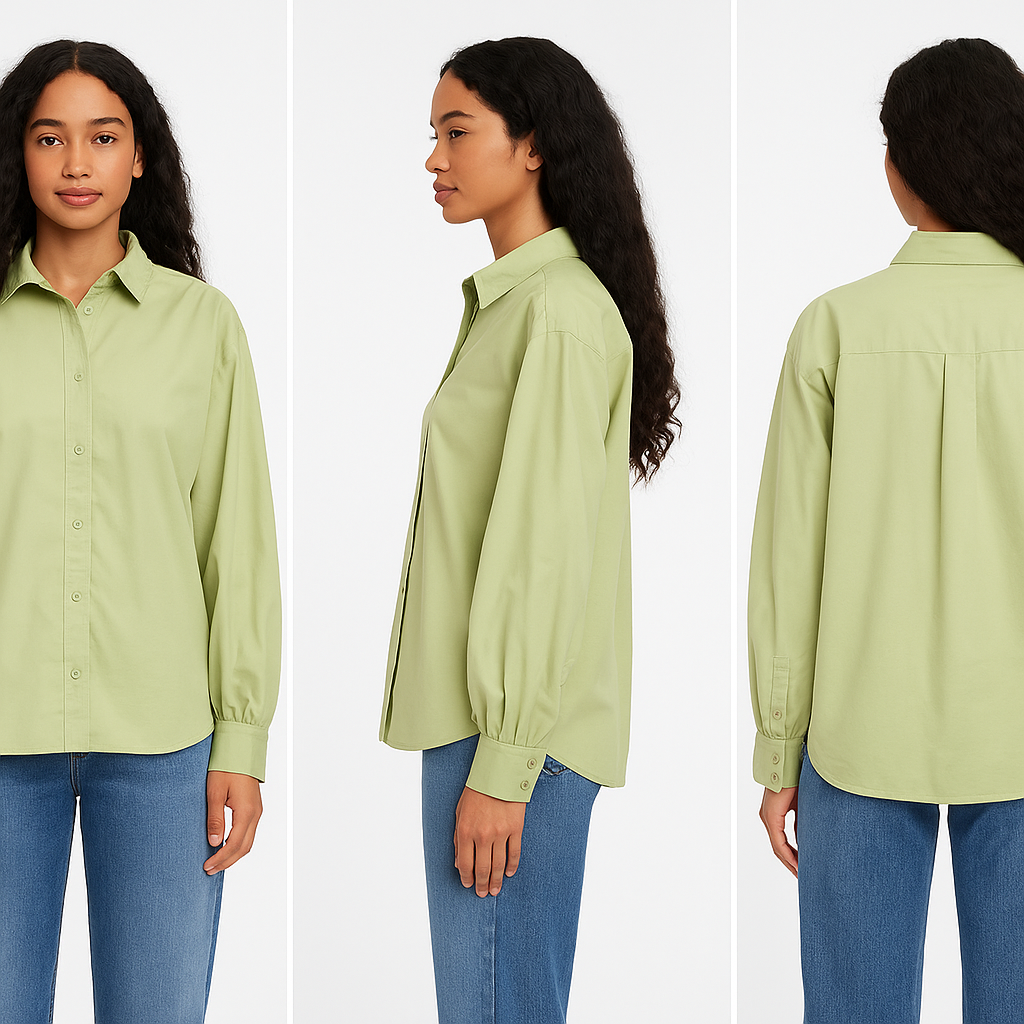
What Is a Cuff Strap Sleeve and Why Does It Matter in Outerwear Design?
Cuff strap sleeves are more than just a decorative touch—they provide both visual interest and practical function. They’re especially common in jackets, coats, and military-inspired apparel where sleeve adjustability is a must.
A cuff strap sleeve features a functional strap—often with a button, snap, or buckle—placed at the wrist or forearm area, allowing the sleeve to be cinched or loosened.
These sleeves help regulate fit, enhance silhouette control, and add a rugged, utilitarian flair to any garment.
How Do Cuff Strap Sleeves Enhance Comfort and Utility?
Whether it’s for wind protection or style statement, cuff strap sleeves are all about controlled flexibility.
By letting the wearer adjust sleeve tightness, these straps prevent wind from entering, keep sleeves in place, and add tailored detailing that elevates the entire look.
This sleeve design is not only functional but also visually structured—bringing edge and dimension to clean silhouettes.
Construction, Styling, and Functional Use of Cuff Strap Sleeves
Main Construction Variants of Cuff Strap Sleeves
| Type | Description | Usage Scenarios |
|---|---|---|
| Tab with Button | Most common; strap sewn into seam with a visible button | Trench coats, military jackets |
| Buckled Strap | Adjustable buckle for tighter cinch and stylistic flair | Biker jackets, moto coats |
| Elastic + Strap Combo | Offers fit flexibility with secure strap finish | Sports jackets, hiking outerwear |
| Hidden Inner Strap | Clean exterior with interior strap for minimal aesthetic | Minimalist raincoats, luxury outerwear |
Designers can choose from these based on the level of control, adjustability, and overall garment complexity they want.
Functional Roles in Different Environments
| Environment | Cuff Strap Purpose |
|---|---|
| Windy/Rainy Areas | Keeps sleeves tight, blocks wind/water entry |
| Industrial/Outdoor | Prevents sleeve snagging during activity |
| Fashion-Forward Urban | Adds sharp detailing and modern tailoring appeal |
| Layered Outfits | Helps sleeves sit well over gloves or under layers |
This type of sleeve becomes essential when performance and appearance must work together.
Styling Tips and Design Variations
- Classic Trench Aesthetic: The cuff strap sleeve is a staple in trench coats, enhancing both shape and military references.
- Moto-Inspired Jackets: Often feature leather straps with metal buckles for a rebellious, structured finish.
- Minimalist Streetwear: May opt for tonal fabric straps and hidden buttons for subtle detail.
- Gender-Neutral Utility: This feature supports unisex silhouettes that combine structure with flexibility.
Brand Examples Using Cuff Strap Sleeves
- Burberry: Their iconic trench coats showcase wide, adjustable cuff straps with D-rings.
- Belstaff: Combines leather cuff straps in moto-style jackets for a hardwearing appeal.
- Acronym & Veilance: Use concealed cuff systems for a futuristic, techwear aesthetic.
- Zara & H&M: Include simplified tab designs in seasonal outerwear for accessibility and trend alignment.
Things to Consider in Production
- Hardware Choice: Ensure durability—metal or reinforced plastic buckles/buttons are ideal.
- Strap Placement: Should align with wrist or slightly above, depending on intended sleeve stack.
- Fabric Thickness: The strap design must accommodate the sleeve fabric’s weight and drape.
- Finish: Edges of the strap must be clean—either turned under, stitched, or tape-bound for quality.
Ribbed Cuff Sleeve
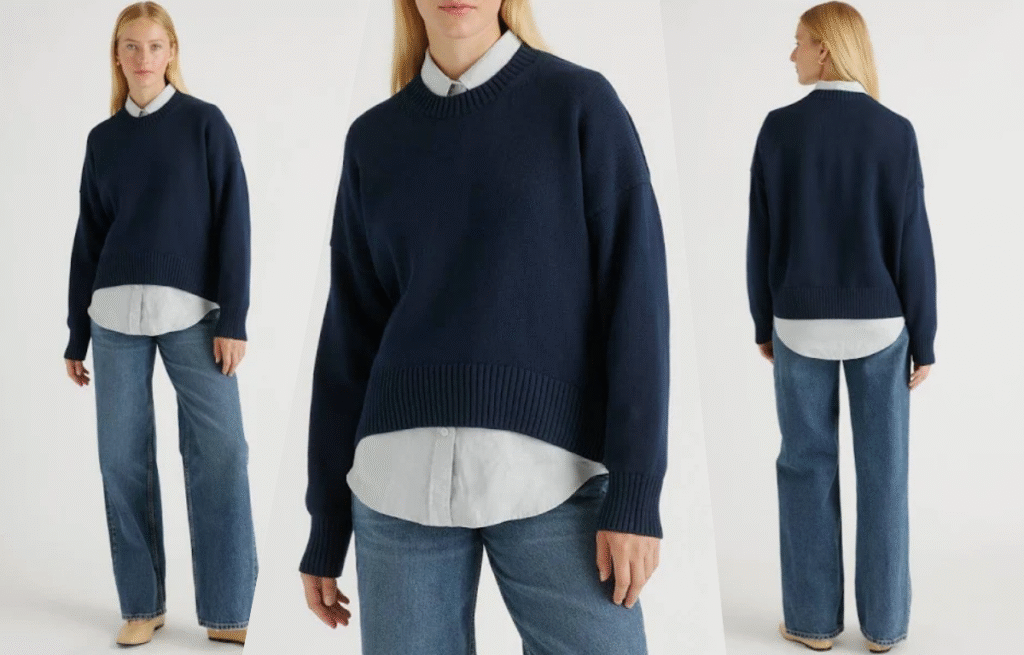
What Is a Ribbed Cuff Sleeve and How Does It Improve Fit and Function?
Ribbed cuff sleeves are widely used in jackets, hoodies, bombers, and sportswear for their snug fit and sleek finish. Their main role is to create a close-fitting wrist opening, offering both comfort and control.
A ribbed cuff sleeve features a stretchable rib knit fabric sewn into the sleeve’s end, designed to keep warmth in and wind out while enhancing sleeve retention during movement.
This simple yet effective sleeve finish is a staple in outerwear and athleisure apparel for its practical functionality and streamlined look.
Why Do Designers Choose Ribbed Cuff Sleeves for Casual and Activewear?
This sleeve style solves multiple performance and wearability problems at once—comfort, fit, and draft protection.
Ribbed cuffs ensure sleeves don’t ride up, trap body heat at the wrist, and add a modern, athletic vibe to the overall silhouette.
They’re cost-efficient, versatile, and compatible with most knit and woven outer fabrics, making them ideal for both functional and fashionable garments.
Design, Materials, Applications, and Production of Ribbed Cuff Sleeves
What Makes a Ribbed Cuff Different?
| Feature | Ribbed Cuff vs. Regular Hem |
|---|---|
| Fit | Elastic, snug around wrist |
| Stretch Recovery | High—thanks to ribbed knit |
| Comfort | Soft and flexible |
| Weather Protection | Keeps wind/cold from entering sleeves |
| Aesthetic Impact | Creates a sporty, clean edge |
Unlike standard open cuffs, ribbed cuffs add functionality through tension and recovery—vital in outerwear or activewear settings.
Material Options for Ribbed Cuffs
| Rib Fabric Type | Description | Best Use |
|---|---|---|
| Cotton Rib Knit | Soft, breathable, natural fibers | Spring jackets, loungewear |
| Polyester-Spandex Mix | Durable, strong recovery, colorfast | Sportswear, utility jackets |
| Wool Blend Rib | Warm and cozy with texture | Cold-weather outerwear |
| Nylon-Rib Blend | Sleek, stretchy, technical appearance | Fashion-forward bomber jackets |
Choosing the right rib material ensures the cuff not only looks good but performs across climates and activity levels.
Functional Roles in Different Sleeve Styles
Ribbed cuffs aren’t limited to one silhouette. Their flexible nature allows them to complement a wide range of jacket types:
- Bomber Jackets: Define the sleeve’s endpoint for a polished streetwear vibe.
- Track Jackets: Keep sleeves in place during movement and exercise.
- Hoodies & Sweatshirts: Enhance comfort and prevent dragging sleeves.
- Windbreakers: Block air from rushing in during high-speed activities.
- Down Jackets: Trap warmth around the wrist to reduce heat loss.
In each case, ribbed cuffs increase usability, warmth retention, and garment structure.
Ribbed Cuff Design Tips for Manufacturers
- Stretch Ratio: Ideal stretch should be around 75–85% of the sleeve opening to allow tension without discomfort.
- Seam Placement: Attach inside the sleeve for clean exterior finish.
- Double Layer Ribbing: In cold-weather garments, consider folded rib cuffs for added insulation and visual depth.
- Color Matching vs. Contrast: Choose tone-on-tone for subtlety or contrast rib for sporty effect.
Pro tip: Ensure ribbed cuffs are pre-washed or pre-shrunk to avoid post-production distortion or curling.
Popular Brands Using Ribbed Cuff Sleeves
| Brand | Application Example |
|---|---|
| Nike | Fleece jackets and track tops |
| Alpha Industries | Classic MA-1 bomber jackets |
| Adidas | Sports jackets with contrast cuffs |
| Carhartt WIP | Workwear-inspired outerwear |
| Zara / H&M | Trendy knit bombers and varsity jackets |
These examples show how ribbed cuffs appear in both functional and fast fashion products, reinforcing their versatility.
Trench Sleeve
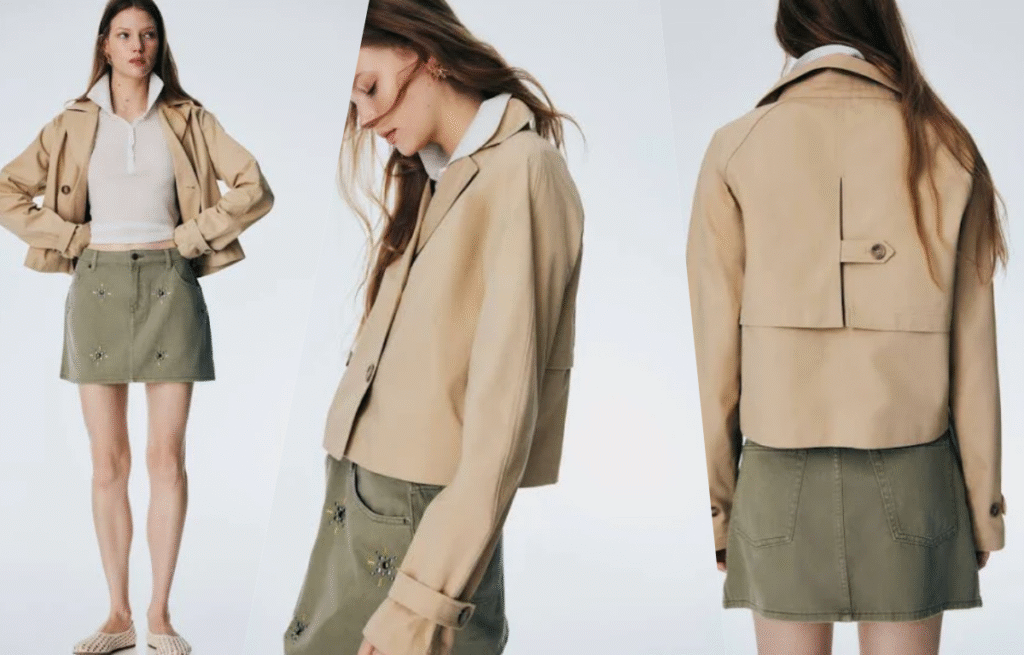
What Is a Trench Sleeve and Why Is It Essential for Functional Outerwear?
Trench sleeves are tailored, structured sleeves typically found on trench coats. They are often designed with shoulder epaulettes, cuff straps, and sometimes storm flaps, blending function with timeless military aesthetics.
A trench sleeve is a straight, set-in sleeve often paired with features like cuff tabs or belts to enhance adjustability, weather resistance, and a sharp silhouette, making it both practical and iconic.
From war-time utility to modern runway, the trench sleeve remains a staple in outerwear design for its structure and versatility.
What Makes Trench Sleeves Different from Regular Jacket Sleeves?
The distinct appeal of a trench sleeve comes from both its construction and its utilitarian details.
Trench sleeves are set-in and cleanly tailored, often enhanced with functional straps, sleeve tabs, or vented backs—originally designed for officers’ mobility and weather protection.
Unlike casual or soft sleeves, trench sleeves are defined, stiffened, and intentionally layered to signal refinement and purpose.
Construction, Features, Functions, and Brand Use of Trench Sleeves
Trench Sleeve Anatomy
| Feature | Description |
|---|---|
| Set-in Construction | Ensures tailored armhole and formal drape |
| Cuff Strap/Belt | Adjustable tightening at wrist to block rain/wind |
| Epaulettes/Shoulder Tabs | Reinforce military origin and visual sharpness |
| Storm Shield | Additional back yoke layer, sometimes extends to sleeve cap |
| Vent Detail | Sometimes includes underarm or wrist vent for airflow |
This hybrid of protection and design results in a sleeve that is both functional and fashionable.
Functional Strengths of Trench Sleeves
- Weather Resistance
The sleeve design is meant to be water-repellent when combined with a tightly woven fabric like gabardine. The cuff strap cinches tight, minimizing water ingress during rain. - Durability in Motion
Originally designed for military use, trench sleeves support range of motion while holding their shape, ideal for walking, commuting, and travel. - Aesthetic Reinforcement
The cuffs, straps, and sometimes buttoned pleats reinforce the coat’s commanding presence. They help visually taper the sleeve and balance the shoulder structure.
Sleeve Design Tips for Manufacturers
| Design Element | Purpose | Tip |
|---|---|---|
| Cuff Strap | Functionality + aesthetics | Use button or D-ring tabs for adjustability |
| Topstitching | Adds structure and holds shape | Double stitching around armhole improves durability |
| Epaulettes | Breaks sleeve line visually | Can be detachable for modern versions |
| Fabric Selection | Holds tailored form + repels moisture | Use gabardine, twill, or coated cotton |
| Sleeve Length | Slightly extended for rain protection | Consider over-wrist length when unbelted |
Trench sleeves are not just for classic trench coats. They’ve evolved into hybrid outerwear and tailored fashion-forward silhouettes.
Trench Sleeves in Brand Collections
| Brand | Style Incorporation |
|---|---|
| Burberry | Heritage trench with buttoned cuff straps |
| Mackintosh | Raincoats with minimalist trench sleeves |
| COS / ARKET | Streamlined trench styles with belt sleeves |
| A.P.C. / Acne | Modern fashion trenches with slight sleeve twists |
| Zara / Mango | Trend-driven versions with contrast or oversized cuffs |
Many brands play with trench sleeves in both minimalist and detailed forms, adapting them to new silhouettes and uses.
Zipper Sleeve
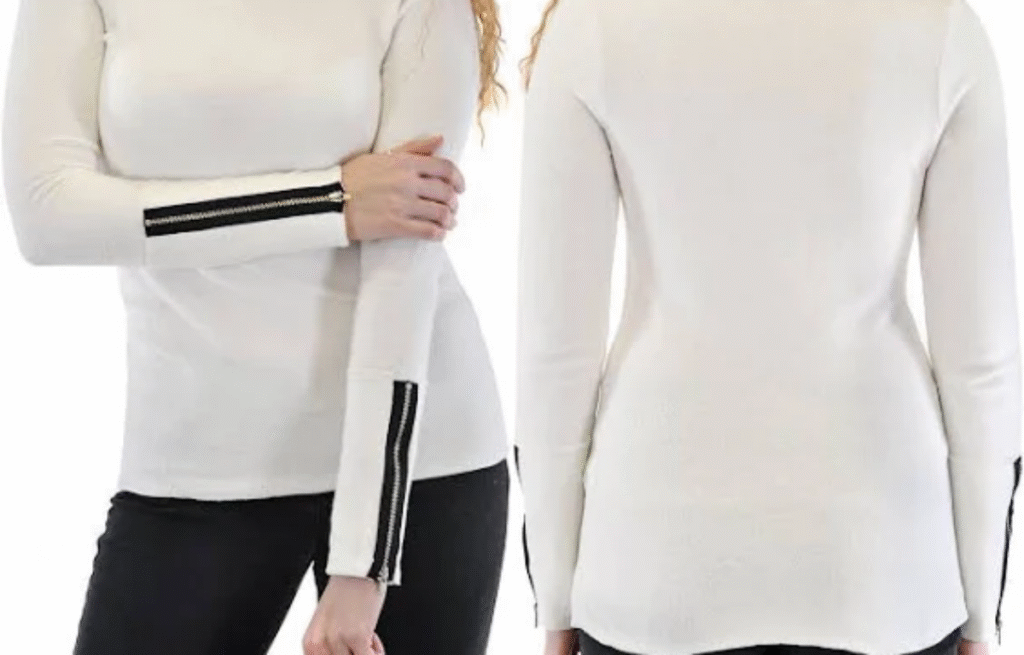
What Is a Zipper Sleeve and How Does It Enhance Jacket Functionality?
Zipper sleeves are designed with one or more zippers integrated into the sleeve seam, cuff, or elbow area, allowing for adjustable fit, ventilation, or even sleeve removal depending on the jacket’s design.
A zipper sleeve adds both function and edge to a garment—providing flexibility in wear, ease of movement, and an element of style customization.
Once limited to biker jackets and utility wear, zipper sleeves are now used in fashion-forward outerwear for both aesthetic and technical purposes.
The Design Logic and Utility Behind Zipper Sleeves
Key Functional Advantages
| Function | Explanation |
|---|---|
| Adjustability | Zippers at cuffs allow users to tighten or loosen the sleeve opening |
| Ventilation | Zippers placed at the bicep or underarm can be opened for airflow |
| Detachability | Some designs include full zip-off sleeves to convert into vests |
| Styling Versatility | Can be left open for a grunge or streetwear look |
This modular aspect makes zipper sleeves particularly popular in performance gear, motorcycle jackets, and techwear.
Common Zipper Placement Options
| Placement Area | Purpose | Design Tip |
|---|---|---|
| Cuff | Ease of wear, especially over gloves or tight wrists | Use metal zippers for a bold look or coil zippers for minimalism |
| Elbow Panel | Style and articulation point | Works well with biker and articulated sleeves |
| Upper Arm | Ventilation and aggressive styling | Often used in tactical or high-performance jackets |
| Full-Length Side | Detachability (convertible to vest) | Ensure double pull sliders for ease of reattachment |
Each zipper sleeve layout supports a different user scenario—from utility to fashion to comfort.
Zipper Sleeve Fabrication & Construction Notes
- Reinforcement is key
Zippers must be double-stitched or tape-reinforced to avoid fabric stress. - Lining compatibility
When used with insulated or lined jackets, ensure the zipper path does not interrupt the lining or expose raw edges. - Zipper type selection
- Metal zippers: Rugged and visible; perfect for moto and streetwear.
- Nylon coil zippers: Flexible and low-profile, best for hidden techwear zips.
- Waterproof zippers: Ideal for outdoor jackets.
Zipper Sleeves in Brand Use
| Brand | Application Example |
|---|---|
| Balenciaga | Oversized sleeves with visible zippers for drama |
| Rick Owens | Technical zipper sleeves in leather or nylon |
| The North Face | Modular jacket sleeves with zip-off convertibility |
| Off-White | Upper-arm zippers for bold streetwear style |
| Nike ACG | Zipper vents integrated for performance heat control |
When Should You Use Zipper Sleeves?
Zipper sleeves are ideal when you want to:
- Add adjustability to sleeve cuffs or elbow articulation
- Introduce styling flexibility for layered looks
- Offer seasonal versatility with zip-off sleeves
- Reinforce a streetwear or performance aesthetic
They’re not just for function—they’ve become part of the language of modern outerwear design.
Articulated Sleeve
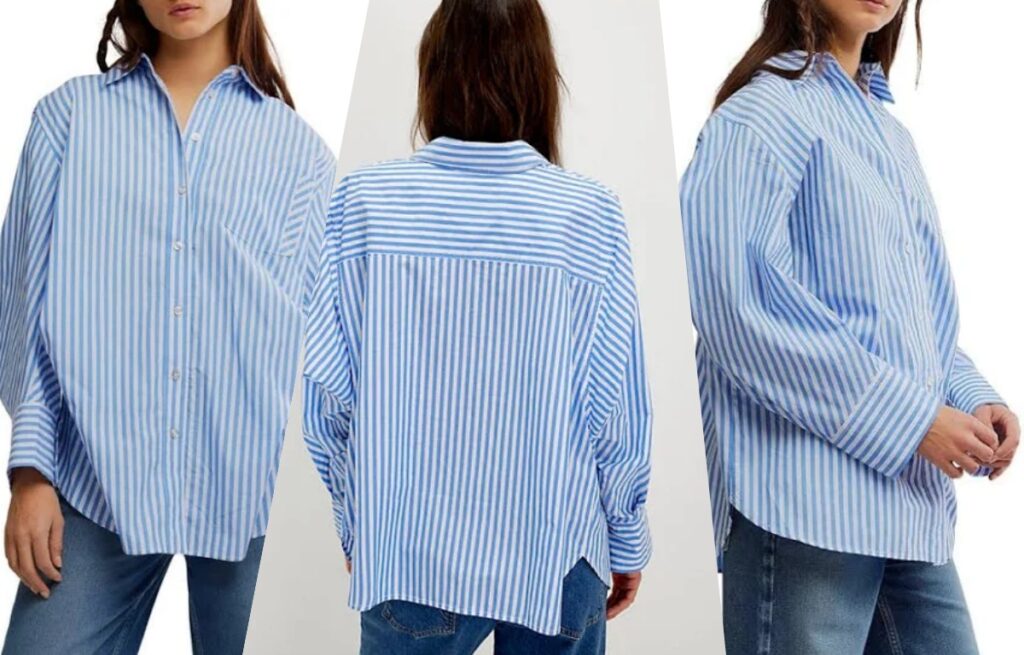
What Is an Articulated Sleeve and Why Does It Matter in Modern Garment Design?
Articulated sleeves are sleeves designed with pre-shaped curves or segmented panels that follow the natural movement of the human arm, especially at the elbow. They’re engineered to improve comfort and mobility in activewear, outerwear, and technical jackets.
An articulated sleeve enhances range of motion, reduces fabric resistance, and delivers a more ergonomic fit—making it essential in performance-driven or movement-heavy garments.
Originally developed for outdoor and military gear, this construction now plays a key role in modern technical fashion and workwear design.
The Engineering Behind Articulated Sleeves
How It Works: The Anatomy of an Articulated Sleeve
Articulated sleeves are often constructed using one of two methods:
| Construction Method | Description |
|---|---|
| Darted/Curved Seam | A single sleeve shaped with strategically placed darts or curved seams |
| Segmented Panels | Built from multiple fabric panels stitched to mimic the bend of the elbow |
These construction techniques reduce tension when the elbow bends and improve comfort over long periods of wear.
Where Articulated Sleeves Excel
| Application Area | Reason for Use |
|---|---|
| Outdoor Jackets | Allows freedom during hiking, climbing, or cycling |
| Workwear Uniforms | Supports dynamic motion while maintaining structure |
| Motorcycle Jackets | Enables forward arm posture and elbow flexion |
| Techwear/Fashion | Adds sculptural detail and a futuristic silhouette |
This design is especially popular in GORE-TEX outerwear, military-grade field jackets, and avant-garde sportswear.
Design Considerations & Fabric Tips
- Material choice matters
Stretch fabrics may reduce the need for articulation, but woven materials require precise shaping for movement. - Match the elbow angle
The pre-bent curve should align with a natural 90° to 110° elbow angle for optimal comfort. - Reinforcement zones
High-stress zones (like the elbow) may include extra padding or abrasion-resistant fabrics. - Aesthetic impact
Designers can exaggerate seamlines for a techwear aesthetic, or keep them subtle for performance outerwear.
Real-World Examples of Articulated Sleeve Use
| Brand | Product Type | Design Purpose |
|---|---|---|
| Arc’teryx | Technical shell | Enhances arm range during alpine activities |
| Nike ACG | Urban outdoor gear | Combines articulation with layering for street-performance |
| Carhartt Workwear | Industrial jacket | Allows manual labor movement without discomfort |
| Stone Island | Tech-fabric coats | Merges innovation with elevated design |
Should You Use Articulated Sleeves in Your Designs?
Choose articulated sleeves if your product is:
- Meant for active environments (sports, utility, outdoor)
- Targeted at high-end techwear or futuristic aesthetics
- Made with non-stretch fabrics that need help accommodating movement
- Focused on ergonomic performance over classic tailoring
Gusseted Sleeve
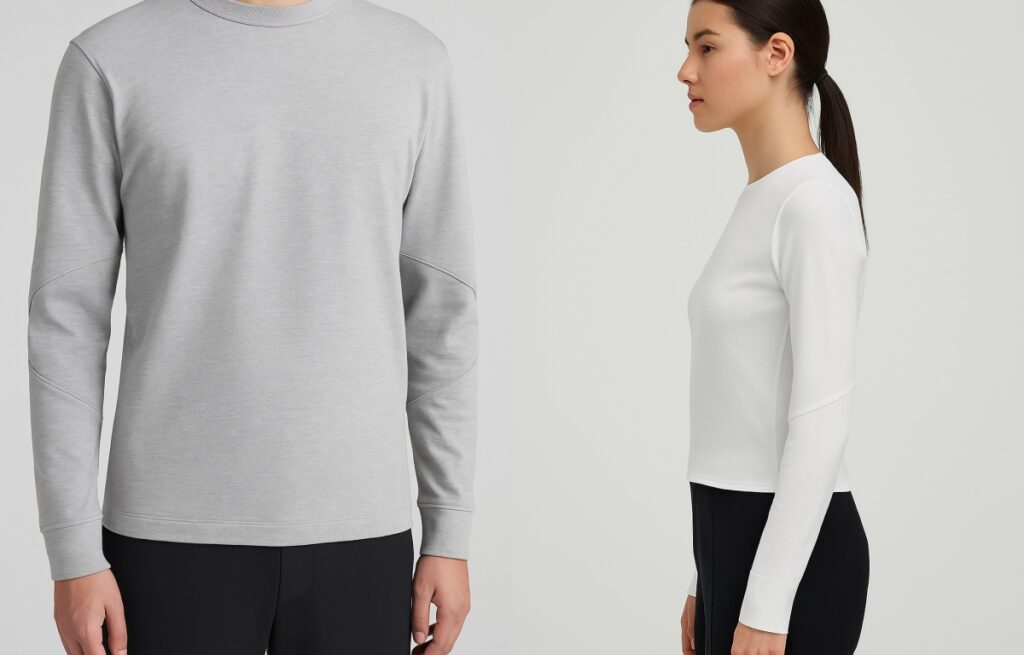
What Is a Gusseted Sleeve and Why Is It Used in Performance Garments?
A gusseted sleeve features a triangular or diamond-shaped fabric panel inserted under the arm or at key seams to enhance mobility, reduce stress on stitching, and improve fit—especially for active or technical wear.
This sleeve design is ideal for motion-intensive apparel, allowing greater range of motion and comfort without compromising the garment’s structure.
Unlike typical sleeve constructions, gussets distribute tension and help prevent tearing or seam failure over time.
The Functionality and Technical Value of Gusseted Sleeves
What Exactly Is a Gusset?
A gusset is a separate piece of fabric—usually shaped like a diamond or triangle—inserted into the underarm area or at the sleeve-body junction.
| Gusset Shape | Application Point | Functionality Benefit |
|---|---|---|
| Diamond | Underarm (common) | Allows multi-directional arm movement |
| Triangle | Side seam or elbow joint | Adds flexibility, reduces bunching or pulling |
| Curved Insert | Sportwear/ergonomic gear | Enhances anatomical shaping and motion support |
Why Gusseted Sleeves Are Essential in Certain Garments
| Industry Use | Example Garments | Key Benefit |
|---|---|---|
| Outdoor Performance | Hiking jackets, rock climbing gear | Enables arm raising without garment lift |
| Workwear | Carpenter overalls, mechanic suits | Withstands repetitive overhead movement |
| Combat Uniforms | Tactical field jackets | Distributes stress across seams |
| Yoga/Activewear | Fitted tops with stretch gussets | Increases mobility in high-stretch zones |
Without gussets, stress from dynamic motion would often concentrate around underarm seams, leading to discomfort or fabric failure.
Construction Techniques and Material Considerations
- Gusset placement must align with range of motion, especially the underarm pivot point
- Use reinforced stitching, like flatlock or bartack, to handle tension across gusset seams
- For stretch fabrics, gussets can be in contrast materials to aid movement and add visual interest
- Gusseted sleeves pair well with raglan sleeves, articulated elbows, and other ergonomic features
Design Flexibility and Style Impact
- Some high-end techwear brands use visible gusset panels as a statement of engineering
- Fashion designers may apply color-blocked gussets for contrast and sporty aesthetics
- Minimalist brands tend to conceal gussets inside seams for function without compromising clean lines
Real-World Brand Applications
| Brand | Application | Design Notes |
|---|---|---|
| Patagonia | Softshell & climbing jackets | Underarm gussets for overhead movement |
| The North Face | Technical outerwear | Invisible gussets paired with articulated shaping |
| 5.11 Tactical | Military-grade uniforms | Diamond gussets prevent stress tear during action |
| Under Armour | Compression and training wear | Stretch gussets aid muscle flex and recovery |
When Should You Use a Gusseted Sleeve?
Choose gusseted sleeves when designing garments that require:
- Maximum range of motion in the shoulders and arms
- Durability under stress, especially at high-tension points
- Improved fit without restricting movement
- A technical, high-performance, or functional look
Roll-up Sleeve
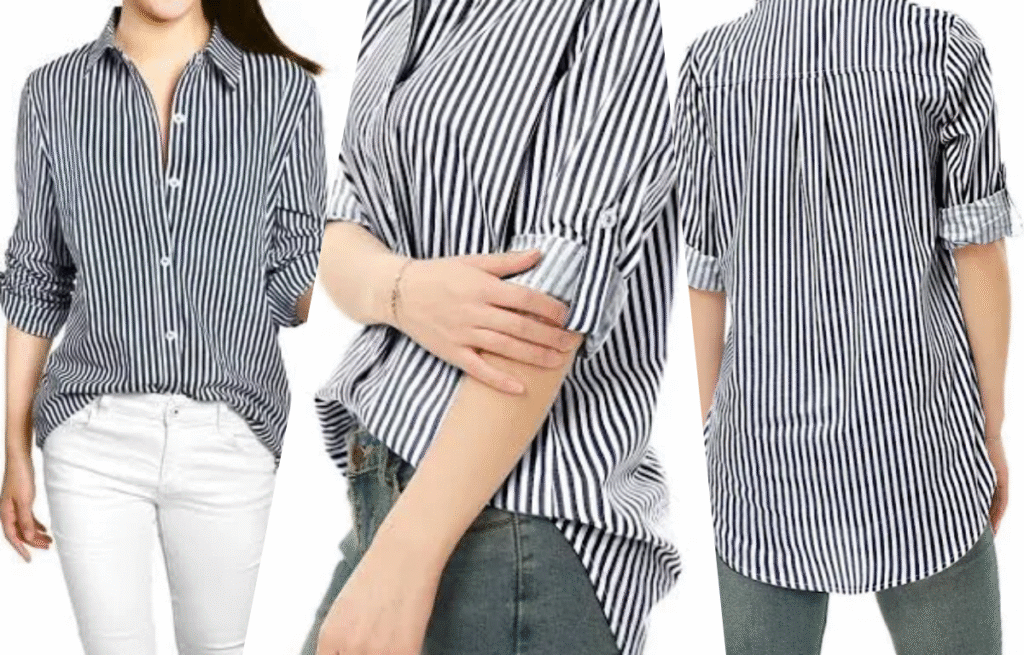
What Is a Roll-up Sleeve and How Does It Enhance Functionality in Jackets?
A roll-up sleeve refers to a sleeve designed with the ability to be folded or rolled and secured in place, often using button tabs, straps, or snap fasteners. It’s popular in utilitarian, workwear, travel, and outdoor garments where versatility and thermal comfort are important.
Roll-up sleeves offer dual styling and functional options, allowing wearers to quickly adjust sleeve length depending on temperature or activity level.
This sleeve type is especially valuable for transitional weather or garments designed for mobility and adaptability.
Understanding the Versatility and Engineering Behind Roll-up Sleeves
Construction Techniques
Roll-up sleeves can appear simple but require precise engineering to remain functional and stylish:
| Component | Purpose | Common Design Choices |
|---|---|---|
| Button tab or strap | Secures the rolled sleeve in place | Single-button, hidden strap, or epaulet |
| Inner sleeve folding | Ensures smooth rolling and tidy appearance | Bias tape-lined or flat-felled seams |
| Sleeve placket | Enhances rollability and access | Used especially in long sleeve shirts |
| Snap fasteners | Fast alternative to buttons in techwear or work | Plastic, metal, or covered hardware |
Most roll-up sleeve constructions require strategic placement of reinforcements at stress points to prevent the button tab from pulling or distorting the outer fabric.
Application Across Garment Categories
Roll-up sleeves are not exclusive to any one category—they are used across menswear, womenswear, and unisex collections:
| Category | Use Case | Notes |
|---|---|---|
| Outdoor jackets | Hiking, camping, warm-to-cool environments | Ventilation and comfort when temperatures rise |
| Safari or utility shirts | Travel-ready wear | Traditional use of roll tabs with functional aesthetic |
| Workwear & uniforms | Adjustable sleeves for labor tasks | Durable fabrics with reinforced sleeve straps |
| Casual fashion | Relaxed, laid-back styling with practical use | Often paired with button-down shirts or shackets |
Functional & Aesthetic Considerations
- Functional: Enables temperature regulation, easier movement, and a cleaner look when sleeves are rolled
- Aesthetic: Adds a rugged, layered, or practical edge to the garment design
- Fit Engineering: Sleeves must be loose enough to roll yet structured enough not to slouch when unrolled
Designers often use contrast fabric on the inner sleeve to add visual interest when sleeves are rolled up—this is especially common in premium men’s shirts or women’s casual blouses.
Consumer Preference Insights
Modern consumers value flexibility and adaptability in garments. Roll-up sleeves directly answer those needs, especially in transitional seasons and active lifestyles.
“It feels like getting two jackets in one—rolled up in the day, down when it’s chilly at night.”
— Customer Feedback, Urban Outfitter Field Jacket
Common Mistakes in Roll-up Sleeve Design (and How to Avoid Them)
| Mistake | Issue It Causes | Better Design Practice |
|---|---|---|
| Tab placement too high or low | Uncomfortable or uneven roll-up | Position tab at ⅔ sleeve length from cuff |
| No reinforcement at tab area | Fabric warps or tears with repeated use | Add interfacing or bartack stitching |
| Sleeve too tight | Cannot roll up cleanly | Add a slightly looser upper sleeve cut |
| Weak fasteners | Roll won’t hold during movement | Use metal snaps or double-stitched buttons |
Vent Sleeve
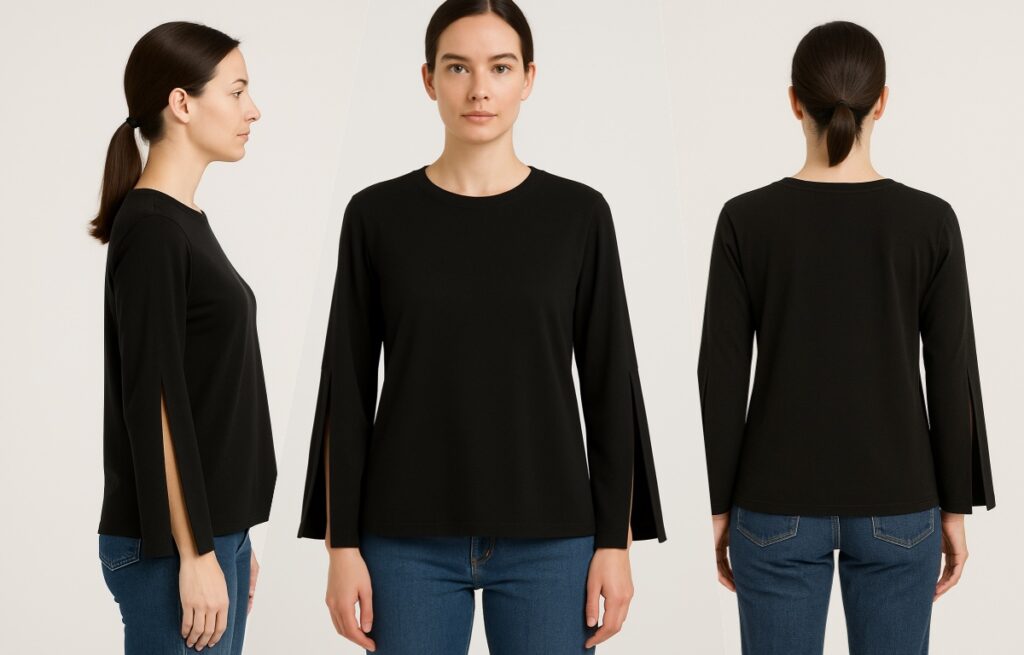
What Is a Vent Sleeve?
A Vent Sleeve refers to a jacket or coat sleeve that incorporates a slit or opening—usually at the cuff or lower sleeve seam—secured by buttons or zippers. This detail is not only decorative but also functional, allowing wearers to open the vent for better mobility or ventilation and close it for a more tailored appearance.
This sleeve type is commonly found in blazers, trench coats, suit jackets, and military-style outerwear, enhancing both comfort and practicality.
Key Construction Features
| Feature | Description |
|---|---|
| Vent Position | Typically at the back seam or side seam of the sleeve cuff |
| Closure Options | Buttons, snaps, zippers, Velcro, or remain open |
| Reinforcement | Often reinforced with interfacing or lining at the slit opening |
| Style Associations | Menswear, tailoring, trench coats, military jackets |
| Functionality | Allows for adjustable fit and ease when layering or rolling up sleeves |
Engineering & Styling of Vent Sleeve
Patterning & Sleeve Head Considerations
Designing a vented sleeve requires rethinking the lower sleeve construction. A basic one-piece sleeve must be split—usually from the back seam—into two overlapping panels. These panels are cut with a vent extension and facing, much like a jacket back vent. For two-piece sleeves, the vent is often built into the back panel only, with a button-overlap mechanism.
Precision in measurement is key. The vent must:
- Align perfectly with sleeve seams
- Maintain even spacing for buttonholes or zipper tracks
- Have reinforced finishing to avoid fraying or distortion
At luxury tailoring levels, a working button vent (surgeon’s cuff) is a signature of craftsmanship, allowing sleeves to be opened or rolled slightly—a tradition in bespoke menswear.
Functional Innovation in Sports and Outerwear
In modern outerwear and activewear, vent sleeves are increasingly hybridized. For instance:
- Zip vents in technical jackets allow heat release during high-intensity movement.
- Mesh-backed vents provide airflow while maintaining a closed appearance.
- Velcro vent cuffs enable quick adjustments in field or tactical gear.
These functional innovations are common in military garments, snowboarding gear, and hiking jackets, where thermal regulation and flexibility are essential.
Design Aesthetics & Consumer Perception
Vent sleeves carry tailored elegance when used in formalwear and utility appeal in performance wear. For example:
- On a trench coat, a button vent adds movement and ease when layering.
- On a suit jacket, a four-button vent is often a marker of craftsmanship.
- In women’s fashion, designers use vent sleeves to create subtle flare effects or asymmetrical detailing.
Consumer perception of vent sleeves is often tied to versatility—a garment that adapts to multiple uses and climate conditions without sacrificing polish.