
 Skip to content
 How to Build Complete, Structured Looks Around Heavyweight Oversized Tees
Heavyweight oversized T-shirts do not function as neutral basics.
Their density and volume create visual gravity that influences the entire outfit structure.
This page explains how to build balanced, intentional urban outfits around heavyweight oversized tees as primary structural anchors.
Heavyweight oversized T-shirts anchor outfits through mass and structure.
They do not disappear into the system—they define it.
This section establishes their role within silhouette hierarchy.
Heavyweight fabric creates visual gravity.
This gravity shifts the outfit’s center of mass upward. If not balanced, the silhouette appears top-heavy.
To judge visual gravity, observe whether attention concentrates excessively on the upper body.
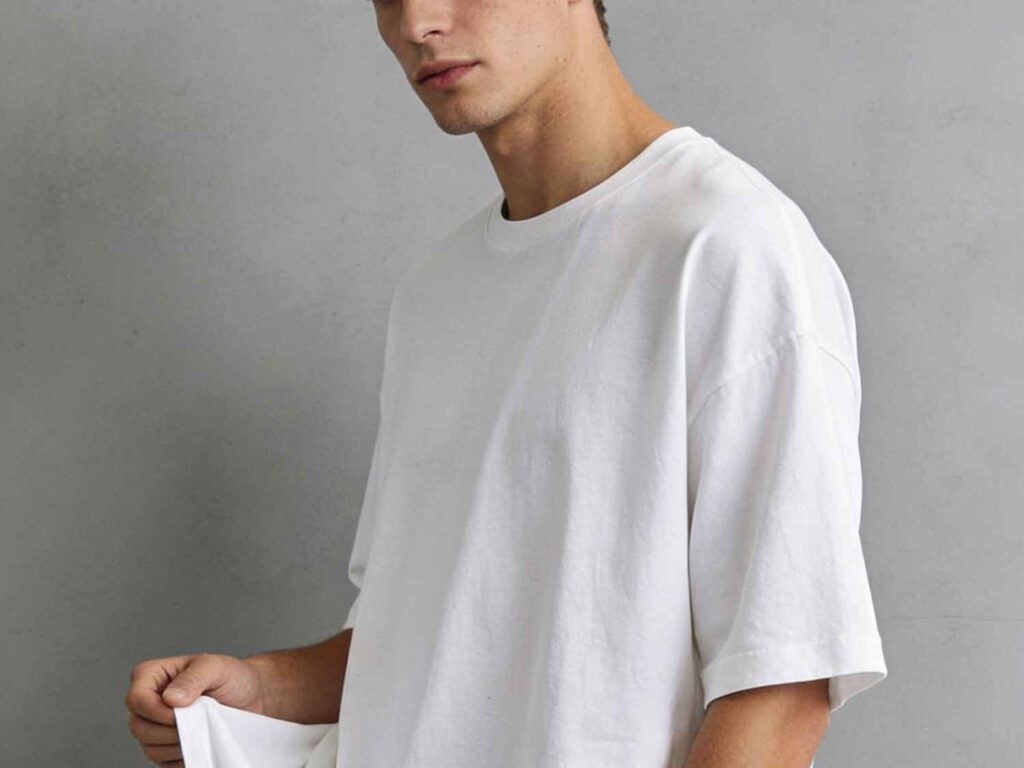

Silhouette hierarchy refers to which garment defines the shape first.
Heavyweight oversized T-shirts often become the dominant element due to density and edge clarity.
Other pieces must support or counterbalance this dominance.
Because heavyweight tees hold structure, layering should be deliberate.
Outfits must be built around their mass distribution rather than treating them as filler layers.
Anchor-first styling prevents imbalance.
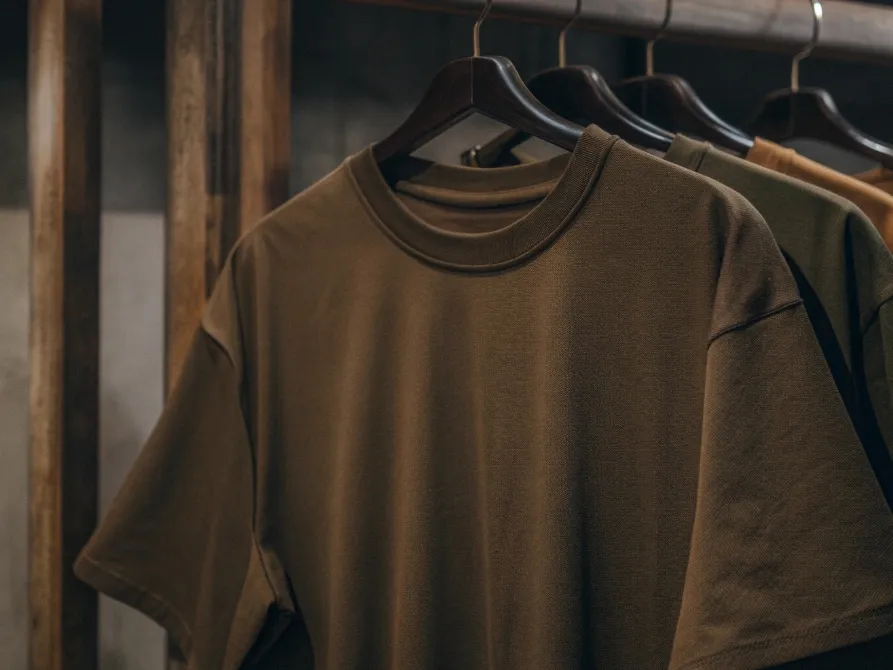
Lower-body selection determines whether the outfit stabilizes or collapses visually.
Bottoms must respond to upper-body mass.
This section defines balancing logic.
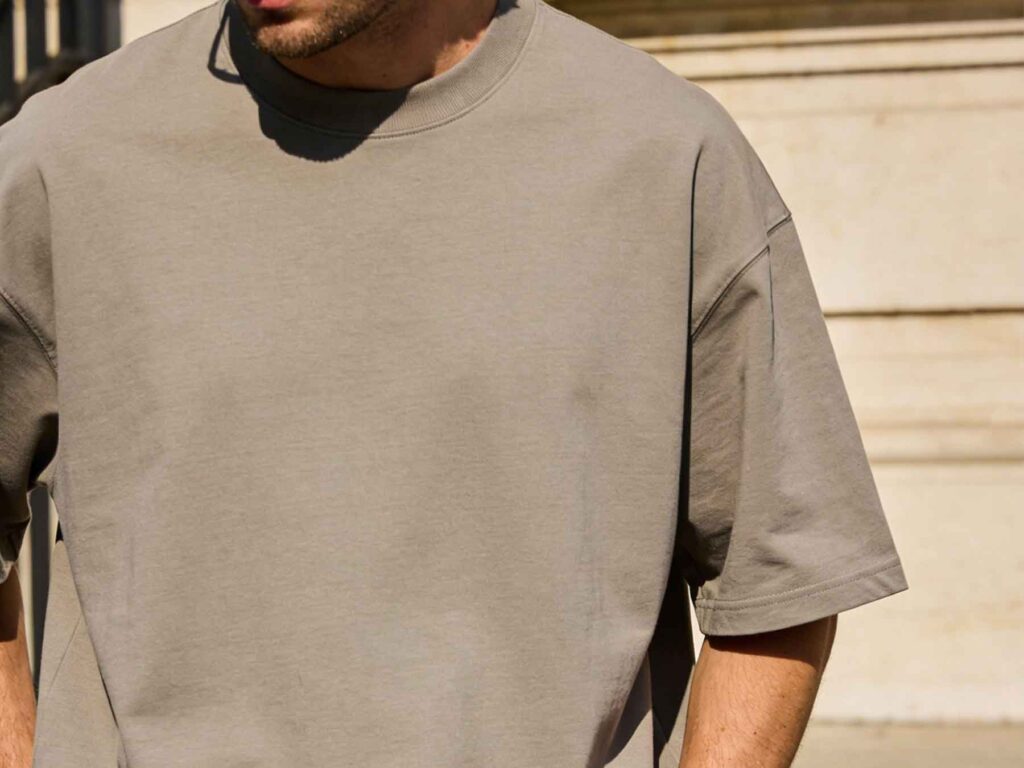
Structured pants—such as tailored or structured denim—provide lower-body firmness.
This counters upper-body density and maintains symmetry.
Balance is achieved when both halves share comparable structural weight.
Relaxed bottoms can work if volume is coordinated.
Wide or relaxed pants must carry proportional weight to avoid imbalance.
Symmetry of mass creates cohesion.


Lightweight or overly slim bottoms create imbalance.
When the lower half lacks structure, the outfit appears unstable.
Visual weight must be distributed evenly.
Pant shape directly influences overall proportion logic.
Different silhouettes produce different structural outcomes.
This section clarifies their interaction.
Wide-leg pants can mirror upper-body volume.
This creates symmetry across the vertical axis.
Proportion works when both top and bottom occupy comparable space.


Straight-leg pants provide vertical grounding.
They anchor the outfit downward, preventing excessive lateral spread.
This pairing emphasizes balance rather than exaggeration.
Slim pants introduce contrast.
When controlled, contrast sharpens the look.
When excessive, it exaggerates upper-body mass and destabilizes proportion.
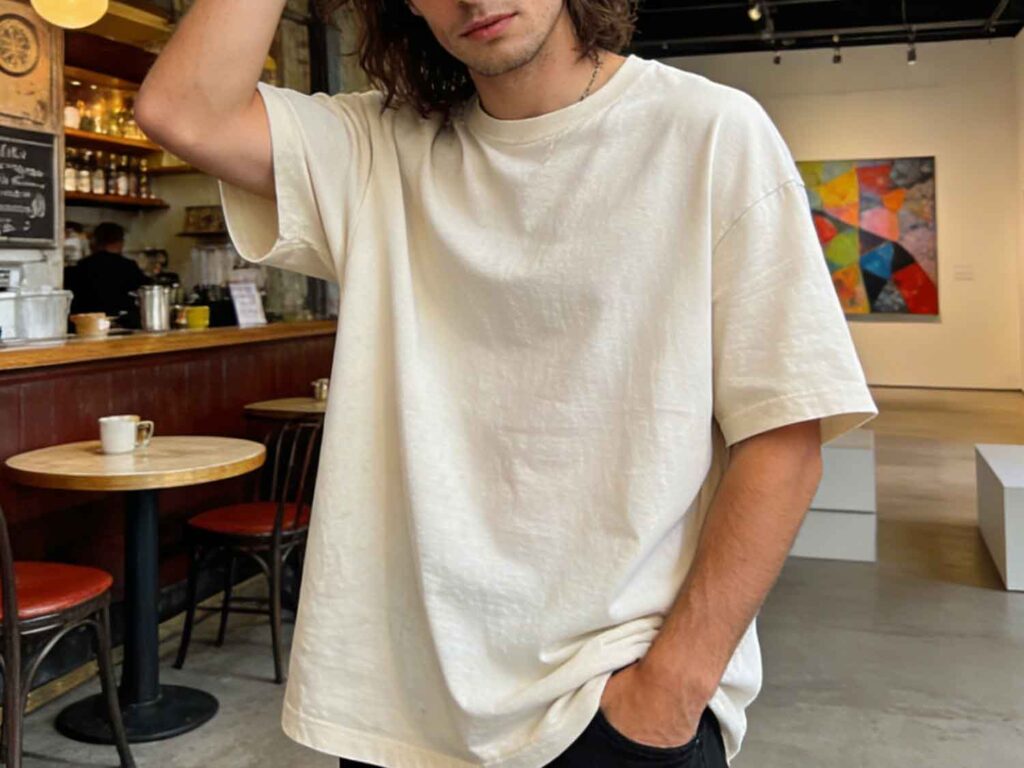
Sleeve length affects upper-body scale perception.
In heavyweight oversized tees, sleeve proportion becomes highly visible.
This section explains its leverage.
Elbow-length sleeves extend horizontal lines.
This enhances visual authority and reinforces architectural presence.
Standard-length sleeves reduce horizontal emphasis.
This creates a more restrained silhouette, suitable for minimal urban systems.
Excess sleeve width combined with heavy fabric can overpower the torso.
Over-expansion at the sleeve shifts visual focus outward, distorting proportion.
Heavyweight oversized tees increase upper-body volume.
Vertical control prevents silhouette drag.
This section defines proportion management.
Waist positioning defines where volume transitions.
Tucking, cropping, or pant rise can adjust breakpoints to prevent top-heaviness.
Higher-rise pants shorten visual torso length.
This prevents elongated upper-body dominance.
Rise selection directly impacts proportion balance.
Excess garment length creates downward drag.
Length must be controlled to maintain clean vertical lines.
Heavyweight oversized tees function differently across urban systems.
They adapt through proportion discipline.
This section explains their versatility.
In streetwear, heavyweight tees emphasize bold structure.
Relaxed coordination with wide or layered pieces reinforces mass.
In minimalist systems, heavyweight tees provide substance without decoration.
Clean lines and restrained layering highlight structure.
Heavyweight’s structural integrity allows adaptation.
Its architectural clarity functions in expressive and restrained frameworks alike.
Imbalance often results from ignoring mass distribution.
Heavyweight exaggerates mistakes.
This section identifies predictable failures.
Excess volume above the waist creates imbalance.
Without counterweight below, the silhouette appears unstable.
Layering soft garments over heavyweight tees reduces structural clarity.
Contrast between firm and soft materials preserves hierarchy.
Uniform softness or uniform heaviness eliminates depth.
Outfits require controlled contrast for balance.
A structured approach prevents imbalance.
This framework provides repeatable checks.
Use it before finalizing an outfit.
Identify the heavyweight tee as the primary structural element.
Ensure other garments respond to its mass.
Assess whether lower-body structure visually supports upper-body density.
Balance must feel symmetrical.
Observe horizontal and vertical lines.
Edges should align without overwhelming the silhouette.
Heavyweight oversized tees occupy a defined structural role.
Understanding that role clarifies outfit decisions.
This section locks in functional placement.
1.As primary silhouette driver
2.As visual weight distributor
3.As minimalist statement piece
We’ll get back to you within 24 hours. Attach your logo/design if needed.
💡 1 . Share your logo, fabric, and quantity for T-shirts, hoodies, and more.
📐 2. We’ll prepare samples for your approval.
🚚 3. Bulk production starts after deposit.
✅ We value your privacy. Your information is 100% safe and confidential.
📦 Need help? Chat with us via WhatsApp anytime!
Note: Your email information will be kept strictly confidential.
Note: Your email information will be kept strictly confidential.
Request a quote, discuss MOQ, lead time, fabrics & QC.
Visit our brand store: Modaknitswear
Retail orders (and dropshipping options) are available on Modaknitswear.