
 Skip to content
 How Oversized Should Fit, Scale, and Balance in Modern Urban Wear
Oversized T-shirts are intentionally loose, but they are not exempt from fit rules.
In modern urban wear, oversized succeeds only when size, proportion, and structure are deliberately controlled.
This page serves as the fit authority for oversized T-shirts, explaining why fit still matters even when looseness is intentional.
Oversized is often misunderstood as simply “wearing something bigger.”
This section resets that assumption before any discussion of measurements or sizing.
Oversized refers to intentional looseness with defined boundaries, not unlimited excess.
Modern oversized garments are designed to look relaxed while still maintaining visual order. When looseness lacks limits, the result shifts from designed volume to accidental sloppiness.
Oversized only works when the looseness is planned and stabilized.


Visual volume describes how large a garment appears, while proportion determines whether it looks correct.
A T-shirt can look large yet still feel balanced, or look large and immediately appear awkward. The difference is how width, length, and shoulder placement relate to each other.
Proportion governs perception more than absolute size.
A T-shirt can be oversized and still look wrong if proportions are misaligned.
Excess width without shoulder control, or added length without recalibrating volume, often produces a distorted silhouette.
Oversized does not forgive poor proportional decisions.
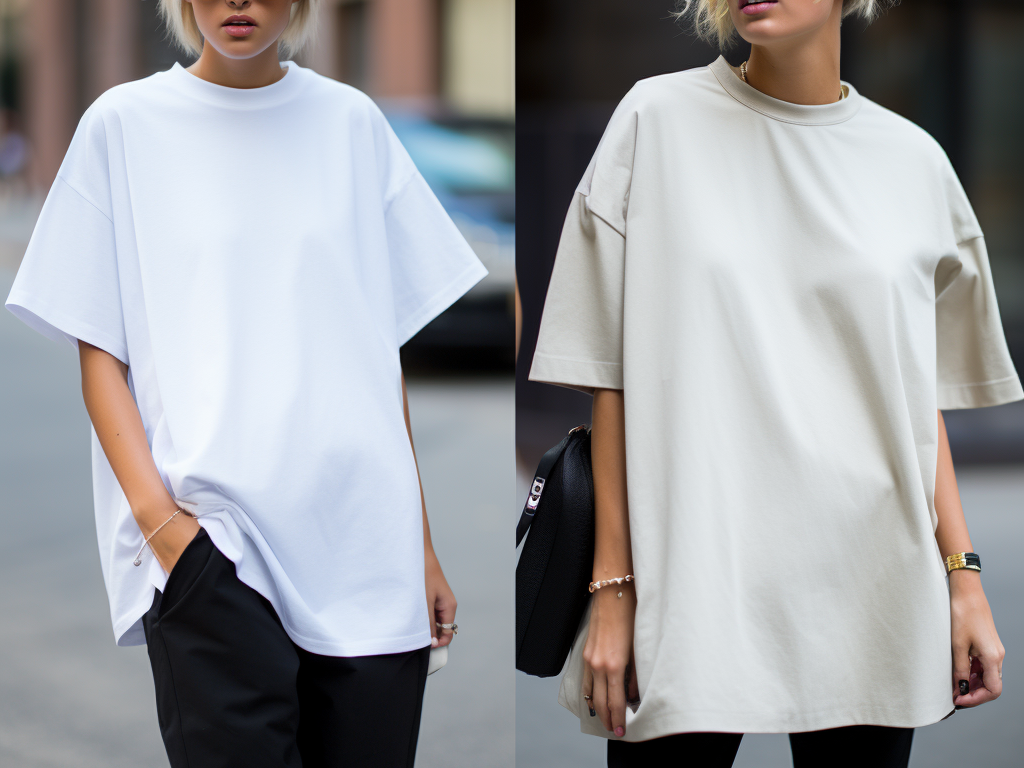
Shoulders and chest define the framework of an oversized silhouette.
If these areas fail, the entire fit collapses.

A correct oversized shoulder is either intentionally extended or intentionally dropped—but never collapsed.
An extended shoulder widens the frame; a dropped shoulder lowers it. A collapsed shoulder, however, lacks structure and creates wrinkles, pulling, or sagging.
Intentional placement is the difference between design and error.
The chest should have visible ease without uncontrolled expansion.
Oversized chest volume should allow air and movement, but it should not balloon outward or distort side seams.
When chest volume overwhelms the shoulder structure, the silhouette loses clarity.
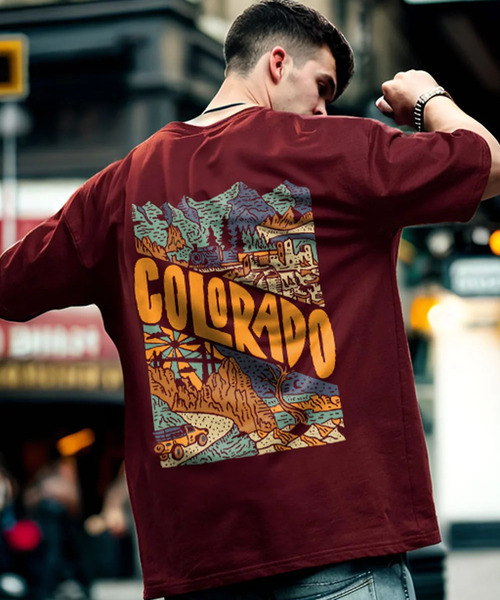
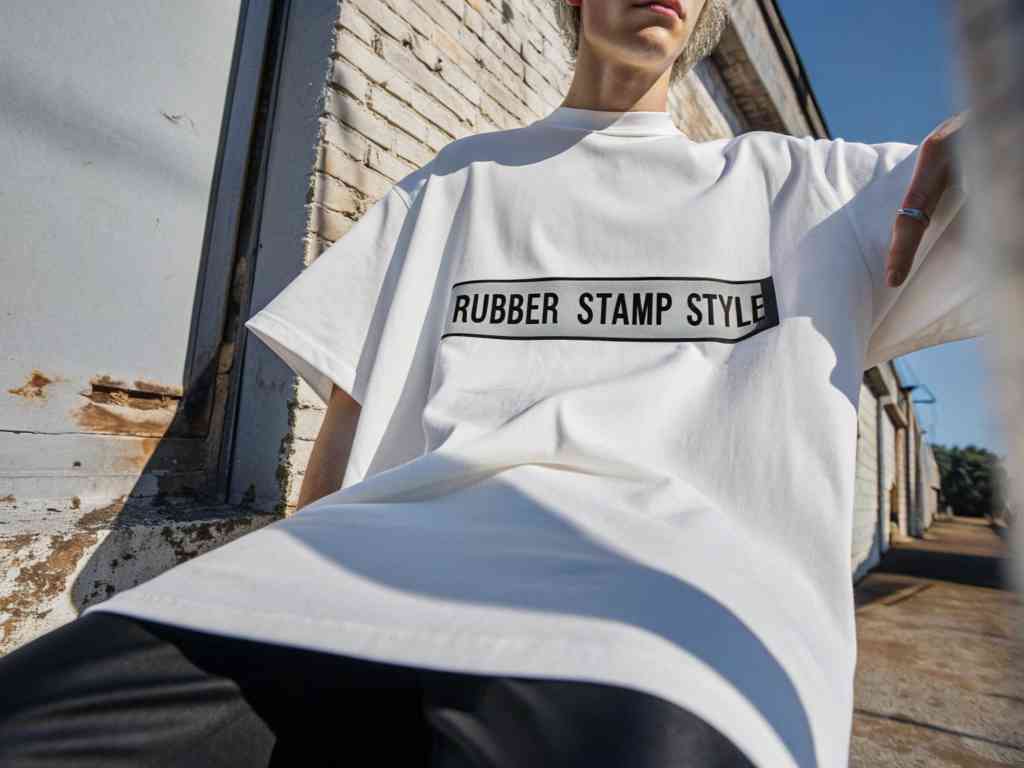
Shoulder and chest alignment determines whether oversized looks relaxed or sloppy.
If these two areas are balanced, the rest of the garment reads as intentional even at larger scale.
If they are misaligned, no adjustment elsewhere will fully correct the fit.
Oversized exists on a spectrum.
This section defines the wearable range, not stylistic extremes.
Functional looseness supports comfort and movement; exaggerated scale prioritizes visual impact.
Modern urban oversized favors functional looseness that integrates into daily life.
When scale becomes the main feature, practicality declines.
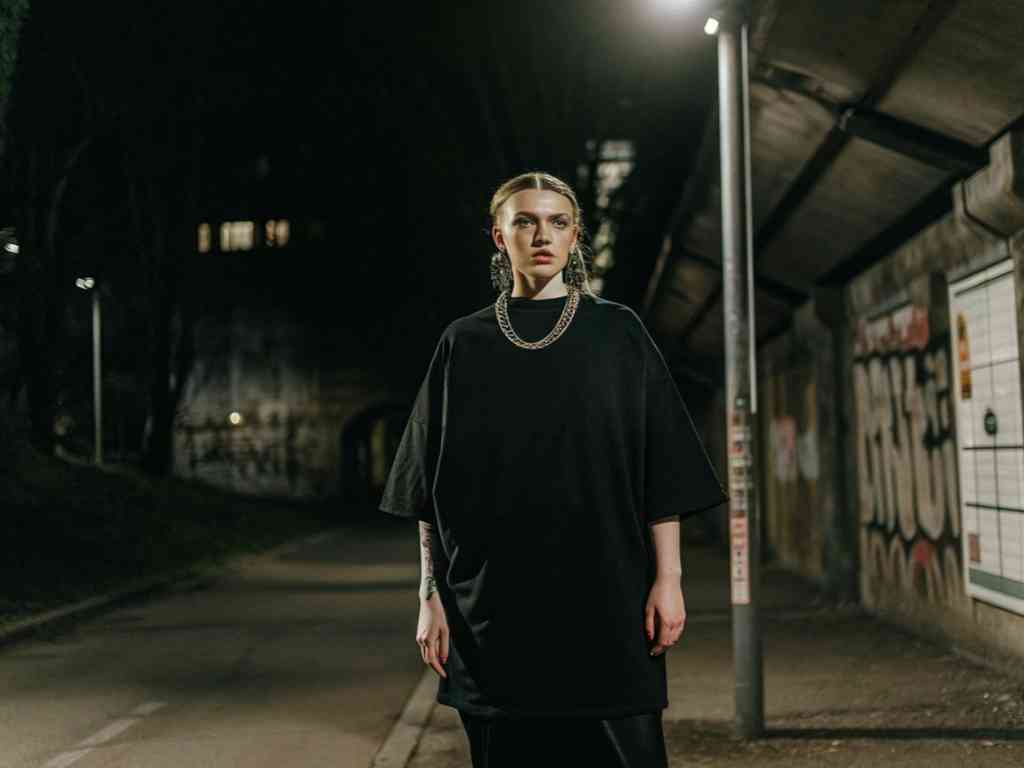

A wearable oversized T-shirt must behave predictably during movement.
Walking, sitting, and reaching should not cause constant shifting or adjustment.
If posture feels compromised, the fit has exceeded its useful range.
Oversized becomes impractical when it interferes with daily function or visual clarity.
Excessive length, width, or fabric volume may look deliberate in static images but fail in real use.
Modern oversized stops before this point.

Choosing the right size is not the same as choosing a larger number.
This section explains how to approach sizing logically.
In pattern-driven oversized designs, your regular size often delivers the intended fit.
When a garment is designed as oversized from the pattern stage, the proportions are already built in.
Sizing up can disrupt this balance rather than improve it.
Sizing up only works when the original pattern supports additional scale.
In many cases, increasing size adds length and width unevenly, causing distortion.
Sizing up should be an exception, not the default strategy.
Pattern-driven oversized is intentional; size-driven oversized is unpredictable.
True oversized garments are engineered to scale correctly.
Garments made oversized only by sizing up rely on chance rather than design.
Scaling is where oversized most often fails.
This section explains how volume should be distributed.
As width increases, length must be carefully controlled.
Excessive width paired with excessive length creates drag and visual heaviness.
Balanced oversized looks broad without looking long and shapeless.
“Wide and long” is the most common oversized failure state.
This combination lowers visual energy and distorts body proportions.
Modern oversized avoids doubling expansion on both axes.
A successful oversized fit works from all viewing angles.
Front view shows balance, side view shows drape, and back view reveals structural integrity.
Failure often appears first from the side or back.
Oversized garments alter how the body is perceived.
This section helps users anticipate those effects.
Oversized affects perceived height and width more than actual measurements.
Poor proportion can shorten the body visually or exaggerate width.
Correct proportion maintains upright posture and visual balance.
Excess upper volume without lower balance creates a top-heavy appearance.
Balanced oversized distributes visual weight evenly across the body.
Silhouette stability depends on this distribution.
Oversized flatters when it reframes the body; it distorts when it overwhelms it.
Proportion determines which outcome occurs.
This is why oversized fits vary so widely in effectiveness.
Loose does not mean careless.
This section addresses the philosophical core of oversized fit.
Fit describes structural alignment, not how tight a garment feels.
An oversized T-shirt can fit correctly while remaining loose.
Structure, not compression, defines fit quality.
Proper fit acts as a framework that supports added volume.
Without this framework, looseness collapses into disorder.
Fit is what keeps oversized readable as design.
Relaxed design is intentional; careless design is unplanned.
Oversized only succeeds when relaxation is engineered.
Everything else is accident.
Most oversized failures follow predictable patterns.
This section highlights them clearly.
Sizing up replaces design logic with guesswork.
The result is inconsistent proportions and unstable fit.
Shoulders define the frame of the garment.
When ignored, the entire silhouette degrades.
Volume without structure produces sloppiness, not style.
Oversized requires support to remain modern.
This framework provides a fast, repeatable evaluation method.
1.Shoulder and chest balance check
2.Length and width proportion check
3.Movement and posture check
Oversized is governed by proportion, not size alone
Shoulders and chest form the structural base
Wearable oversized stays within functional limits
Pattern-driven design matters more than sizing up
Length and width must scale together
Fit stabilizes volume, even in loose garments
We’ll get back to you within 24 hours. Attach your logo/design if needed.
💡 1 . Share your logo, fabric, and quantity for T-shirts, hoodies, and more.
📐 2. We’ll prepare samples for your approval.
🚚 3. Bulk production starts after deposit.
✅ We value your privacy. Your information is 100% safe and confidential.
📦 Need help? Chat with us via WhatsApp anytime!
Note: Your email information will be kept strictly confidential.
Note: Your email information will be kept strictly confidential.
Request a quote, discuss MOQ, lead time, fabrics & QC.
Visit our brand store: Modaknitswear
Retail orders (and dropshipping options) are available on Modaknitswear.