
 Skip to content
 How Drop Shoulder Fits Should Balance Structure, Volume, and Intent
The key to a well-executed drop shoulder T-shirt is not how oversized it looks, but how the shoulder line is designed, how body width and length are balanced, and how the sleeves stabilize the silhouette.
This page defines how a drop shoulder T-shirt should fit, not oversized trend styling and not the shortcut of simply sizing up.
After reading, you should be able to judge whether a drop shoulder T-shirt is structurally sound—and understand why it looks clean or why it appears sloppy.
Drop shoulder is not a “size feel.” It is a pattern-driven construction choice.
This section explains what drop shoulder means in pattern terms, how it differs from other loose fits, and where the structure breaks down.
Drop shoulder is defined by relocating the shoulder point downward and rebuilding the structure around it—not by simply adding width.
In pattern construction, the shoulder seam is moved outward and downward from the shoulder peak to the upper arm area. The armhole and sleeve connection must be re-engineered accordingly; otherwise, fabric bunching and distortion occur.
A true drop shoulder can be identified when the shoulder seam rests stably on the upper arm and the transition between body and sleeve remains smooth rather than collapsed.
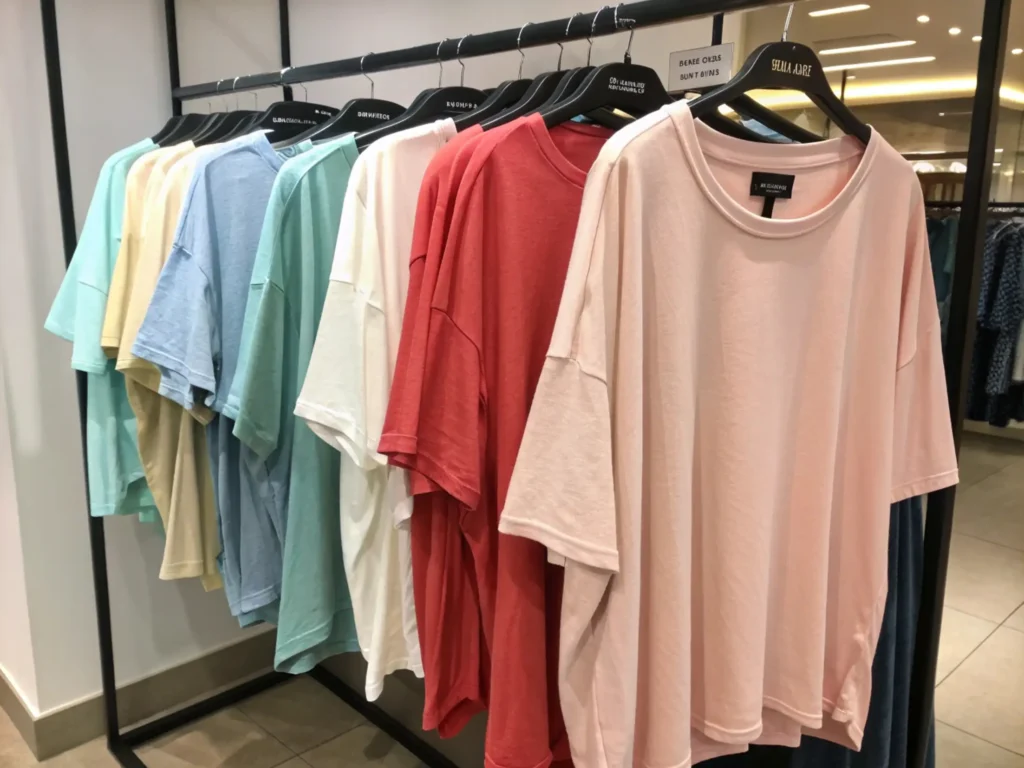

Drop shoulder changes shoulder placement; oversized increases overall volume; relaxed adds ease without altering structure.
An oversized T-shirt may retain a normal shoulder seam while expanding chest and length. A relaxed fit may feel looser but still sit on the shoulder point. A drop shoulder must alter the shoulder seam and armhole structure.
A quick rule: if the shoulder seam does not move, it is not a drop shoulder. If the seam drops but sleeves are unchanged, the result is often sloppy.
Drop shoulder fails when shoulder drop is not supported by proportion and structure.
Common failure signs include excessive shoulder collapse, fabric stacking at the upper arm, distorted armholes, and a body that is both overly wide and overly long.
Drop shoulder is not “the more drop, the better.” Once the structure cannot support the drop, the garment loses intention and appears careless.
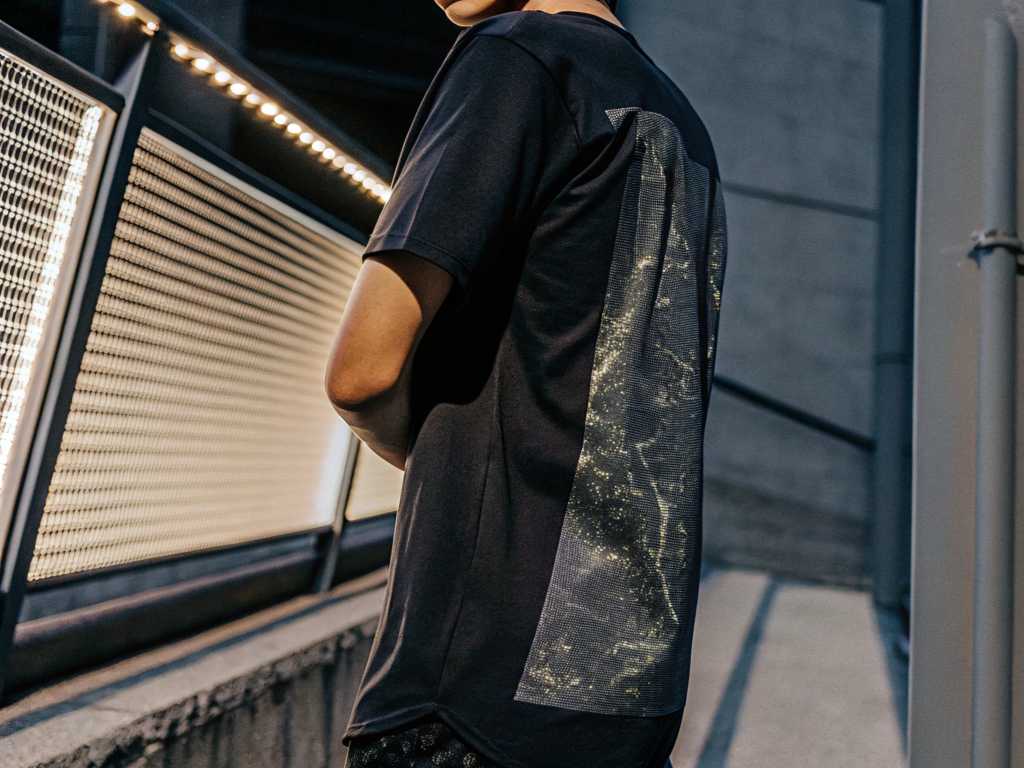
The shoulder line is the primary control mechanism of a drop shoulder T-shirt.
Its placement determines whether the fit looks intentional or visually weak.

The ideal drop shoulder seam sits near the upper arm starting point—not mid-bicep or lower.
At this position, the garment maintains relaxed volume while preserving upper-body structure. When dropped too far, the shoulder collapses visually and pulls the chest and back downward.
A practical check: when standing naturally, the shoulder seam should fall just outside the shoulder peak to the upper arm, evenly on both sides.
A controlled drop maintains a clean silhouette even after movement.
Excessive drop often leads to armhole collapse, upper-arm fabric buildup, and distortion when lifting arms or walking. These are signs of structural failure, not design intention.
If the body rides up noticeably or shoulder wrinkles intensify during motion, the shoulder drop exceeds what the structure can support.

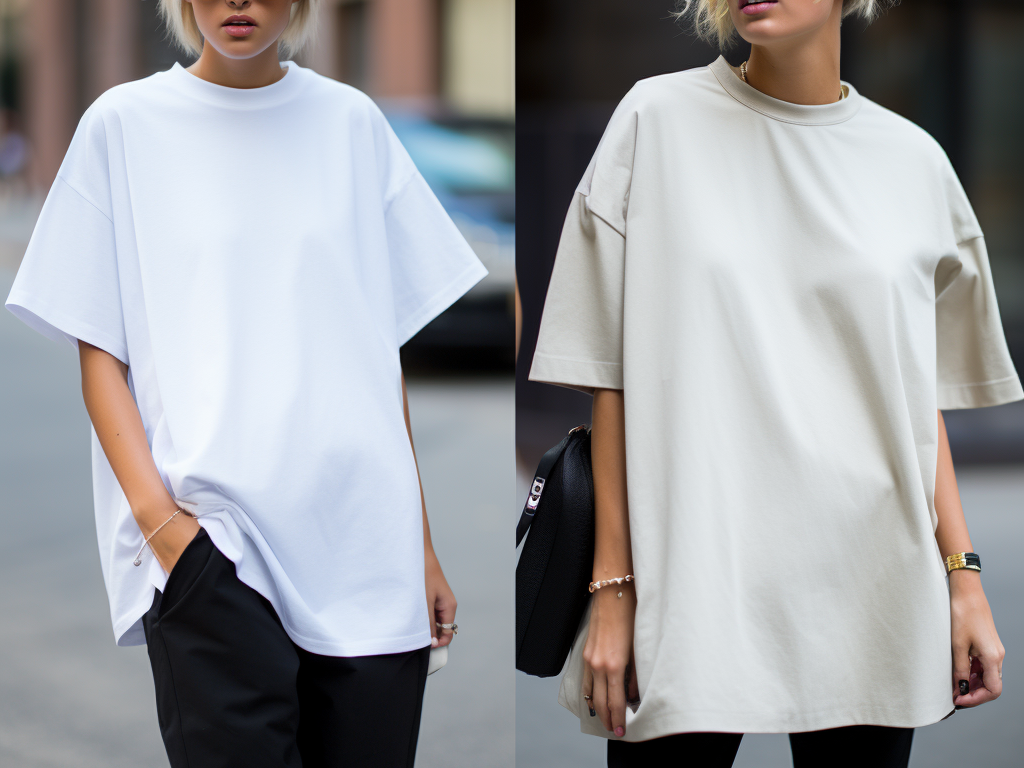
Poor shoulder placement visually lowers posture and weakens the upper body line.
Because drop shoulder reduces the natural support point, it relies heavily on neckline stability and fabric behavior to maintain shape.
A well-placed shoulder creates a relaxed yet upright silhouette; a poorly placed one makes the garment look dragged downward. From the side view, the shoulder line should extend smoothly—not slope sharply down.
Drop shoulder affects the entire garment, not just the shoulder seam.
Body width and length must be recalibrated accordingly.
The greater the shoulder drop, the more carefully body width must be adjusted.
If width is insufficient, tension and armhole wrinkling appear. If width is excessive, the garment turns boxy and collapses.
From the front, side seams should fall cleanly; from the side, fabric should not balloon under the arm.
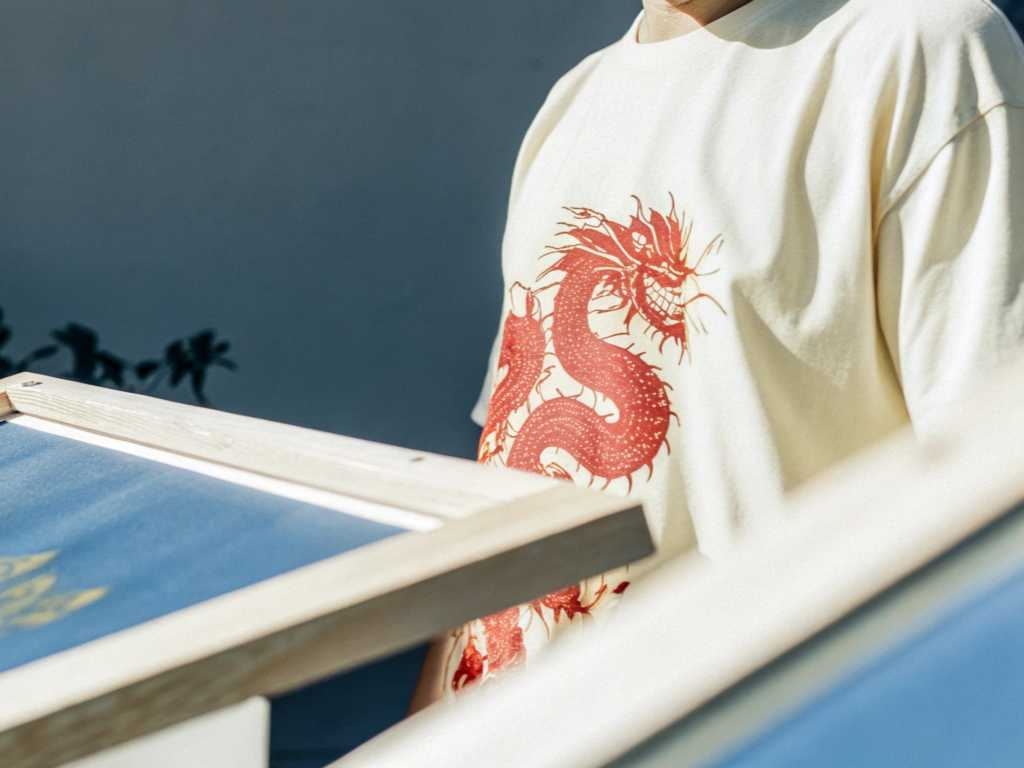
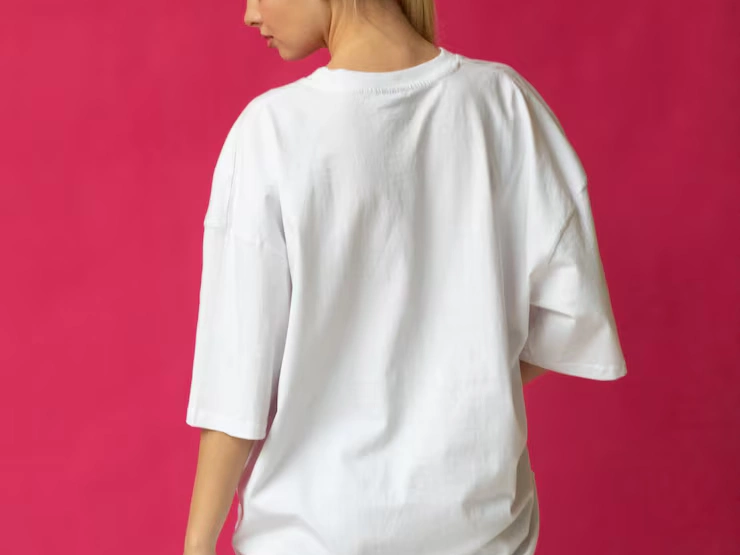
Excessive width combined with excessive length is the most common drop shoulder failure.
Width already lowers visual center of gravity. Added length exaggerates drag and removes proportion.
A simple rule: the wider the body, the more restrained the length must be.
A valid drop shoulder fit must work from all three views.
Front view checks balance and shoulder clarity. Side view checks vertical hang and drag. Back view checks shoulder blade wrinkling and back panel collapse.
If a garment looks acceptable from the front but wrinkles heavily across the upper back, the proportions are mismatched.

Sleeves act as the stabilizers of a drop shoulder silhouette.
Their proportions determine whether the upper body looks clean or boxy.
Sleeve length must visually continue from the dropped shoulder—not interrupt it.
If sleeves are too short, the upper body looks cut off. If too long, fabric stacks at the arm.
The sleeve opening should allow the arm line to appear smooth, not compressed.
Sleeve opening controls whether the fit looks controlled or sloppy.
Too wide creates a “wind-catching” effect; too narrow creates tension that contradicts the relaxed structure.
When arms hang naturally, the sleeve opening should maintain space without flaring outward.
Correct sleeves refine the silhouette; incorrect sleeves exaggerate boxiness.
Drop shoulder already expands horizontal volume. Over-wide sleeves amplify the box shape. Controlled sleeves restore edge definition.
From the front, the upper body should appear relaxed but shaped—not square.
Drop shoulder construction is highly dependent on fabric behavior.
Identical patterns behave very differently across materials.
Moderate fabric weight supports dropped shoulders; overly light fabrics collapse.
With structural support lowered, light fabrics cause seams to slide and armholes to wrinkle.
A simple test: lightly shake the garment—shoulders should not collapse like a bag.
The goal is drape with backbone—not stiffness or limpness.
Too stiff looks rigid; too soft looks uncontrolled. A good drop shoulder holds clean lines during motion without twisting.
Watch the side seams: excessive forward/backward movement signals imbalance.
Lightweight fabrics magnify every proportional error.
Low structure exposes over-dropped shoulders, oversized sleeves, and excessive length immediately.
If using lightweight materials, pattern precision must increase—or the fit will fail.
Drop shoulder fit must hold not only at rest, but in motion.
Arm movement should not create concentrated pulling or wrinkling.
If lifting arms produces bunching at the shoulder, the garment was not designed as a true drop shoulder.
Correct fits move with the body, not against it.
During walking or sitting, the body should maintain vertical stability.
Excessive front stacking or back pull indicates proportion imbalance.
Clean daily wear relies on this stability.
Twisting, seam drift, and neckline shifting signal failure.
Side seams drifting forward, uneven shoulder seams, or warped collars indicate mismatch between structure and fabric.
A quick test: walk, sit, stand—side seams should return to the side, collar should stay flat.
Most failures are not stylistic—they are structural.
Sizing up does not create a drop shoulder.
It increases volume without altering shoulder structure, leading to wrinkles and imbalance.
Drop shoulder must be built into the pattern.
Dropping the shoulder without recalibrating body width causes collapse.
This leads to armhole bunching and shoulder sag.
Drop shoulder requires coordinated adjustments.
Sleeves and fabric determine whether the structure holds.
Wide sleeves plus soft fabric quickly turn drop shoulder into boxy or pajama-like.
Judging shoulder placement alone is insufficient.
Use the following checks to evaluate whether a drop shoulder T-shirt is structurally correct.
Shoulder seam sits stably on the upper arm—not excessively low.
Symmetry and clean movement confirm correct placement.
Body width, length, and sleeve volume must work together.
The silhouette should remain clean from front, side, and back.
Fabric should maintain lines during motion.
No twisting, pulling, or distortion during daily movement.
We’ll get back to you within 24 hours. Attach your logo/design if needed.
💡 1 . Share your logo, fabric, and quantity for T-shirts, hoodies, and more.
📐 2. We’ll prepare samples for your approval.
🚚 3. Bulk production starts after deposit.
✅ We value your privacy. Your information is 100% safe and confidential.
📦 Need help? Chat with us via WhatsApp anytime!

Note: Your email information will be kept strictly confidential.
Note: Your email information will be kept strictly confidential.
Request a quote, discuss MOQ, lead time, fabrics & QC.
Visit our brand store: Modaknitswear

Retail orders (and dropshipping options) are available on Modaknitswear.