
 Skip to content
 How Fabric Choice Shapes Comfort, Warmth, and Durability
Fabric selection determines how a men’s hoodie feels, performs, and ages over time.
While design and fit influence appearance, the material itself defines comfort, insulation, breathability, and durability.
Understanding hoodie fabrics helps identify garments capable of supporting everyday wear across varied environments.
Fabric is the primary factor shaping the hoodie wearing experience.
Material composition influences softness, thermal behavior, and structural durability.
For garments used frequently, fabric quality often determines whether a hoodie remains comfortable and functional over time.
Fabric directly determines how a hoodie interacts with the body.
Fiber composition, yarn quality, and knit structure affect softness, breathability, and flexibility. Because hoodies often sit close to the skin for extended periods, the material must remain comfortable throughout daily activities.
When fabric quality is balanced, the garment provides both softness and structural stability. These characteristics allow the hoodie to remain wearable across long periods without causing discomfort.


Frequent wear reveals fabric limitations quickly.
Hoodies used daily experience repeated movement, friction, and washing. Lower-quality materials may lose softness, stretch unevenly, or develop surface pilling after limited use.
Daily garments therefore require fabrics that can maintain their structure and comfort despite repeated stress. Strong material construction helps prevent early degradation.
The durability of a hoodie largely depends on its fabric composition.
Well-engineered materials maintain consistent texture, elasticity, and structural integrity across many wear cycles. Poor material choices may appear comfortable initially but deteriorate rapidly.
Selecting fabrics designed for long-term use helps ensure the hoodie remains reliable as an everyday garment.

Most modern hoodies are constructed from several common fabric categories.
Each material type offers different advantages in comfort, warmth, and durability.
Understanding these materials helps evaluate how a hoodie will perform in everyday conditions.

Cotton is one of the most common materials used in hoodies.
Natural cotton fibers provide softness, breathability, and comfortable skin contact. Cotton also adapts well to knit construction, allowing hoodies to remain flexible during movement.
Because of its balanced comfort and versatility, cotton is widely used in everyday hoodie designs.
Cotton–polyester blends combine natural and synthetic fibers.
These blends often improve durability and shape retention while maintaining some of the softness associated with cotton. Polyester fibers can increase resistance to stretching and wrinkling.
The balance between cotton and polyester determines how breathable or resilient the fabric will be.


Some hoodies use synthetic fibers designed for performance.
Materials such as polyester or nylon can enhance durability and moisture management. These fabrics are commonly used in athletic or outdoor-oriented hoodies.
However, purely synthetic fabrics may feel less breathable or natural against the skin compared with cotton-based materials.
Thermal comfort in hoodies depends on balancing warmth and airflow.
Fabric composition and density influence how heat and moisture move through the garment.
A balanced thermal profile allows hoodies to function across varied daily environments.
Thicker fabrics provide greater insulation.
Dense textile structures trap air between fibers, which helps retain body heat. This property makes heavier fabrics useful in cooler conditions.
However, increased insulation can also reduce airflow, which may lead to overheating in warmer environments.

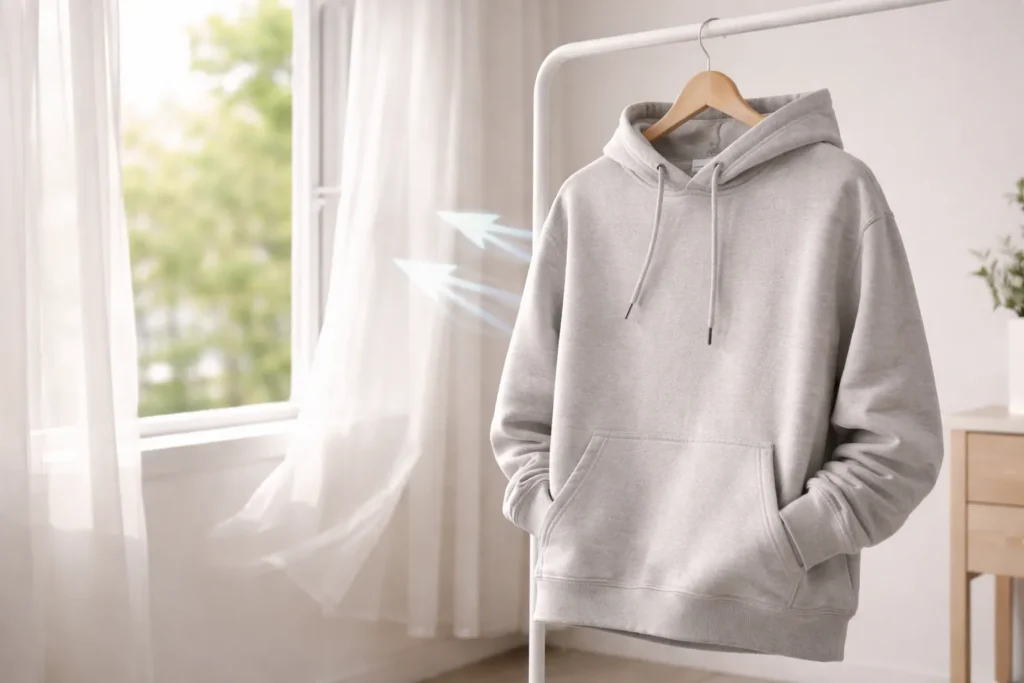
Breathable fabrics allow air circulation through the garment.
When airflow moves through the textile structure, heat and moisture dissipate more easily. This helps maintain comfort during moderate physical activity or indoor wear.
Breathable materials therefore improve hoodie usability in everyday environments.
Everyday hoodies require moderate insulation combined with ventilation.
Garments designed for daily wear must perform across indoor and outdoor settings. Excessive insulation may trap heat, while insufficient insulation may reduce warmth.
Balanced fabrics help maintain comfortable temperature regulation throughout the day.

Softness is one of the most noticeable characteristics of hoodie fabrics.
However, long-term comfort depends on sustained softness rather than initial texture alone.
High-quality materials maintain comfortable tactile qualities throughout repeated wear.
The interior fabric surface plays a major role in comfort.
Because hoodies often rest directly against the neck, arms, and torso, the interior texture must remain smooth and gentle. Rough interior fabrics can create irritation during extended wear.
Soft interior surfaces improve the garment’s overall comfort experience.
Daily garments must remain comfortable during extended use.
A hoodie that feels pleasant initially but becomes rough or uncomfortable after several hours may not perform well as an everyday garment. High-quality fabrics maintain tactile comfort throughout prolonged wear.
This consistency supports the garment’s everyday usability.
Some fabrics achieve softness through chemical treatments.
Artificial softening may create a pleasant initial feel but can fade after washing or repeated wear. When this occurs, the fabric may feel rougher than before.
Natural fiber quality and balanced yarn construction typically provide more stable softness.
Durability is a critical requirement for everyday hoodies.
Material strength determines whether the garment maintains its structure over time.
Strong fabrics resist stretching, thinning, and surface damage.
Frequent movement places stress on hoodie fabric.
Areas such as elbows, shoulders, and cuffs experience repeated stretching during daily activities. Fabrics with strong fiber structure resist deformation and maintain shape.
This resistance helps preserve the garment’s fit.
Repeated washing and wearing gradually stress textile fibers.
High-quality fabrics maintain density and structure despite these stresses. Lower-quality materials may become thin or uneven after repeated use.
Maintaining fabric integrity helps extend the garment’s lifespan.
Resilient fabrics adapt to movement without losing shape.
Elasticity within the textile structure allows the hoodie to stretch slightly during motion and then return to its original form.
This resilience helps maintain both comfort and appearance.
Fabric weight influences how a hoodie performs in everyday conditions.
Different weights provide varying levels of warmth, flexibility, and structural support.
Material density therefore affects both comfort and practicality.
Lightweight fabrics emphasize mobility and breathability.
These materials allow greater airflow and often feel less restrictive during movement. Lightweight hoodies may be suitable for warm climates or as layering garments.
However, they typically provide less insulation.
Midweight fabrics provide balanced performance.
They offer moderate warmth while maintaining sufficient breathability and flexibility. This balance allows the hoodie to function across many daily environments.
For this reason, midweight fabrics are commonly used in everyday hoodies.
Heavyweight fabrics prioritize insulation and structural presence.
Denser textiles retain more heat and may provide stronger garment structure. These qualities make heavyweight hoodies suitable for cooler conditions.
However, dense fabrics may reduce breathability in warmer environments.
Fabric behavior changes over time with repeated wear.
Understanding how materials age helps predict hoodie longevity.
High-quality fabrics maintain comfort and structural stability across extended use.
Durable fabrics preserve their tactile qualities.
High-quality fibers maintain smooth texture even after multiple wash cycles. Lower-quality fabrics may become rough or lose their softness over time.
Stable softness contributes to consistent comfort.
Fabric fatigue occurs when fibers weaken through repeated stress.
Strong yarn construction and balanced knit density help prevent thinning or weakening in high-stress areas. Durable fabrics therefore maintain thickness and resilience.
Preventing fatigue extends garment life.
Material stability helps maintain garment structure.
When fabrics resist excessive stretching and deformation, the hoodie retains its intended silhouette. This stability prevents the garment from appearing worn or misshapen.
Shape stability improves long-term usability.
Fabric quality is often misunderstood in casual clothing.
Certain characteristics may appear appealing but do not necessarily indicate durable materials.
Recognizing these misconceptions helps evaluate hoodie fabrics more accurately.
Artificially softened fabrics may feel unusually smooth initially.
However, this softness may come from chemical treatments rather than fiber quality. When treatments fade, the fabric may lose its pleasant texture.
Natural fiber softness often remains more consistent over time.
Extremely thin fabrics may appear comfortable but lack durability.
Such materials can stretch or wear out more quickly under daily use. Repeated washing may also accelerate deterioration.
Balanced fabric density helps maintain durability.
Marketing descriptions often exaggerate fabric quality.
Terms such as “premium,” “luxury,” or “ultra-soft” may not reflect measurable textile properties. Evaluating fiber composition, knit density, and fabric resilience provides more reliable indicators of quality.
Objective material characteristics offer better guidance.
Evaluating hoodie fabrics requires observing several practical indicators.
These indicators reveal both comfort potential and durability.
A systematic evaluation helps identify high-quality materials.
1.Softness and comfort check
2.Fabric density check
3.Warmth–breathability balance check
4.Long-term durability check
Interior fabric feels soft and comfortable
Material density appears stable and well-constructed
Fabric allows moderate airflow without trapping excess heat
Textile structure resists stretching and deformation
Softness remains consistent after washing
Fabric maintains shape during movement
Material shows minimal pilling or thinning
Fabric choice determines how a men’s hoodie performs in comfort, warmth, and durability.
High-quality materials balance softness, breathability, insulation, and structural strength.
When these characteristics remain stable over time, the hoodie becomes a reliable everyday garment.
We’ll get back to you within 24 hours. Attach your logo/design if needed.
💡 1 . Share your logo, fabric, and quantity for T-shirts, hoodies, and more.
📐 2. We’ll prepare samples for your approval.
🚚 3. Bulk production starts after deposit.
✅ We value your privacy. Your information is 100% safe and confidential.
📦 Need help? Chat with us via WhatsApp anytime!

Note: Your email information will be kept strictly confidential.
Note: Your email information will be kept strictly confidential.
Request a quote, discuss MOQ, lead time, fabrics & QC.
Visit our brand store: Modaknitswear

Retail orders (and dropshipping options) are available on Modaknitswear.