
 Skip to content
 Fabric quality is one of the main factors that determines whether a zip up hoodie feels comfortable, breathable, and reliable over time. The zipper changes how the garment functions, but the fabric still determines how it feels on the body, how it handles warmth, and how well it holds structure through repeated use. In practical terms, a zip hoodie only performs as well as the textile base supporting it.
This page explains how fabric choice shapes the everyday experience of wearing a zip up hoodie. The goal is to show how comfort, airflow, durability, and long-term usability all begin with material selection.
Fabric choice matters because the material controls how the hoodie feels, moves, and ages.
A zipper may define the category, but fabric defines the wearing experience. In everyday use, warmth balance, softness, and structural stability all begin at the textile level.
Fabric is the foundation of hoodie comfort because the material is what stays in direct contact with the body for hours at a time.
A zip up hoodie may have practical advantages through its front opening, but those advantages do not matter much if the fabric feels rough, stiff, or unstable.
Comfort depends on how the textile manages softness, weight, flexibility, and skin feel during real wear. In the brand reference material, fabric development is treated as a core capability because touch, elasticity, breathability, and structure are central to long-term garment value.
A good zip hoodie should therefore be judged not only by silhouette or zipper quality, but by whether the fabric makes the garment easy to wear repeatedly.
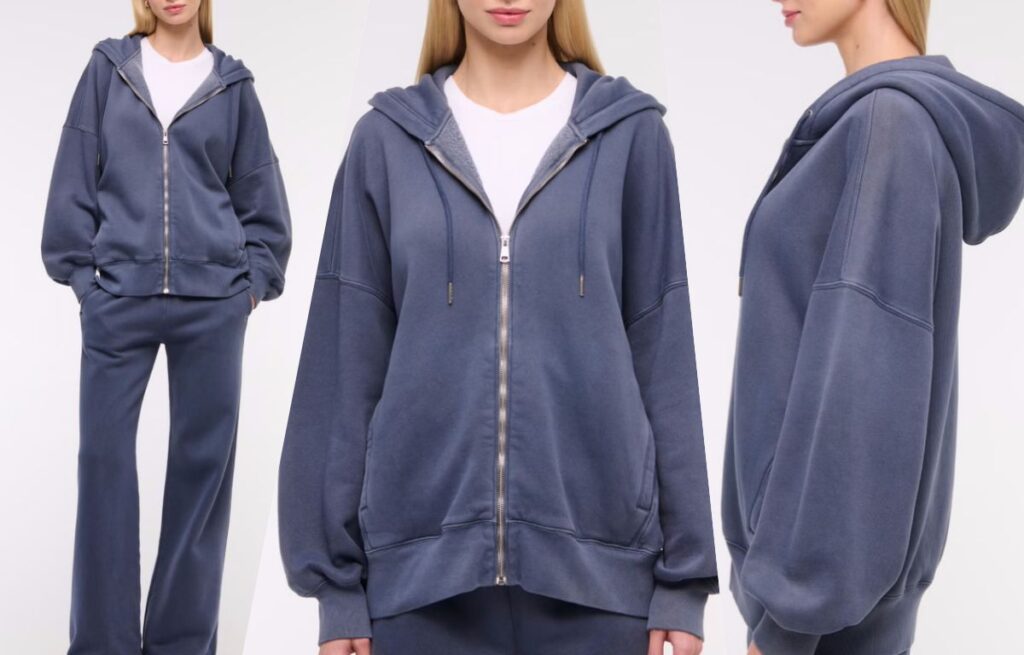
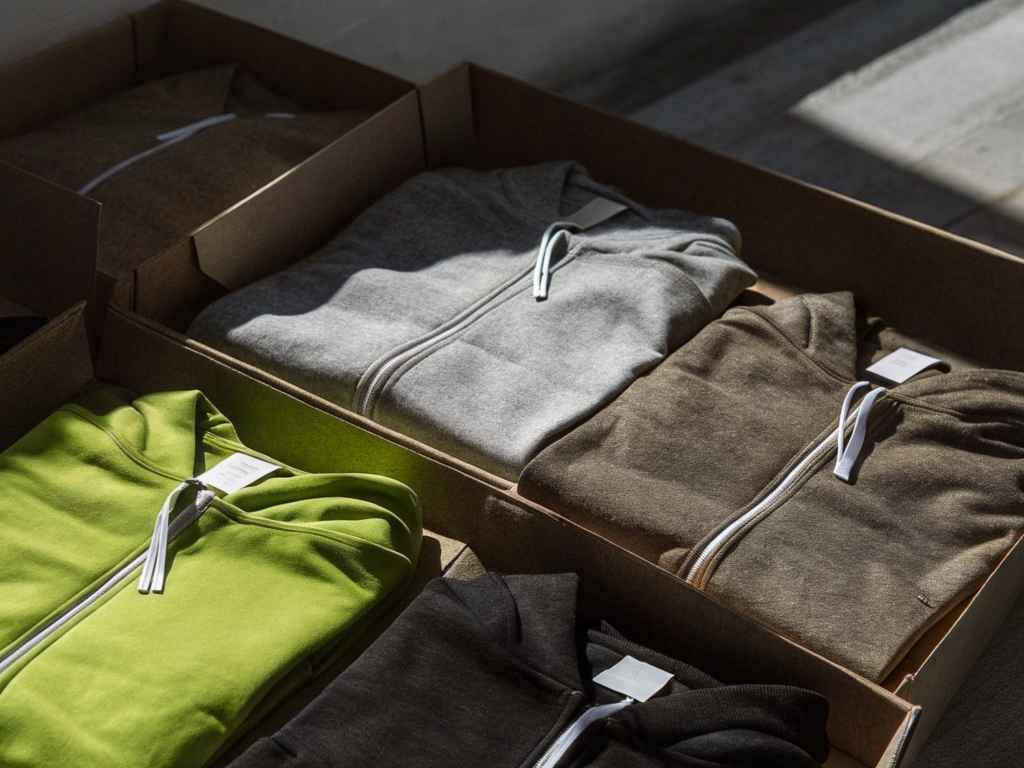
Material structure affects warmth and airflow because fabric controls how much heat the hoodie retains and how easily air can move through it.
A denser or more insulating textile may feel warmer and more protective, while a lighter or more breathable fabric may improve comfort during movement and indoor wear. This balance matters especially in zip hoodies, which are often used across commuting, layering, and mixed indoor–outdoor conditions.
The material must therefore support moderate insulation without trapping too much heat during ordinary activity. The broader brand profile also emphasizes breathable, functional yarns adapted to urban life and cross-scenario wear.
In practical terms, fabric structure determines whether the hoodie feels thermally useful or becomes difficult to manage.
Fabric quality determines long-term wearability because daily garments are judged over repeated use, not only at first touch.
A hoodie that feels acceptable when new may become less useful if the fabric pills, stretches, loses softness, or weakens structurally after regular wear. Long-term performance depends on whether the material can maintain shape, comfort, and surface integrity over time.
This is consistent with the brand material’s focus on durability, stable structure, and comfort as connected qualities rather than isolated features.
A high-quality zip up hoodie should keep feeling dependable after many wears, many adjustments of the zipper, and many ordinary daily situations. That kind of reliability begins with strong fabric selection.
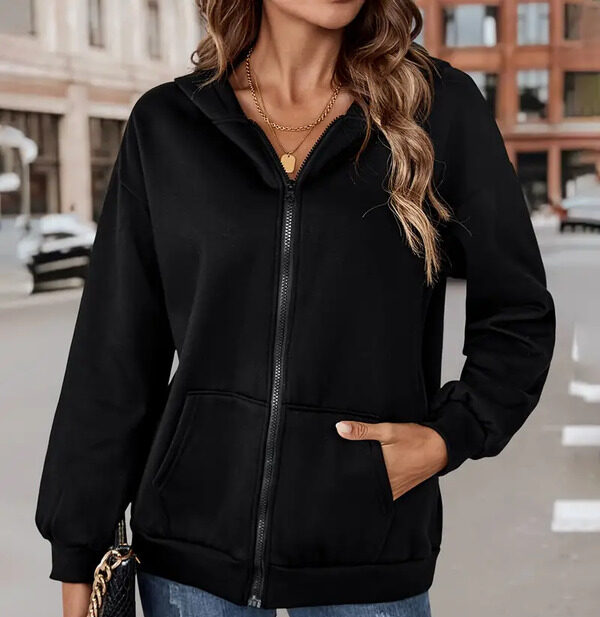
Most zip up hoodies are made from a few core fabric categories, and each category affects comfort and performance differently.
The material should be judged by how it behaves in use, not only by its label.
In practice, the right fabric is the one that balances softness, warmth, airflow, and durability for the hoodie’s intended role.
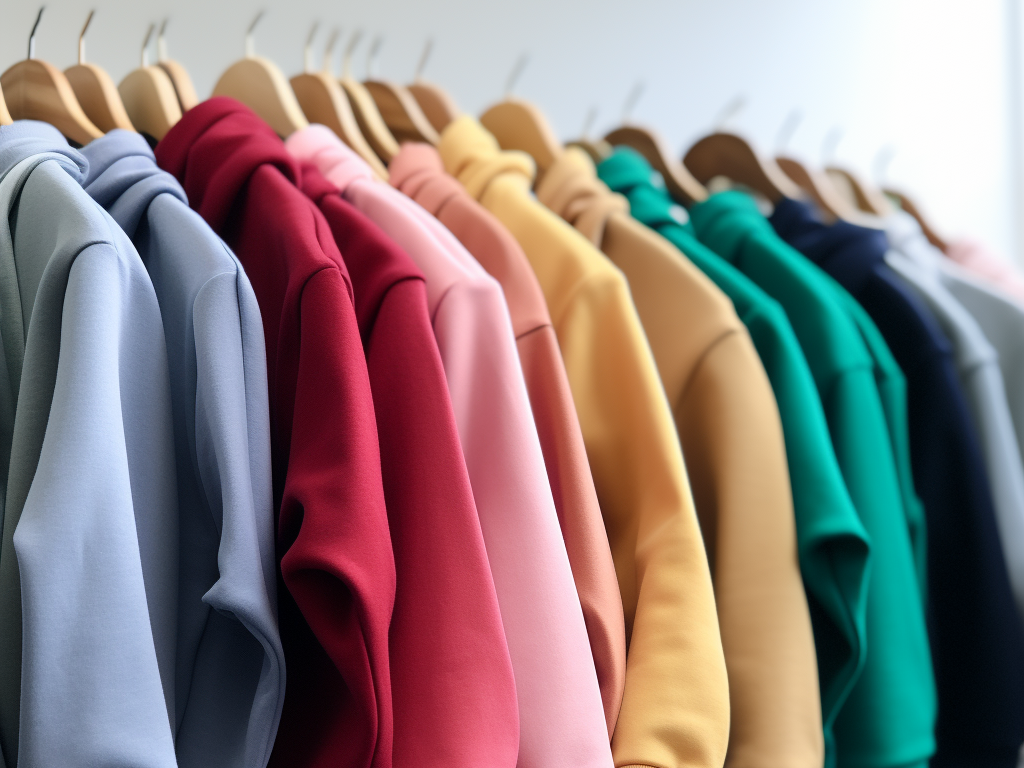
Cotton fabrics are common in zip up hoodies because they usually provide a familiar casual hand feel and strong everyday comfort.
Cotton tends to feel soft, approachable, and easy for long-hour wear, which is why it remains one of the most common choices in relaxed hoodie construction. In everyday garments, this matters because comfort and repeat wear are major parts of product value. The limitation is that cotton performance depends heavily on construction quality.
A stronger cotton knit can feel stable and breathable, while a weaker one may lose shape or wear down more quickly.
Cotton works best in zip hoodies when softness is supported by enough structure to keep the garment reliable through repeated use and zipper-related tension.
Cotton–polyester blends are widely used because they often balance softness, shape retention, and practical durability more effectively than some single-fiber constructions.
Cotton contributes comfort and a natural casual feel, while polyester can improve resilience, support recovery, and help the hoodie maintain shape over time.
This type of balance aligns with the broader preference for garments that combine comfort, structure, and cross-scenario usability. In a zip up hoodie, that matters because the front zipper introduces additional seam tension and repeated opening and closing.
A strong blend can support everyday wear without feeling overly technical or overly fragile. The correct judgment is not whether the blend sounds advanced, but whether the finished fabric feels stable, comfortable, and repeatable.
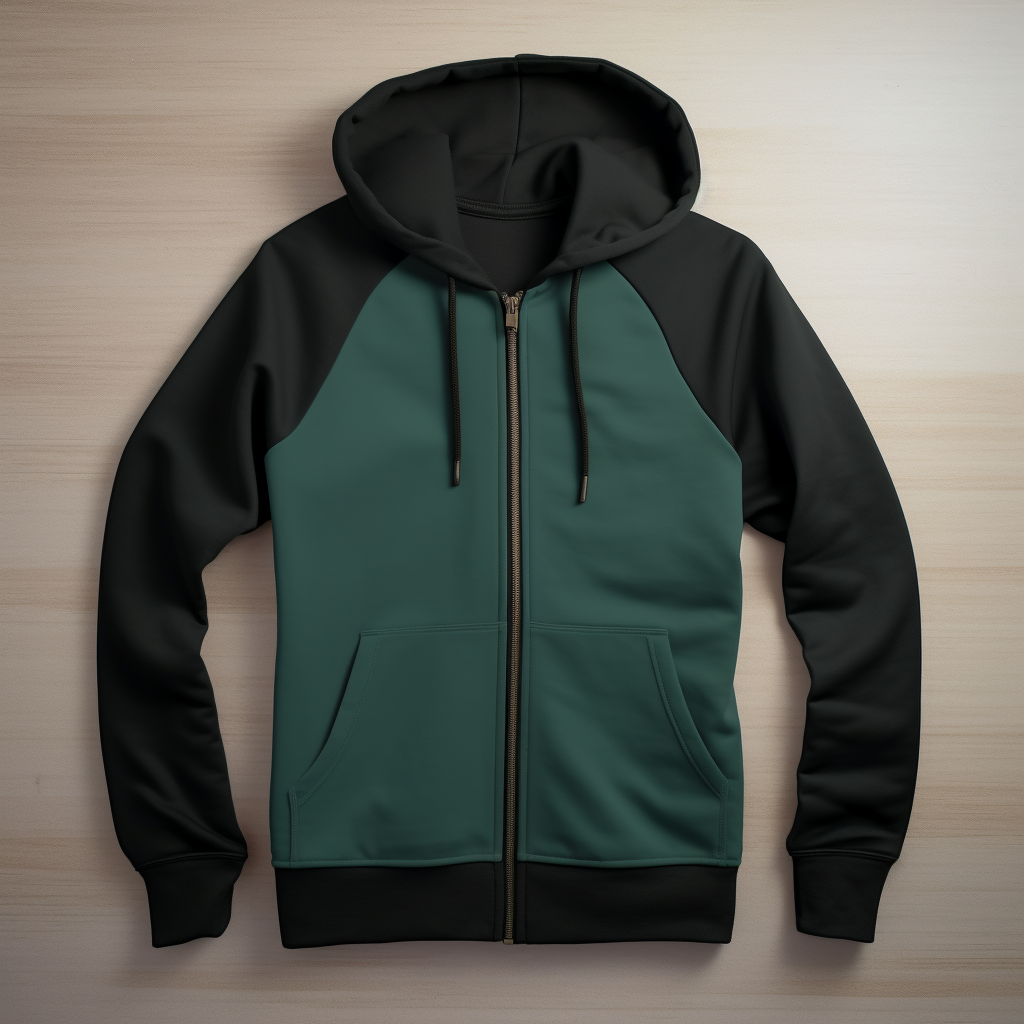
Synthetic fabrics are often used in performance-oriented zip hoodies because they can support lighter weight, faster drying, and stronger moisture control.
These materials are useful when the hoodie is meant to handle more movement, more weather variation, or a more technical casual-sport context.
Their value depends on whether they stay comfortable enough for daily wear while still delivering functional advantages. The brand reference material highlights breathable, elastic, and durable construction as important in urban active products. That logic applies here as well.
Synthetic fabrics work best when they help the hoodie feel more adaptable without becoming slick, harsh, or overly artificial. In casual zip hoodies, synthetics are most effective when performance traits do not come at the expense of wear comfort.
Warmth and breathability need to be balanced because a zip up hoodie is often worn across different temperatures and activity levels. Too much insulation reduces flexibility.
Too little insulation weakens comfort in cooler conditions. The best everyday fabrics manage both needs without pushing too far in one direction.
Insulating fabrics are useful because they help the hoodie retain warmth during cooler weather, light outdoor use, and transitional daily routines.
A zip up hoodie benefits from some degree of thermal hold, since it often functions as a light outer layer or a mid-layer in casual dressing. The correct amount of insulation depends on whether the hoodie is meant for indoor-heavy wear, commuting, or colder conditions.
The broader product material emphasizes functional fabrics adapted to city life and multiple use environments. In that context, insulation should support comfort rather than dominate it.
A fabric that retains warmth well can make a zip hoodie more dependable, but only if it does not make the garment difficult to regulate during normal indoor movement.


Breathable fabrics improve airflow because they let heat and moisture escape more easily during walking, commuting, and ordinary movement.
This matters in zip hoodies because the garment is often worn for long periods and across changing environments. Breathability supports comfort by reducing stuffiness and helping the body stay more thermally stable.
The zipper helps with this too, but the fabric still does most of the underlying work. In the reference material, breathable yarns and fabrics are described as important for urban comfort and activity-friendly wear.
A good hoodie fabric should therefore allow enough airflow that the garment stays usable indoors and during light daily activity. Breathability makes a zip hoodie easier to keep on instead of constantly taking off.
Balanced fabrics are usually the strongest choice for everyday zip hoodies because daily use rarely demands extreme warmth or extreme ventilation alone.
Most people need a hoodie that can handle mild outdoor conditions, indoor wear, and moderate movement within one day. That kind of performance usually comes from fabrics that sit between heavy insulation and excessive lightness.
This balance reflects the broader emphasis on products that support business-casual, leisure, outdoor light activity, and urban movement without becoming overly specialized. A balanced fabric helps the zip hoodie remain comfortable across more situations.
It gives enough protection to feel useful and enough breathability to stay manageable.

Softness matters because a zip up hoodie is often worn directly over a T-shirt or close to the body for long periods.
A fabric can be structurally sound and still feel less wearable if the surface experience is poor.
Good softness improves repeat use, but it needs to be balanced with enough strength to last.
Interior texture matters because it shapes how the hoodie feels against the skin during actual wear.
A fabric that is soft and non-irritating on the inside makes the garment easier to wear over many hours, especially in daily routines that include both movement and rest. This connects directly to the brand’s emphasis on “hand feel” and fabric language as core product strengths.
A strong zip up hoodie should feel comfortable when zipped up, worn open, layered, or used across changing conditions. Interior comfort should not be treated as a small finishing detail.
It is a major part of why some hoodies become dependable wardrobe pieces and others do not.
Softness improves long-hour wearability because it reduces friction, discomfort, and body awareness of the garment over time.
The more a hoodie is worn throughout a day, the more the material needs to feel easy rather than distracting. This matters especially in categories where garments are expected to move between commuting, relaxing, and casual daily activity without a change of clothes.
A soft fabric helps the hoodie remain usable across those transitions. The correct judgment is not whether the hoodie feels unusually plush for a few seconds in hand. It is whether that softness contributes to steady comfort over repeated hours of wear.
Real softness should help the garment disappear into daily life rather than demand attention.
Softness should be balanced with durability because a hoodie that feels soft but weak will not remain comfortable for long.
If the fabric loses integrity, pills heavily, stretches out, or thins quickly, the early comfort advantage disappears. The strongest materials are not simply the softest.
They are the ones that keep enough softness while also supporting repeated use, washing, and structural stability. This matches the broader product logic in the brand document, where comfort, durability, and material engineering are treated as interdependent rather than separate promises.
A well-made zip hoodie should therefore feel soft without feeling fragile. The correct balance is fabric comfort that still supports long-term daily use.
Durability begins with structure because the fabric must hold its form through movement, washing, and repeated zipper use.
A zip hoodie places more demands on material stability than a garment with no front opening. Fabric that lacks strength may still look acceptable at first, but it usually becomes less reliable with time.
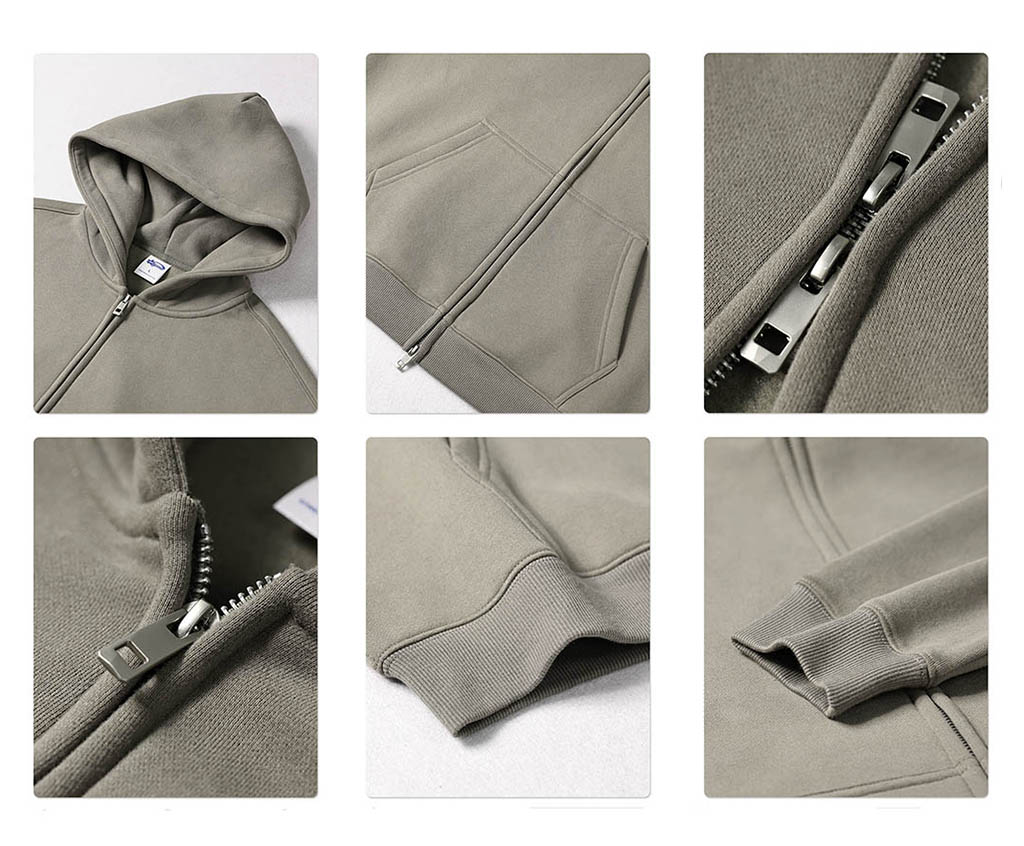
Knit density affects structural strength because denser, more consistent fabrics usually provide better resistance to wear and better support for the hoodie’s overall shape.
In a zip up hoodie, this matters because the fabric must support seams, hood weight, and zipper construction without becoming unstable. A denser knit often gives the garment a stronger foundation, which can help it remain intact through repeated daily use.
This relates to the brand’s emphasis on structural control and durable urban knitwear engineering. The correct judgment is not whether the hoodie feels thick for its own sake.
It is whether the fabric feels organized and supportive enough to maintain the garment’s function over time.
A good zip up hoodie fabric should resist stretching and deformation because repeated wear puts ongoing tension on the chest, shoulders, hem, and zipper area.
If the fabric stretches too easily and fails to recover, the garment can become uneven, lose shape, and feel less stable in use. This is particularly important in casual garments designed for commuting, leisure, and repeat wear, where shape retention is part of practical value.
The correct judgment is whether the hoodie remains balanced after movement rather than becoming loose in some areas and tense in others. Resistance to deformation helps preserve both comfort and overall garment reliability.
Fabric recovery matters because the hoodie needs to return to its intended shape after being worn, zipped, layered, and moved in.
Recovery is what prevents the garment from gradually becoming misshapen through normal use. This matters especially in a zip hoodie because the front opening and seam construction make structural imbalance more noticeable if the fabric begins to sag or warp.
The brand material places value on elasticity, stability, and long-term wear performance as connected features of good fabric development.
A strong hoodie fabric should therefore recover well enough that the garment continues to look and feel composed after repeated use, not only when new.
Fabric weight affects how a zip hoodie feels, how warm it is, and how easily it adapts to different situations.
Weight should be judged in relation to daily use rather than as a simple sign of quality.
The best weight depends on how the hoodie is meant to function in real life.
Lightweight fabrics improve flexibility because they usually feel easier to move in and less physically demanding over long periods.
In a zip up hoodie, this can be especially useful for layering, indoor use, and moderate climates where the garment should feel present without becoming heavy.
Lightweight materials often support easier packing and easier travel use as well. The limitation is that lighter fabrics may provide less insulation and less structural hold. The correct judgment is whether the lightness still leaves enough stability for the hoodie to feel usable and composed.
Lightweight fabric works best when flexibility is gained without making the garment feel underbuilt.
Midweight fabrics are often the strongest everyday choice because they balance warmth, structure, and comfort without pushing the hoodie toward either fragility or heaviness.
A midweight zip hoodie usually performs well in commuting, daily urban use, and indoor–outdoor transitions because it has enough body to hold shape while remaining easy to wear.
This reflects the wider preference for apparel that works across multiple casual scenarios rather than in a single narrow function. The correct judgment is whether the fabric feels substantial enough to support the garment while still remaining adaptable.
For many people, midweight construction is what makes a zip hoodie most repeatable in everyday life.
Heavyweight fabrics support increased warmth because they provide more insulation and often a stronger sense of garment substance.
In a zip up hoodie, this can make the piece more useful in colder environments or in situations where a more protective casual layer is needed. Heavyweight construction can also make the hoodie feel more solid and more structurally defined. The trade-off is reduced flexibility and potentially more heat retention indoors.
The correct judgment is whether that added weight meaningfully improves the hoodie’s purpose. Heavyweight fabrics work best when the garment is truly meant to serve colder daily routines rather than universal all-day use.
Fabric stability matters more in zip hoodies because the zipper changes how tension is distributed across the front of the garment.
The material must support seam stress, maintain alignment, and keep the hoodie front from becoming distorted.
This is one of the clearest cases where fabric strength directly affects category performance.
Fabric tension around zipper seams is important because the zipper creates a structural line that is used repeatedly and visually exposed at all times.
If the surrounding fabric is weak or unstable, the front can ripple, pull, or lose alignment. A stable fabric helps the zipper sit cleanly and lets the garment open and close without stressing the body panels too aggressively.
In a well-made zip hoodie, the textile around the zipper should support repeated use without becoming wavy or stretched.
The correct judgment is whether the front remains calm and even when zipped, partly opened, and worn through ordinary movement.
Strong fabric helps prevent distortion near zipper construction because the front opening is one of the most structurally demanding parts of the garment.
The zipper interrupts the fabric surface, so any weakness in the surrounding textile becomes easy to see. Distortion may appear as twisting, bubbling, pulling, or uneven hanging across the chest.
A stable material reduces those risks by giving the zipper seam a more reliable foundation. This is especially important in garments expected to provide a clean, practical, repeatable wearing experience.
The correct judgment is whether the hoodie front still looks balanced after repeated use, rather than only when new.
Fabric stability supports garment structure during wear because the hoodie needs to remain visually and physically balanced while the body moves.
A zip hoodie with weak material can lose front alignment, sag under the hood, or shift around the zipper area more noticeably than a pullover. Good stability helps the hoodie hold its shape while still feeling relaxed.
This is consistent with the broader brand focus on urban knitwear engineering, where structure and comfort are meant to work together across everyday scenarios.
The correct fabric should therefore support the zipper system without making the garment stiff. Strong stability allows the hoodie to feel easy while still remaining composed.
Low-quality fabric often becomes visible through wear problems before it becomes obvious through labels alone.
A hoodie may feel acceptable at first and still decline quickly if the material is weak.
Recognizing these warning signs helps identify fabric quality more accurately.
Fabric thinning or pilling are common signs of low-quality hoodie material because they show that the surface is breaking down faster than it should under normal wear.
Pilling usually indicates weak fiber integrity or a fabric surface that cannot handle friction well. Thinning suggests the material is losing substance and durability too early.
In everyday hoodies, these are serious issues because the garment is expected to support repeat use and maintain comfort over time.
The correct judgment is whether the hoodie surface remains stable after regular use. If it pills heavily or feels worn too soon, the material quality is usually weak.
Loss of softness after repeated wear is a warning sign because daily comfort depends on fabric maintaining a reasonably stable hand feel over time.
A hoodie that becomes rough, dry, or unpleasant after washing or repeated use loses part of its main value. This matters especially in casual garments, where comfort is not an extra benefit but a basic requirement.
The correct judgment is whether softness holds up through use rather than disappearing after the first stage of ownership.
Strong fabrics usually soften in a controlled way or remain stable. Weak fabrics often lose their best quality quickly.
Structural sagging shows that the fabric is no longer supporting the garment well enough to preserve shape.
In a zip up hoodie, this may appear around the front opening, hem, shoulders, or hood attachment points. Because the zipper makes front imbalance easier to notice, sagging can weaken both comfort and appearance at the same time.
A stable fabric should resist this kind of collapse through ordinary wear. The correct judgment is whether the garment still looks composed after many uses.
If the hoodie starts to hang unevenly, lose front stability, or feel stretched out in key areas, the material strength is usually insufficient.
A strong zip hoodie fabric can be judged systematically by reviewing comfort, temperature balance, structure, and long-term performance in order.
This helps separate real quality from first-impression softness or simple marketing language.
Good evaluation begins with how the fabric feels, but it should end with how the fabric performs.
1.Fabric softness and comfort check
2.Breathability and warmth balance check
3.Structural durability check
4.Long-term performance check
Fabric is the foundation of zip hoodie comfort, airflow, durability, and long-term wearability.
Cotton offers familiar softness, blends often improve balance and resilience, and synthetics can add performance benefits.
The best everyday fabrics balance insulation and breathability rather than maximizing one alone.
Softness matters, but it should be supported by enough strength to last through repeated wear.
Knit density, shape retention, and recovery are major signs of real fabric durability.
Midweight fabrics are often the most adaptable for daily use, while lightweight and heavyweight options serve narrower needs.
Fabric stability matters even more in zip hoodies because the zipper creates extra seam tension and visible front structure.
Warning signs of weak fabric include pilling, thinning, loss of softness, and structural sagging.
A reliable evaluation framework checks comfort, temperature balance, structural strength, and long-term performance.
We’ll get back to you within 24 hours. Attach your logo/design if needed.
💡 1 . Share your logo, fabric, and quantity for T-shirts, hoodies, and more.
📐 2. We’ll prepare samples for your approval.
🚚 3. Bulk production starts after deposit.
✅ We value your privacy. Your information is 100% safe and confidential.
📦 Need help? Chat with us via WhatsApp anytime!

Note: Your email information will be kept strictly confidential.
Note: Your email information will be kept strictly confidential.
Request a quote, discuss MOQ, lead time, fabrics & QC.
Visit our brand store: Modaknitswear

Retail orders (and dropshipping options) are available on Modaknitswear.