
 Skip to content
 Print durability matters because the graphic is often the defining feature of the hoodie. In a graphic garment, visual identity depends on whether the print remains clear, stable, and structurally intact through repeated wear. A print that degrades too quickly reduces both the visual value and the functional lifespan of the product.
This page explains how graphic prints age, what causes them to weaken, and how fabric and construction help preserve print quality over time. The goal is to help readers judge print longevity as a measurable quality factor, not just a visual preference.
Print durability matters because the graphic is not a temporary decoration.
In a graphic hoodie, it is part of the product’s identity, value, and long-term usability.
When the print fails early, the garment often loses its main reason for being chosen.
Graphics are defining elements of the garment because they often distinguish a graphic hoodie from a basic hoodie more than color or silhouette alone.
The artwork, logo, or typography is usually the main identity signal, so the print has to remain stable if the garment is going to keep its intended character. If the print breaks down early, the hoodie may still function physically, but it no longer performs visually in the same way.
That is why print durability should be judged as part of core garment quality. In graphic hoodies, the print is not secondary. It is one of the main product features, and its lifespan directly affects whether the hoodie continues to look intentional after repeated use.


Print durability affects product value because long-term usefulness depends on how well the graphic holds up under ordinary wear.
A hoodie with strong fabric and weak print quality loses value quickly, since the most visible design element deteriorates before the garment itself is finished. This matters especially in categories where durability, comfort, and repeat wear are part of product quality expectations. A durable print protects the hoodie’s visual identity and helps justify continued wear over time.
The correct judgment is not whether the print looks bright when new. It is whether the graphic still looks controlled after washing, movement, and daily use. Lasting value depends on that stability.
Long-term wear expectations matter in streetwear because graphic hoodies are often repeated across many casual settings rather than reserved for one-time use.
A strong hoodie is expected to survive regular wear while keeping enough of its visual identity to remain relevant. Some softening or aging is normal, but early cracking, fading, or peeling usually signals weak production rather than normal character.
In modern casual clothing, repeated wear is part of the value standard, especially when fabric quality and structural stability are central to the garment’s purpose. A graphic hoodie should age with control.
The print does not need to remain identical forever, but it should remain readable, stable, and visually coherent for a reasonable lifespan.

Graphic prints age in stages rather than all at once. Early performance, mid-stage wear, and later decline often follow a visible pattern.
Understanding that cycle helps separate normal aging from early production failure.

Early-stage graphic stability is the period when the print should remain at its clearest and most structurally controlled.
At this stage, edges should look precise, the surface should feel secure, and the graphic should sit evenly on the fabric without lifting or breaking. This stage is important because it reveals whether the print method, ink quality, and hoodie fabric were matched correctly.
A strong print should maintain this stable condition through early washes and initial wear without dramatic surface change. Minor softening can be normal, but obvious cracking or fading is not. The correct judgment is whether the print still appears integrated into the garment after the first phase of use.
Early instability usually predicts faster long-term decline.
Gradual changes from repeated wear are normal because prints are exposed to bending, friction, washing, and body movement over time.
A durable print does not remain frozen in its original state, but it should age in a controlled way. This often means slight softening of the surface, mild reduction in sharpness, or a more settled appearance as the graphic integrates into the wear pattern of the hoodie.
These changes are acceptable when legibility and structure remain intact. The correct judgment is whether the evolution feels even and predictable.
If the print begins changing through scattered fading, isolated cracking, or irregular texture breakdown, the aging is less controlled. Good print longevity allows change without rapid visual failure.


Long-term graphic aging patterns usually reveal whether the print was fundamentally strong or weak from the start.
Strong prints tend to show gradual reduction in intensity while preserving enough shape, contrast, and edge definition to remain readable. Weak prints often move toward instability more quickly, with cracking across stress points, fading in uneven patches, or edges lifting from the fabric.
Long-term aging should be judged by pattern, not by the presence of any change at all. All printed garments evolve with time. What matters is whether the change remains visually controlled and structurally calm.
A high-quality graphic hoodie usually shows a slower and more even aging pattern rather than sudden breakdown.
Print durability depends on a system rather than one isolated factor.
The printing method, the ink-to-fabric relationship, and the stability of the garment all contribute to how long the graphic remains clear.
Weakness in any one of these areas can shorten the print’s lifespan.
The printing technique strongly influences durability because each method bonds to the hoodie differently and responds differently to movement and washing.
Some methods create bold, stable surface graphics. Others prioritize detail or production flexibility but may depend more heavily on exact fabric compatibility and process control. The correct judgment is not to assume one named technique is always better.
It is to assess whether the chosen method suits the design scale, the hoodie surface, and the expected wear pattern. A large bold graphic may perform well with one method, while a detailed illustration may require another.
Print durability begins with choosing an application method that supports both the design and the garment structure.

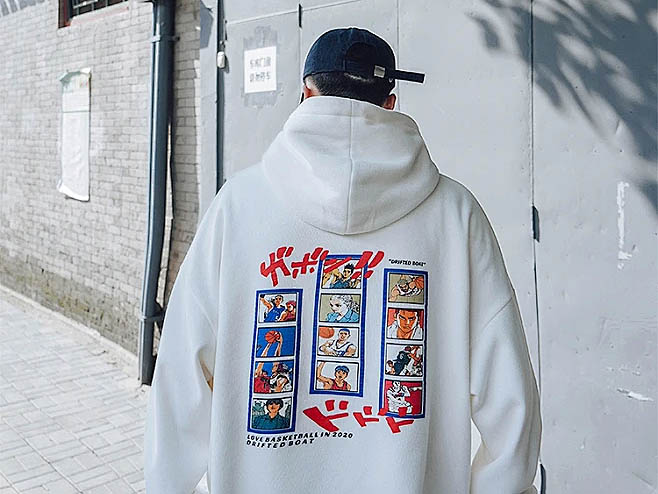
Ink adhesion and material compatibility matter because the print can only last if the graphic bonds properly to the hoodie surface.
If the ink sits weakly on the fabric, the print may peel, crack, or lose color faster. If the ink is too rigid for the material, repeated movement can break the surface layer.
Good compatibility means the ink adheres securely while still moving with the garment. This depends on both the print material and the fabric’s structure, texture, and composition. The correct way to judge this is to look for an integrated print surface rather than one that feels detached or overly plastic.
Durable prints depend on strong bonding without sacrificing flexibility.
Fabric stability supports graphics because the print depends on the hoodie surface staying reasonably consistent during wear.
If the fabric stretches too easily, loses shape, or twists over time, the print is forced to absorb that instability. This often leads to cracking, distortion, or weakened surface performance.
Fabric development, structural control, and long-term wear stability are therefore directly relevant to print lifespan. A strong print requires a dependable base. The correct judgment is not only whether the fabric feels comfortable.
It is whether the fabric remains supportive enough that the print can stay visually calm and structurally coherent through repeated use.

Fabric structure affects print longevity because the print sits on a moving textile surface, not on a rigid panel.
The more stable and well-constructed the fabric is, the more evenly the print can perform over time.
Good print durability usually begins with a fabric that resists unnecessary distortion.
Fabric stretching affects graphic integrity because the print must expand and recover with the garment every time the hoodie is worn.
If the fabric stretches beyond what the print layer can tolerate, surface fractures or shape distortion often begin to appear. This is especially important in areas like the chest and upper torso, where motion and tension are frequent.
A stable hoodie should allow natural movement without transferring excessive strain into the graphic. The correct judgment is whether the fabric holds its form well enough that the print remains visually stable during actual wear.
When the base material stretches too aggressively, even a decent print can fail earlier than expected.
Knit density supports graphic stability because a denser and more even surface gives the print a better base to bond with.
Dense knits usually reduce irregular movement across the print area and provide better support for maintaining sharpness and surface consistency. This does not mean the hoodie must be heavy. It means the face of the fabric should be coherent enough to support the graphic through regular use.
Fabrics built with stronger structure and better material engineering generally provide more reliable support for long-term garment performance. The correct judgment is whether the print sits on a stable field rather than a loose, shifting surface. Stable knits usually help prints age more evenly.
Fabric recovery matters because durability depends not only on stretch, but on how well the hoodie returns to shape after movement.
A fabric that stretches and fails to recover places repeated stress on the same print zones, which can lead to permanent warping or visual imbalance.
Good recovery helps the print return to a calm state after the garment is worn, reducing cumulative strain. This is part of broader garment quality, where elasticity, structure, and durability should work together rather than separately.
The correct judgment is whether the hoodie panel looks smooth and stable after normal movement. Recovery protects the print by reducing long-term distortion.
Print degradation usually appears in a few predictable forms.
These visible failures are useful because they help identify whether the problem is normal aging or weak production.
Most print issues become easier to judge when the specific type of deterioration is recognized.
Print cracking is one of the most common signs of degradation because the surface layer begins to split where it can no longer flex with the garment.
Cracking often appears first across high-motion areas or across larger printed sections that experience repeated bending. Fine surface aging may be acceptable in older garments, but obvious fracture lines appearing early usually indicate weak flexibility, poor adhesion, or an unstable fabric base. The correct judgment is to look at whether the cracking is gradual and minor or severe enough to break the graphic into visible segments.
Controlled aging is different from structural failure. When cracks interrupt legibility, print durability is weak.
Color fading is a common aging pattern because pigment intensity naturally decreases with washing, friction, and repeated exposure.
The question is not whether any fading occurs, but how quickly and how evenly it happens. A durable print may soften slightly while still maintaining enough contrast and clarity to remain readable.
A weak print often loses color fast, unevenly, or in patches that make the graphic appear washed out before the garment itself has meaningfully aged.
The correct judgment is whether the fading feels controlled. Good print longevity means the design remains visually intentional even as it gradually loses some original intensity.
Print peeling or separation is a stronger sign of failure because it shows that the graphic is no longer adhering properly to the hoodie surface.
This often begins at corners, edges, or stress-heavy areas, where the print starts lifting away from the fabric. Peeling is usually more serious than normal soft fading because it indicates breakdown in the bond between graphic and garment. A durable print should remain attached even as it ages.
The correct judgment is whether the print surface stays connected and stable under normal wear. Once separation begins, the print is usually entering a later stage of deterioration rather than a mild aging phase.
Graphic prints do not fail at one fixed moment.
Degradation usually begins with small surface signs, develops through repeated wear, and ends in more visible structural failure.
Understanding this timeline helps readers identify problems before the print fully breaks down.
Early signs of graphic wear are usually subtle and appear before major visual failure.
These may include slight dulling of the surface, minor softening of sharp edges, very fine stress lines, or a change in how the print feels when bent. These early signals are useful because they show whether the print is aging gradually or starting to weaken too soon.
The correct judgment is whether the changes remain cosmetic and controlled. If the print begins showing obvious cracks, edge lift, or major fading after limited wear, that is not healthy early aging. It is a warning that the print may not have strong long-term stability.
Progressive deterioration happens as repeated washing, movement, and friction continue to stress the print layer.
At this stage, small issues usually become more visible. Fine cracks widen, fading becomes more noticeable, and the print may begin to lose evenness across the surface. This stage matters because it separates prints that age acceptably from those that degrade quickly.
A strong print may continue to look worn but still readable. A weak one often loses clarity fast once deterioration begins. The correct judgment is whether the change remains steady and moderate or starts accelerating into structural failure. Progressive wear should not immediately destroy the design’s function.
Late-stage graphic failure occurs when the print no longer performs visually or structurally in a dependable way. At this point, the design may be heavily cracked, faded beyond legibility, peeling from the fabric, or permanently distorted.
The graphic may still exist in fragments, but it no longer holds its intended shape or message. This stage is important because it marks the end of practical print life, even if the hoodie body remains wearable. The correct judgment is not whether some aging is visible.
It is whether the print can still function as a coherent graphic. Once clarity and attachment are largely lost, the print has moved beyond normal wear into full failure.
Print longevity depends not only on the print itself, but also on how the hoodie is built.
Construction affects tension, surface stability, and how stress travels across the garment.
A well-constructed hoodie helps protect the graphic by reducing unnecessary strain.
Fabric stability protects graphics because a steady garment surface prevents the print from being constantly pulled out of shape.
If the hoodie panel stays structurally calm during movement, the print experiences less repeated stress. This is why stable fabric construction matters as much as visual softness or weight. A graphic placed on a stable chest or back panel is more likely to remain aligned and readable over time.
The correct judgment is whether the area under the print holds its shape through ordinary wear. Distortion often starts when the garment base is not controlled enough to support the graphic consistently.
Structural support in graphic placement areas matters because different parts of the hoodie experience different kinds of stress.
The chest, upper back, and sleeve zones each move differently, so the garment must provide enough support where graphics are placed. Prints perform better when they sit on panels with balanced construction and enough surface integrity to hold shape.
A weak placement area can shorten print life even if the print process itself was acceptable. The correct judgment is whether the graphic sits on a stable field that remains visually coherent during wear.
Placement is not only about composition. It is also about structural suitability.
Balanced garment tension helps protect prints because the hoodie should distribute movement across the body without concentrating strain into the graphic zone.
If the garment is too tight, too unstable, or poorly proportioned, the print becomes a stress point rather than a protected design area. This links fit quality directly to print durability.
Clothing built for comfort, structural balance, and repeated urban wear usually protects surface details more effectively because the garment moves in a controlled way.
The correct judgment is whether the hoodie feels easy on the body while keeping the print area visually calm. Good tension balance supports both comfort and longevity.
Poor print quality often reveals itself early through visible surface problems.
These signs matter because they help identify weak production before the hoodie has been worn for a long time.
A careful inspection can often predict whether the print is likely to remain stable.
Uneven or overly thick prints are warning signs because they often indicate poor control in the printing process.
A quality print should have consistent coverage, even edges, and a surface that feels deliberate rather than heavy for no reason. When some areas look overbuilt while others look weak, the graphic may age unevenly. Excess thickness can also reduce flexibility, which increases the risk of cracking later.
The correct judgment is whether the print feels controlled and proportionate to the fabric. A graphic should not look swollen, rubbery, or irregular if durability is expected.
Early cracking after limited wear is one of the clearest signs of poor print quality because it shows that the surface cannot tolerate normal movement or washing.
A durable print may soften over time, but it should not begin visibly breaking after only a short period of use. Early cracks usually indicate brittle print material, weak adhesion, poor curing, or an unstable fabric beneath the graphic. The correct judgment is whether the cracking appears after meaningful long-term use or far too soon.
If it starts early, the production quality is usually weak regardless of how sharp the print first looked.
Print edges lifting from fabric indicate poor adhesion because the graphic is beginning to separate from the hoodie surface.
This often happens first at corners or along thin outer lines where the bond is easiest to break. A stable print should remain flat and attached, even after repeated use. Edge lift is especially important because it often predicts larger peeling later.
The correct judgment is whether the edges stay settled into the garment or begin to curl upward under light stress. Early edge lifting is usually a production problem, not normal aging.
Print durability is easier to judge when it is evaluated in a fixed sequence.
Instead of relying on appearance alone, it is better to review surface quality, fabric compatibility, structural support, and long-term potential together.
This creates a more reliable way to judge whether a graphic hoodie is likely to age well.
1.Print clarity and surface consistency check
2.Fabric compatibility check
3.Structural stability check
4.Long-term durability potential check
Print durability matters because the graphic is often the main identity feature of the hoodie.
A strong print protects product value by staying clear, stable, and readable over repeated wear.
Prints usually age in stages: early stability, gradual wear, and eventual decline.
Durability depends on print method, ink adhesion, fabric compatibility, and garment stability.
Stable fabric structure helps prevent cracking, distortion, and early graphic failure.
The most common degradation signs are cracking, fading, and peeling.
Early warning signs include thick uneven prints, fast cracking, and edges lifting from the fabric.
Good construction protects prints by reducing tension and keeping placement areas stable.
A useful evaluation framework checks print surface quality, fabric compatibility, structural support, and long-term durability potential.
We’ll get back to you within 24 hours. Attach your logo/design if needed.
💡 1 . Share your logo, fabric, and quantity for T-shirts, hoodies, and more.
📐 2. We’ll prepare samples for your approval.
🚚 3. Bulk production starts after deposit.
✅ We value your privacy. Your information is 100% safe and confidential.
📦 Need help? Chat with us via WhatsApp anytime!

Note: Your email information will be kept strictly confidential.
Note: Your email information will be kept strictly confidential.
Request a quote, discuss MOQ, lead time, fabrics & QC.
Visit our brand store: Modaknitswear

Retail orders (and dropshipping options) are available on Modaknitswear.