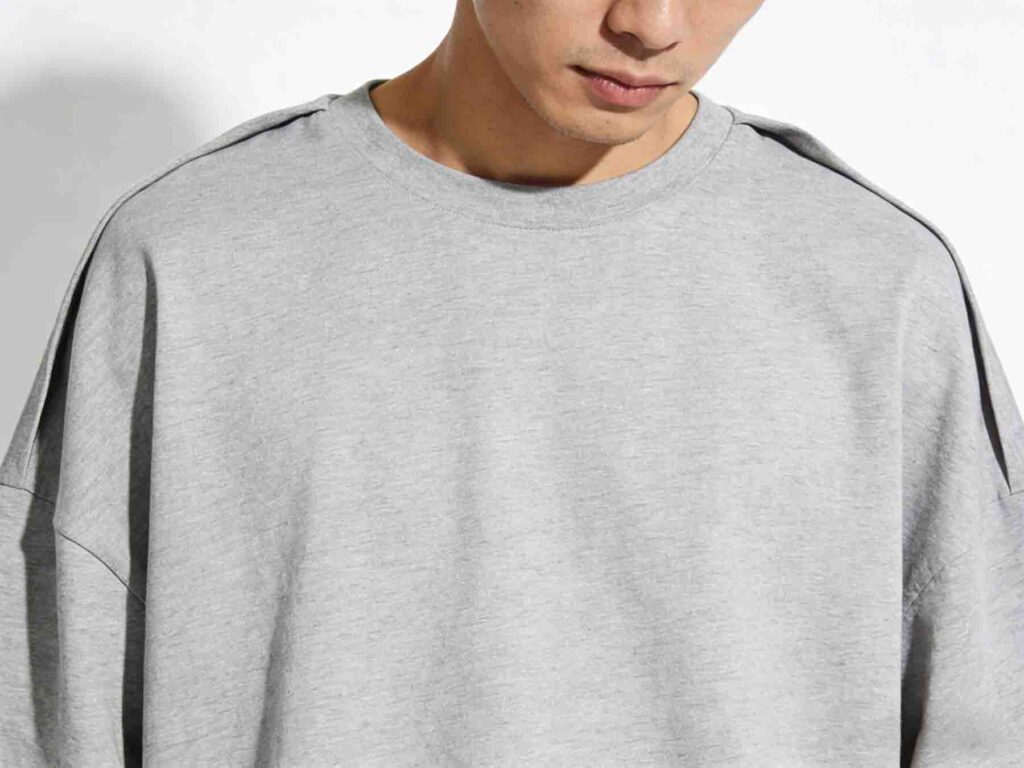
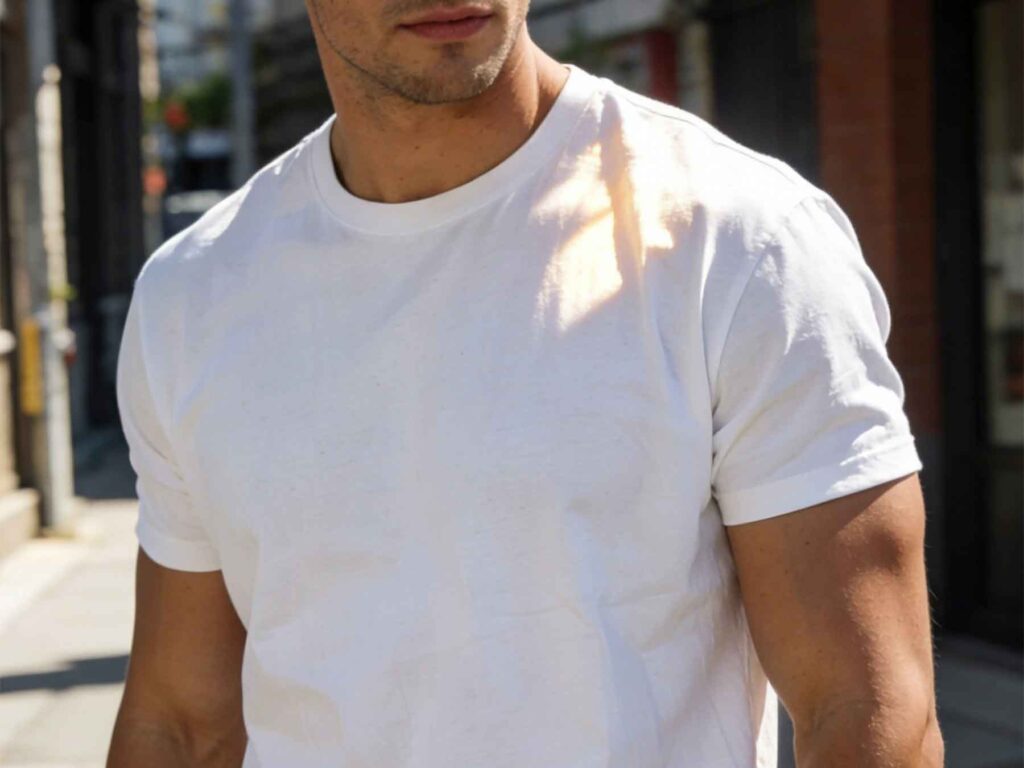
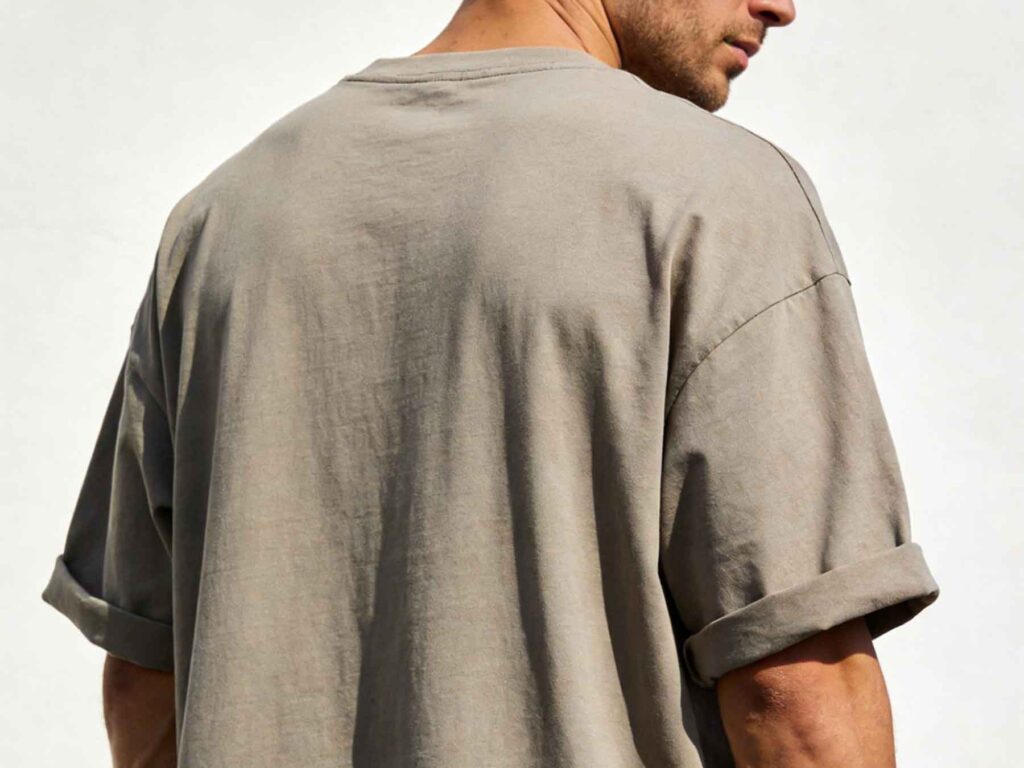
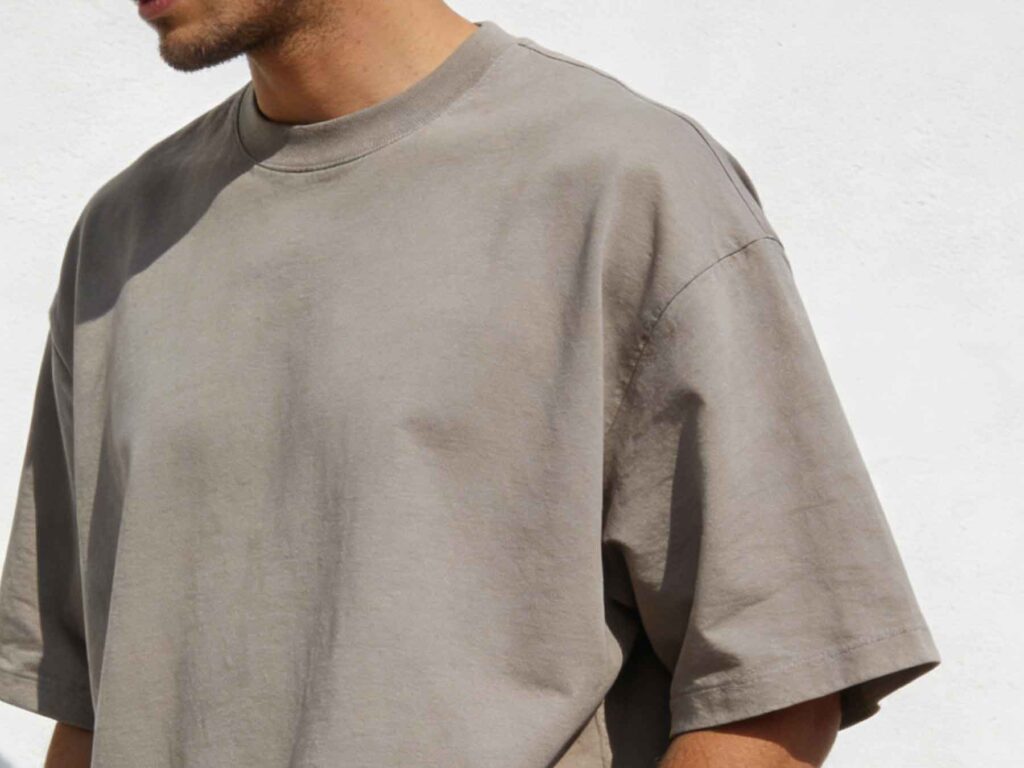
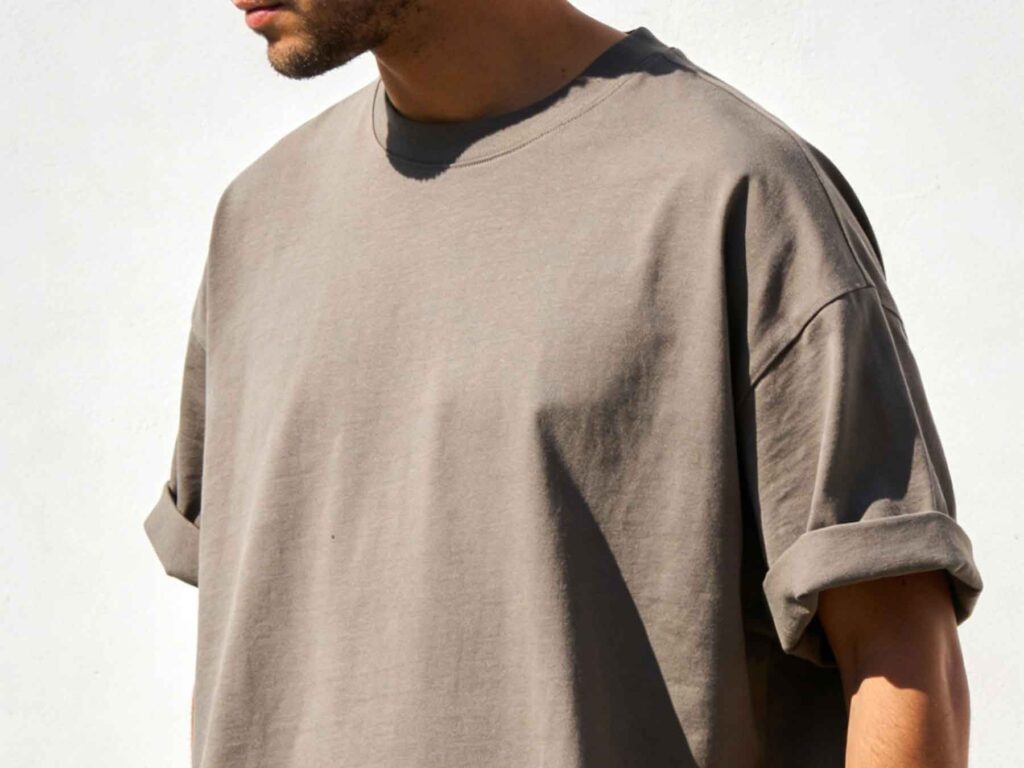
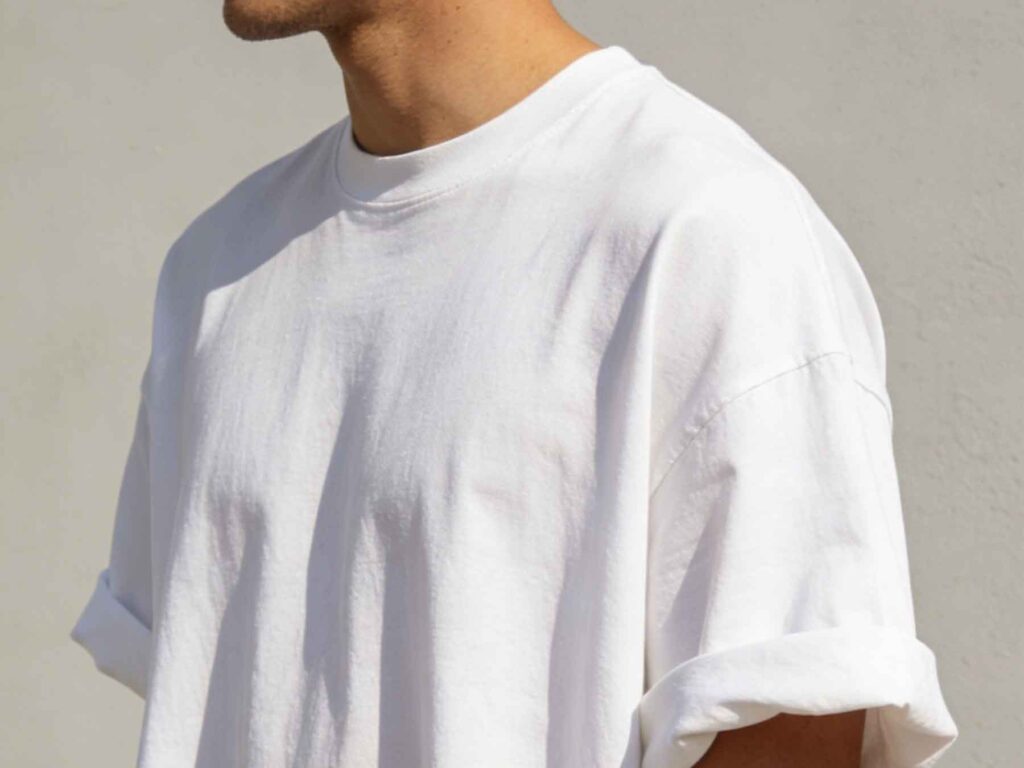
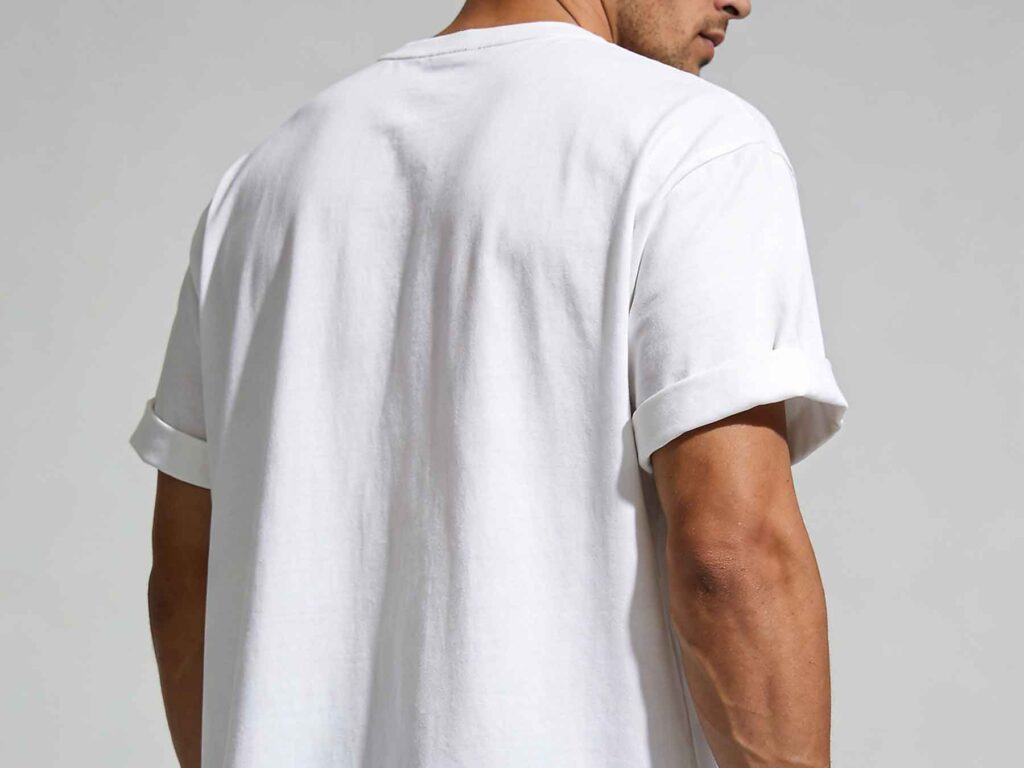
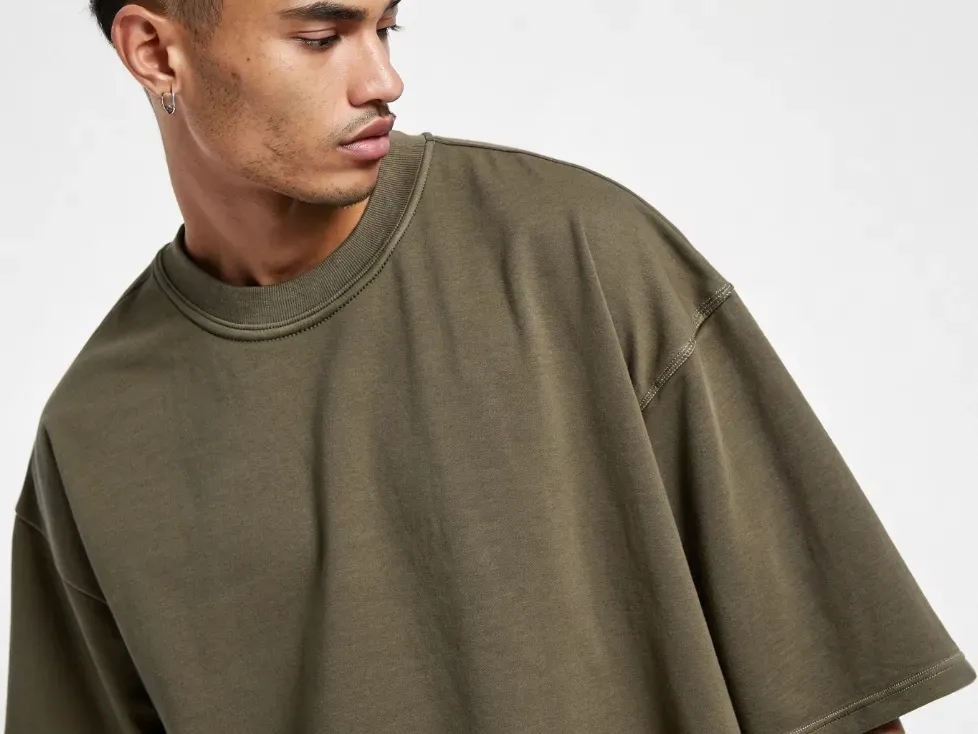
Comfort in drop shoulder design is structural and physical, not visual.
This section clarifies why comfort is not the same as looseness and how wear experience changes over time.
Comfort vs looseness: why they are not the same
Looseness creates space, but comfort depends on how that space is controlled.
A loose T-shirt can still feel uncomfortable if fabric drags, shifts excessively, or concentrates pressure in the wrong areas. Drop shoulder comfort is not defined by extra room alone, but by whether that room reduces tension without creating instability.
True comfort feels neutral and unobtrusive, not constantly noticeable.
How drop shoulder construction changes pressure distribution
Drop shoulder construction reduces pressure at the shoulder point by relocating load across a wider area.
By lowering the shoulder seam, tension is spread from a single stress point to the upper arm and upper torso. This often reduces neck and shoulder pressure during standing and walking.
However, if not balanced, redistributed pressure can turn into fabric drag or pulling elsewhere.
The difference between initial comfort and long-wear comfort
Many drop shoulder T-shirts feel pleasant when first worn due to looseness and fabric softness. Over time, however, poor structure can lead to shifting seams, fabric buildup, or heat retention.
Long-wear comfort is determined by whether the garment still feels balanced after hours, not minutes.
How Drop Shoulder T-Shirts Feel Around the Shoulders
Shoulder & Upper Body Experience
The shoulder area is where most wearers notice comfort differences first.
Drop shoulder designs change how weight and movement are felt in the upper body.
Reduced shoulder seam pressure and tension
Drop shoulder T-shirts typically reduce direct pressure on the shoulder seam.
Because the seam no longer sits on the shoulder peak, there is less localized compression. This can feel more relaxed, especially during long periods of standing or walking.
The benefit depends on the seam sitting stably rather than sliding downward.
Freedom of arm movement vs loss of support
Drop shoulder designs increase arm freedom but reduce structural support.
Lowered armholes allow easier arm lifting and reaching. At the same time, the garment relies more on fabric behavior to maintain shape.
Comfort improves when freedom does not result in constant fabric shifting.
When drop shoulders feel relaxed vs unstable
Drop shoulders feel relaxed when movement feels natural and unforced.
They feel unstable when the wearer constantly senses fabric slipping, dragging, or rebalancing. If arm movement causes the body to ride up or twist, comfort breaks down.
Stable comfort feels “quiet” on the body.
How the T-Shirt Interacts With the Body Throughout the Day
Body Drape & Skin Contact
Comfort is strongly affected by how fabric touches—or avoids—the body.
Drop shoulder designs change this interaction significantly.
Fabric contact across chest, back, and torso
Drop shoulder T-shirts usually reduce direct fabric contact across the upper torso.
Increased spacing allows the fabric to hang rather than cling. This can feel less restrictive, especially across the chest and shoulders.
Poor drape, however, can cause fabric to bunch against the back or sides.
Airflow, spacing, and heat release
Comfort improves when spacing allows air to circulate naturally.
Drop shoulder designs can enhance airflow if fabric hangs evenly. This helps release heat during walking or indoor wear.
If fabric collapses or sticks, airflow decreases and warmth builds quickly.
Why some drop shoulder tees feel breezy while others feel clingy
The difference comes from fabric behavior, not the drop shoulder itself.
Lightweight fabrics with poor recovery may cling despite looseness. Fabrics with controlled drape maintain space and airflow.
Comfort depends on whether spacing is preserved throughout movement.
Why Fabric Choice Determines Wear Experience
Fabric Weight & Comfort Balance
Fabric choice defines whether drop shoulder comfort is maintained or lost.
Weight, drape, and recovery must work together.
Lightweight vs midweight vs heavyweight comfort differences
Midweight fabrics often provide the most balanced comfort in drop shoulder designs.
Lightweight fabrics feel airy but can cling or shift excessively. Heavyweight fabrics feel stable but may trap heat.
Midweight fabrics tend to balance airflow, stability, and pressure distribution.
How fabric drape affects perceived softness and ease
Softness is perceived through movement, not touch alone.
A fabric that drapes smoothly feels softer during wear, even if the surface texture is firm. Poor drape creates friction and distraction.
Comfort improves when fabric moves with the body rather than resisting it.
The role of fabric recovery in maintaining comfort over time
Good recovery prevents fabric fatigue and shifting.
Fabrics that recover after stretching maintain their original balance. Without recovery, garments sag, cling, or pull unevenly.
Long-term comfort relies on recovery more than softness.
How Drop Shoulder T-Shirts Perform When You Move
Comfort in Motion
True comfort is tested during movement, not at rest.
Drop shoulder designs change how motion is felt.
Arm lifting, walking, sitting, and daily gestures
Comfort holds when movement does not create noticeable resistance or drag.
Arm lifting should feel easy, walking should not cause fabric bounce, and sitting should not force the garment to ride up excessively.
Discomfort often appears during repeated small movements.
Twist, pull, and fabric shift during movement
Excessive twisting or pulling signals imbalance.
If seams rotate or fabric shifts noticeably with each step, comfort degrades.
Stable designs return to position after movement.
When movement enhances comfort vs creates distraction
Good designs disappear during movement; poor ones demand attention.
Comfort is present when the wearer forgets about the garment. Constant adjustment indicates failure.
Ease should feel continuous, not situational.
Comfort After Hours of Wear
Long-Wear & Daily Use Experience
Drop shoulder comfort must persist throughout the day.
This section addresses time-based wear experience.
How drop shoulder tees feel after a full day
Well-designed drop shoulder T-shirts feel similar at hour eight as at hour one.
Poor designs begin to feel heavy, warm, or unbalanced over time.
Consistency is a key comfort indicator.
Heat buildup, fatigue, and fabric behavior over time
Heat and fatigue accumulate when fabric fails to manage airflow.
As the day progresses, poor breathability and fabric collapse increase discomfort.
Stable drape helps prevent this accumulation.
Comfort consistency from morning to evening
Comfort should remain predictable across changing conditions.
Moving indoors and outdoors should not require frequent adjustment.
Consistency defines wearable comfort.
User Types and Comfort Expectations
Who Drop Shoulder Comfort Is Best For
Drop shoulder comfort is not universal.
It varies by body type and daily activity.
Body types and posture considerations
Drop shoulder designs often suit relaxed or neutral posture best.
They can reduce pressure for broader shoulders but may feel unstable for those needing structural support.
Posture influences perceived comfort.
Lifestyle fit: desk work, commuting, casual movement
Drop shoulder comfort aligns well with low-to-moderate activity days.
Desk work, commuting, and casual walking benefit most.
High-activity or highly structured environments may reduce comfort benefits.
When drop shoulder comfort may not suit the wearer
Those seeking firm support or highly controlled fits may find drop shoulders distracting.
Comfort preferences differ. Drop shoulder is not a universal solution.
Why Some Drop Shoulder T-Shirts Feel Uncomfortable
Common Comfort Issues & Misjudgments
Most discomfort comes from imbalance, not the concept itself.
Excessive looseness causing drag or imbalance
Too much looseness creates fabric drag and uneven pressure.
Comfort decreases when the garment constantly shifts.
Poor fabric choice amplifying discomfort
Fabric magnifies both comfort and discomfort.
Unsuitable fabrics exaggerate every design weakness.
Mistaking visual ease for physical comfort
Looking relaxed does not guarantee feeling comfortable.
Wear experience must be evaluated physically, not visually.
Quick Checklist — Drop Shoulder Comfort Judgment Points
Reduced shoulder pressure without slippage
Natural arm movement without drag
Even fabric contact across torso
Noticeable airflow and heat release
Fabric recovers after movement
No constant need for adjustment
Comfort remains after hours of wear
Feels neutral, not attention-drawing
TL;DR — Drop Shoulder Comfort Rules
Comfort is about pressure, movement, and stability
Looseness alone does not guarantee comfort
Drop shoulder redistributes tension, not removes it
Fabric behavior defines long-term comfort
True comfort holds in motion and over time
If it requires constant adjustment, it is not comfortable
✕
📝 Get a Custom Apparel Quote – Fast, Secure & Easy!
We’ll get back to you within 24 hours. Attach your logo/design if needed.
📦 How It Works:
💡 1 . Share your logo, fabric, and quantity for T-shirts, hoodies, and more.
📐 2. We’ll prepare samples for your approval.
🚚 3. Bulk production starts after deposit.
✅ We value your privacy. Your information is 100% safe and confidential. 📦 Need help? Chat with us via WhatsApp anytime!
The ULTIMATE Guide to Costume Design in 2024
Note: Your email information will be kept strictly confidential.
Totally free and full of resources
Save a lot of time looking for products
A must-have catalog for sourcing
Written by experienced designers
The ULTIMATE Guide to Costume Design in 2023
Note: Your email information will be kept strictly confidential.
Totally free and full of resources
Save a lot of time looking for products
A must-have catalog for sourcing
Written by experienced designers
Before you go — choose the right site
Manufacturing (OEM/ODM)?
Request a quote, discuss MOQ, lead time, fabrics & QC.