
 Skip to content
 How Modern Hoodies Support All-Day Comfort and Daily Activity
Men’s hoodies are widely used because they support long hours of comfortable wear during everyday routines.
Their knit construction, relaxed silhouette, and moderate warmth allow them to function across commuting, indoor environments, and casual social settings.
When properly designed, a hoodie maintains comfort throughout the day while supporting natural movement and environmental adaptability.
Comfort is the primary reason hoodies remain widely used in modern wardrobes.
Unlike specialized garments designed for limited situations, everyday hoodies must support extended wear across varied daily conditions.
Understanding comfort as a functional requirement clarifies why hoodies remain central to casual clothing systems.
Clothing used daily must remain comfortable over extended periods.
Men’s hoodies are frequently worn for many hours during commuting, work, or social activities. Garments used in this way must maintain consistent comfort without causing fatigue, overheating, or restriction.
Because hoodies often remain on the body throughout the day, their design must account for sustained wear rather than short-term use.


Casual garments prioritize wearability and mobility.
Unlike formal clothing, which may emphasize structure and appearance, casual garments must support movement and long-term comfort. Hoodies align with this requirement through flexible knit fabrics and relaxed silhouettes.
This emphasis on comfort allows hoodies to function as dependable everyday layers.
Hoodies combine several qualities that support daily use.
Soft fabrics, moderate insulation, and adaptable design allow hoodies to perform across different environments. These characteristics make them practical for commuting, indoor activities, and relaxed social settings.
Because they meet these everyday needs, hoodies have become widely adopted as daily garments.

Everyday hoodies must meet certain baseline comfort expectations.
These standards determine whether a hoodie can support regular wear without discomfort.
Several structural and material qualities define these expectations.

Interior fabric texture influences long-term comfort.
Because hoodies often sit directly against the body or over lightweight shirts, the interior surface must remain smooth and comfortable. Rough or coarse fabrics can create irritation during extended wear.
Soft interior textures help maintain consistent comfort throughout daily activities.
Weight affects physical comfort over time.
If a hoodie is excessively heavy, the additional fabric mass may create pressure on the shoulders or upper body during long hours of wear. Extremely lightweight fabrics, however, may lack warmth or structure.
Balanced fabric weight allows the garment to remain comfortable without feeling burdensome.
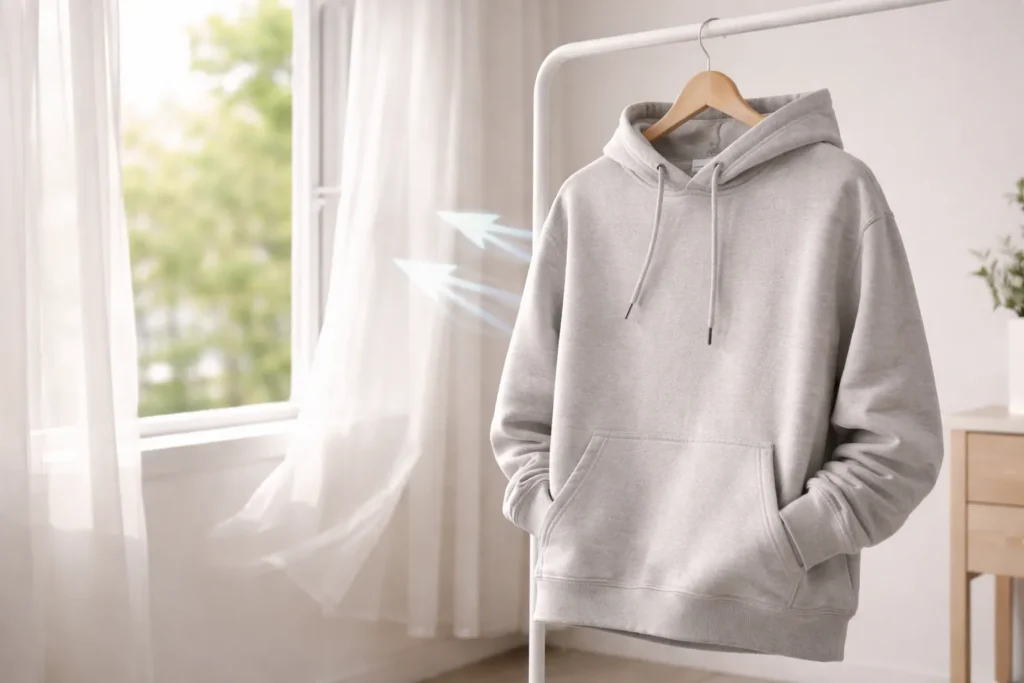

Comfortable garments maintain stable proportions.
A hoodie that fits properly should allow natural movement without creating tightness across the chest, shoulders, or sleeves. At the same time, it should maintain enough structure to avoid feeling excessively loose or unstable.
Balanced fit supports comfort during extended wear.
Warmth is an important factor in hoodie comfort.
However, everyday hoodies must balance insulation with breathability.
Moderate warmth allows the garment to remain comfortable across varied environments.
Everyday hoodies are most useful in moderate climates.
During transitional seasons such as spring and autumn, temperatures fluctuate throughout the day. Hoodies provide enough insulation to remain comfortable outdoors while still allowing breathability indoors.
This balance makes them suitable for daily routines.


Indoor environments often maintain stable temperatures.
If a hoodie traps excessive heat, it may become uncomfortable when worn indoors for extended periods. Breathable knit fabrics help regulate temperature and prevent overheating.
Balanced warmth therefore improves daily usability.
Outdoor movement requires moderate insulation.
Walking or commuting in cooler weather often generates body heat. Hoodies provide enough warmth to protect against mild cold while allowing excess heat to dissipate during movement.
This thermal balance supports everyday activity.
Modern daily routines often involve moving between different environments.
Hoodies remain practical because they adapt to these transitions.
Their structure allows them to function across both indoor and outdoor spaces.
Daily routines often involve temperature shifts.
Moving between outdoor environments, public transportation, and indoor spaces exposes clothing to varying conditions. Hoodies provide moderate insulation that adapts well to these transitions.
This adaptability helps maintain comfort throughout the day.
Commuting often involves both movement and stationary periods.
Walking between locations generates body heat, while waiting for transit may expose the wearer to cooler conditions. Breathable fabrics allow hoodies to respond to these changing conditions.
Airflow within the fabric helps regulate temperature during commuting.
Layering increases environmental adaptability.
Hoodies can function as standalone garments in mild weather or as mid-layers beneath jackets in colder conditions. This flexibility allows them to adjust to changing temperatures throughout the day.
Layer adaptability enhances everyday practicality.
Everyday clothing must allow unrestricted movement.
Hoodies support this requirement through flexible fabrics and relaxed construction.
These features allow the garment to adapt to daily physical activity.
Mobility begins with proper shoulder construction.
Activities such as reaching, carrying items, or commuting require free arm movement. Hoodies typically provide room in the shoulders and sleeves to support this mobility.
Balanced garment proportions allow movement without restriction.
Daily travel requires clothing that supports movement.
Walking through urban environments or navigating transportation systems requires garments that do not restrict the body. Hoodies allow comfortable motion because their knit fabrics stretch naturally.
This flexibility improves everyday usability.
Comfortable clothing should move with the body.
Hoodies adapt easily to sitting, standing, walking, and other routine actions. Their soft fabrics and relaxed silhouettes reduce resistance during movement.
This natural motion contributes to their popularity as everyday garments.
Comfort must remain stable throughout the day.
Hoodies used for daily routines may be worn for many consecutive hours.
Time-based performance therefore becomes an important quality indicator.
Garments intended for daily use must remain comfortable over time.
A hoodie that feels comfortable initially but becomes restrictive or warm after several hours may not perform well as an everyday garment. High-quality hoodies maintain consistent comfort throughout long wear periods.
Stable performance supports daily reliability.
Fabric weight affects long-term wearability.
Even moderate weight differences may become noticeable after several hours. Balanced fabric density distributes weight evenly across the shoulders and torso.
This distribution reduces fatigue during extended wear.
Garments should maintain their shape throughout the day.
If a hoodie stretches excessively or shifts out of position during normal movement, comfort may decrease over time. Stable construction helps the garment maintain consistent fit.
Fit stability improves long-hour usability.
The sensory experience of clothing influences comfort perception.
For everyday hoodies, tactile qualities play a significant role in long-term wearability.
Fabric texture and breathability determine how the garment feels throughout the day.
Soft fabrics improve tactile comfort.
Because hoodies often touch the neck, arms, and torso directly, the fabric surface must remain gentle against the skin. Coarse textures may become uncomfortable during extended wear.
Smooth fabrics help maintain consistent comfort.
Breathability improves overall comfort perception.
When air circulates through the fabric, heat and moisture dissipate naturally. This prevents the garment from feeling overly warm or humid during daily activity.
Breathable materials therefore enhance long-term wearability.
Comfortable garments minimize friction.
Seams, fabric edges, and hood attachments must be designed to avoid rubbing against sensitive areas. Proper construction helps prevent irritation during long hours of wear.
Reduced friction contributes to a comfortable wearing experience.
Despite their versatility, hoodies have practical limits.
Certain environments or activities may reduce their comfort advantages.
Recognizing these boundaries ensures realistic expectations.
Hot weather may reduce hoodie practicality.
In warm climates or during summer conditions, the insulation provided by a hoodie may trap excess heat. Lighter garments often provide better comfort in these environments.
Temperature therefore influences hoodie usability.
Athletic activities require specialized garments.
During intense exercise, moisture management and ventilation become critical. Athletic clothing designed for performance typically provides better airflow than everyday hoodies.
Hoodies are generally better suited to moderate activity.
Certain situations benefit from minimal clothing layers.
In very warm indoor environments or during travel in hot climates, lightweight shirts may provide greater comfort than thicker garments.
Understanding these limits clarifies hoodie usage boundaries.
Evaluating hoodie comfort requires systematic observation.
Several simple checks help determine whether a garment supports daily wear.
These indicators reveal how well a hoodie performs during extended use.
1.Softness and interior feel check
2.Weight balance check
3.Warmth and breathability check
4.Movement comfort check
Soft interior fabric comfortable against the skin
Balanced weight that does not strain the shoulders
Breathable material preventing overheating
Moderate warmth suitable for daily environments
Stable fit allowing natural movement
Comfortable during extended wear
Minimal seam irritation
Men’s hoodies remain everyday wardrobe staples because they provide reliable comfort during long daily wear.
Balanced warmth, breathable fabrics, flexible construction, and stable fit allow them to support commuting, casual activities, and indoor environments.
When these qualities are present, hoodies function as dependable all-day garments in modern menswear.
We’ll get back to you within 24 hours. Attach your logo/design if needed.
💡 1 . Share your logo, fabric, and quantity for T-shirts, hoodies, and more.
📐 2. We’ll prepare samples for your approval.
🚚 3. Bulk production starts after deposit.
✅ We value your privacy. Your information is 100% safe and confidential.
📦 Need help? Chat with us via WhatsApp anytime!

Note: Your email information will be kept strictly confidential.
Note: Your email information will be kept strictly confidential.
Request a quote, discuss MOQ, lead time, fabrics & QC.
Visit our brand store: Modaknitswear
Retail orders (and dropshipping options) are available on Modaknitswear.