Many people choose a T-shirt just for the print or color, but the neckline has a huge impact on comfort, fit, and even style. If you’re in fashion, understanding neckline options is a real game-changer.
The most common T-shirt necklines include crew neck, V neck, scoop neck, and more. Each brings its own strengths and best-use scenarios. Knowing the differences helps you choose or design tees that fit your needs perfectly.
I’ve seen first-hand how a simple change in neckline can transform a basic tee into a best-seller. Let’s dive deeper, starting with the classic crew neck.
Crew Neck
What Is a Crew Neck and Why Is It So Popular?
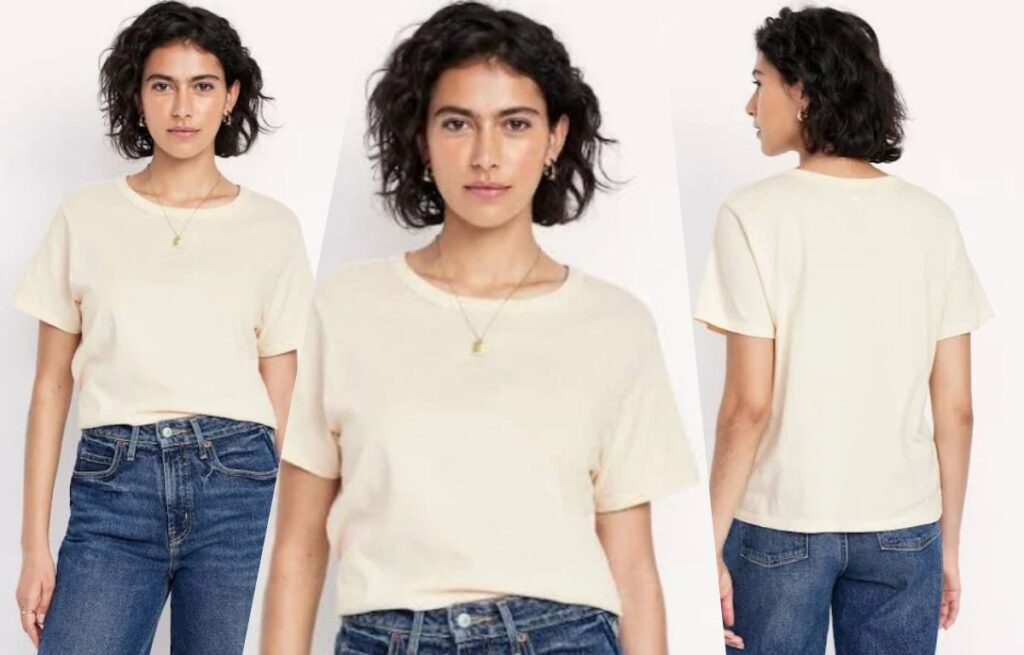
Crew neck T-shirts are the staple of wardrobes around the world. I see this neckline requested most by brands, especially for basics and teamwear.
A crew neck is a round neckline that fits closely at the base of the neck. It’s known for its simple, timeless look and works well for all ages, body types, and occasions.
Years ago, I visited a factory and saw the difference in demand between crew neck and other necklines. Crew neck always dominated orders because it’s versatile, easy to produce, and universally flattering.
Structure, Benefits, and Drawbacks of Crew Neck T-Shirts
Construction and Technical Features
Crew necks are built using a ribbed or self-fabric band sewn around the neckline. Quality versions include reinforced stitching or taping to help the collar keep its shape after washing. Some brands use wider bands for a vintage look, while others keep it slim for modern styles.
| Advantages | Disadvantages | Best For | Typical Uses |
|---|---|---|---|
| Simple, classic, versatile | Can make neck look shorter | All ages, all genders | Everyday, uniforms, teamwear |
| Easy to mass produce | Less room for creative detail | Athleisure, basics, mass market | Layering, printing, promotions |
| Comfortable, secure fit | Can feel tight for some people | Casual and formal brands | Office, gym, outdoors |
When Is the Crew Neck Ideal—and Where Is It Limited?
Crew necks are the go-to for basics, uniforms, and any style where comfort and simplicity matter most. The shape suits most people, making it a safe choice for brands serving diverse customers. Crew necks work for layering in cold weather and as the foundation for printed tees.
However, the close fit can be less flattering for those with shorter necks or round faces, making their neck appear even shorter. Some fashion-forward brands find the crew neck too basic or limiting for creative expression, leading them to experiment with wider bands, contrast stitching, or new collar materials.
Crew Neck vs. V Neck vs. Scoop Neck
| Feature | Crew Neck | V Neck | Scoop Neck |
|---|---|---|---|
| Shape | Round, close to neck | Angled, dips into chest | Wide, deep U-shape |
| Best For | Basics, all occasions | Slimming, layering, statement | Feminine, summer, casual |
| Comfort | Secure, classic, reliable | Open, less constricting | Very open, airy, relaxed |
| Downside | Can shorten neck visually | Not for every body type | May reveal more skin |
As a manufacturer, I always suggest crew necks for brands needing versatility and easy bulk production. They’re ideal for high-volume lines, promotions, or any brand that wants a reliable, universal fit.
V-Neck
What Are the Main Types of T-Shirt Necklines?
Most people choose T-shirts for their color or print, but the neckline completely changes the fit, style, and attitude of a tee. For brands and designers, knowing each neckline’s strengths can help you create collections that appeal to a wider market.
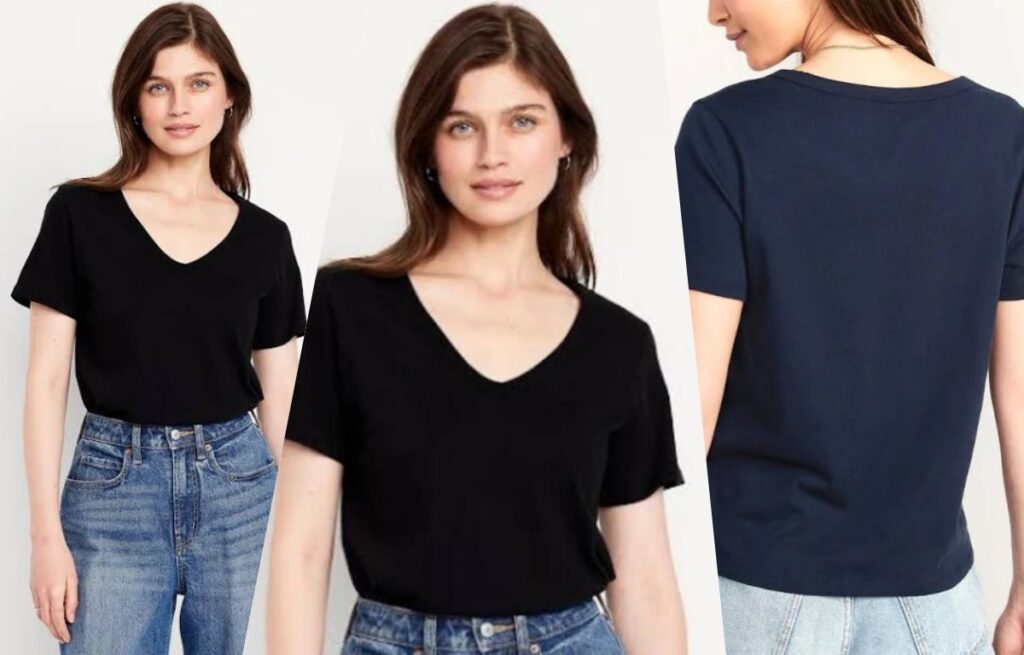
V-neck T-shirts feature a neckline that forms a V-shape, dipping down toward the chest. This design creates a slimming, elongating effect and is favored by people who want a modern, slightly dressier look.
I still remember when I helped a client switch their main line from crew necks to V-necks—the collection suddenly felt more fashion-forward and their customers loved the updated silhouette.
What Is a V-Neck and What Makes It Unique?
V-neck T-shirts are easy to spot: the neckline angles downward in a “V” shape, exposing more of the chest and neck than a crew neck. The depth of the V can vary from subtle to dramatic, offering flexibility for different styles and customer preferences.
A V-neck is a T-shirt neckline with two angled sides that meet in a point, forming a V. This cut elongates the neck, flatters the jawline, and works well for layering or accessorizing.
A brand I worked with found that V-necks quickly became favorites for both men and women looking for a more stylish and versatile alternative to basics.
Structure, Benefits, and Drawbacks of V-Neck T-Shirts
Construction and Technical Features
V-necks require precise cutting and sewing so that the point of the “V” sits flat and doesn’t stretch out. High-quality V-necks use reinforced stitching at the base, and ribbed or self-fabric trim for a clean finish. The depth and width of the V can be adjusted to suit the brand’s market—shallow for everyday, deeper for fashion or activewear.
| Advantages | Disadvantages | Best For | Typical Uses |
|---|---|---|---|
| Slimming, elongates neck | May reveal too much for some | Men and women, style-focused | Summer, layering, activewear |
| Flatters most face shapes | Can look informal if too deep | Modern, trend-driven brands | Office casual, events, nightlife |
| Great for layering/jewelry | Less coverage than crew neck | Petite, athletic, fashion | Resort, travel, parties |
When Is the V-Neck Ideal—and Where Is It Limited?
V-necks are ideal for wearers who want to lengthen the look of their neck or highlight their chest and jawline. They’re great for hot weather, active lifestyles, and brands with a younger, more fashion-conscious audience. Many men prefer V-necks under dress shirts to avoid visible collars, while women use V-necks to showcase necklaces or layer with camis.
However, deep V-necks can feel too revealing or informal for some markets or occasions. Poorly constructed V-necks may stretch out or form a “V” that doesn’t lie flat. Brands targeting classic or conservative customers may find crew necks or higher necklines better suited.
V-Neck vs. Crew Neck vs. Scoop Neck
| Feature | V-Neck | Crew Neck | Scoop Neck |
|---|---|---|---|
| Shape | Angled, dips into chest | Round, sits at base of neck | Wide, deep U-shape |
| Best For | Slimming, layering, modern | Basics, all ages, unisex | Feminine, relaxed, summer |
| Comfort | Open, airy, flexible | Secure, classic, reliable | Very open, casual, light |
| Downside | Can reveal too much, informal | Can shorten neck visually | Can show more skin than desired |
As a manufacturer, I recommend V-necks for brands aiming for a more stylish, updated feel in their basics. With the right fit and finishing, V-necks offer real versatility and market appeal.
Scoop Neck
What Are the Main Types of T-Shirt Necklines?
When people pick a T-shirt, the neckline plays a bigger role than most realize. The scoop neck is a classic option that brings softness, comfort, and a relaxed feel—making it a favorite for both fashion brands and everyday wardrobes.
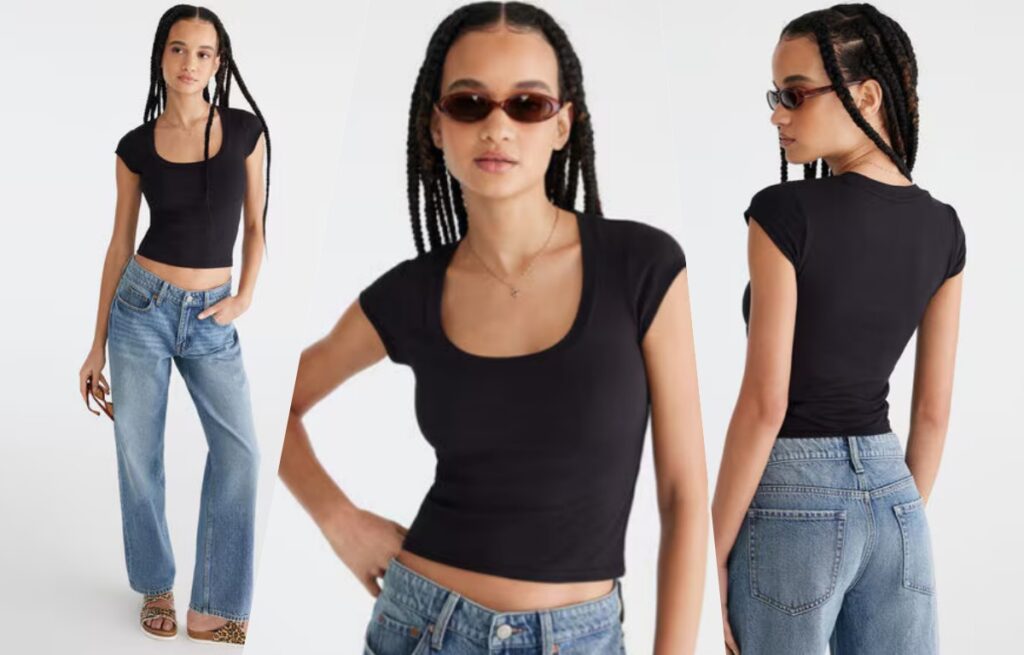
A scoop neck is a wide, deep, U-shaped neckline that sits lower than a crew neck. It exposes more of the collarbone and upper chest, creating a feminine and casual look that works for layering and warm weather.
I remember adding scoop neck tees to a brand’s summer line—they became an instant hit with customers wanting something breezy and a little more open than standard basics.
What Is a Scoop Neck and Why Do People Love It?
Scoop neck T-shirts stand out for their deep, rounded neckline, which drops below the collarbones. This shape is ideal for showing off necklaces, layering with tanks or camis, or simply feeling cooler on hot days.
A scoop neck is a deep, curved neckline that’s wider and lower than other styles, creating an open, feminine, and laid-back appearance. It’s perfect for summer, layering, and anyone who prefers a softer neckline.
A beachwear client told me their scoop neck tees always sold out first, especially in lightweight fabrics and soft pastels.
Structure, Pros, and Cons of Scoop Neck T-Shirts
Construction and Technical Features
Scoop necks require careful pattern making so the neckline sits flat and holds its shape after wear. Most are finished with narrow self-fabric or ribbed binding, with reinforced stitching to prevent stretching or gaping. The width and depth of the scoop can vary—subtle for modest looks or very deep for trendy, summer styles. Fabrics with good recovery (like cotton blends with a touch of spandex) work best.
| Advantages | Disadvantages | Best For | Typical Uses |
|---|---|---|---|
| Airy, cool, relaxed look | Can feel too revealing for some | Women’s, youth, fashion brands | Summer, layering, casual basics |
| Flatters collarbone and neck | Not ideal for conservative settings | Petite, feminine, creative lines | Resort, vacation, active wear |
| Great for accessorizing/layering | Needs stable construction to hold shape | Modern, trend-driven collections | Statement, lounge, beach |
When Is the Scoop Neck Best—and Where Does It Have Limits?
Scoop necks excel in warm climates and summer collections. They create a breezy, easygoing mood, letting the wearer show a bit more skin or play with layers and jewelry. Many women and fashion brands love scoop necks for their soft, approachable vibe.
But scoop necks do have drawbacks. The deep neckline can feel too exposed for some customers or markets, especially where modesty is valued. Cheap or poorly constructed scoop necks may lose their shape, stretch out, or roll at the edge after a few washes. Designers need to choose high-quality fabrics and precise finishing for best results.
Brands often use scoop necks to add a touch of femininity or laid-back charm to basics, and sometimes play with details like lace trim, color-contrast binding, or double-layer fabrics for extra impact.
Scoop Neck vs. Crew Neck vs. V-Neck
| Feature | Scoop Neck | Crew Neck | V-Neck |
|---|---|---|---|
| Shape | Wide, deep U-curve | Round, sits high at neck | Angled, forms a V |
| Best For | Summer, layering, accessories | All-purpose basics, unisex | Slimming, fashion-forward |
| Comfort | Very open, airy, light | Secure, classic, versatile | Open, not as wide as scoop |
| Downside | Can reveal too much, may lose shape | Can feel restrictive, plain | Can look informal if too deep |
As a manufacturer, I recommend scoop necks for brands looking to offer feminine, easygoing styles. With the right fabric and construction, they stand out as bestsellers in any summer or layering-focused collection.
U-Neck
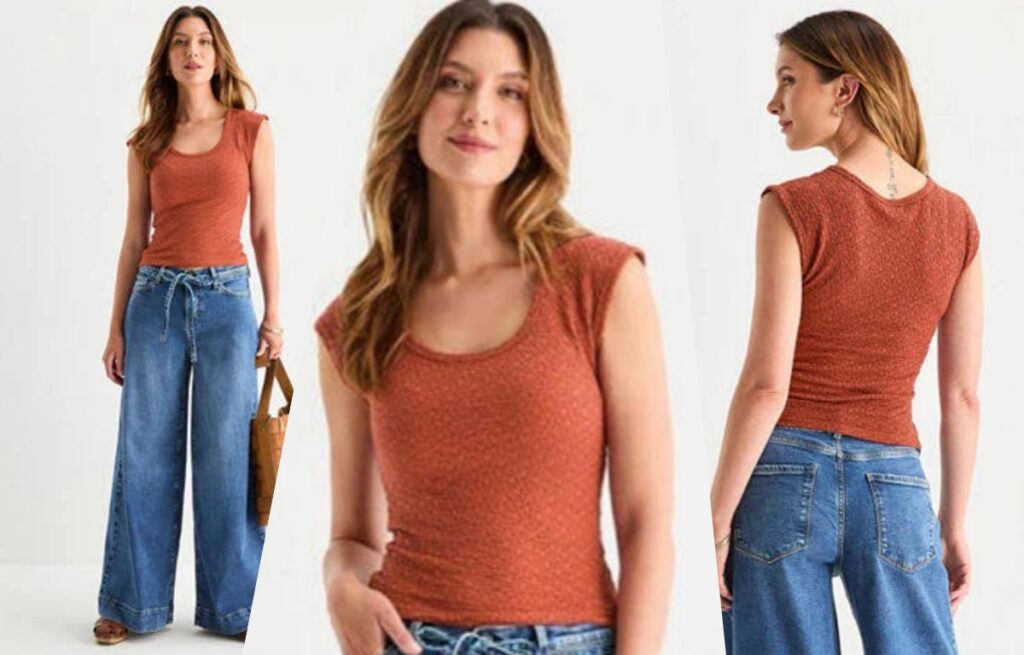
What Are the Main Types of T-Shirt Necklines?
When people look at T-shirts, most only notice prints or colors. But the neckline changes the whole silhouette and comfort. The U-neck is a less common but highly versatile style that combines elements of both crew neck and scoop neck, giving brands a fresh option for modern basics.
A U-neck is a neckline shaped like a wide, shallow “U”—lower than a crew neck but less deep and dramatic than a scoop neck. It creates an open, relaxed look while staying modest and easy to wear.
I remember adding U-neck tees to a capsule collection for a boutique brand. They quickly became popular among customers wanting something softer than a crew neck but not as revealing as a scoop neck.
What Is a U-Neck and How Does It Compare to Other Styles?
U-neck T-shirts feature a rounded, shallow “U” shape at the neckline. This design sits lower on the chest than a classic crew neck, but doesn’t drop as deep or wide as a typical scoop neck. It’s a perfect compromise for people who want a touch of openness without feeling too exposed.
A U-neck is a T-shirt neckline with a broad, low, but not too deep “U” curve. It flatters most body types, highlights the collarbone, and offers comfort, breathability, and easy styling for all genders.
A client once told me their U-neck tees were especially popular with older teens and women, who liked the softer, modern feel for daily wear and layering.
Structure, Pros, and Cons of U-Neck T-Shirts
Construction and Technical Features
U-neck T-shirts need precise patterning to achieve the gentle curve and consistent width across the neckline. Most are finished with self-fabric or ribbed binding, secured with reinforced stitching to prevent stretching or rolling. The opening should sit comfortably on the chest without gaping. Fabrics with a bit of stretch (like cotton-spandex blends) help the neckline hold its shape.
| Advantages | Disadvantages | Best For | Typical Uses |
|---|---|---|---|
| Open, airy, not too revealing | Can lose shape if poorly constructed | Men’s, women’s, all ages | Summer, casual basics, layering |
| Flatters collarbone and neck | May look plain compared to deep necks | Petite, active, minimalist styles | Office, travel, daily wear |
| Good for layering/accessories | Less dramatic than scoop/V-neck | Brands wanting modern basics | Resort, loungewear, essentials |
Where Does the U-Neck Excel—and Where Is It Challenging?
U-neck T-shirts shine in collections where comfort and subtle style are priorities. They’re perfect for those who want a more open neckline than crew necks, but don’t want the exposure of a deep scoop or V-neck. The style is unisex and works with nearly any outfit, making it a strong option for basics and lifestyle brands.
However, the gentle curve means that a U-neck can look plain if not paired with great fabric, colors, or details. Poorly constructed U-necks may stretch or lose their curve after washing. It’s important for brands to use stable knits, proper binding, and good stitching for lasting shape.
Some designers add subtle details—contrast binding, small chest prints, or layered necklaces—to enhance the neckline and set their tees apart.
U-Neck vs. Crew Neck vs. Scoop Neck
| Feature | U-Neck | Crew Neck | Scoop Neck |
|---|---|---|---|
| Shape | Wide, shallow U-curve | Round, sits high at neck | Deep, open, curved |
| Best For | Modern basics, layering, comfort | All-purpose basics, unisex | Feminine, casual, summer |
| Comfort | Open, relaxed, easy to style | Secure, classic, versatile | Very open, breezy, trendy |
| Downside | Can look plain if too basic | Can feel tight, less airy | May feel too revealing for some |
As a manufacturer, I recommend U-neck tees for brands wanting a fresh, inclusive take on everyday style. They offer comfort and quiet elegance, especially in soft, high-quality knits.
Boat Neck
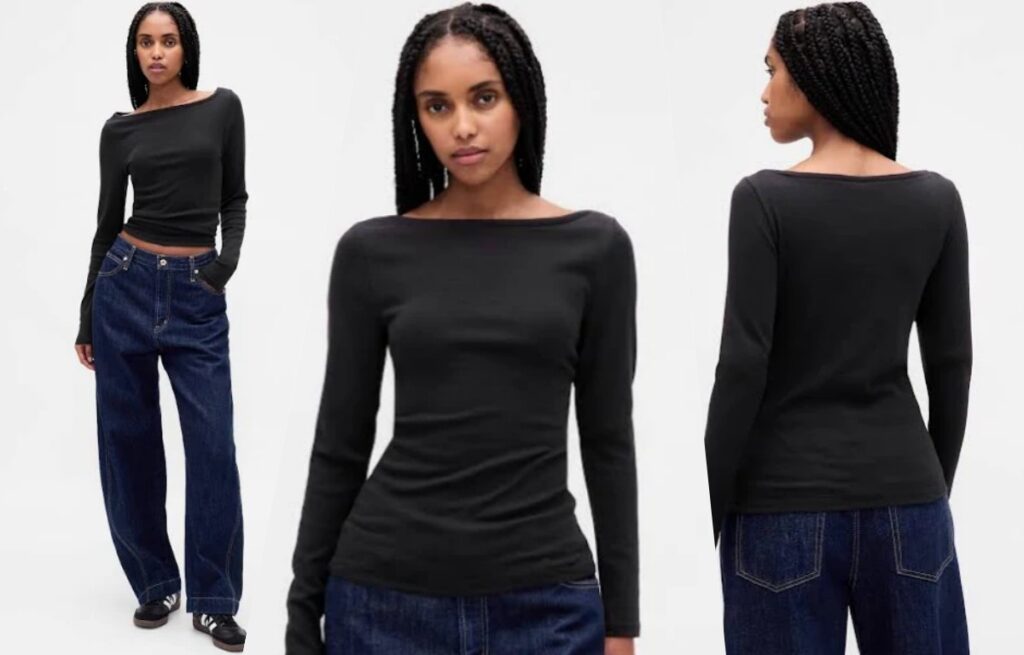
What Are the Main Types of T-Shirt Necklines?
Most people don’t realize how much the neckline shapes a T-shirt’s personality. The boat neck is a timeless option that brings instant elegance and a hint of Parisian chic, making it a favorite for brands looking to stand out with simple but elevated basics.
A boat neck is a wide, horizontal neckline that runs almost straight across from shoulder to shoulder. It highlights the collarbone and creates a refined, feminine look—perfect for both casual and dressier outfits.
I remember helping a boutique label launch boat neck tees. The response was fantastic—especially from women who wanted something more graceful than a basic crew neck, but still comfortable for everyday wear.
What Is a Boat Neck and Why Do People Love It?
Boat neck T-shirts feature a neckline that is almost straight, sitting wide on the shoulders and close to the collarbone. This shape draws the eye upward and outward, giving the illusion of broader shoulders and a longer neck.
A boat neck is a broad, horizontal neckline that extends toward the shoulders. It creates an elegant, open look, and flatters the neck and upper body, making it a favorite for those who want a sophisticated yet easy-to-wear style.
I worked with a European designer who loved pairing boat neck tees with high-waisted trousers and statement earrings for a modern, “effortless chic” effect.
Construction, Pros, and Cons of Boat Neck T-Shirts
Construction and Technical Features
Boat necks need careful pattern work to ensure the neckline sits flat and doesn’t sag or slip off the shoulder. Most are finished with a narrow facing or self-fabric binding, sometimes reinforced with a stabilizer for shape retention. The opening should be wide, but not so loose that straps show or the tee slides down. The ideal fabric is soft, stable, and has good recovery to keep the neckline crisp.
| Advantages | Disadvantages | Best For | Typical Uses |
|---|---|---|---|
| Elegant, elongates neckline | Can slip off narrow shoulders | Women’s, minimalist, creative | Resort, lounge, chic basics |
| Highlights collarbone/shoulders | Less coverage in cold weather | Petite, artistic, feminine styles | Spring, summer, layering |
| Works for layering/jewelry | Not ideal for high-movement activities | Fashion-forward, boutique brands | Casual, office, travel, events |
When Does the Boat Neck Shine—and Where Is It Challenging?
Boat necks are ideal for brands targeting creative, feminine, or minimalist aesthetics. They pair well with soft knits, pastels, and Parisian-inspired looks. The neckline flatters the shoulders and collarbone, making it a go-to for those who like accessorizing with necklaces or earrings.
But boat necks can also be tricky. If the neckline is too wide, it can slide off the shoulder or reveal undergarment straps, frustrating some customers. The wide, open shape offers less warmth than classic crew necks, so boat necks are usually better for spring, summer, or indoor wear. Proper construction, quality fabric, and precise patterning are critical for comfort and style.
Some designers use boat necks with contrasting bindings, subtle embroidery, or as the base for cut-out or layered details to set their collections apart.
Boat Neck vs. Crew Neck vs. U-Neck
| Feature | Boat Neck | Crew Neck | U-Neck |
|---|---|---|---|
| Shape | Wide, horizontal, shoulder to shoulder | Round, sits high at neck | Shallow, soft “U” curve |
| Best For | Elegant, feminine, creative looks | All-purpose basics, unisex | Modern basics, relaxed styles |
| Comfort | Open, airy, chic | Secure, classic, versatile | Relaxed, not too revealing |
| Downside | Can slip, less coverage | Can feel restrictive, plain | Can look plain if not styled |
As a manufacturer, I recommend boat necks for brands looking to offer something elevated and fashion-forward. They instantly upgrade basic tees and attract customers looking for comfort with a touch of style.
Bateau Neck
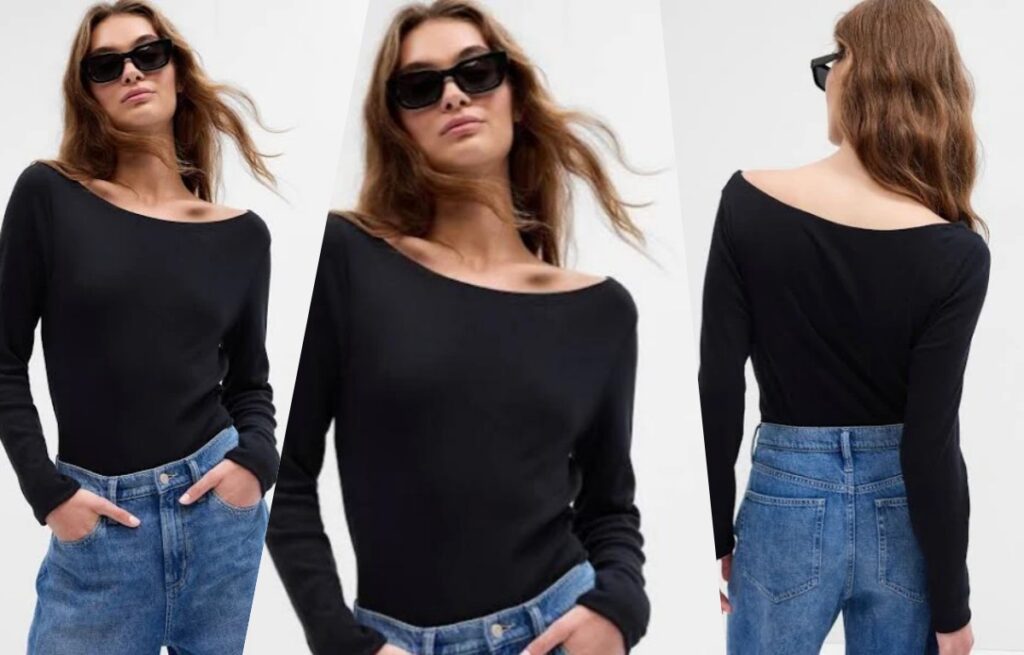
What Are the Main Types of T-Shirt Necklines?
Most people never think about necklines until they try something new. The bateau neck—sometimes called the boat neck—is a sophisticated, timeless choice that brings Parisian elegance to even the simplest T-shirt design. For brands seeking a refined, feminine touch, this neckline is a true standout.
A bateau neck is a wide, almost straight neckline that runs horizontally from shoulder to shoulder, sitting close to the collarbone. It creates a graceful, open look that flatters the upper body and pairs well with modern or vintage styling.
I remember a designer friend launching a capsule of bateau neck tees. Their customers loved the instantly chic silhouette—especially when paired with high-waisted pants or statement jewelry.
What Is a Bateau Neck and How Is It Different from Other Styles?
Bateau neck T-shirts stand out for their horizontal neckline, which sits higher than a scoop or U-neck but is much wider than a crew neck. This shape beautifully highlights the collarbones and shoulders while staying modest and versatile.
A bateau neck is a wide, shallow neckline that runs straight across the top of the chest. It’s designed to expose the collarbone and give the illusion of broader shoulders—creating an elegant, subtly dramatic look.
A women’s brand I worked with made bateau necks their signature—clients kept coming back for new colors and soft modal fabrics.
Structure, Advantages, and Drawbacks of Bateau Neck T-Shirts
Construction and Technical Features
Bateau necklines demand careful pattern drafting to achieve the perfect width—wide enough to skim the shoulders, but not so open that the top slips or reveals straps. Most are finished with a narrow facing or self-fabric binding for a crisp edge. Some premium versions use reinforced stitching or stabilizing tape for shape retention. The choice of soft, stable knits is key for comfort and to keep the neckline in place.
| Advantages | Disadvantages | Best For | Typical Uses |
|---|---|---|---|
| Refined, classic, feminine | Can slip off narrow shoulders | Women’s, minimalist, creative | Resort, office, event, chic basics |
| Flatters collarbone/shoulders | Less coverage for colder climates | Petite, elegant, vintage brands | Spring, summer, layering |
| Great for layering/accessories | Not ideal for very active wear | Premium or boutique collections | Lounge, travel, statement pieces |
When Does the Bateau Neck Shine—and Where Is It a Challenge?
Bateau necks are the go-to for brands that want to channel Parisian chic, retro style, or refined minimalism. They’re ideal for highlighting jewelry or framing the upper body, making them perfect for those who prefer subtle elegance over drama.
However, the wide neckline can slip off the shoulder on narrower frames if not constructed precisely. This style offers less coverage and warmth than a crew or mock neck, so it’s best for spring, summer, or indoor wear. Premium brands pay close attention to the neckline’s shape and finish, often adding light interfacing for extra stability.
Some designers enhance the bateau neckline with subtle embellishments, contrast piping, or even back buttons for an extra touch of sophistication.
Bateau Neck vs. Boat Neck vs. Crew Neck
| Feature | Bateau Neck | Boat Neck | Crew Neck |
|---|---|---|---|
| Shape | Wide, straight, collarbone-skimming | Wide, sometimes slightly curved | Round, close to neck |
| Style | Elegant, classic, Parisian chic | Relaxed, feminine, modern | Everyday, versatile, basic |
| Best For | Minimalist, boutique, premium lines | Creative, layering, summer | All-purpose, active, mass market |
| Downside | Can slip, less warmth | Can show straps, less coverage | Can feel plain, less distinct |
As a manufacturer, I recommend the bateau neck for brands aiming at timeless elegance, French-inspired design, or collections focused on subtle statement details.
Turtleneck
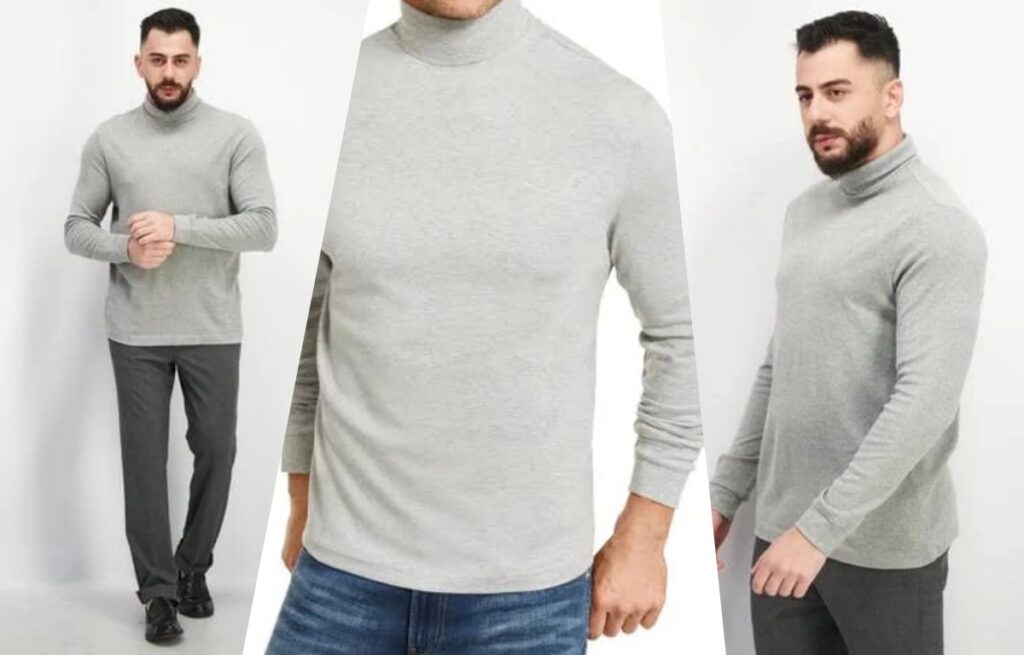
What Are the Main Types of T-Shirt Necklines?
Most people choose a T-shirt based on the print or color, but the neckline changes everything about style, comfort, and even seasonality. The turtleneck is one of the most distinctive options—adding both elegance and utility to any collection.
A turtleneck is a high, close-fitting collar that extends up the neck, often folding over. It delivers warmth, a sleek silhouette, and a look that transitions easily from casual to sophisticated.
I remember when a client introduced turtleneck tees to their fall line. The new styles became top sellers among professionals and creatives seeking a modern, functional look for cooler days.
What Is a Turtleneck and How Is It Different from Other Necklines?
A turtleneck T-shirt features a tall, tubular collar that fits snugly around the neck, usually designed to fold over once or twice. This design traps warmth and creates a striking, elongating effect.
A turtleneck is a T-shirt neckline with a high collar that folds down to cover the neck completely. It’s perfect for cold weather, layering, or making a minimalist, stylish statement.
I helped a client launch a minimalist capsule with black and gray turtleneck tees. Customers loved how the style could shift from office to evening with just a blazer or necklace.
Structure, Advantages, and Drawbacks of Turtleneck T-Shirts
Construction and Technical Features
Turtlenecks require precise patterning and sewing to ensure the collar stands up smoothly and feels comfortable. The collar is usually made from ribbed knit fabric for stretch and recovery, attached with secure, flat seams to the neckline. Good turtlenecks use fabrics with enough elasticity so the collar hugs the neck but is easy to fold over and doesn’t sag or stretch out after wear.
| Advantages | Disadvantages | Best For | Typical Uses |
|---|---|---|---|
| Provides warmth and coverage | Can feel tight for some wearers | Men’s, women’s, all ages | Fall/winter, layering, office |
| Sleek, stylish, modern look | Not suitable for hot weather | Professionals, creatives, minimalists | Transitional, travel, evenings |
| Great for layering or solo wear | Can shorten neck visually on some bodies | Petite, fashion-forward brands | Resort, chic basics, street style |
Where Does the Turtleneck Shine—and Where Is It Challenging?
Turtlenecks excel in cold weather, minimalist, or fashion-forward collections. They are ideal for layering under blazers, coats, or dresses, and can instantly make a tee look more upscale or professional. Many people appreciate the extra coverage and wind protection, especially for city or travel wear.
However, some wearers find turtlenecks restrictive or too warm, especially in mild climates or for active use. They can also visually shorten the neck, which may not flatter all body types. Quality is crucial—cheap fabrics will lose stretch, and poorly sewn collars will sag after just a few washes.
Brands often offer turtlenecks in classic colors, ribbed or smooth knits, and sometimes with added features like thumbholes or contrast stitching for extra style.
Turtleneck vs. Mock Neck vs. Crew Neck
| Feature | Turtleneck | Mock Neck | Crew Neck |
|---|---|---|---|
| Collar Height | High, folds over | Medium, stands up, no fold | Flat, sits at base of neck |
| Best For | Cold weather, layering, office | Transitional, smart casual | All-purpose basics, unisex |
| Comfort | Warm, snug, can feel tight | Warm but less constricting | Open, classic, versatile |
| Downside | Not for hot weather, can shorten neck | Not as formal or warm as turtleneck | Can feel plain or less stylish |
As a manufacturer, I recommend turtleneck tees for brands wanting to add sophistication, function, and winter appeal to their lines. With quality materials and construction, they stand out as seasonal bestsellers.
Mock Neck
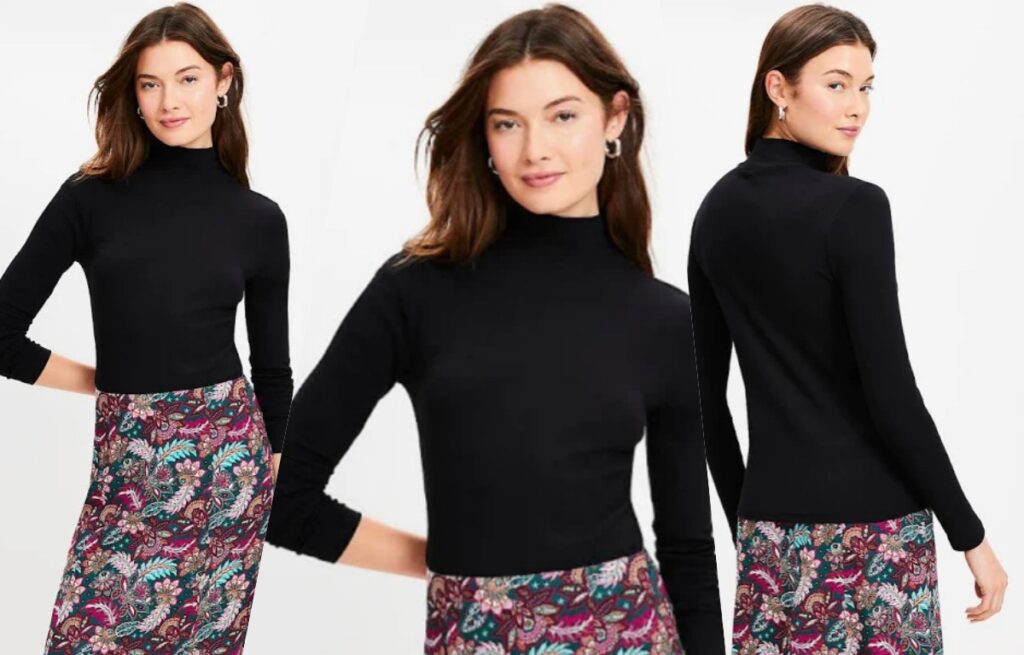
What Are the Main Types of T-Shirt Necklines?
Most people focus on prints or fabric when buying T-shirts, but the neckline is just as important for comfort, function, and style. The mock neck sits between a crew neck and a turtleneck—bringing both versatility and modern edge to any collection.
A mock neck is a mid-height collar that sits above the collarbone, higher than a crew neck but lower and less snug than a turtleneck. It gives a clean, streamlined look and adds light warmth without bulk.
I remember introducing mock neck tees to an athleisure brand. Their customers loved the style—especially for fall and transitional weather, or as a fresh alternative to classic basics.
What Is a Mock Neck and How Is It Different from Other Styles?
Mock neck T-shirts have a collar that stands up slightly, usually 2–5 cm high. It doesn’t fold over like a turtleneck, and isn’t as tight, but still provides coverage and style. This makes it a great choice for people who want something modern, minimal, and a little more polished than a crew neck.
A mock neck is a raised neckline, typically short and close-fitting, that frames the neck without folding over. It’s comfortable for layering, gives a subtle statement, and is easy to style for both men and women.
I once worked with a streetwear label that launched a range of mock neck tees in bold colors—the line quickly became a favorite among creative, urban shoppers.
Structure, Advantages, and Drawbacks of Mock Neck T-Shirts
Construction and Technical Features
Mock necks require careful patterning to achieve the right balance of height and comfort. Most are made with a ribbed or self-fabric band sewn around the neckline, with reinforced stitching to hold the shape. The collar should be snug but not restrictive, and the fabric needs enough stretch to slip on easily and recover its shape after wear.
| Advantages | Disadvantages | Best For | Typical Uses |
|---|---|---|---|
| Clean, modern, minimalist style | Can feel warm in hot weather | Athleisure, streetwear, smart basics | Transitional, office, urban style |
| Adds subtle warmth and coverage | Not ideal for people with very short necks | Trend-driven, creative brands | Layering, cool weather, daily wear |
| Good for layering or solo wear | May be tricky to pattern for some fabrics | Men’s and women’s collections | Lounge, work, travel |
Where Does the Mock Neck Work Best—and Where Can It Be Challenging?
Mock necks are ideal for collections targeting cooler climates, modern minimalism, or active/lifestyle markets. They work especially well in tech-inspired, urban, and athleisure lines, giving a “smart” edge to basics. The design flatters long necks and slim builds, and pairs nicely with jackets, blazers, or even under dresses.
However, the higher neckline can feel warm in summer or for active sports, and may not flatter people with shorter or fuller necks. Poorly sewn collars can feel stiff or lose shape over time. Using quality stretch fabric and precise stitching is essential for comfort and longevity.
Some brands use mock necks with bold graphics, color-blocked panels, or subtle embroidery to create new signature pieces for their lines.
Mock Neck vs. Turtleneck vs. Crew Neck
| Feature | Mock Neck | Turtleneck | Crew Neck |
|---|---|---|---|
| Collar Height | Short (2–5cm), stands up | Tall, folds over, snug to neck | Flat, sits at base of neck |
| Best For | Transitional, layering, minimalism | Winter, layering, elegant style | Basics, all-purpose, unisex |
| Comfort | Warm, not too tight, easy to layer | Warmest, can be restrictive | Most comfortable, most open |
| Downside | Can feel warm, not for all necks | Can overheat, shortens neck visually | Can feel plain or less modern |
As a manufacturer, I recommend mock necks for brands wanting to bring modern, functional style to their basics. They’re perfect for mid-season collections, office casual, and anyone who wants a subtle twist on the classic tee.
Polo Collar
What Are the Main Types of T-Shirt Necklines?
T-shirt necklines are more than a finishing detail—they shape the look, function, and even the audience for each style. The polo collar is a standout option for brands seeking to blend smart, sporty, and versatile vibes in one garment.
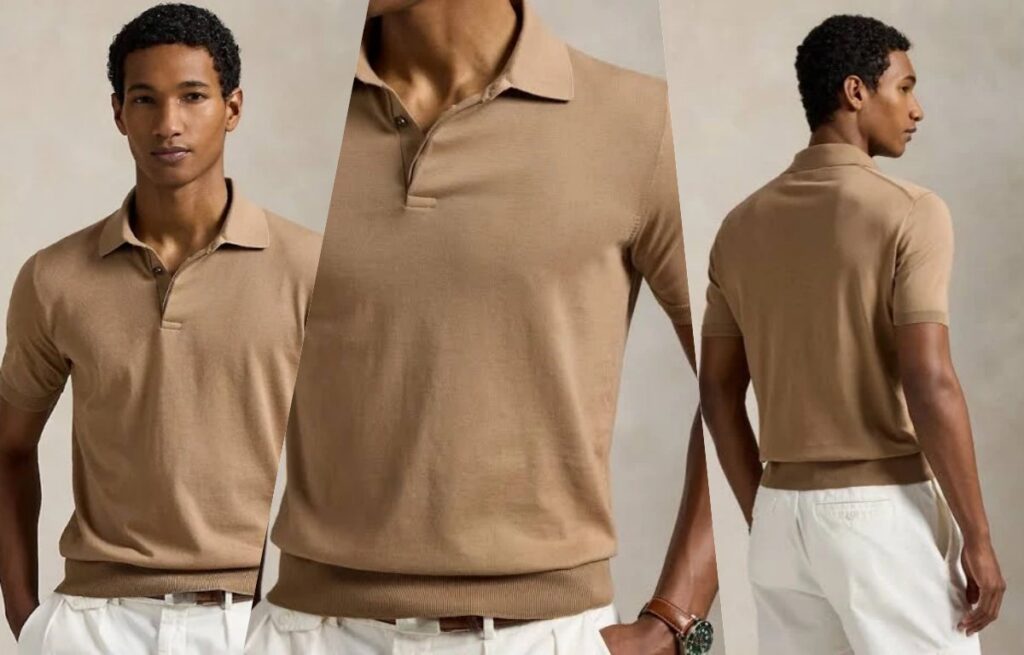
A polo collar is a structured, fold-over collar usually paired with a short button placket. It brings a touch of refinement and adaptability, making a T-shirt instantly ready for casual, business casual, and sporty settings.
I remember helping a brand replace basic crew necks with polo collars in their main line. Customers quickly noticed the elevated, professional look and the versatility for work, travel, or leisure.
What Is a Polo Collar and What Sets It Apart?
The polo collar—sometimes called a “shirt collar” or “tennis collar”—is recognized by its flat, pointed collar and a short button placket (typically two or three buttons) at the neckline. This creates a smart, pulled-together appearance while keeping the comfort of a knit tee.
A polo collar is a fold-over neckline attached to a T-shirt with a partial button placket. It offers structure, adjustability, and a look that easily transitions from casual to business or sporty.
A corporate client told me their team started wearing polo collar tees for trade shows and business travel—they appreciated the sharp look and the option to unbutton for comfort.
Structure, Advantages, and Drawbacks of Polo Collar T-Shirts
Construction and Technical Features
Polo collars are typically made from ribbed or self-fabric, sometimes with added interlining for crispness. The placket is reinforced with extra stitching and buttons for adjustability. High-quality polos use tight seams where the collar meets the body, and sometimes include collar stays for shape retention. Some brands add tipping, stripes, or color contrast for a signature touch.
| Advantages | Disadvantages | Best For | Typical Uses |
|---|---|---|---|
| Professional, sporty, stylish | More steps and cost than basic necklines | Men’s and women’s, all ages | Office, golf, school, uniforms |
| Versatile (casual to dressy) | Can feel too formal for some markets | Fashion-forward, preppy, active | Resort, travel, smart basics |
| Good for branding & logos | Collar can lose shape if poorly made | Brands seeking an elevated image | Promotions, teamwear, events |
When Does the Polo Collar Shine—and Where Is It Challenging?
Polo collars are ideal for brands wanting to reach the business casual, teamwear, or active markets. The adjustable placket lets wearers control comfort and ventilation, and the structured collar frames the face for a sharp look. Polo collar tees also allow for embroidery, patches, or logos—making them popular for uniforms and branded events.
However, there are challenges: Poor-quality construction leads to collars that curl, sag, or lose their crisp edge after washing. The extra labor and materials can raise costs, and in very casual or minimalist collections, a polo collar may feel too formal. Lightweight or unstable fabrics may not support the weight of the collar and placket, leading to stretching or warping over time.
Some brands use contrast color at the collar or placket, printed linings, or unique button shapes to modernize the look and stand out.
Polo Collar vs. Crew Neck vs. Mock Neck
| Feature | Polo Collar | Crew Neck | Mock Neck |
|---|---|---|---|
| Structure | Fold-over, placket, adjustable | Flat, sits at base of neck | Short, stands up, no placket |
| Style Impact | Professional, sporty, classic | Versatile, basic, casual | Modern, minimalist, semi-formal |
| Comfort | Adjustable, can loosen or button | Most comfortable, no hardware | Snug, soft, warmer |
| Best For | Work, travel, sports, branding | Everyday, layering, mass market | Fall, urban, layering |
| Downside | Higher cost, needs good sewing | Less structure, less formal | Can feel warm or snug |
As a manufacturer, I recommend polo collar tees for brands looking to bridge the gap between style and function. With the right fabric, patterning, and finishing, the polo collar is a perennial bestseller for every age and setting.
Collared Neck
What Are the Main Types of T-Shirt Necklines?
Most people think of T-shirts as casual basics, but the neckline can add instant structure, versatility, and sophistication. The collared neck is a classic feature that brings a dressier, more put-together look—helping brands reach new audiences and settings beyond casual wear.
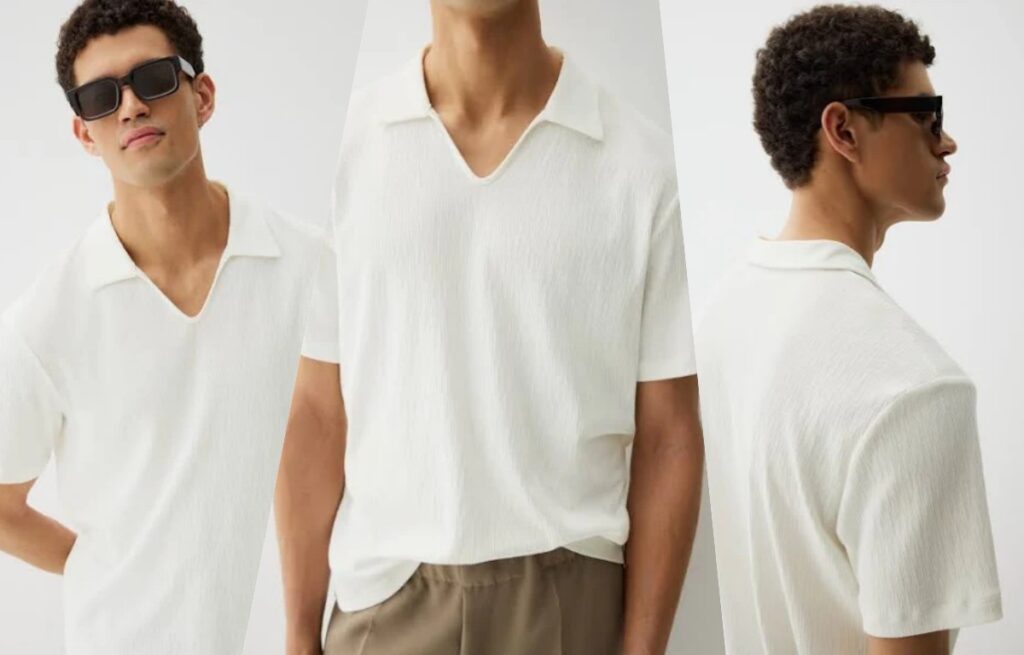
A collared neck is a T-shirt neckline finished with a fold-over collar—usually pointed or rounded—that can be paired with buttons, zippers, or left open. This design bridges the gap between T-shirts and polos, making tees appropriate for business casual, uniforms, and smart everyday wear.
I remember working with a corporate client who wanted their uniforms to feel both relaxed and polished. Adding collared neck tees let their team look sharp at trade shows while still enjoying the comfort of knitwear.
What Is a Collared Neck and Where Is It Used?
Collared neck T-shirts feature a structured collar—usually cut from self-fabric, rib, or woven cotton—that folds over and sits at the base of the neck. The collar can be finished with a short placket and buttons (as in polo styles), a zipper, or even decorative snaps.
A collared neck is a T-shirt neckline finished with a standing or fold-over collar, giving the shirt a smart, tailored look. It’s a popular choice for uniforms, business casual, golf, and any brand wanting a step up from basic crew necks.
A schoolwear supplier I worked with made collared tees their go-to for student uniforms—parents loved the balance of style, comfort, and easy care.
Structure, Pros, and Cons of Collared Neck T-Shirts
Construction and Technical Features
Collared necklines require extra pattern work and construction steps. The collar is usually cut as a separate piece, sometimes with interfacing for shape retention, then sewn to the neckline with a reinforced seam. High-quality designs use tight, even stitching and may add collar stays or under-collar taping for added structure. Plackets can be made with matching or contrast fabric, and buttons or zippers are chosen for durability and style.
| Advantages | Disadvantages | Best For | Typical Uses |
|---|---|---|---|
| Instantly elevates appearance | More labor-intensive and higher cost | Corporate, school, uniforms | Business casual, travel, golf |
| Versatile (casual to formal) | Can feel less relaxed than basic necks | Preppy, active, travel brands | Promotions, events, hospitality |
| Good for branding (embroidery) | Needs careful construction to hold shape | Premium or fashion collections | Smart basics, teamwear, resorts |
Where Does the Collared Neck Shine—and Where Is It Challenging?
Collared necks are ideal for brands wanting to cross into business, preppy, or event-driven markets. The structured collar frames the face, projects confidence, and gives space for logo embroidery or team branding. Collared neck tees are especially popular for uniforms in hospitality, travel, retail, and education, and they’re a key style for golf and resortwear.
However, the construction is more complex than basic necklines, which means higher costs and more room for error. A poorly sewn collar will curl, stretch, or sag, ruining the effect. Collared necks also tend to look less relaxed than crew or scoop necks, so may not suit very casual or youth-focused collections. Fabric choice is important—collars should feel soft but hold their shape through repeated wear and washing.
Designers often update collared tees with contrast plackets, printed linings, or modern details like invisible zippers or snaps for a unique twist.
Collared Neck vs. Polo Collar vs. Crew Neck
| Feature | Collared Neck | Polo Collar | Crew Neck |
|---|---|---|---|
| Structure | Fold-over, can be open or buttoned | Fold-over, always with placket | Flat, sits at base of neck |
| Style Impact | Business casual, smart, preppy | Sporty, smart-casual, versatile | Universal, most casual |
| Best For | Workwear, uniforms, travel, golf | Sports, events, smart basics | Everyday, layering, mass market |
| Comfort | Structured, can be snug or relaxed | Structured but more relaxed | Most comfortable, most open |
| Downside | Higher cost, less relaxed look | More sewing steps, can sag | Can look plain, less formal |
As a manufacturer, I recommend collared necks for brands seeking smart, versatile options that go beyond the basics. When constructed with care, they provide long-term shape and a polished look.
Henley Neck
What Are the Main Types of T-Shirt Necklines?
Most people see T-shirts as basic, but the neckline can totally change the vibe. The Henley neck is a unique option that combines comfort, adjustability, and a touch of vintage style—making it a versatile favorite for brands wanting to add depth to their collections.
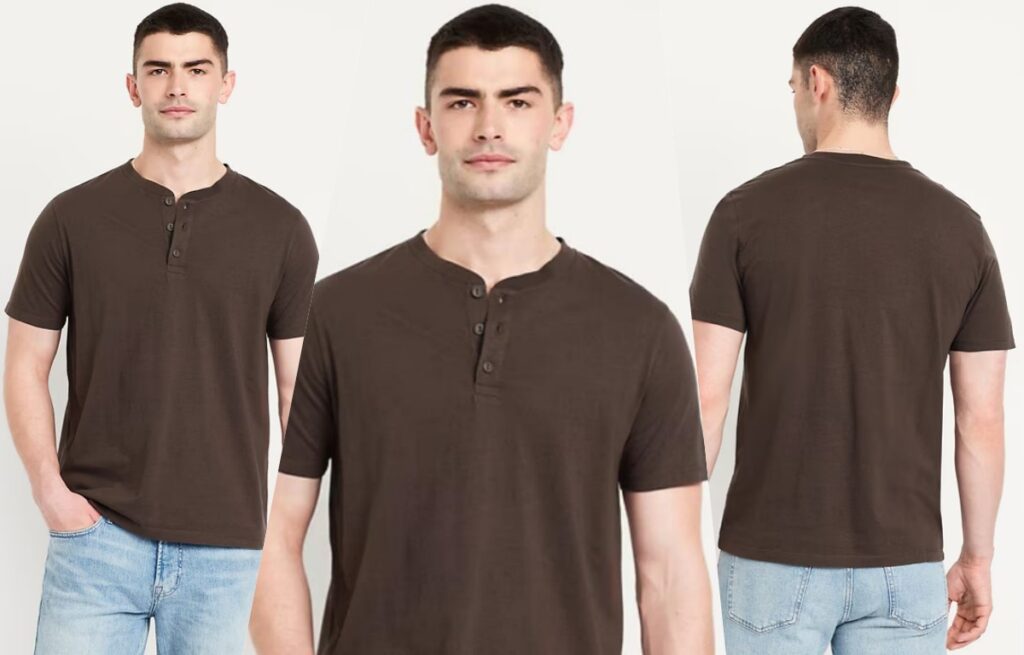
A Henley neck is a round neckline with a short buttoned placket (usually 2–5 buttons) and no collar. It bridges the gap between crew necks and polos, bringing a casual yet rugged, heritage feel.
I helped a menswear brand add Henley neck tees to their essentials line. Customers loved the easy styling and found the placket useful for both ventilation and layering.
What Is a Henley Neck and Why Is It Popular?
Henley neck T-shirts are instantly recognizable: they start with a classic round neckline, then add a short placket with buttons down the chest—giving the shirt extra style and function without a collar.
A Henley neck is a crew-style neckline with a buttoned placket (typically 2–5 buttons). It offers adjustable comfort, vintage flair, and is perfect for both casual and active lifestyles.
A client once told me their Henley neck tees sold out every season, thanks to their rugged yet stylish look that works for men and women alike.
Structure, Advantages, and Drawbacks of Henley Neck T-Shirts
Construction and Technical Features
Henley necks are constructed by attaching a placket (a strip of reinforced fabric) at the front center of the neckline, and adding buttonholes and buttons. The neckline is finished with rib or self-fabric trim for comfort. Reinforced stitching at the base of the placket prevents tearing and helps maintain shape. Fabrics with good recovery—like cotton blends—work best to support the placket and avoid stretching or puckering.
| Advantages | Disadvantages | Best For | Typical Uses |
|---|---|---|---|
| Adjustable opening for ventilation | More complex construction than basic tees | Active, outdoors, lifestyle | Workwear, casual, layering |
| Vintage, rugged, heritage style | Can stretch if placket is not reinforced | Men’s, women’s, all ages | Summer, travel, basics |
| Great for layering and details | Not as formal as collared options | Fashion-forward, premium brands | Lounge, streetwear, sportswear |
When Does the Henley Neck Shine—and Where Can It Be Challenging?
Henley necks excel in active, outdoor, and heritage-inspired lines. The adjustable placket adds airflow for comfort during sports, work, or summer wear. The style is also great for layering under shirts, jackets, or sweaters, and it works for both men’s and women’s collections.
However, the placket requires precise construction—if not sewn well, it can stretch, twist, or lose shape after washing. Buttons must be securely attached, and the base reinforced. Henley necks are more casual than polo collars, so may not suit business or formal lines. Still, brands can customize plackets with contrast fabrics, unique buttons, or decorative stitching to stand out.
Some designers use deep plackets for extra style, while others keep them short and minimal for subtle detailing.
Henley Neck vs. Crew Neck vs. Polo Collar
| Feature | Henley Neck | Crew Neck | Polo Collar |
|---|---|---|---|
| Structure | Round neck + buttoned placket | Round neck, no buttons | Fold-over collar + placket/buttons |
| Style | Casual, rugged, vintage | Basic, classic, versatile | Sporty, smart, business casual |
| Best For | Outdoor, active, layering | Everyday basics, teamwear | Uniforms, office, travel |
| Downside | Needs strong construction/placket | Less detail, less adjustable | Higher cost, can feel too formal |
As a manufacturer, I recommend Henley neck tees for brands wanting heritage style and functional comfort. With quality fabric, sturdy placket, and creative details, they become instant bestsellers in both men’s and women’s lines.
Mandarin Collar
What Are the Main Types of T-Shirt Necklines?
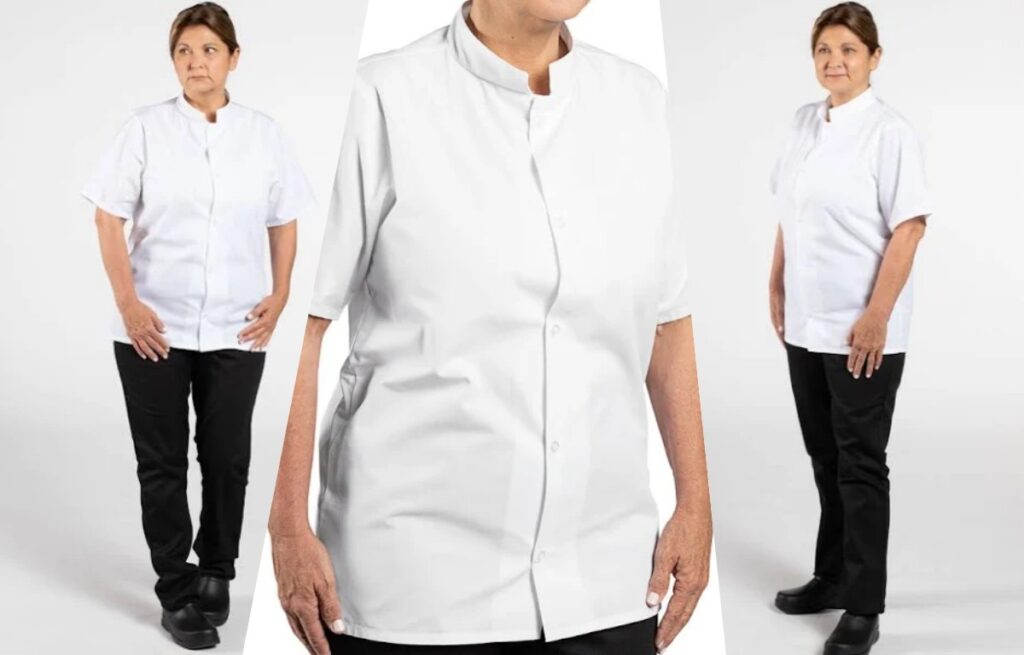
Most people never realize how much a small detail—like the neckline—can set a T-shirt apart. The mandarin collar is a standout choice, blending global heritage with minimalist modern style. For brands wanting to innovate, this neckline adds both sophistication and instant recognition.
A mandarin collar is a short, stand-up band collar that sits snugly around the neck without folding over. It’s inspired by traditional East Asian clothing, but has become popular worldwide in fashion-forward collections.
I remember working with a menswear brand that used mandarin collars for a new line. The result was a collection that felt refined, contemporary, and unlike anything else on the market.
What Is a Mandarin Collar and Why Choose It?
The mandarin collar—also called a band collar or Chinese collar—stands upright, usually 2–5 cm high, and does not fold down like classic collars. The edges can be straight or gently curved, and sometimes a small button or hook is added at the front for closure.
A mandarin collar is a narrow, stand-up collar with no fold, sitting close to the neck. It offers a clean, modern, and slightly formal look while remaining comfortable and easy to wear.
I’ve seen mandarin collar tees paired with blazers, jackets, or worn solo for an understated, smart-casual look that appeals to all genders and ages.
Structure, Advantages, and Drawbacks of Mandarin Collar T-Shirts
Construction and Technical Features
Mandarin collars require careful pattern making to ensure the collar stands up straight and hugs the neck without feeling tight. The collar is usually cut as a separate band, sometimes reinforced with interfacing for shape retention. The band is attached to the neckline with a smooth, even seam. Some designs include a front button or hook-and-eye closure, while others are left open for a minimalist look. Fabric choice matters: soft, stable knits or lightweight wovens work best for both structure and comfort.
| Advantages | Disadvantages | Best For | Typical Uses |
|---|---|---|---|
| Unique, refined, cultural style | Less common, may not suit all customers | Men’s and women’s lines | Modern, heritage, creative, chic |
| Frames the face, minimal bulk | Limited adjustability if closed | Minimalist, global, premium | Office, resort, events, lounge |
| Good for layering and warm weather | Can feel stiff if interfacing is too firm | Petite, slim necks/faces | Summer, travel, statement pieces |
Where Does the Mandarin Collar Shine—and Where Is It Challenging?
Mandarin collars add instant sophistication and a hint of heritage. They work well for brands looking for a modern, global, or “East-meets-West” vibe. The collar stands up to frame the face, which flatters most body types and photographs beautifully. In hot climates, the lack of a fold-over makes the neckline breezy and comfortable.
But they require precision in pattern cutting—too loose and the collar flops; too tight and it feels uncomfortable. Poor-quality construction or cheap interfacing can lead to curling or sagging. Some customers may find the style unfamiliar or too formal for daily wear, so clear branding and styling tips can help. Mandarin collars pair well with buttoned plackets (like Henley or kurta styles), and can be customized with piping, embroidery, or colored linings for brand distinction.
Mandarin Collar vs. Polo Collar vs. Crew Neck
| Feature | Mandarin Collar | Polo Collar | Crew Neck |
|---|---|---|---|
| Shape | Stand-up band, no fold | Fold-over, structured, placket | Flat, sits at base of neck |
| Best For | Modern, formal, creative, chic | Sporty, business casual, uniforms | All-purpose, basics, unisex |
| Comfort | Light, frames face, minimal bulk | Adjustable, can feel bulky | Most comfortable, always casual |
| Downside | Less adjustable, less familiar | Can sag, needs pressing | Can look plain or too basic |
As a manufacturer, I recommend the mandarin collar for brands wanting a signature look, targeting creative, luxury, or culturally inspired collections. With quality fabric and precise construction, it’s a statement detail that stands out.
Stand Collar
What Are the Main Types of T-Shirt Necklines?
Most people focus on prints and fabrics, but the neckline is what really gives a T-shirt its character. The stand collar is a distinctive choice, adding structure, edge, and a sense of modern style. For brands aiming to differentiate their collections, the stand collar offers both subtle sophistication and practical benefits.
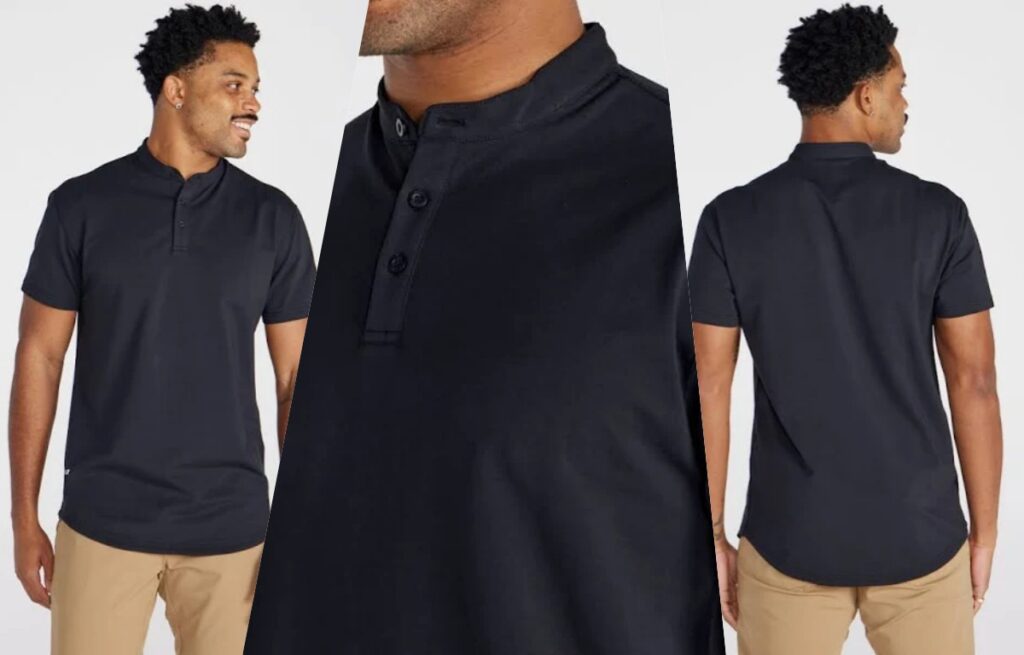
A stand collar is a short, upright collar that stands away from the neck without folding over. It’s found on both classic shirts and modern T-shirts, blending minimalism, comfort, and a sharp silhouette.
I once worked with a streetwear brand that made the stand collar their signature. Customers loved how it brought a sleek, technical look to casual tees.
What Is a Stand Collar and Where Is It Used?
Stand collars—sometimes called band collars—are short, upright collars that fit closely around the neck, usually standing 2–5 cm high. Unlike polo or shirt collars, they don’t fold over and often have no visible closure.
A stand collar is a vertical collar that rises from the neckline without folding down, creating a modern, minimal, and tailored look. It’s popular in techwear, Asian-inspired designs, and fashion-forward basics.
I introduced stand collar tees to a spring capsule for an urban brand. They were a hit with customers seeking a cleaner, more polished take on casualwear.
Structure, Advantages, and Drawbacks of Stand Collar T-Shirts
Construction and Technical Features
Stand collars require precise pattern making and careful attachment to the T-shirt body. The collar is cut as a separate band and usually reinforced with interfacing to help it hold its shape. The neckline seam should be smooth, with even stitching, so the collar stands upright without flopping. Some designs add a hidden button or snap, but most stand collars are left open for a true minimalist effect.
| Advantages | Disadvantages | Best For | Typical Uses |
|---|---|---|---|
| Modern, clean, architectural style | Needs careful construction to avoid sag | Men’s, women’s, unisex | Streetwear, techwear, urban basics |
| Frames the face, minimal bulk | Can feel restrictive if too tight | Minimalist, luxury, fashion | Office, events, statement pieces |
| Great for layering and warm weather | Less familiar to some consumers | Creative, design-driven brands | Transitional, smart casual, resort |
Where Does the Stand Collar Excel—and Where Is It Challenging?
Stand collars add instant polish and a forward-thinking vibe to basics. They’re popular in collections targeting city dwellers, creative professionals, and anyone who wants a subtle but distinctive style. The collar frames the face nicely, works with most body types, and keeps the neckline open for breathability.
However, stand collars must be carefully patterned and sewn—if the collar is too stiff, it feels uncomfortable; if too loose, it will collapse. Quality interfacing and good finishing are essential for lasting structure. Stand collars are less common in traditional or conservative markets, so brands should educate customers with style tips and outfit ideas.
Designers often combine stand collars with hidden plackets, contrast fabrics, or technical details for extra appeal.
Stand Collar vs. Mandarin Collar vs. Crew Neck
| Feature | Stand Collar | Mandarin Collar | Crew Neck |
|---|---|---|---|
| Shape | Upright, no fold, minimalist | Upright, usually curved edges | Flat, round, sits at base of neck |
| Best For | Modern, techwear, smart basics | Heritage, chic, global fusion | Basics, all-purpose, unisex |
| Comfort | Minimal bulk, light, clean | Light, sometimes with closure | Most comfortable, classic |
| Downside | Can be stiff or tight if not fitted | Can feel formal or unfamiliar | Can look plain or less structured |
As a manufacturer, I recommend stand collar tees for brands wanting a signature, urban, or tech-inspired detail. With quality materials and exact construction, the stand collar elevates everyday basics into something special.
Off-Shoulder
What Are the Main Types of T-Shirt Necklines?
Most people think of T-shirts as casual basics, but necklines can totally redefine their style. The off-shoulder neckline is a fashion-forward choice, turning a basic tee into a statement piece with feminine, relaxed, and playful energy.
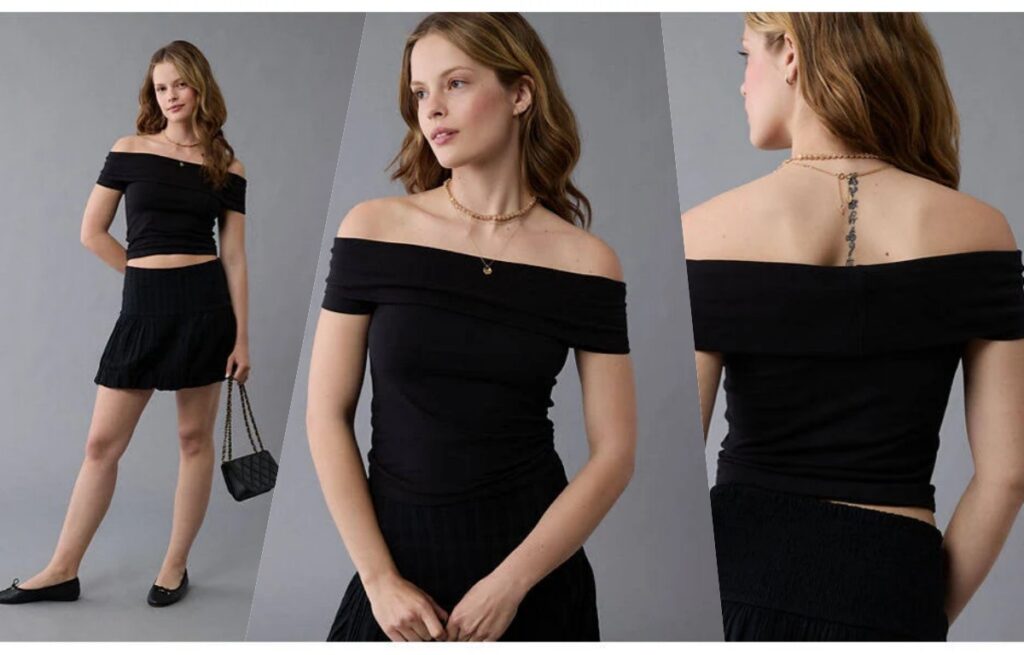
An off-shoulder neckline is cut wide and low so that the T-shirt sits below the shoulders, exposing the collarbones and upper arms. This creates a flirty, summery, and eye-catching look—perfect for trend-driven and resort collections.
I once worked with a beachwear brand that added off-shoulder tees to their lineup. They quickly became bestsellers for vacation and festival wear.
What Is an Off-Shoulder Neck and Why Is It So Popular?
Off-shoulder necklines feature an extra-wide opening, often with elastic or special seaming, that allows the T-shirt to drape just below the shoulders. The arms and collarbone are left exposed, bringing attention to the upper body and giving the wearer a breezy, confident look.
An off-shoulder neckline is designed to rest below the shoulders, highlighting the neck and upper chest for a relaxed, elegant, and flirty appearance. It’s ideal for summer, events, and anyone who wants to stand out.
A festival-focused client once said their off-shoulder tees were always the first to sell out at spring events and pop-ups.
Structure, Advantages, and Drawbacks of Off-Shoulder T-Shirts
Construction and Technical Features
Off-shoulder tees need precise patterning and reliable stretch at the neckline to stay in place. Most styles use elastic bands sewn inside the collar to provide grip and shape retention. The sleeve can be long, short, or even puffed for extra volume. Fabrics should have good recovery (like cotton blends with spandex) so the neckline doesn’t sag or roll after washing. Well-made off-shoulder tees also feature reinforced seams to prevent tearing at stress points.
| Advantages | Disadvantages | Best For | Typical Uses |
|---|---|---|---|
| Feminine, trendy, statement look | Can slip if not constructed well | Women, youth, trend-focused | Resort, party, layering, summer |
| Cool and breathable for hot weather | Not suited for active or formal settings | Petite, confident wearers | Festival, holidays, date night |
| Highlights shoulders and collarbone | May not suit all body types or tastes | Fashion, creative collections | Street style, beachwear, casual chic |
Where Does the Off-Shoulder Neck Shine—and Where Is It Challenging?
Off-shoulder tees are perfect for summer, resort, party, and festival collections. They let wearers show off jewelry, sun-kissed skin, or a playful layered look. The silhouette instantly elevates even the simplest T-shirt, making it a go-to for brands targeting bold, expressive, or feminine markets.
However, there are technical and style challenges. Neckline elastic must be strong yet comfortable, or the tee may slip with movement. Fit is especially important—too loose, and it won’t stay put; too tight, and it can dig in. Off-shoulder tees are less practical in colder weather, for very active use, or in conservative markets. Good construction, quality elastic, and the right fabric are all key for success.
Some designers play with double layers, puff sleeves, ruffles, or asymmetrical hems to set their off-shoulder tees apart.
Off-Shoulder vs. Boat Neck vs. Strap Neck
| Feature | Off-Shoulder | Boat Neck | Strap Neck |
|---|---|---|---|
| Exposure | Full shoulders, collarbone exposed | Wide, sits on shoulders, subtle | Thin straps, partial exposure |
| Comfort | Needs good elastic for security | Open, easy to wear, less dramatic | Depends on strap fit and design |
| Style | Feminine, bold, playful | Elegant, minimal, classic | Trendy, youthful, layered |
| Best For | Resort, party, summer, festival | Office, casual, minimalist | Beach, layering, summer events |
| Downside | Can slip, needs precise fit | Can show straps, less bold | Less support, straps can twist |
As a manufacturer, I recommend off-shoulder tees for brands that want statement summer pieces or festival favorites. Solid construction and fabric choice are what set a good off-shoulder tee apart from the rest.
Cold Shoulder
What Are the Main Types of T-Shirt Necklines?
Most people see T-shirts as basic staples, but the neckline can make a piece stand out. The cold shoulder neckline is a clever, trend-driven detail that combines comfort, playfulness, and just the right amount of skin for confident, stylish looks.
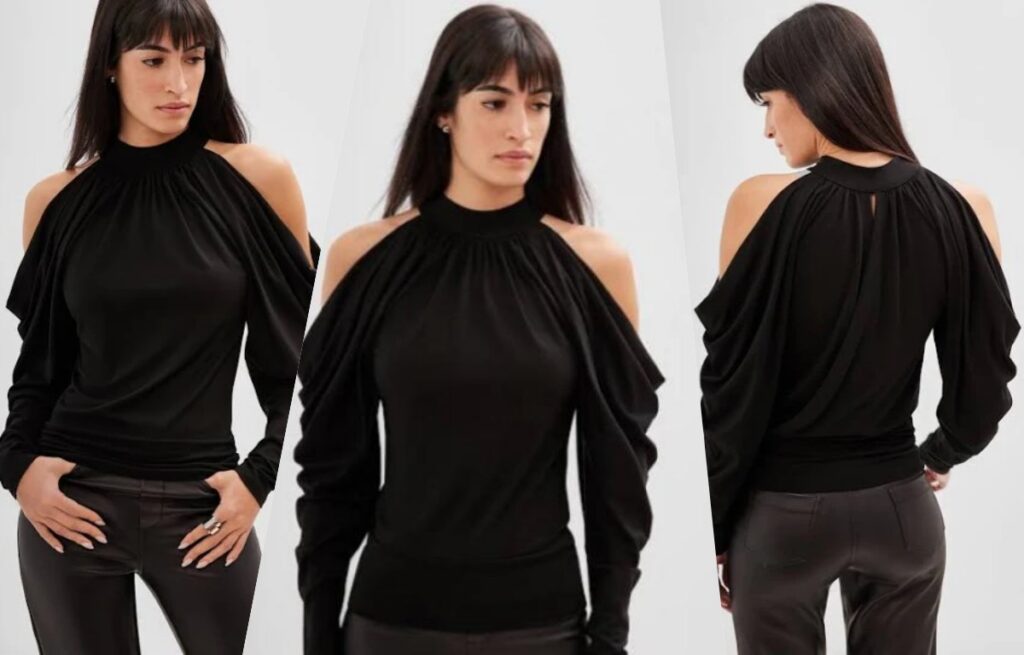
A cold shoulder T-shirt features cut-outs or openings at the top of the shoulders, usually with the rest of the sleeve and neckline intact. This design offers a flirty, modern twist while keeping coverage everywhere else.
I remember a client who added cold shoulder tees to their summer capsule. The feedback was immediate—customers loved the balance of bold style and everyday comfort.
What Is a Cold Shoulder Neckline and Why Is It So Popular?
Cold shoulder T-shirts are designed with openings at the shoulders—either round, square, or slashed—while keeping a regular neckline and sleeve structure. This lets the wearer show off their shoulders without fully committing to an off-shoulder or tank style.
A cold shoulder neckline means the shoulders are exposed through shaped cut-outs, with the rest of the tee providing regular coverage. It’s trendy, eye-catching, and easy to style for summer or casual events.
A women’s fashion brand I worked with found cold shoulder tees especially popular among young adults who wanted a playful look but didn’t want to give up comfort or support.
Structure, Advantages, and Drawbacks of Cold Shoulder T-Shirts
Construction and Technical Features
Cold shoulder tees require careful cutting and finishing of the shoulder openings. The cut-outs are often finished with binding, narrow hems, or overlock stitching for durability and a clean edge. The sleeve must be set to hang well without drooping or twisting at the cut-out. Fabrics with good recovery (stretch and return) help the tee keep its shape and prevent sagging at the open edges.
| Advantages | Disadvantages | Best For | Typical Uses |
|---|---|---|---|
| Trendy, playful, feminine style | Not ideal for cold weather | Women, youth, confident shoppers | Summer, parties, layering, vacation |
| Highlights shoulders with comfort | Needs careful finishing to avoid fraying | Petite, creative, style-focused | Casual events, festivals, weekends |
| Keeps coverage on arms and body | Not suited for formal/business settings | Resort, fashion-forward brands | Lounge, travel, date night |
Where Does the Cold Shoulder Shine—and Where Is It Challenging?
Cold shoulder tees are perfect for brands targeting summer, festival, or trend-driven markets. They appeal to consumers who want something new and attention-grabbing, but not as bold as full off-shoulder styles. The design works well for all body types and is comfortable for daily wear—making it a staple in youth and women’s fashion.
However, precision in construction is essential. Poorly finished openings can fray or lose shape, and bad patterning may cause the sleeve to sit awkwardly or slip. Cold shoulder tees are less practical in winter or formal contexts, so brands often market them as seasonal or occasion pieces. Some designers use double straps, ruffles, or hardware at the cut-out for extra flair.
Cold Shoulder vs. Off-Shoulder vs. Strap Neck
| Feature | Cold Shoulder | Off-Shoulder | Strap Neck |
|---|---|---|---|
| Exposure | Shoulders only, arms and body covered | Full shoulder and collarbone | Thin straps, more open neckline |
| Comfort | Secure, regular arm coverage | Needs elastic, can slip | Depends on strap fit/design |
| Style | Playful, modern, trendy | Flirty, bold, feminine | Trendy, youthful, layered |
| Best For | Parties, summer, casual layering | Resort, events, festival | Beach, summer, creative layering |
| Downside | Not for cold weather, can fray edges | Needs precise fit, less coverage | May twist or slip, less support |
As a manufacturer, I recommend cold shoulder tees for brands looking to offer fresh, statement basics—especially for spring/summer or creative capsule collections.
Deep V-Neck
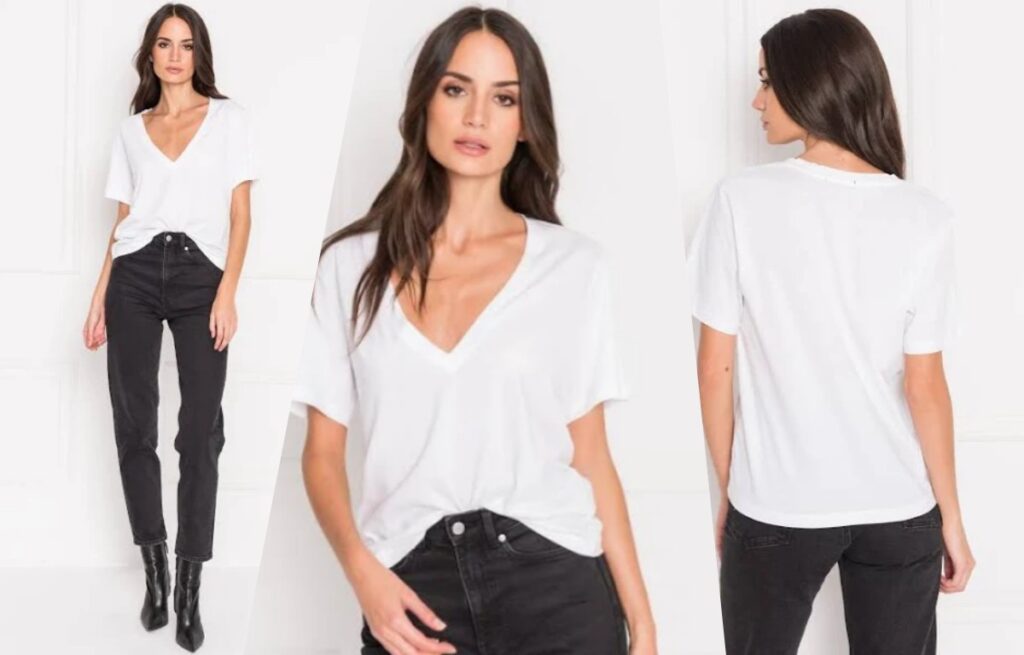
What Are the Main Types of T-Shirt Necklines?
Most people choose T-shirts for comfort, but the neckline can change everything about a tee’s look and attitude. The deep V-neck is a bold, stylish choice for brands that want to add a touch of drama, modern flair, and a flattering silhouette to their collection.
A deep V-neck is a neckline cut in a sharp, plunging “V” that dips much lower than a standard V-neck. This style highlights the neck and chest, creating a long, lean look and a striking fashion statement.
I remember working with a fashion brand that launched deep V-neck tees for summer. The style quickly became a hit among customers wanting both breathability and a more daring, nightlife-ready vibe.
What Is a Deep V-Neck and Who Should Wear It?
Deep V-neck T-shirts feature a sharply angled neckline that plunges well below the collarbone, exposing more of the upper chest and sometimes part of the sternum. The depth can be adjusted for subtlety or drama, depending on the design.
A deep V-neck is a sharply angled, low-cut neckline that creates a long, slender appearance and adds bold, modern energy to any tee. It’s popular for fashion-forward, summer, or party collections.
I worked with a women’s brand that paired deep V-necks with layered necklaces and statement bralettes—the looks dominated festival season photos.
Structure, Pros, and Cons of Deep V-Neck T-Shirts
Construction and Technical Features
Deep V-necks demand precise cutting and sewing so the “V” point lies flat and the neckline doesn’t stretch out over time. The neckline is typically finished with a narrow self-fabric or ribbed binding, and reinforced stitching at the base of the V for durability. The fit should be snug through the shoulders to keep the V from gaping. Quality stretch fabrics (cotton/modal or spandex blends) provide structure and comfort.
| Advantages | Disadvantages | Best For | Typical Uses |
|---|---|---|---|
| Flatters neck and chest | Can feel too revealing for some customers | Fashion-forward brands, youth | Nightlife, summer, layering, party |
| Makes neck look longer/slimmer | Not suitable for formal/business settings | Petite, athletic, confident | Festivals, clubwear, vacation |
| Great for layering and jewelry | Needs careful sewing to avoid gaping | Summer, trendy, bold markets | Trend pieces, events, resort |
Where Does the Deep V-Neck Shine—and Where Is It Challenging?
Deep V-necks are perfect for collections aimed at young, trendy, or daring customers. They draw attention to the neckline, collarbones, and jewelry, and are especially popular in summer and nightlife capsules. The open neckline allows for creative layering—think bralettes, tanks, or even body chains for an edgy look.
But there are technical challenges: If the neckline is cut too low or too wide, it can gap, sag, or lose shape after a few wears. Quality binding and reinforced seams at the V-point are essential. Deep V-necks are less appropriate for office, school, or conservative markets, and not ideal for very active settings. Some customers may feel self-conscious about the exposure, so brands often offer a range of V depths.
Designers sometimes add lace panels, cross-straps, or bold prints to further accentuate the deep V and set their pieces apart.
Deep V-Neck vs. V-Neck vs. Scoop Neck
| Feature | Deep V-Neck | V-Neck | Scoop Neck |
|---|---|---|---|
| Depth | Very low, plunging | Moderate, stops at chest | Wide, rounded, not pointed |
| Style | Bold, dramatic, modern | Classic, versatile, slimming | Feminine, relaxed, open |
| Best For | Parties, layering, bold looks | Basics, office, layering | Summer, casual, accessories |
| Downside | Can be too revealing/gaping | Less dramatic, more mainstream | May reveal bra straps, modesty |
As a manufacturer, I recommend deep V-necks for brands seeking trend-driven, statement pieces for fashion, summer, or event collections. Quality materials and precise construction make all the difference.
Keyhole Neck
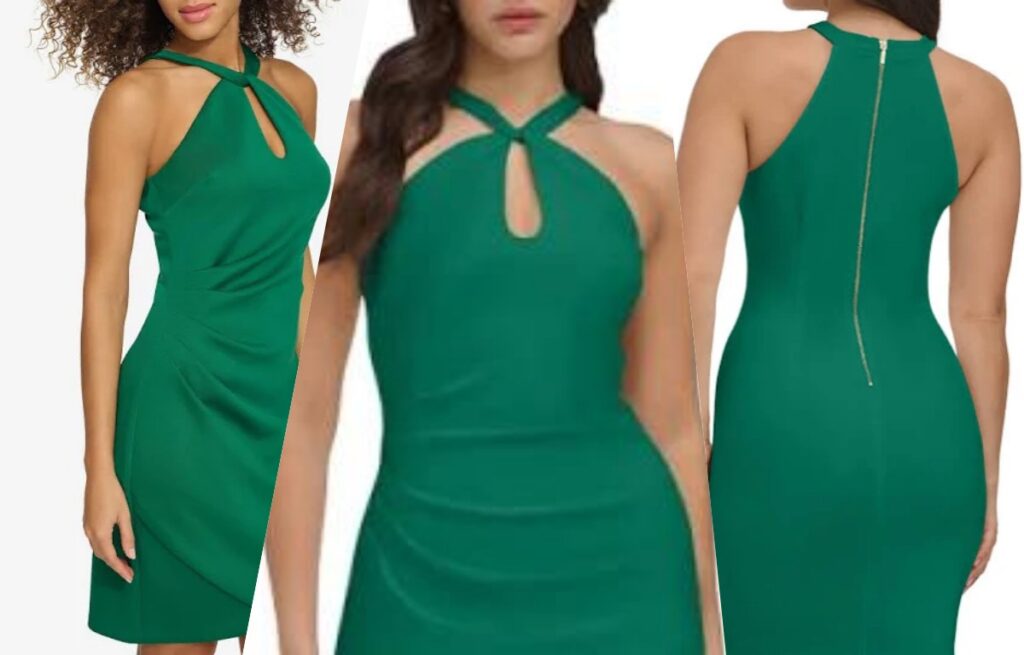
What Are the Main Types of T-Shirt Necklines?
When people shop for T-shirts, they often overlook the neckline. But for brands, details like the keyhole neck can turn a basic tee into a chic, standout piece. This neckline is both feminine and modern—perfect for adding a touch of elegance to casual wear.
A keyhole neck is a neckline that features a small, rounded or teardrop-shaped cut-out (the “keyhole”), usually at the front, sometimes at the back. The opening is often finished with binding and sometimes closed with a button or tie.
I once helped a womenswear client launch a capsule of keyhole neck tees—the line was a hit for special occasions and summer events, offering something just a bit more dressed-up than the usual basics.
What Is a Keyhole Neck and Why Is It Unique?
Keyhole neck T-shirts are defined by a small opening—usually at the base of the neckline. The keyhole may be round, oval, or teardrop-shaped, and is sometimes accented with a button, bow, or decorative stitching. This subtle detail adds visual interest and a playful touch, making any T-shirt feel a little more special.
A keyhole neck features a small, finished cut-out at the front or back neckline. It offers a balance of modesty and style—showing just a hint of skin while keeping the overall look polished and wearable.
I worked with a resort brand that used keyhole necklines for their evening tees—customers loved pairing them with skirts or statement jewelry for dinner by the beach.
Structure, Advantages, and Drawbacks of Keyhole Neck T-Shirts
Construction and Technical Features
Keyhole necks require precise cutting and finishing to ensure the opening keeps its shape. The cut-out is usually reinforced with self-fabric binding or a narrow facing. A small button, loop, or bow is sometimes added to close the opening or simply as a decorative accent. High-quality keyhole tees use stable knits or blended fabrics with good recovery, so the neckline and opening remain smooth after washing and wearing.
| Advantages | Disadvantages | Best For | Typical Uses |
|---|---|---|---|
| Adds feminine, elegant detail | Needs careful finishing to avoid fraying | Women’s, resort, special occasions | Casual chic, events, summer |
| Subtle hint of skin, not too bold | Opening may lose shape if poorly made | Petite, creative, trend-driven | Layering, statement basics |
| Great for accessorizing | Button/loop can break with rough use | Boutique, premium collections | Lounge, vacation, day-to-night |
Where Does the Keyhole Neck Shine—and Where Is It Challenging?
Keyhole necks shine in collections aiming for subtle glamour or a slightly elevated feel. The opening draws the eye upward, flatters the neckline, and works especially well for summer, resort, or event-driven pieces. The style is feminine without being too revealing, making it a popular option for both younger and mature customers.
However, precision in construction is crucial. Poor finishing leads to stretched-out or fraying openings, and cheap buttons or loops can break easily. For lasting quality, use fabrics with good stretch and recovery, and reinforce the area around the opening. Some designers experiment with placement—front, back, or both—and play with shapes and trims for brand distinction.
Keyhole Neck vs. Deep V-Neck vs. Crew Neck
| Feature | Keyhole Neck | Deep V-Neck | Crew Neck |
|---|---|---|---|
| Style Detail | Small cut-out, subtle, elegant | Dramatic, open, bold | Classic, full coverage, basic |
| Skin Exposure | Minimal, playful, refined | Much more revealing, modern | None, most modest |
| Best For | Events, chic, feminine collections | Summer, nightlife, statement looks | Basics, everyday, all ages |
| Downside | Needs precise finishing, button may break | Can be too revealing, needs fit | Can feel plain or too safe |
As a manufacturer, I recommend keyhole necks for brands wanting to offer something a bit more unique and dressy, while keeping comfort and versatility.
Square Neck
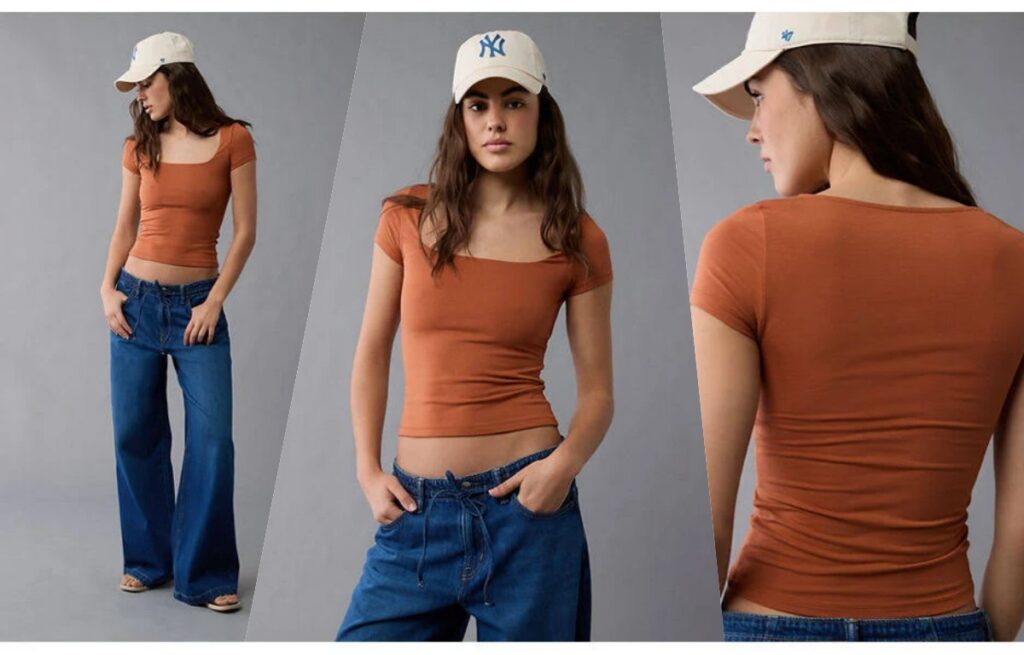
What Are the Main Types of T-Shirt Necklines?
Most people picture a basic round neck when they think of T-shirts. But the neckline can totally change the style, fit, and even the confidence you feel wearing it. The square neck is a strong, classic option that brings sophistication, structure, and a touch of vintage elegance to any collection.
A square neck is a neckline with straight edges that form right angles, creating a geometric, open shape. It highlights the collarbone and upper chest, delivering a flattering and distinctive look for both modern and retro-inspired styles.
I worked with a boutique label that introduced square neck tees to their women’s line. Customers quickly fell in love with how the neckline framed their shoulders and gave a dressier, more feminine edge to basic tees.
What Is a Square Neck and Why Does It Stand Out?
Square neck T-shirts are defined by a wide, horizontal neckline with straight sides and a flat, horizontal base. The right angles create a bold, architectural effect, exposing more of the collarbone and upper chest than most other necklines.
A square neck is a geometric, open neckline that creates sharp lines and a wider, more structured opening. It flatters the neck and shoulders, and brings a clean, elegant, or even vintage vibe to a tee.
A summer collection I helped design paired square neck tees with high-waisted skirts—creating a silhouette that quickly became a best-seller for its confidence and sophistication.
Structure, Pros, and Cons of Square Neck T-Shirts
Construction and Technical Features
Square necklines require careful pattern drafting to achieve the right angles and to keep the neckline flat without puckering or gaping. The edges are usually finished with a narrow self-fabric band or facing, reinforced at the corners to prevent stretching or distortion. Quality square neck tees use stable, slightly structured fabrics—like cotton spandex blends or modal—for crisp lines and shape retention.
| Advantages | Disadvantages | Best For | Typical Uses |
|---|---|---|---|
| Flatters collarbone and shoulders | Needs precise patterning, can gape at corners | Women’s, fashion brands | Summer, event, chic basics |
| Vintage, feminine, modern appeal | Not ideal for active or sporty wear | Petite, creative, confident wearers | Parties, day-to-night, layering |
| Opens up neckline for jewelry | May reveal straps, needs stable fabric | Trend-driven, boutique, premium | Resort, casual chic, statement tees |
Where Does the Square Neck Shine—and Where Is It Challenging?
Square necks are ideal for brands wanting to offer something feminine, fashion-forward, or vintage-inspired. The shape draws attention to the collarbone and upper chest, pairing beautifully with necklaces or statement earrings. It can create a broader-shouldered, statuesque effect, which is especially flattering for petite or narrow frames.
However, square necklines require precision in both pattern and sewing. Corners can stretch or pucker if not reinforced, and some customers may find the wide, open shape less supportive or practical—especially in active or performance settings. Designers sometimes use built-in shelf bras, elastic at the neckline, or double-layer fabrics to add support and comfort.
Some brands accent square necklines with ruffles, contrast binding, or puff sleeves for extra drama and a signature touch.
Square Neck vs. Scoop Neck vs. Boat Neck
| Feature | Square Neck | Scoop Neck | Boat Neck |
|---|---|---|---|
| Shape | Straight sides, flat base, right angles | Deep, rounded, open “U” | Wide, horizontal, shoulder-to-shoulder |
| Best For | Feminine, dressy, vintage looks | Casual, layering, summer | Elegant, classic, minimalist |
| Comfort | Structured, open, less coverage | Relaxed, very open, airy | Chic, open, frames collarbone |
| Downside | Can gape/stretch at corners | May reveal too much, loses shape | Can slip, less coverage in cold |
As a manufacturer, I recommend square neck tees for brands that want to deliver a statement basic, dressier look, or a fresh silhouette for summer and events. Quality fabric and construction make all the difference.
Sweetheart Neck
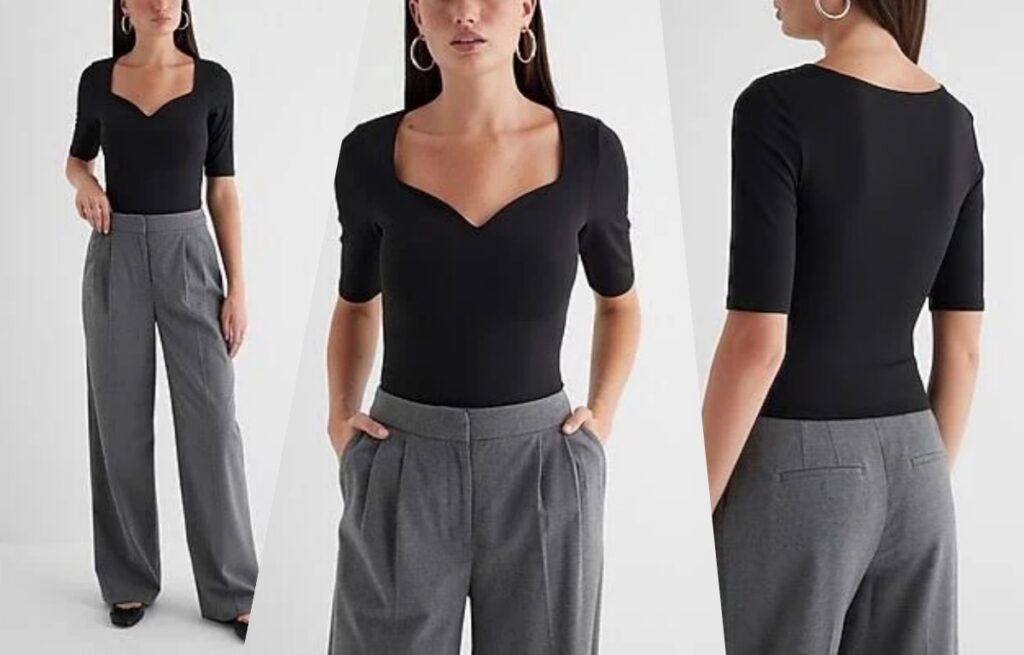
What Are the Main Types of T-Shirt Necklines?
Most people think T-shirts are simple, but a change in neckline—like the sweetheart neck—can instantly make them romantic, elegant, and standout. For brands looking to capture feminine energy and add vintage-inspired charm, this detail is a game-changer.
A sweetheart neck is a curved neckline that dips in the center, forming the shape of a heart at the bust. It flatters the collarbone and bust, adding a soft, graceful, and feminine touch to any tee.
I worked with a women’s boutique brand that launched a sweetheart neck tee for spring. It sold out within weeks, especially among customers looking for a more dressed-up, date-ready basic.
What Is a Sweetheart Neck and Why Is It So Popular?
Sweetheart neck T-shirts are easy to recognize: the neckline curves downward in two arches, meeting at a soft point in the center. This shape mimics the top of a heart, framing the bust and collarbone beautifully.
A sweetheart neck is a T-shirt neckline that curves in a heart shape, creating a romantic, feminine, and vintage-inspired look. It is ideal for dressing up basics or flattering a variety of body shapes.
One client paired sweetheart neck tees with high-waisted skirts and delicate necklaces, creating a silhouette that worked for both casual brunch and evenings out.
Structure, Advantages, and Drawbacks of Sweetheart Neck T-Shirts
Construction and Technical Features
Sweetheart necklines require careful pattern drafting to get the curves even and ensure the center point sits flat. The neckline is usually finished with a narrow self-fabric band, facing, or even a hidden elastic for added support. The front of the tee often includes a bit of shaping (darts or gathering) to accentuate the bust and keep the neckline smooth. Stable, stretchy fabrics (like cotton-spandex blends or modal) are ideal to maintain the shape and hug the curves.
| Advantages | Disadvantages | Best For | Typical Uses |
|---|---|---|---|
| Very flattering, feminine look | Needs precise pattern and quality sewing | Women, vintage, special occasion | Date nights, events, resort, spring |
| Highlights collarbone and bust | Not ideal for active or modest markets | Petite, curvy, confident shoppers | Statement basics, brunch, parties |
| Dresses up simple tees instantly | Can reveal undergarments if not fitted well | Trend-driven, boutique brands | Day-to-night, vacation, layering |
Where Does the Sweetheart Neck Shine—and Where Is It Challenging?
Sweetheart necks are ideal for brands targeting feminine, romantic, or vintage-inspired markets. They create a soft, face-framing silhouette, and are perfect for pairing with jewelry, soft cardigans, or summer skirts. The shape flatters both petite and curvy frames and feels right at home in spring, resort, or special occasion lines.
However, the curves of the neckline can lose shape or pucker if not constructed well. Cheap or thin fabrics may sag, especially at the center dip. The style reveals more of the chest and bust, so may not be suitable for conservative or active collections. Designers sometimes add built-in bras, gathers, or double layers to ensure comfort and support.
Some brands accent the neckline with lace trim, ruching, or subtle prints to add extra romance.
Sweetheart Neck vs. Square Neck vs. Scoop Neck
| Feature | Sweetheart Neck | Square Neck | Scoop Neck |
|---|---|---|---|
| Shape | Curved, heart-shaped, romantic | Angular, straight, bold | Wide, deep, rounded |
| Best For | Feminine, vintage, special events | Modern, statement, dressy | Casual, airy, accessories |
| Comfort | Soft, open, accentuates bust | Open, structured, frames shoulders | Very open, relaxed, easy to layer |
| Downside | Needs quality fit and sewing | Can gape at corners, less support | Can feel too plain or revealing |
As a manufacturer, I recommend sweetheart neck tees for brands wanting a signature romantic look, and for seasonal collections where details matter.
Heart-Shaped Neckline
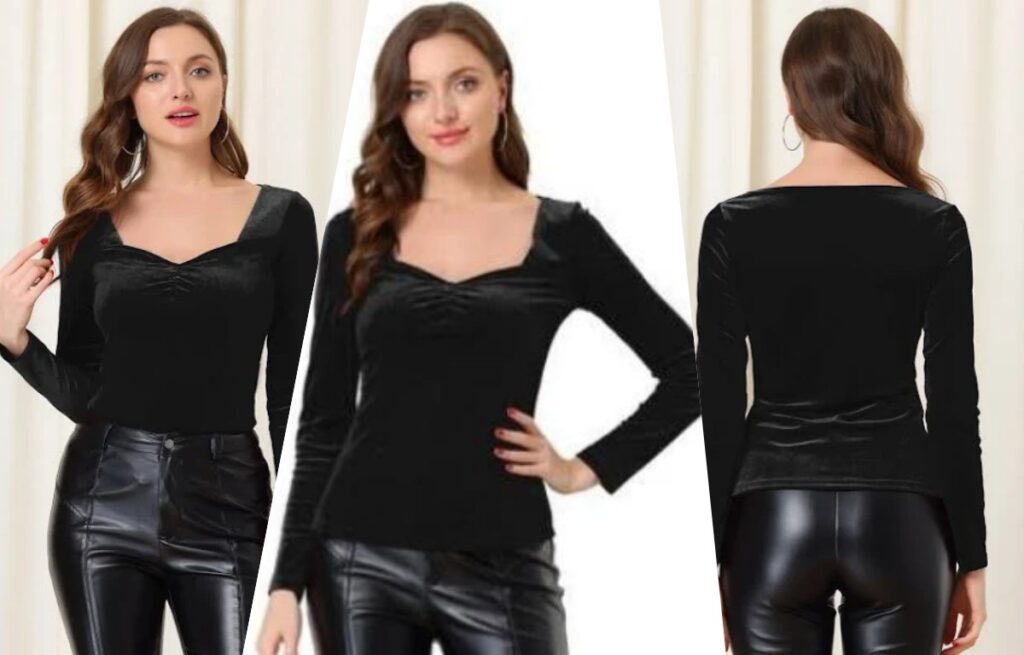
What Are the Main Types of T-Shirt Necklines?
Most people think of T-shirts as casual basics, but the right neckline can transform a simple tee into a statement of personality. The heart-shaped neckline—often called a sweetheart neck—is a romantic, feminine detail that adds vintage-inspired charm and flatters a variety of body types.
A heart-shaped neckline is a curved neckline that forms two soft arches meeting in the center of the chest, mimicking the top of a heart. It frames the bust and collarbone, giving a graceful, flattering, and eye-catching look to any T-shirt.
I helped a premium women’s brand launch heart-shaped neck tees for their spring collection. Customers instantly gravitated to the romantic vibe—especially for date nights, events, and photo-worthy occasions.
What Is a Heart-Shaped Neckline and Why Is It So Flattering?
Heart-shaped necklines are defined by their two curved edges meeting in a soft dip at the center, forming a heart-like silhouette. This shape draws attention to the collarbone and bust, enhancing feminine features while staying elegant.
A heart-shaped neckline is a curved, low-cut neckline that follows the contours of a heart. It flatters the bust and shoulders, and adds instant romance and sophistication to any tee.
A boutique I worked with paired heart-shaped neck tees with skirts and delicate jewelry, making them bestsellers for both special occasions and everyday “elevated basics.”
Structure, Benefits, and Drawbacks of Heart-Shaped Neckline T-Shirts
Construction and Technical Features
Heart-shaped necklines require careful pattern drafting to achieve symmetrical curves and a smooth center dip. Most styles use a self-fabric or narrow binding for a clean finish, sometimes with elastic or a hidden seam for added support. The chest area often includes subtle shaping (darts, gathers, or lining) to help the neckline hug the body and prevent gaping or sagging. Stretchy, stable knits (like cotton-modal blends or spandex jersey) are best to keep the neckline looking crisp wash after wash.
| Advantages | Disadvantages | Best For | Typical Uses |
|---|---|---|---|
| Romantic, feminine, flattering | Needs careful sewing to avoid puckering | Women’s, vintage, occasion lines | Date night, brunch, events, layering |
| Highlights bust and collarbone | Not for very active or modest settings | Petite, curvy, confident shoppers | Resort, day-to-night, spring |
| Elevates basics to special status | Can show undergarments if not fitted well | Premium and creative brands | Statement pieces, summer |
Where Does the Heart-Shaped Neckline Shine—and Where Can It Be Challenging?
Heart-shaped necklines are ideal for brands wanting to deliver romantic, feminine, or vintage-inspired styles. The shape instantly draws attention and can make simple T-shirts feel ready for events or celebrations. It works well for petite or curvy frames and is a great base for accessories like delicate necklaces or layered cardigans.
However, this neckline demands skilled pattern making and sewing—uneven curves or a gaping center can ruin the look. Cheap or thin fabrics may sag, especially at the center dip, and heart-shaped necklines can be too revealing for modest or conservative customers. Many brands address this by offering built-in bras, gathered fronts, or double layers for comfort and support.
Designers often accent heart-shaped necklines with lace, ruching, or contrast stitching for extra personality.
Heart-Shaped Neckline vs. Sweetheart Neck vs. Square Neck
| Feature | Heart-Shaped Neckline | Sweetheart Neck | Square Neck |
|---|---|---|---|
| Shape | Two arches, center dip (heart) | Soft heart, rounded dip | Flat sides, angular, right angles |
| Style | Romantic, feminine, vintage | Romantic, feminine, soft | Bold, modern, vintage, structured |
| Best For | Special occasions, spring, layering | Events, romantic, date-ready | Modern basics, retro looks |
| Downside | Needs skilled fit/sewing, more open | Same as heart-shaped, less dramatic | Can gape/stretch at corners |
As a manufacturer, I recommend heart-shaped necklines for brands who want to deliver romantic, expressive basics or elevate their spring and summer collections. Premium fabric and expert construction are key.