 Skip to content
Clothing Manufacturer for Private Label Online Brands
Launch faster, test with lower risk, and scale with more confidence through a factory system built for knit basics, casual activewear, and long-term repeat products.
Modaknits is a manufacturing-based apparel company in Dongguan, China, focused on custom development, sampling, bulk production, and delivery for overseas brands.
- 3–5 Days Sampling
- Small-Batch Start from 1–20 pcs on selected programs
- Scalable Production from Testing to Bulk
- Stable Reorder Logic for Repeat Products
- In-House Pattern and Sample Development Support
Built for Brands That Need Flexibility at the Start and Stability as They Grow
Growing DTC Apparel Brands
- Lower-risk product launches
- Sampling before scale
- Faster repeat orders
- A supplier that can keep up as order size grows
Creator-Led and Content-Driven Brands
- Fast test runs
- Strong visual consistency
- Reliable restocks on winning items
- Flexible shipping support
Activewear, Yoga, and Casual Performance Labels
- Comfortable and wearable fabrics
- Stable fit across repeat runs
- Support for yoga pants, leggings, and basic activewear
- Production room to scale after demand grows
Blank Apparel Brands
- Consistent base products
- Clean fit and hand feel
- Multi-color flexibility
- Reliable replenishment support
Premium Basics Brands
A good fit for brands centered on heavyweight tees, logo hoodies, elevated essentials, and casual products where fabric feel shapes product value.
- Better fabric weight options
- Strong hand feel
- Clean finishing and decoration
- Stability across future runs
Premium basics brands usually depend on product feel more than short-term novelty. Fabric weight, surface quality, shape balance, and reorder consistency all influence whether a core style becomes a long-term SKU. Modaknits is stronger in this kind of category because the factory is built around knit products that need to sell repeatedly, not just look good in a single drop.
Streetwear and Graphic Apparel Brands
A practical match for brands building collections around graphic tees, logo hoodies, fleece products, and restockable knit silhouettes with strong brand identity.
- Strong base garments
- Print and embroidery readiness
- Flexible quantities across styles
- Consistent restocks on bestsellers
Graphic and logo-led brands need more than decoration support. They need base garments that can hold shape, carry branding well, and remain commercially useful across repeat runs. With support for DTG, embroidery, heat transfer, and categories like T-shirts, hoodies, and sweatshirts, Modaknits is well suited to streetwear and graphic apparel lines built around restockable knit products.
Casual Essentials Brands
A strong fit for brands selling everyday T-shirts, sweatshirts, sweatpants, hoodies, and other wearable basics designed for repeat purchase.
- Comfortable knit products
- Stable sizing and fit
- Easy restock planning
- A supplier that supports long-term continuity
Casual essentials brands often grow through a connected group of core products rather than a single hero item. That makes product continuity more important than constant seasonal change. Modaknits is better suited to this structure because its core range already covers T-shirts, hoodies, sweatshirts, sweatpants, and other repeat-friendly knit categories that can move from sample to reorder to larger production more smoothly.
Small Retail and Boutique Labels
Well suited to smaller labels that need lower opening risk, curated product lines, and a supplier that can support careful growth instead of pushing large first commitments.
- Manageable first runs
- Product focus over excessive variety
- Reliable communication
- The option to reorder proven items
Smaller labels usually need a factory that can treat early orders seriously while still leaving room for future growth. Modaknits is useful here because the setup combines product development support, 3–5 day sampling, selected small-batch entry, fluent English communication, and a broader production base behind it. That makes it easier to start carefully without getting stuck at the small-order stage.
Why the Factory Choice Affects More Than Production
A garment can look right in the sample room and still fail in real business. The fit may shift in bulk. Fabric feel may change between runs. A small order may not be treated seriously because the quantity is not large enough. Later, when the product finally starts selling, the original supplier may not have the structure to support consistent restocks or higher volume. That is where many online brands lose time, margin, and momentum.
Why These Problems Hurt Growth
For a brand built on T-shirts, hoodies, leggings, or activewear, repeat products matter more than one good photo sample. When the second run feels different from the first, the problem is not limited to production.
It affects customer confidence, product reviews, inventory planning, and the brand’s ability to build a core line that can sell again and again. That is why pattern continuity, material control, and sample-to-bulk connection matter so much in private label manufacturing.
| Common Factory Problem | What It Causes for the Brand |
|---|---|
| Large opening MOQ | Slower launch and more inventory risk |
| Sample and bulk disconnected | Product changes after approval |
| Fabric logic not controlled | The second order feels different |
| Weak pattern continuity | Fit drift across sizes or future runs |
| Small orders not taken seriously | Slow testing and weaker early momentum |
| No room to scale | Supplier change becomes necessary too early |
| Overly generic product direction | Less support for repeatable knit and activewear programs |
What Makes the Difference
| Production Factor | Generic Supplier Pattern | Modaknits Production Approach |
|---|---|---|
| Sample speed | May be acceptable but disconnected from later bulk | Sampling is part of a broader production path |
| Pattern continuity | Often changes project by project | Supported by in-house pattern and sample teams |
| Repeat order stability | Can drift when styles reopen | Better suited to repeatable core products |
| Small quantity support | Sometimes available without scale logic | Small runs can move into later expansion |
| Product focus | Broad and generic | Stronger fit for knit basics and activewear-related categories |
| Growth path | May require supplier change later | Easier to grow in one connected factory system |
What Really Matters Before You Choose a Clothing Manufacturer
Sampling Speed
Pattern and Fit Continuity
Fabric Direction
Reorder Stability
Small-Batch Support
Room to Scale
Modaknits Advantages for Online Brands
| Factor | Why It Matters for Online Brands | What Modaknits Brings |
|---|---|---|
| Sampling speed | Faster testing and faster launch timing | 3–5 day sampling support |
| Small-batch entry | Less inventory pressure at the start | Selected 1–20 piece quick-return support |
| Fit continuity | Better product confidence across runs | In-house pattern and sample structure |
| Fabric direction | Stronger hand feel and repeat stability | Better alignment with knit basics and activewear |
| Reorder confidence | Helps build long-term key SKUs | More controlled product flow for repeat products |
| Scale capacity | Reduces need to change suppliers later | 4 factories, 18 lines, 100,000 pcs monthly capacity |
How Modaknits Supports a Better Start and a Stronger Growth Path
Start Small Without Locking Into Heavy Inventory
For many online brands, the main concern is not whether a product idea is good. The real concern is how much inventory to commit before the product is proven. Modaknits helps reduce that pressure through quick-return small-batch support on selected programs.
The current fast-start model is centered on 100% cotton custom T-shirts, with 1–20 piece support and a small-batch production window of around 5–10 days. That makes it easier to test a style, content angle, launch timing, or logo direction before moving into larger runs.
Move Faster in Sampling and Product Review
Long development cycles usually slow everything down. Sampling delays product launch, pushes content schedules back, and makes a new style harder to validate on time. Modaknits supports sampling in 3–5 days, giving brands a faster way to review fit, fabric, branding, and overall product direction.
When the team behind sampling includes pattern makers, sample technicians, sourcing support, and merchandisers inside one connected structure, the movement from concept to sample becomes smoother and more usable for real business decisions.
Keep Repeat Products More Stable
Core products grow through repeat sales. That means the second and third order often matter more than the first. Modaknits is stronger in product lines that need a more fixed pattern direction, a more controlled fabric system, and a more standardized production flow.
That reduces the chance of product drift between runs and makes the factory a better fit for brands built around repeatable T-shirts, hoodies, sweatshirts, sweatpants, leggings, yoga pants, and entry activewear programs.
Support Both Development and Later Scale
Some suppliers are easy to start with, but difficult to grow with. Others can take larger quantities, but are not structured for early-stage product work. Modaknits is positioned between those two extremes.
The current factory base includes 4 factories, 18 production lines, around 5,000 square meters of factory space, and monthly output of about 100,000 pieces, plus an additional 50,000 to 80,000 pieces of expansion capacity. That allows a brand to move from 10 pieces to 100, then 1,000, and later 5,000+ within one broader system.
Support Branded and Decoration-Ready Products
Private label manufacturing is not only about cutting and sewing. Surface presentation matters. Logo execution matters. Print performance matters. For branded knit basics and casual activewear, Modaknits already has DTG, embroidery, heat transfer, shrinkage handling, fabric inspection, and automatic cutting support inside the manufacturing system.
That gives stronger support to logo hoodies, graphic tees, embroidered sweatshirts, branded blank programs, and similar categories that depend on both garment quality and brand presentation.

| Stage | Typical Need | How Modaknits Helps |
|---|---|---|
| Early concept | Clarify product direction | Pattern, sourcing, and sample support |
| Launch testing | Start with lower risk | Selected small-batch and fast-start options |
| First reorder | Keep product closer to approved version | More controlled production flow |
| Growth phase | Increase quantity without losing continuity | Connected factory system with larger capacity |
| Product family expansion | Add related styles over time | Stronger fit for knit basics and activewear-adjacent categories |
Product Categories Modaknits Manufactures for Private Label Online Brands
Not every clothing factory is equally suitable for every product category. Modaknits is not built around formal tailoring or highly structured woven fashion. The stronger product direction is knit-based apparel with stable pattern logic, wearable comfort, decoration potential, and long-term reorder value. That makes the factory a stronger fit for brands developing a connected range of core products rather than a one-off style with no repeat plan.

Custom T-Shirts
One of the strongest categories at Modaknits and one of the most practical starting points for a private label brand.
- The fabric feels too light, too rough, or too generic
- Collar shape changes after wash or repeat runs
- Body fit is not stable enough for long-term restocks
- Print results look weaker on a poor base garment
Custom T-shirts work well here because Modaknits already has a quick-return small-order model centered on 100% cotton T-shirts, making this category a natural entry point for first launches, graphics, blank lines, and repeat basics.
Fabric hand feel, body balance, collar shape, and print readiness are all easier to manage when the category already sits close to the center of the factory’s product focus.

Heavyweight T-Shirts
A strong direction for premium basics brands, streetwear labels, and private label programs that need more structure and stronger hand feel.
- The fabric feels stiff instead of substantial
- The silhouette looks bulky instead of clean
- Drape changes across colors or repeat runs
- Higher retail positioning is weakened by unstable finish
Heavyweight tees fit the Modaknits product logic because they rely on consistent fabric feel, stable silhouette, and repeat-quality handling over time.
This makes them especially suitable for brands selling core product value through hand feel and product presence, not only through logo graphics or short-term marketing.
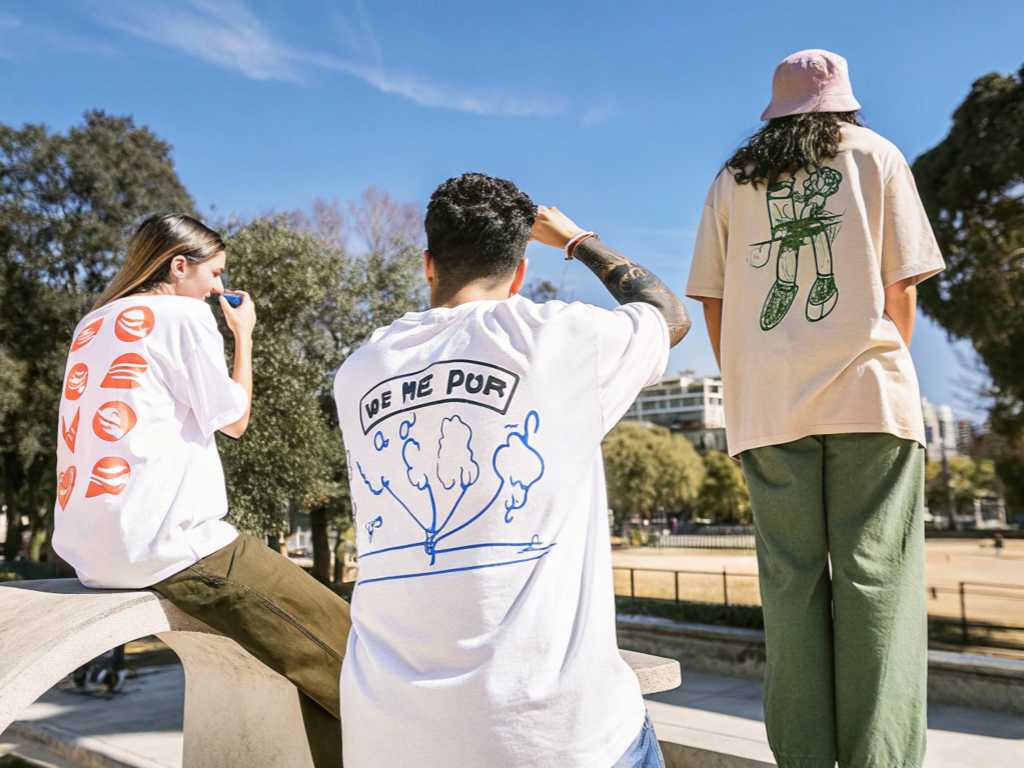
Graphic T-Shirts
A key category for creator-led brands, streetwear labels, community merchandise, and online brands that launch through visual storytelling.
- The print looks flat on a weak fabric surface
- The garment shape does not match the brand image
- Shrinkage affects graphic placement or balance
- Reorders lose consistency in both print and base fit
Graphic T-shirts are a strong match because the factory already supports DTG and other branding-related applications, while the base product direction remains centered on knit T-shirts with repeat potential.
That makes the category more suitable for brands that need both artwork expression and a stable product underneath it.
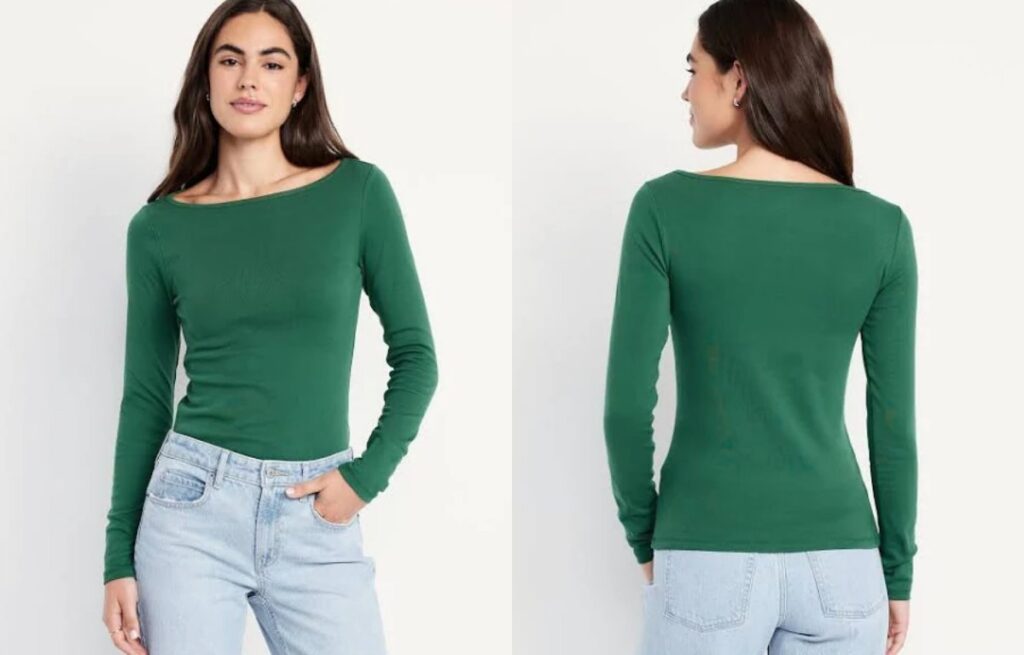
Long Sleeve T-Shirts
- Sleeve balance feels off across sizes
- The body works, but the full garment loses proportion
- The style looks simple, but repeat quality is harder than expected
- Restocks become inconsistent when shape control is weak

Custom Hoodies
- Fleece feel is inconsistent across orders
- Rib, cuff, or hem tension feels off
- The hoodie shape looks too flat or too oversized
- Decoration works on the first run but weakens later
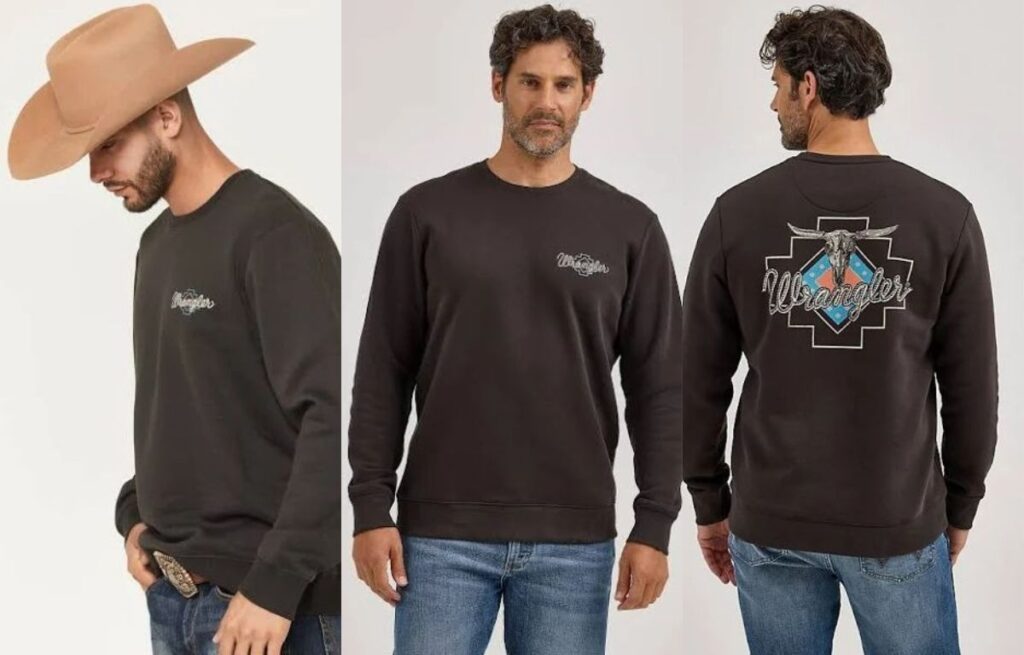
Custom Sweatshirts
- The body shape looks ordinary or lacks structure
- The fabric surface is not clean enough for decoration
- Embroidery pulls or distorts the garment face
- Future restocks do not stay close to the first run

Sweatpants
- Rise or leg shape shifts between runs
- Fabric feel does not match the top in set programs
- The silhouette feels too loose or too narrow
- Repeat orders lose comfort or consistency
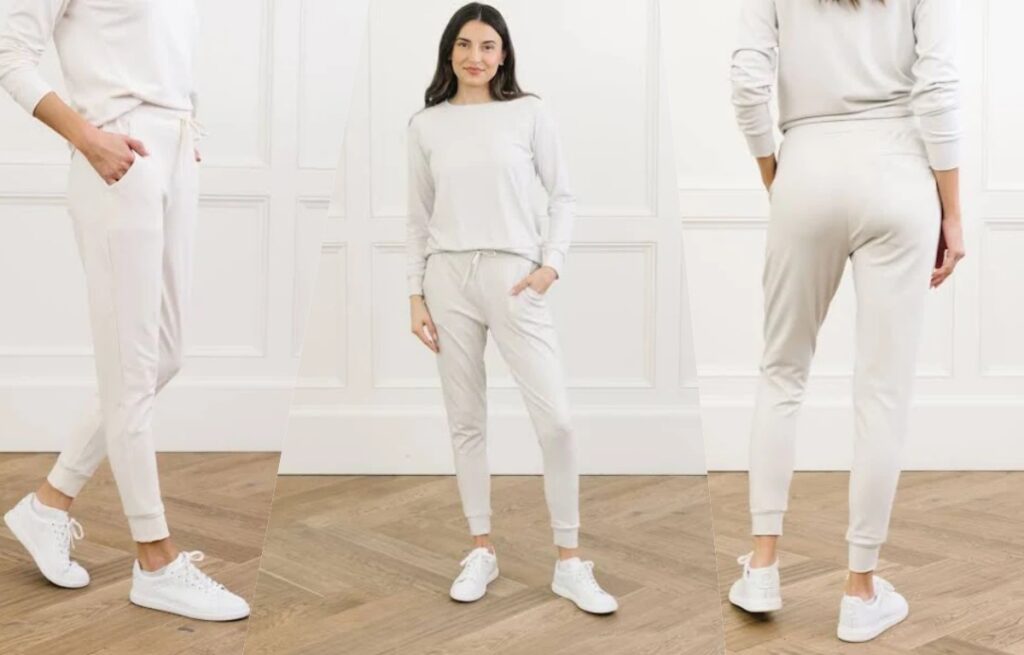
Joggers
- The cuff shape feels unstable across sizes
- The product looks simple, but fit balance is hard to repeat
- Color and wash feel vary between runs
- The bottom does not coordinate cleanly with the top

Matching Sets
- The top and bottom do not feel like one product family
- Fabric weight or color does not match closely enough
- Fit balance between upper and lower pieces feels off
- Reorders create mismatch inside the set program

Yoga Pants
- Waistband hold is not stable enough
- Stretch feels weak, harsh, or uneven
- Fabric becomes less comfortable in repeat runs
- The fit looks correct standing still but weaker in movement

Leggings
- Waistband tension changes between orders
- Fabric recovery is not strong enough for repeat wear
- Opacity or hold feels inconsistent
- Reorders drift away from the original fit and feel
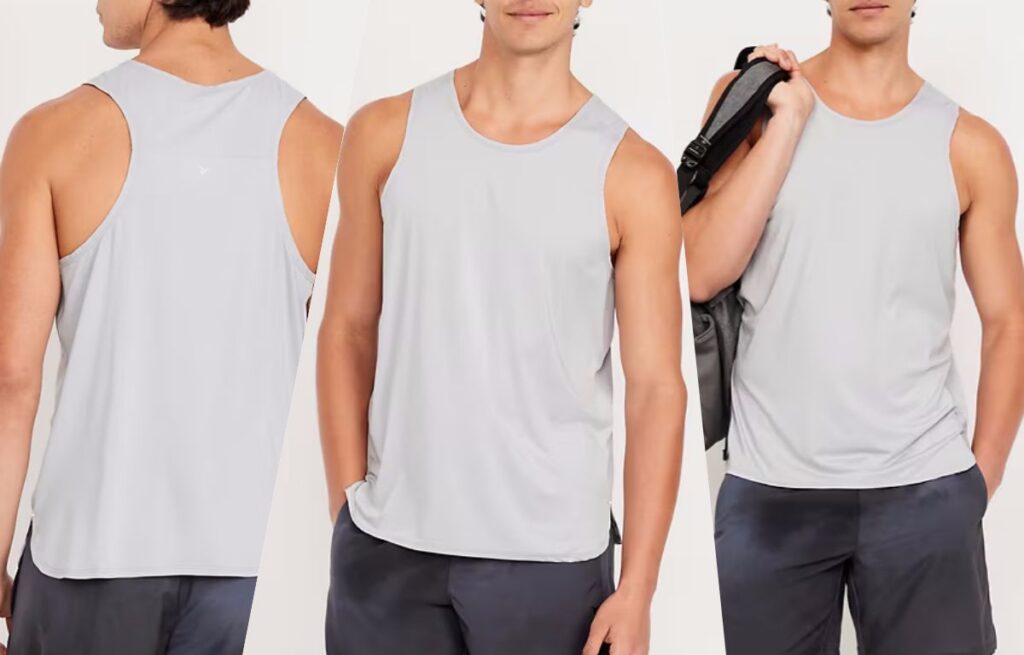
Activewear Tops and Tanks
- The fabric feels too thin, too synthetic, or not comfortable enough
- Armhole, neckline, or body fit is unstable across runs
- The top does not match the bottom well in set programs
- The style looks fine visually but lacks long-term wear appeal

Basic Activewear Sets
A strong direction for brands that want wearable performance products without moving into highly specialized sportswear development.
- Set pieces do not feel balanced as one offer
- Fabric direction feels too technical or not technical enough
- Fit between top and bottom is inconsistent
- The set looks good at launch but is harder to repeat well
Basic activewear sets work best when comfort, usability, and repeat sales matter more than extreme technical complexity. That sits close to the activewear position already established inside the Modaknits range, making these sets suitable for entry activewear lines, lifestyle movement collections, and scalable repeat programs.
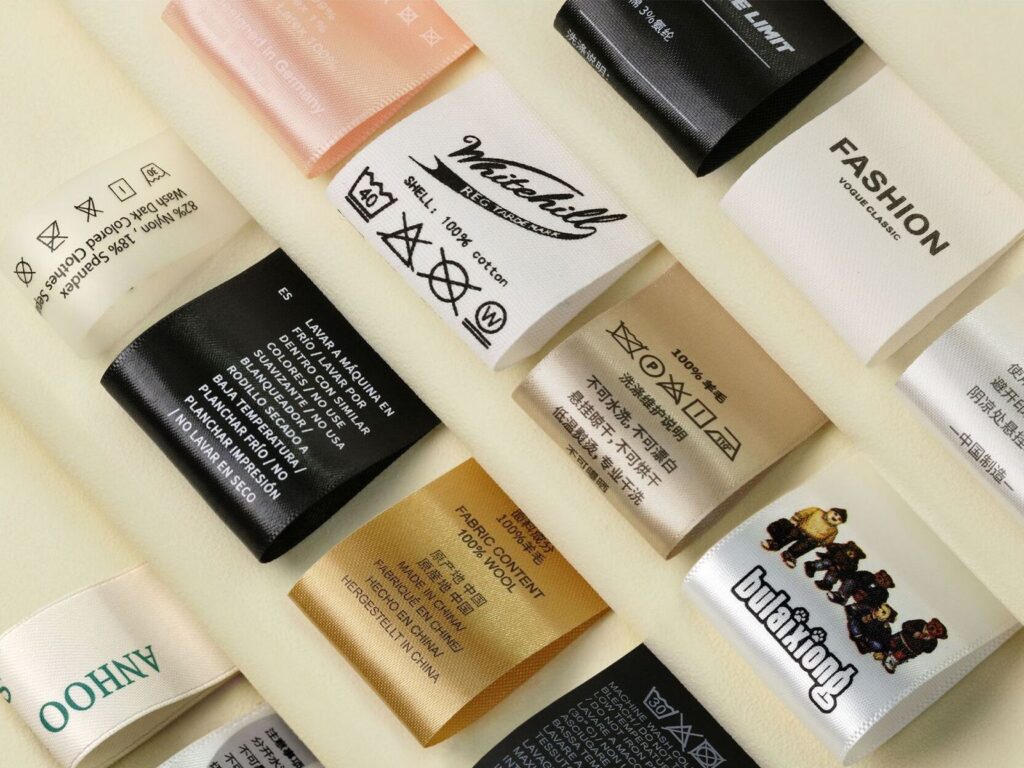
Blank and Private Label Knit Basics
A natural fit for brands that need stable base products ready for printing, embroidery, labeling, or repeat blank sales across core SKUs.
- Base garment quality feels too generic
- Fit shifts across repeat colors or repeat runs
- Decoration readiness is not stable enough
- Replenishment becomes harder than initial production
Blank and private label programs depend on stable base garments more than trend complexity. That overlaps closely with Modaknits’ strengths in knit basics, repeatable product logic, branding support, and replenishment-friendly manufacturing. For brands building long-term core SKUs, this is one of the most commercially useful categories in the whole range.
Small MOQ Support That Makes It Easier to Start
Many online brands do not fail because the product idea is weak. They get stuck because the first order feels too risky. Inventory pressure comes too early, cash gets tied up too soon, and the brand is forced to commit before real demand is clear.
Modaknits addresses that problem with a fast-start approach built around quick sampling, selected small-batch support, and a production path that can grow later instead of stopping at the testing stage.
| Stage | Quantity Range | Typical Purpose |
|---|---|---|
| Sample review | 1–5 pcs | Check fit, hand feel, logo, and overall product direction |
| Fast-start run | 1–20 pcs | Lower-risk launch and early market testing |
| Early validation | 10–50 pcs | Test sell-through and gather first real feedback |
| Growth check | 100–500 pcs | Confirm a product has repeat potential |
| Scale stage | 1,000+ pcs | Move into more structured bulk production |
| Expansion stage | 5,000+ pcs | Support stronger volume once the product line is proven |
A lower opening MOQ only matters when it helps a brand make a better decision. The real advantage is not the number itself. The advantage is being able to test earlier, move faster, and place the next order with more confidence. That is where Modaknits becomes useful for private label online brands that want a practical first step, not a heavy first commitment.
From Sample to Bulk Production Without Rebuilding the Product
A common problem in apparel sourcing appears after the first success. The sample is approved. The early batch goes out. The product begins to sell. Then the original supplier cannot keep up with the next stage, or the brand has to move the style to a different factory. That change usually creates new risks in fit, fabric feel, finishing, and production communication. Modaknits is in a stronger position because its fast-start capability sits on top of a real manufacturing base.
Problems that may be encountered
- The first supplier handles samples but cannot support bigger orders
- A new factory is introduced too early, which creates fit and fabric inconsistency
- Restocks become unstable because the product is rebuilt instead of continued
- The brand loses time when each growth stage needs a different partner
- Small-batch suppliers may not have enough production depth
- Large factories may not care about the product until the quantity is already high
| Production Stage | Typical Quantity | What Happens at This Stage | What Modaknits Supports |
|---|---|---|---|
| Product review | 1–5 pcs | Confirm fit, fabric feel, trims, and visual direction | Sampling and development review |
| Fast-start stage | 1–20 pcs | Launch lean and reduce opening inventory pressure | Quick-return entry support on selected projects |
| Testing stage | 10–50 pcs | Check product response in the market | Small-batch output with faster turnaround |
| Validation stage | 100–500 pcs | Confirm a style can be repeated and restocked | More stable production planning |
| Bulk stage | 1,000+ pcs | Move into stronger volume | 18-line factory system support |
| Expansion stage | 5,000+ pcs | Support larger replenishment and growth | Monthly capacity around 100,000 pcs with extra expansion room |
Fabric and Material Options That Support Product Feel, Wear Comfort, and Repeat Orders
In private label apparel, material choice shapes the product long before production volume becomes the main issue. A T-shirt can look fine and still fail because the hand feel is weak. A hoodie can photograph well and still lose value after decoration if the fabric base is wrong.
A pair of leggings can look clean in the first sample and still disappoint in wear if stretch response and recovery are not stable enough. This is why Modaknits is a stronger fit for product lines where fabric direction is treated as part of the product system, not as an afterthought.

100% Cotton Jersey
- The fabric can feel too thin if weight is not chosen well
- Shrinkage can affect the final body balance
- The surface may not stay clean enough for stronger print presentation
- The product can lose value quickly if the hand feel feels too generic

Heavyweight Cotton Jersey
- The fabric can feel stiff instead of premium
- Drape can become too bulky if the fabric and shape are not balanced
- Surface roughness can weaken decoration results
- Product value drops if repeat runs do not stay close in weight and finish

Cotton-Poly Jersey
- The fabric can feel too synthetic if the blend is not balanced well
- The natural softness expected in better basics can be lost
- Print finish may look less clean on an inconsistent surface
- The final product can feel generic if the fabric identity is weak

Cotton-Spandex Soft Stretch Knit
- Shape retention can weaken if recovery is not strong enough
- The fabric may feel too basic if there is not enough structure
- Stretch comfort may be fine for casual use but not enough for more active use
- Product positioning becomes unclear if the fabric sits awkwardly between lounge and sport

French Terry Knit
- The face can feel too flat if the fabric quality is weak
- The inside loop feel may not feel refined enough
- Body structure may not support a stronger retail position
- Matching set consistency becomes harder if fabric quality varies across runs

Brushed Fleece Knit
- The fabric can feel bulky if weight and silhouette are not aligned
- Decoration performance can weaken if the base fabric is unstable
- The inside brush may feel soft at first but flatten too quickly
- Repeat orders can drift in warmth, body feel, and overall silhouette

Nylon-Spandex Interlock
- The hand feel can become too slick or too synthetic
- Recovery may look acceptable in the sample but weaken in repeated wear
- Opacity issues can appear if weight is too light
- Waistband feel can become too stiff or too soft depending on the fabric choice

Nylon-Spandex Double Knit
- The product can feel overly technical for a comfort-led brand
- Thickness and support can feel too firm if the fabric is not matched to the use
- Recovery and hold need to stay reliable after real wear
- The fabric has to balance support with day-long comfort, not only visual neatness

Polyester-Spandex Performance Knit
A more performance-led option for activewear tops, training separates, and lighter sports-focused products where quick-dry behavior, lighter weight, and practical movement matter more than a cotton-like hand feel.
Common Needs or Pain Points
- The fabric can feel too technical or too artificial for lifestyle-led brands
- Surface quality may look cheap if the fabric level is not controlled
- Softness can be lost when performance is pushed too aggressively
- Product identity can become unclear between sportswear and casualwear
| Fabric Type | Best Use Case | What Usually Matters Most |
|---|---|---|
| 100% Cotton Jersey | Core T-shirts, graphics, blank tees | Natural hand feel, weight balance, print surface |
| Heavyweight Cotton Jersey | Premium tees, blank programs, streetwear basics | Substance, drape, body stability |
| Cotton-Poly Jersey | Everyday basics and accessible repeat programs | Softness, practicality, cost balance |
| Cotton-Spandex Soft Stretch Knit | Fitted tops, stretch basics, crossover styles | Softness, light stretch, shape retention |
| French Terry Knit | Lightweight hoodies, sweatshirts, joggers | Comfort, clean face, set consistency |
| Brushed Fleece Knit | Hoodies, sweatshirts, sweatpants | Warmth, softness, structure, decoration compatibility |
| Nylon-Spandex Interlock | Leggings, yoga pants, activewear bottoms | Stretch, recovery, opacity, smooth surface |
| Nylon-Spandex Double Knit | Supportive activewear bottoms and sets | Body stability, comfort, shape hold |
| Polyester-Spandex Performance Knit | Activewear tops, training layers, light performance items | Quick-dry feel, lighter weight, practical movement |
Printing and Branding Options That Help Private Label Products Look Complete
For many online brands, branding is where the product starts to feel real. That is especially true for graphic tees, logo hoodies, embroidered sweatshirts, creator merchandise, and blank products developed for later customization. The stronger result usually comes from choosing the right garment base, the right surface treatment, and the right branding method together. Modaknits has a practical advantage here because the product focus already sits in categories where decoration matters: T-shirts, hoodies, sweatshirts, blank programs, and branded casual basics.
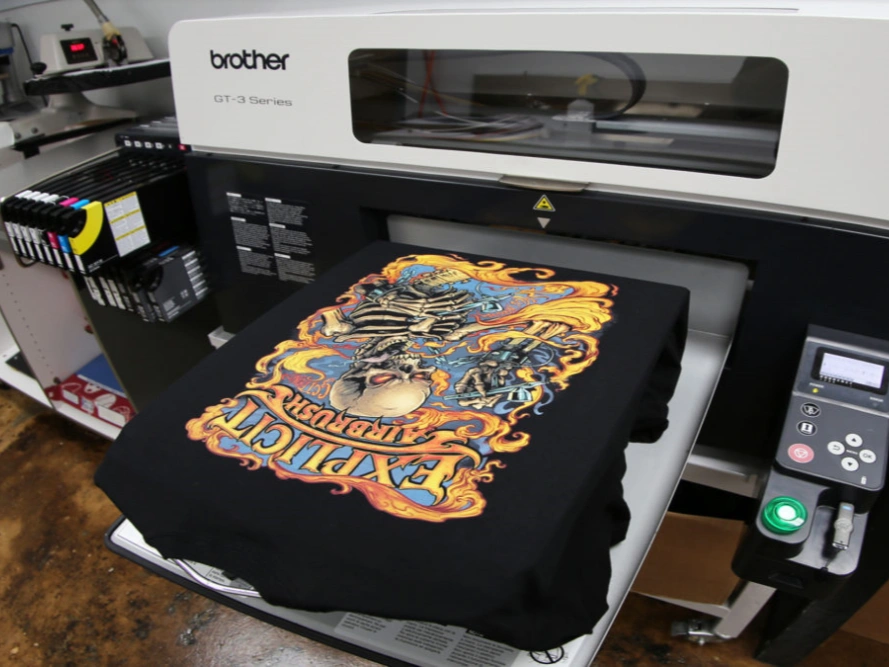
DTG Printing
A practical option for graphic tees, printed hoodies, creator merchandise, and smaller branded runs where detail, flexibility, and lower opening pressure matter.
- Fine lines and gradients can look weak on the wrong garment base
- The artwork may be strong, but the print surface may not support it cleanly
- A printed item can crack, fade, or lose sharpness if the process is not matched properly
- Smaller projects still need a professional result, not a compromise result
Modaknits is equipped with DTG printing, embroidery, and heat transfer support, backed by 18 production lines and a monthly capacity of around 100,000 pieces, with an additional 50,000–80,000 pieces of scalable production room for growing orders.
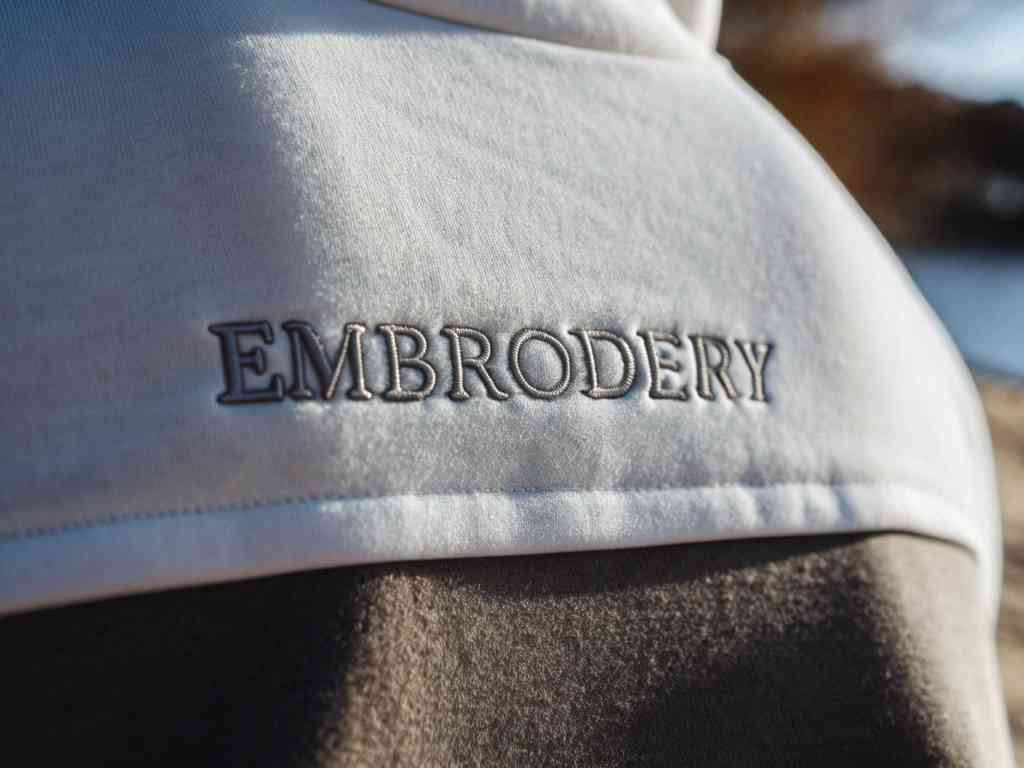
Embroidery
A strong fit for logo hoodies, sweatshirts, premium basics, and branded casualwear where the logo needs more depth, texture, and permanence.
- The base fabric may not have enough stability for a clean embroidered result
- Embroidery can distort the garment face if the fabric body is wrong
- Logo size and placement can feel heavy when the garment is not balanced properly
- The first run may look clean, but later reorders can drift if the base garment changes
Embroidery is already part of the Modaknits equipment and branding support. That gives the factory a stronger position in logo hoodies, embroidered sweatshirts, and more premium casual basics where the branding method needs to feel integrated with the garment instead of added after the fact.
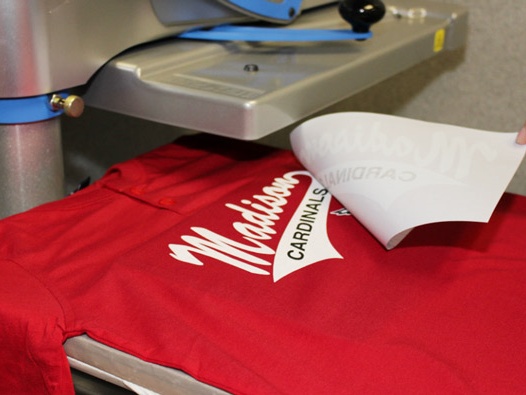
Heat Transfer
- A logo method may look too heavy for the intended garment category
- The finish can feel less integrated when method and product base are mismatched
- Placement needs to stay clean across multiple sizes
- Some smaller or faster projects need branding flexibility without overcomplicating the build
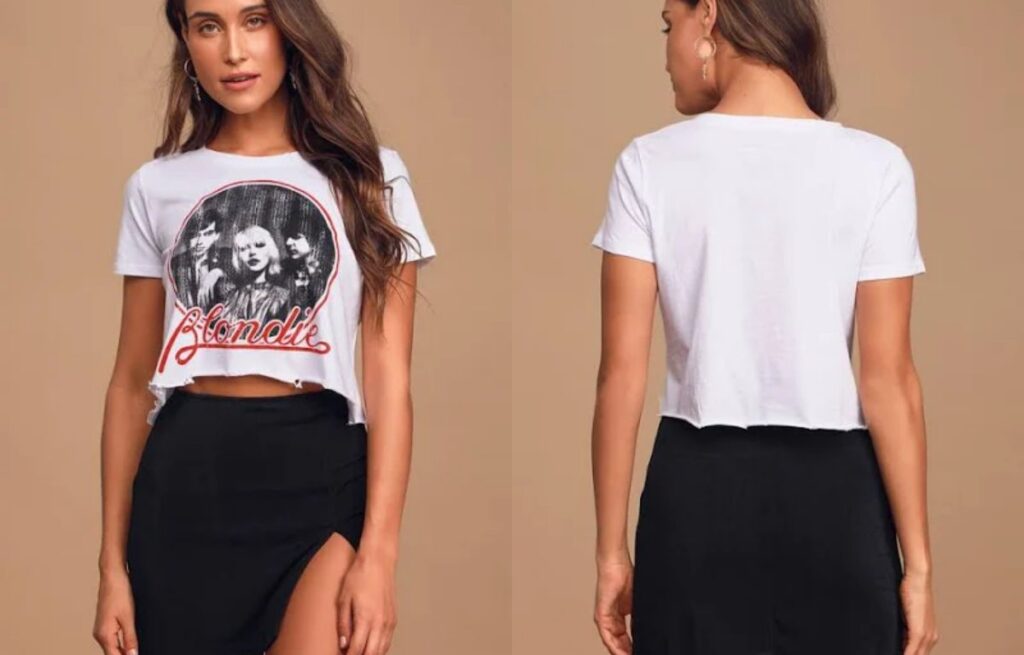
Graphic T-Shirt Programs
- The artwork may be strong, but the base garment feels too weak
- Print quality alone is not enough if body shape and fabric feel are off
- Graphic placement can shift in value when shrinkage and fit are not controlled
- Reorders often fail because the second run no longer feels like the first one
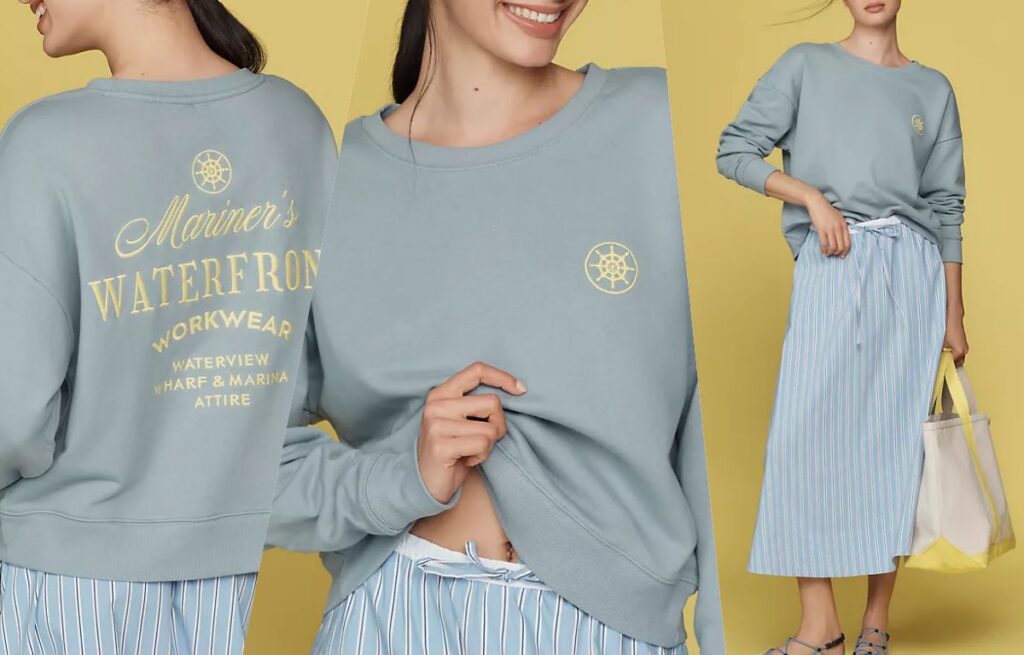
Logo Hoodie and Sweatshirt Programs
- The logo method may look fine, but the hoodie still feels weak as a product
- Rib, cuff, and silhouette problems reduce the impact of the branding
- Fabric and decoration can work against each other if not planned together
- A hoodie that sells well once becomes harder to repeat across future runs

Blank and Private Label Base Programs
- The base garment quality feels too generic for long-term brand use
- Decoration readiness changes between colors or repeat orders
- A blank line still fails if hand feel and fit are unstable
- Replenishment becomes inefficient when every run starts from zero again
| Branding Direction | Best Use Case | Why It Fits Modaknits |
|---|---|---|
| DTG Printing | Graphic tees, creator drops, art-led T-shirts | Confirmed method, strong match with core T-shirt category |
| Embroidery | Logo hoodies, sweatshirts, branded fleece basics | Confirmed method, better for premium-looking knit branding |
| Heat Transfer | Simple logos, selected tops, practical custom programs | Confirmed method, useful for flexible branding applications |
| Graphic T-Shirt Programs | Streetwear, creator brands, print-led basics | Strong combination of stable tee base and print-ready direction |
| Logo Hoodie & Sweatshirt Programs | Casual basics, brand staples, creator merchandise | Strong fit for decoration-ready fleece products and repeat orders |
| Blank & Private Label Base Programs | Blank lines, logo-ready products, branding-ready stock | Strong overlap with repeatable knit basics and restock logic |
Color and Finish Options That Support Product Identity
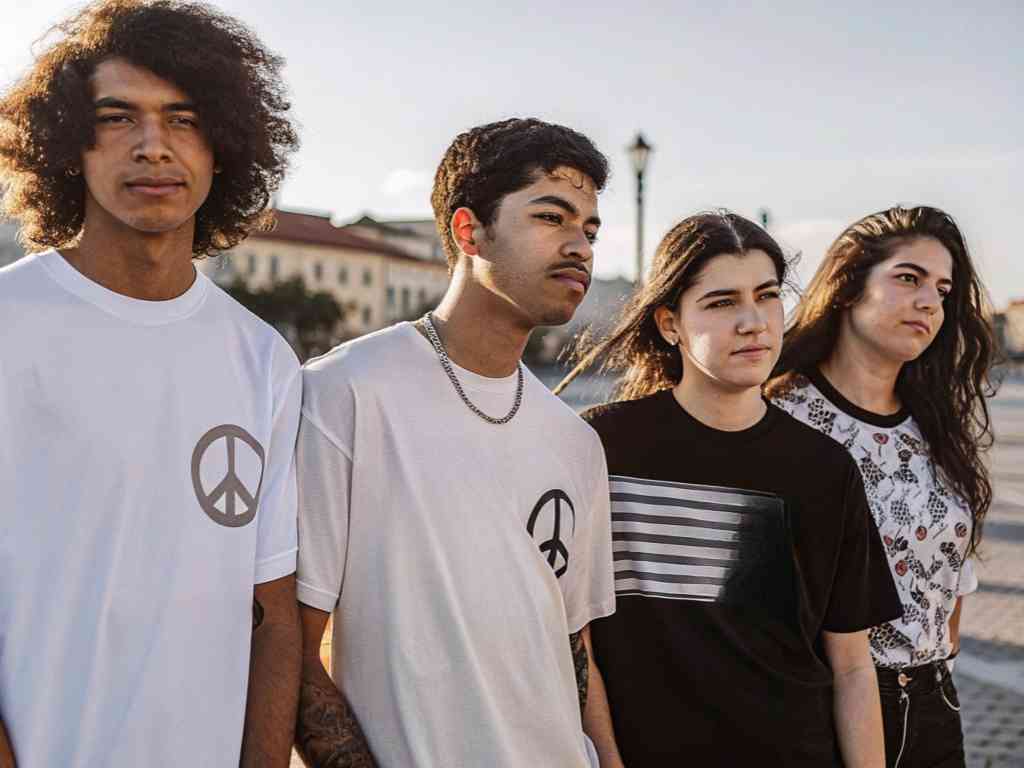
Many clothing factories treat color as a simple choice at the end of development. In real business, it affects much more than appearance. A core T-shirt program may need stable black, white, grey, earth tones, or seasonal colors that can be reordered with less confusion. A hoodie collection may need a color range that still works cleanly with embroidery or printed branding. A washed T-shirt program may aim for a softer visual identity and a more lived-in look. Modaknits is in a better position to support these directions because the product focus already includes T-shirts, hoodies, sweatshirts, blank programs, and graphic-led basics, and internal materials also reference multi-color programs plus washed and dyed T-shirt directions.
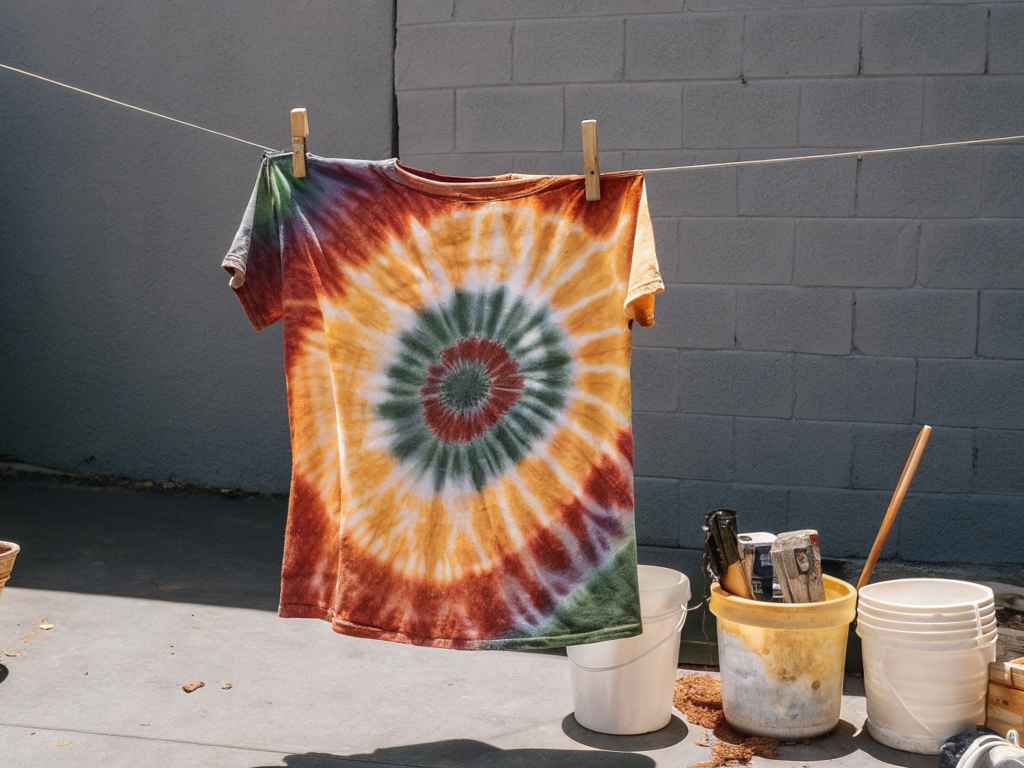
Dyed T-Shirt Direction

Core Solid Color Programs

Washed T-Shirt Direction
Graphic-Led Color Programs
| Color / Finish Direction | Best Product Types | Why It Matters |
|---|---|---|
| Core solid colors | T-shirts, hoodies, sweatshirts, sweatpants | Cleaner restocks and easier long-term product planning |
| Multi-color programs | Blank tees, blank hoodies, logo-ready basics | More merchandising flexibility without changing the whole product logic |
| Washed finish | Graphic tees, casual vintage-led tops, relaxed basics | Adds texture, softness in presentation, and stronger visual identity |
| Dyed finish | T-shirts and selected casual basics | Helps create a more distinct product feel and color story |
| Graphic-led base colors | Printed tees and creator merchandise | Supports artwork visibility and overall product presentation |
Size, Fit, and Pattern Stability for Repeatable Products
A lot of suppliers can produce a garment that looks close enough on the first run. Fewer can keep the product closer to the same fit and wearing feel across future runs. That matters even more in categories where repeat sales are the goal: T-shirts, hoodies, sweatshirts, sweatpants, yoga pants, leggings, and basic activewear. In stretch-led styles, fit is not only about width and length. It is also about movement, waistband hold, seam behavior, and how the fabric returns after wear. This is why Modaknits places value on pattern continuity, sample-to-bulk connection, and product direction that is strong enough for repeat orders instead of one-time production only.

T-Shirts
- Collar balance changes between runs
- Body shape feels correct in the sample but weaker in production
- Shrinkage affects final proportions
- Repeat orders lose the same overall wearing feel

Hoodies and Sweatshirts
- Rib and cuff tension feel different between runs
- The hoodie shape becomes too flat or too oversized
- Decoration affects how the garment sits on the body
- Future reorders no longer match the first approved feel
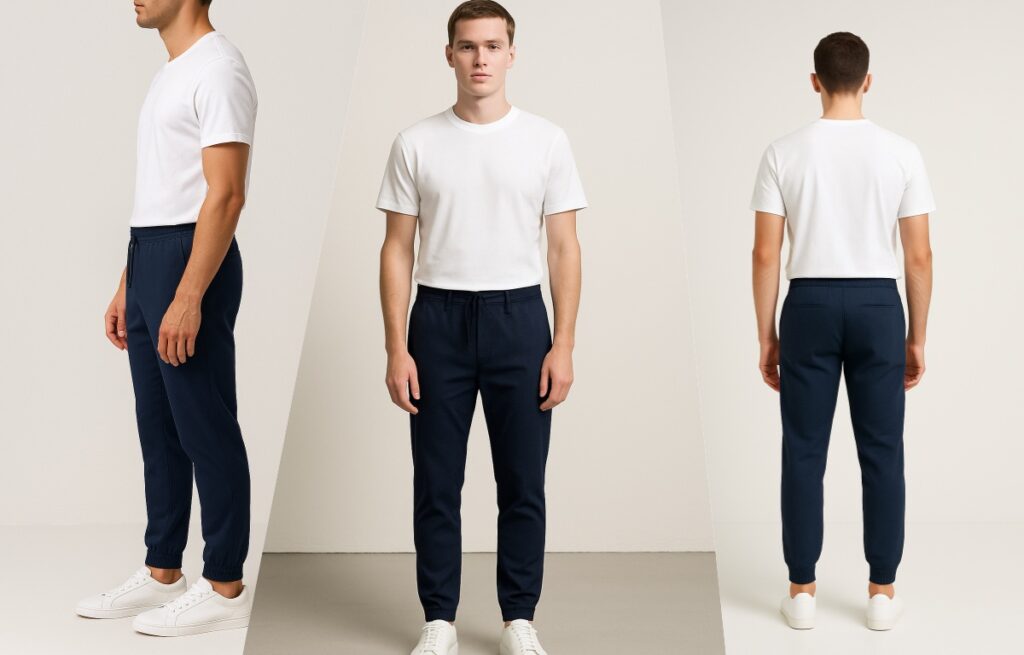
Sweatpants and Joggers
- Rise or leg shape changes between runs
- The silhouette feels too narrow or too loose
- The bottom no longer matches the top in set programs
- Comfort drops even when measurements look similar on paper

Matching Sets
- Top and bottom do not feel like one product family
- Fabric weight or color does not stay close enough
- Fit balance between upper and lower pieces feels off
- Reorders create mismatch inside the set program

Yoga Pants and Leggings
- Waistband tension changes between orders
- Stretch feels tight, weak, or uneven
- Fabric recovery is not stable enough for repeat wear
- The fit looks right standing still but weaker in movement
Quality Control That Protects Product Feel, Fit, and Repeat Orders
Many problems in apparel production do not begin in sewing. They begin before sewing. A T-shirt can lose value because the body shape changes after wash. A hoodie can look right but fail to keep the same balance across repeat runs. A legging can feel fine in the first sample but lose confidence when stretch recovery and production handling are not aligned. This is why quality control should be treated as a production habit, not a last-minute inspection step. Modaknits already supports fabric inspection and shrinkage handling, and the sample and pattern structure behind the factory also helps carry product logic from development into bulk production. That is especially important for repeat categories such as T-shirts, hoodies, sweatshirts, sweatpants, yoga pants, leggings, and basic activewear.
Fabric Inspection
Shrinkage Handling
Automatic Cutting Support
Sample-to-Bulk Connection
| Quality Control Area | Why It Matters | What Modaknits Supports |
|---|---|---|
| Fabric inspection | Reduces material-related problems early | Fabric review before deeper production |
| Shrinkage handling | Helps protect fit and body balance | Shrinkage control inside operating flow |
| Cutting accuracy | Supports size consistency and cleaner production | Automatic cutting support |
| Sample-to-bulk continuity | Helps keep production closer to approved direction | 2 sample rooms, 7 pattern makers, 20 sample technicians |
| Repeat production stability | Protects future reorders and long-term core SKUs | More standardized flow for repeatable products |
Production Capacity and Lead Times That Support Growth, Not Only the First Order
Sampling
Small-Batch Production
Fast-Start Quantity
Growth Capacity
| Production Stage | Typical Quantity | Typical Timing | What It Solves |
|---|---|---|---|
| Sampling | 1–5 pcs | Around 3–5 days | Review fit, feel, and product direction |
| Fast-start stage | 1–20 pcs | Selected quick-return support | Lower opening risk and faster launch |
| Testing stage | 10–50 pcs | Small-run planning | Real market validation before deeper stock |
| Validation stage | 100–500 pcs | Production planning based on style | Confirms reorder potential |
| Bulk stage | 1,000+ pcs | Factory-scale production | Supports growth after demand is proven |
| Expansion stage | 5,000+ pcs | Based on broader production planning | Supports larger repeat demand |
Shipping and Logistics Support That Helps Brands Launch and Restock Faster
Smaller and growth-stage brands often do not work with one simple delivery pattern. A product may need to move quickly for a launch. A later order may need a more cost-conscious shipping route. A creator brand may want direct shipment logic. A growing basics brand may want replenishment support linked to an overseas warehouse. This is why logistics support should be clearly shown on the page. Modaknits already supports express, air, and sea shipping, together with dropshipping, multi-address delivery, and overseas warehouse coordination.
Express

Air Freight

Sea Freight
| Shipping Method | Typical Transit Time | Best Use Case |
|---|---|---|
| Courier / Express | 3–5 days | Samples, urgent launches, smaller fast-moving orders |
| Air Freight | 5–8 days | Medium-volume orders needing faster delivery |
| Sea Freight | 20–30 days | Larger orders where freight efficiency matters more |
A Clear Custom Process from First Brief to Production
Step 1. Product Brief and Project Alignment
Step 2. Product Review and Feasibility Check
Step 3. Quotation and Production Route Confirmation
Step 4. Pattern Development and Sample Planning
Step 5. Sample Making and First Physical Review
Step 6. Sample Feedback and Revision Confirmation
Step 7. Deposit, Production Planning, and Manufacturing
Step 8. Quality Check, Balance Payment, and Shipment
Representative Project Scenarios Modaknits Is Well Suited to Handle
A lot of brands do not need a factory that claims to make everything. They need a factory that can handle the right kind of product with the right rhythm.
Modaknits is strongest when the project sits inside knit basics, blank or branded casualwear, and comfort-led activewear that needs to start cleanly, be reviewed properly, and remain workable across future orders.
Graphic T-Shirt Launch for a Growing Online Brand
- Product: 100% cotton graphic T-shirts
- Brand type: Growing online apparel label
- Sales channel: Shopify and social sales
Challenge
The brand wanted to launch quickly without taking on heavy opening inventory.
Solution
Modaknits supported sample development, DTG-ready garment planning, and a smaller launch path built around repeat potential.
Result
Lower inventory pressure, faster product testing, and a clearer route to repeat orders

Logo Hoodie Program for Premium Basics Brand
- Product: Logo hoodies and sweatshirts
- Brand type: Premium basics label
- Sales channel: DTC online store
Challenge
The brand needed hoodies with stable shape, clean logo execution, and better long-term restock value.
Solution
Modaknits supported sample development, embroidery-ready planning, and a more repeat-oriented hoodie program.
Result
Stronger product consistency, cleaner branding presentation, and a better foundation for reorders.

Matching Set Development for a Casual Essentials Brand
- Product: Hoodie and sweatpant matching sets
- Brand type: Casual essentials brand
- Sales channel: Online retail
Challenge
The top and bottom needed to stay consistent in fabric feel, fit balance, and overall presentation.
Solution
Modaknits developed the set as one connected knit product family instead of two separate garments.
Result
Better set consistency, easier merchandising, and a cleaner path for future replenishment.

Frequently Asked Questions About Working with Modaknits

Start with a Sample. Build the Product Line Step by Step.
If the product direction is clear, the next step does not need to be complicated. Send the item you want to develop, confirm the fabric and logo direction, review the sample, and choose the most practical production route from there.
How to Begin
- Share your product idea, tech pack, design, or reference
- Receive quotation and production feasibility feedback
- Develop and confirm samples
- Start production with an agreed timeline

