
 Skip to content
 Hoodie weight matters because fabric density changes how a zip up hoodie feels, how warm it stays, and how easily it can be worn across a full day. In everyday use, the best hoodie is rarely the heaviest or the lightest. It is the one that balances warmth, airflow, and physical ease.
This page explains how fabric weight shapes thermal comfort and breathability in zip up hoodies. The goal is to help readers judge which fabric weights are most practical for daily use.
Fabric weight matters because it influences how a hoodie performs before fit or styling is even considered.
Weight affects warmth, drape, mobility, and how the garment feels over long hours. For everyday zip hoodies, the right density usually matters more than extreme thickness.
Fabric mass influences perceived warmth because heavier and denser materials usually retain more body heat than lighter ones.
In a zip up hoodie, this changes how useful the garment feels in commuting, layering, and daily outdoor movement.
A thicker fabric often creates a stronger sense of insulation, but warmth should be judged by use condition, not by weight alone. A garment that feels warm enough in cool air may feel excessive indoors.
The correct judgment is whether the hoodie provides enough thermal support for routine use without turning warmth into the main burden. For daily wear, perceived warmth should feel steady and manageable rather than overly protective.


Weight affects long-hour comfort because the body notices fabric load over time, not only at first wear.
A hoodie that feels substantial in hand may become tiring after commuting, sitting, walking, and repeated movement across the day.
This matters because everyday garments are expected to stay easy through long use, not just during initial try-on. In the brand reference material, comfort, structure, and repeat wear are treated as connected parts of garment quality.
A good daily hoodie should feel present enough to hold shape, but not so heavy that the wearer becomes constantly aware of it. Long-hour comfort depends on that balance.
Everyday hoodies require balanced fabric density because most daily situations involve changing temperatures, moderate movement, and repeated indoor–outdoor transitions.
A fabric that is too light may feel underbuilt. A fabric that is too dense may feel overly warm or physically demanding.
The most practical density usually sits between those extremes. It should support enough structure for repeated wear while remaining breathable and easy to layer.
This aligns with the broader product logic in the reference material, where garments are expected to work across commuting, leisure, and urban daily activity rather than one narrow scene. A daily zip hoodie performs best when its density supports versatility instead of limiting it.
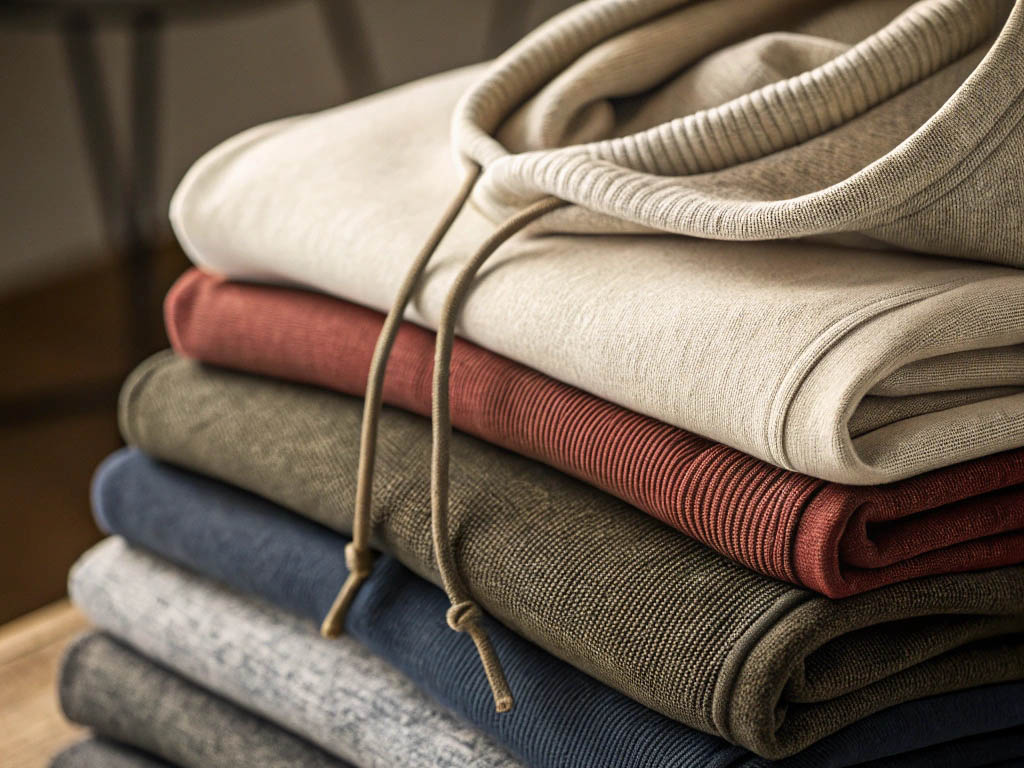
Zip up hoodies are usually built in lightweight, midweight, or heavyweight fabric ranges.
These categories matter because they shape how the garment feels in motion, how much warmth it provides, and how broadly it can be used.
Weight classification is therefore one of the clearest ways to judge everyday practicality.

Lightweight zip hoodies are useful because they feel easier to move in and easier to layer across mild conditions.
Their lower fabric mass usually makes them more comfortable in indoor spaces, transitional weather, and daily routines that do not require strong insulation.
They often work well for travel, errands, and relaxed urban use when the wearer wants a hoodie that feels present but not heavy. The trade-off is that lightweight fabrics may provide less thermal protection and less structure.
The correct judgment is whether the hoodie still feels stable enough for repeat wear. Lightweight works best when flexibility is gained without making the garment feel thin, flimsy, or overly casual in a weak way.
Midweight hoodies are often the strongest everyday option because they balance structure, warmth, and comfort without leaning too far in one direction.
They usually provide enough substance for shape retention while remaining comfortable across indoor–outdoor transitions.
This makes them especially practical for commuting, casual layering, and long-hour wear. In broader wardrobe terms, midweight fabrics often match the kind of multi-scene use emphasized in the reference material.
The correct judgment is whether the hoodie feels substantial enough to be useful but light enough to remain easy. For most daily zip hoodies, midweight construction offers the most dependable overall performance.
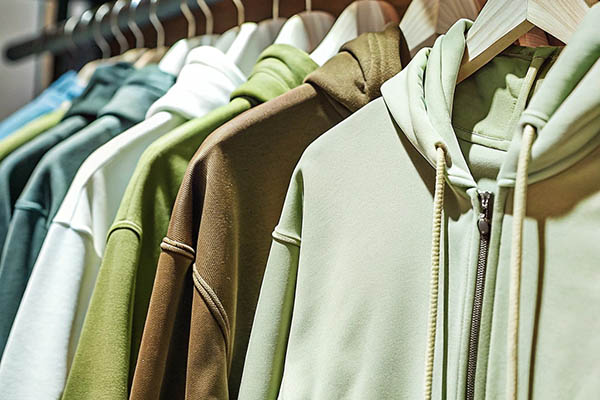

Heavyweight hoodies are best suited to colder conditions because they provide more insulation, more body, and a stronger sense of protection.
They can also create a more structured silhouette, which some wearers prefer in outer-layer casual use.
Their main advantage is warmth and substance. Their main limitation is reduced flexibility and reduced breathability in mild or indoor conditions. A heavyweight zip hoodie may feel excellent in cold air and excessive once the environment becomes more controlled.
The correct judgment is whether the added weight serves a real need. Heavyweight construction works best when colder weather or stronger thermal support justifies the additional mass.
Fabric weight strongly influences warmth because thicker materials usually hold more heat and create more insulation between the body and the environment.
In zip hoodies, that effect can be useful or excessive depending on how and where the garment is worn. Thermal comfort depends on matching warmth level to real daily conditions.
Thicker fabrics retain more heat because they create a denser barrier that slows airflow and helps preserve body warmth.
In zip up hoodies, this often makes heavier fabrics more useful in colder air, early mornings, and windy outdoor movement.
The advantage is greater protection. The limitation is that retained warmth can quickly become excessive once the wearer enters heated indoor spaces or becomes more active.
The correct judgment is whether the fabric’s heat retention supports daily comfort rather than overpowering it. A hoodie should feel warm enough to be useful, but not so insulating that it stops adapting well to the rest of the day.
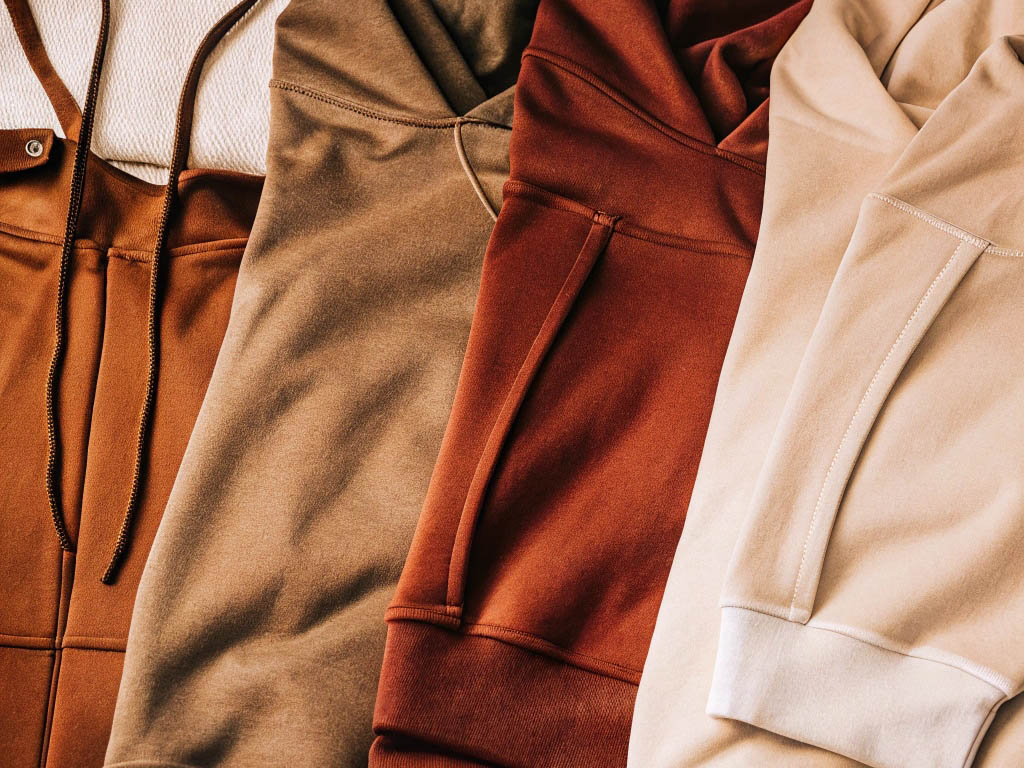

Moderate warmth is usually more practical for daily commuting because commuting often involves mixed conditions rather than one fixed temperature.
A person may start outdoors, enter transit, walk again, and then move into a controlled indoor environment within a short period.
A hoodie that provides moderate warmth tends to perform better across that pattern than one built only for insulation. This matches the broader value placed on multi-scene wear and urban functionality in the reference material.
The correct judgment is whether the hoodie can stay on comfortably through most of the routine. Moderate warmth is usually what keeps a zip hoodie useful instead of situational.
Preventing overheating matters because many daily hoodies are worn longer indoors than outdoors.
Once a garment becomes too warm for indoor use, its practical value drops even if it performs well outside.
A zip hoodie has one advantage here: the zipper allows quick ventilation adjustment. But zipper control can only help so much if the fabric itself retains too much heat. This is why insulation should be judged together with breathability, not alone.
The best daily hoodie should remain thermally manageable indoors without needing constant removal. If heat becomes difficult to control in ordinary interior conditions, the weight is likely too high for broad everyday use.

Breathability matters because daily hoodie use includes walking, commuting, carrying items, and moving through different environments.
A garment that traps too much heat or moisture becomes less comfortable even if it initially feels warm and soft. Good daily performance therefore depends on airflow as much as insulation.
Breathability is especially important during commuting or walking because even light movement raises body temperature. A hoodie that cannot release enough heat may feel acceptable while standing still and uncomfortable once the wearer begins moving.
This matters in urban life, where clothing is often used across repeated low- to moderate-intensity activity. A breathable zip hoodie stays easier to wear because it does not turn movement into heat buildup too quickly.
The correct judgment is whether the garment remains comfortable after a period of ordinary walking. If warmth rises sharply during minor activity, the hoodie is likely too dense or too closed for daily use.
Airflow supports temperature regulation because it allows excess heat and moisture to move away from the body instead of staying trapped inside the garment. In a zip hoodie, this process is influenced both by fabric structure and by how much the zipper can be opened.
The zipper improves control, but the fabric still determines the baseline level of ventilation. A hoodie with poor airflow will remain less comfortable even when partly unzipped.
The correct judgment is whether the garment can settle back into comfort after movement or changing conditions. Good airflow helps the hoodie feel more adaptable instead of more thermally fixed.
Fabric structure affects ventilation because knit density, fiber blend, and surface compactness all influence how easily air moves through the hoodie. A looser or lighter structure usually improves airflow, while a denser structure usually reduces it.
This does not mean every airy fabric is better. It means ventilation depends on construction as much as on nominal fabric weight. In the reference material, breathability and comfort are closely linked to fabric development and practical urban use.
The correct judgment is whether the structure supports enough airflow for the hoodie’s intended daily role. Ventilation should be treated as part of comfort engineering, not as a secondary bonus.
Fabric weight and breathability usually move in opposite directions. Heavier materials often improve insulation but reduce ventilation.
Lighter materials usually increase airflow but reduce warmth. Understanding this trade-off helps explain why the best daily hoodie is usually one that stays balanced rather than extreme.
Lightweight fabrics usually provide greater ventilation because they use less mass and often allow more air movement through the garment. This helps reduce stuffiness during indoor wear, mild weather, and daily movement.
The benefit is better thermal release and less physical heaviness. The limitation is that lighter fabrics may not provide enough warmth in colder outdoor conditions. They can also feel less substantial if the construction is weak.
The correct judgment is whether the added ventilation matches the wearer’s actual environment. Lightweight fabrics work best when the main need is flexibility and comfort rather than insulation.
Midweight fabrics often balance warmth and airflow most effectively because they provide enough insulation for regular daily use without fully shutting down ventilation. This is why they are often the most dependable everyday hoodie choice.
A midweight zip hoodie can usually perform across transit, indoor wear, and moderate outdoor movement with fewer compromises than very light or very heavy alternatives. This supports the broader product idea of garments designed for multiple urban and casual scenarios.
The correct judgment is whether the fabric feels thermally stable across the day. Good midweight construction usually offers the strongest compromise between comfort and utility.
Heavy fabrics usually limit breathability because increased density and mass reduce airflow and hold more heat close to the body. This can be useful in cold environments, but it often becomes restrictive indoors or during movement.
The issue is not only warmth. It is also slower thermal release. Once heat builds up, a heavy hoodie may take longer to return to a comfortable state even if unzipped.
The correct judgment is whether the lower breathability is acceptable for the garment’s intended use. If the hoodie is meant for broad everyday use rather than colder specialty use, heavy fabric may create more thermal burden than practical value.
The most practical fabric weight for everyday zip hoodies is usually the range that supports commuting, layering, and long-hour use without becoming too warm or too tiring.
In most cases, that means moderate rather than extreme density. Daily wear rewards balance more than specialization.
Moderate weight fabrics work well for commuting because commuting usually combines short outdoor exposure, indoor time, and repeated minor movement. A hoodie that is too light may feel insufficient in cool air. A hoodie that is too heavy may become uncomfortable once indoors.
A moderate fabric gives the wearer enough warmth for routine travel while still staying manageable once conditions change. This is especially useful in city routines built around temperature variation and layered dressing.
The correct judgment is whether the hoodie can stay useful through most of the route rather than excelling in only one part of it.
Balanced warmth is essential for indoor–outdoor transitions because the wearer often moves back and forth between environments several times in one day. A daily zip hoodie should not force constant removal every time the temperature shifts slightly.
Moderate-weight fabrics usually perform best here because they provide some protection outdoors while remaining adjustable enough indoors. The zipper adds flexibility, but the fabric still has to support thermal moderation at the base level.
The correct judgment is whether the hoodie remains broadly comfortable across those transitions. If it feels appropriate outside and immediately excessive inside, the weight balance is weak.
Comfortable weight matters because an everyday hoodie is often worn for extended periods. The fabric should feel supportive enough to hold shape, but not so substantial that it becomes tiring over hours of use.
This matters in garments expected to function across commuting, leisure, travel, and daily casual wear. A hoodie that feels easy at first and burdensome later is not well balanced for real life.
The correct judgment is whether the wearer can keep the hoodie on comfortably through ordinary routines without becoming aware of fabric mass as a problem. Daily use usually favors moderate weight for exactly this reason.
A zip hoodie feels too warm when insulation begins to interfere with normal daily comfort.
This usually happens when the fabric retains more heat than the environment or activity level requires. Recognizing that upper warmth boundary helps separate useful warmth from excess insulation.
Heat buildup during indoor wear is one of the clearest signs that a hoodie is too warm for broad everyday use. Even if the garment performs well outdoors, indoor conditions usually expose whether the fabric holds too much heat.
This matters because many daily hoodies spend more time inside offices, homes, cafés, classrooms, or transit spaces than outside. If the wearer needs to unzip fully or remove the hoodie quickly just to stay comfortable, the thermal balance is likely too high.
The correct judgment is whether indoor use still feels manageable. A daily hoodie should not become difficult as soon as the environment becomes controlled.
Overheating in mild climates usually indicates that the hoodie is too insulating for routine use in that environment. A garment built for colder air may feel useful at first and then excessive once the wearer begins moving or the sun rises.
This is especially relevant in places where daily temperatures are moderate rather than cold. In those conditions, the best hoodie usually supports light coverage and flexible adjustment rather than strong thermal retention.
The correct judgment is whether the hoodie matches the real climate rather than an imagined colder use case. Mild-weather wear usually favors fabrics with more balance and less mass.
Reduced comfort during daily activity is another sign that the hoodie is too warm. If ordinary movement such as walking, carrying items, or commuting quickly leads to trapped heat and discomfort, the garment is no longer well suited to daily performance.
This matters because the hoodie is expected to support real-life activity, not only static wear. In quality urban clothing, comfort and function should remain aligned across repeated daily movement.
The correct judgment is whether the wearer can stay comfortable during ordinary activity without thermal overload. If not, the hoodie exceeds the practical warmth range.
A zip hoodie feels too heavy when fabric mass begins to reduce ease of movement or long-hour comfort.
Heavier materials can provide warmth and structure, but beyond a certain point they create physical burden instead of daily usefulness.
Recognizing that upper weight boundary helps define what is practical.
Excessive fabric weight can reduce mobility because heavier hoodies often feel less flexible across the shoulders, torso, and sleeves. The garment may not fully restrict movement, but it can make ordinary actions feel slower or more effortful.
This becomes more noticeable in zip hoodies because the front closure adds structure and the hood adds additional weight at the upper body. If the fabric is too substantial, the whole garment may begin to feel mechanically present rather than naturally wearable.
The correct judgment is whether movement still feels easy during ordinary activity. A daily hoodie should support motion, not work against it.
Fatigue during long wear is a clear sign that a hoodie is too heavy for everyday use. A garment may feel impressive or protective at first and still become physically tiring after several hours of wear.
This matters because real wardrobe value depends on repeat comfort, not short-term impression. In the reference material, long-wear comfort, structural stability, and practical use are treated as connected parts of product value.
The correct judgment is whether the wearer stops noticing the hoodie after a while or becomes more aware of its mass as the day continues. For everyday use, a hoodie should feel sustainable rather than burdensome.
Heavy hoodies are especially problematic in mild weather because they combine more insulation with more physical mass than the environment usually requires. This creates a double burden: the garment feels too warm and too substantial at the same time.
In cooler climates, that weight may still serve a purpose. In mild weather, it often becomes unnecessary. The hoodie starts functioning more like outerwear than like a flexible daily layer.
The correct judgment is whether the garment’s weight is solving a real comfort problem. If the weather does not justify it, heavy fabric usually reduces practicality rather than increasing it.
A daily zip hoodie can be judged more accurately when fabric weight is evaluated through comfort, airflow, warmth, and long-hour use in sequence.
This avoids treating thickness as a simple quality marker. The best fabric weight is the one that stays useful across the wearer’s actual routine.
1.Fabric weight suitability check
2.Breathability and airflow check
3.Warmth balance check
4.Long-hour comfort check
Fabric weight affects warmth, airflow, physical ease, and long-hour comfort in zip up hoodies.
Lightweight fabrics improve ventilation, midweight fabrics usually offer the best daily balance, and heavyweight fabrics suit colder conditions.
Thicker fabrics retain more heat, but they also reduce breathability and may feel excessive indoors.
Everyday hoodies usually work best when warmth and airflow are balanced rather than extreme.
A hoodie is too warm when it causes indoor heat buildup or overheating during ordinary movement.
A hoodie is too heavy when it reduces mobility, creates fatigue, or feels excessive for mild weather.
The most practical daily hoodie usually sits in a moderate weight range that supports commuting, transitions, and long-hour wear.
We’ll get back to you within 24 hours. Attach your logo/design if needed.
💡 1 . Share your logo, fabric, and quantity for T-shirts, hoodies, and more.
📐 2. We’ll prepare samples for your approval.
🚚 3. Bulk production starts after deposit.
✅ We value your privacy. Your information is 100% safe and confidential.
📦 Need help? Chat with us via WhatsApp anytime!

Note: Your email information will be kept strictly confidential.
Note: Your email information will be kept strictly confidential.
Request a quote, discuss MOQ, lead time, fabrics & QC.
Visit our brand store: Modaknitswear

Retail orders (and dropshipping options) are available on Modaknitswear.