
 Skip to content
 Zip up hoodies remain popular because they solve practical daily needs without requiring complex styling. Their front-opening structure makes them easier to adjust, easier to layer, and easier to repeat across ordinary routines. In modern casual clothing, that combination of convenience and comfort gives the zip hoodie long-term value.
This page explains why zip up hoodies became essential for everyday wear. The focus is on practical usefulness, not trend language.
Zip up hoodies are popular because their function is obvious in everyday use. The zipper changes how the garment is worn, removed, and adjusted throughout the day. That practical advantage is one of the main reasons many people reach for them repeatedly.
Front zipper closure is the main reason zip hoodies feel practical in daily life.
A full front opening gives the wearer immediate control over how closed or open the garment feels. That makes the hoodie easier to manage than a fixed pullover shape, especially when body temperature or environment changes during the day.
This convenience matters because daily clothing is often adjusted in small ways rather than removed completely. A zip hoodie can be worn fully closed outdoors, half-open while walking, or completely open indoors. That range of use comes from one structural feature.
The zipper is therefore not a minor detail. It is the reason the garment functions more like an adaptable layer than a single fixed form.


Ease of wearing and removing the garment is one of the clearest advantages of a zip hoodie.
Because the front opens fully, the wearer does not need to pull the garment over the head each time. That makes the hoodie easier to put on quickly and easier to remove without disrupting other layers.
This becomes especially useful in routines where clothing changes happen often. A person may leave home in cool air, enter a warm interior, and later go back outside again. In those conditions, a front-opening hoodie creates less friction than a pullover.
The benefit is simple but important. A garment that is easier to use usually becomes a garment that is worn more often.
Adaptability is a major reason zip hoodies fit everyday routines so well.
Daily life rarely stays in one condition for long. People move between indoors and outdoors, activity and rest, transit and destination. A zip hoodie responds to those shifts without requiring a full change of clothes.
That adaptability comes from the garment’s ability to function in multiple ways. It can behave like a light jacket, a casual mid-layer, or an easy top layer over a T-shirt. The same piece can therefore stay useful across different parts of the day.
A garment that adapts easily becomes more dependable. That is why zip hoodies often move from occasional wear into core wardrobe use.

Many wearers prefer zip hoodies because they offer more control during wear. A pullover hoodie can still be comfortable, but its structure is more fixed once it is on the body.
The zip version adds flexibility that becomes noticeable in everyday use.

Adjustable ventilation is one of the strongest functional differences between zip and pullover hoodies.
A zipper allows the wearer to release heat immediately without removing the garment. This matters in daily life because comfort often depends on small adjustments, not complete outfit changes.
A pullover hoodie can only stay on or come off. A zip hoodie offers more stages between those two options. The front can remain closed in cool air, partly opened during walking, or fully opened in warm indoor conditions.
This makes the garment easier to regulate across the day. For many wearers, that added control is enough to make the zip version more practical than the pullover version.
Greater temperature control is one reason some people choose zip hoodies more often than pullovers.
The front zipper changes the garment from a fixed insulating layer into an adjustable one. That flexibility becomes useful when weather is mild, indoor heat varies, or activity level changes.
In practical use, the wearer does not always want to remove the hoodie completely. Sometimes the better solution is simply to reduce heat retention. A zip hoodie allows that quickly and with little effort.
This makes the garment more useful in transitional conditions. A pullover can still provide warmth, but the zip version usually offers better control over how that warmth is managed.


Convenience during active schedules helps explain why zip hoodies often feel easier to live with.
Busy daily routines involve repeated small transitions: leaving home, commuting, entering buildings, moving between tasks, and adjusting layers along the way. A zip hoodie fits that rhythm well.
The front-opening structure saves time and reduces inconvenience. It is easier to take off during a short stop, easier to put back on, and easier to regulate without interrupting movement. This is especially useful when the day includes many changes but no single long pause.
For wearers with active schedules, the zip hoodie often wins not because it looks different, but because it asks less of the wearer throughout the day.
Zip hoodies are widely used because they layer easily with other clothing.
Their front-opening structure gives them more flexibility than many closed-front casual garments.
That makes them useful across seasons and outfit types.
Zip hoodies work well because they layer easily over lighter tops.
A T-shirt, long-sleeve shirt, or casual button layer can sit underneath without making the garment difficult to manage. The zipper also allows the underlayer to remain partly visible when desired.
This matters because everyday outfits often rely on simple layering rather than full styling complexity. A hoodie that can be opened or closed over a base layer gives the wearer more visual and thermal control. It also makes the outfit easier to adapt when conditions change.
That is why zip hoodies often function as one of the easiest middle layers in casual wardrobes. They add coverage without locking the outfit into one fixed shape.

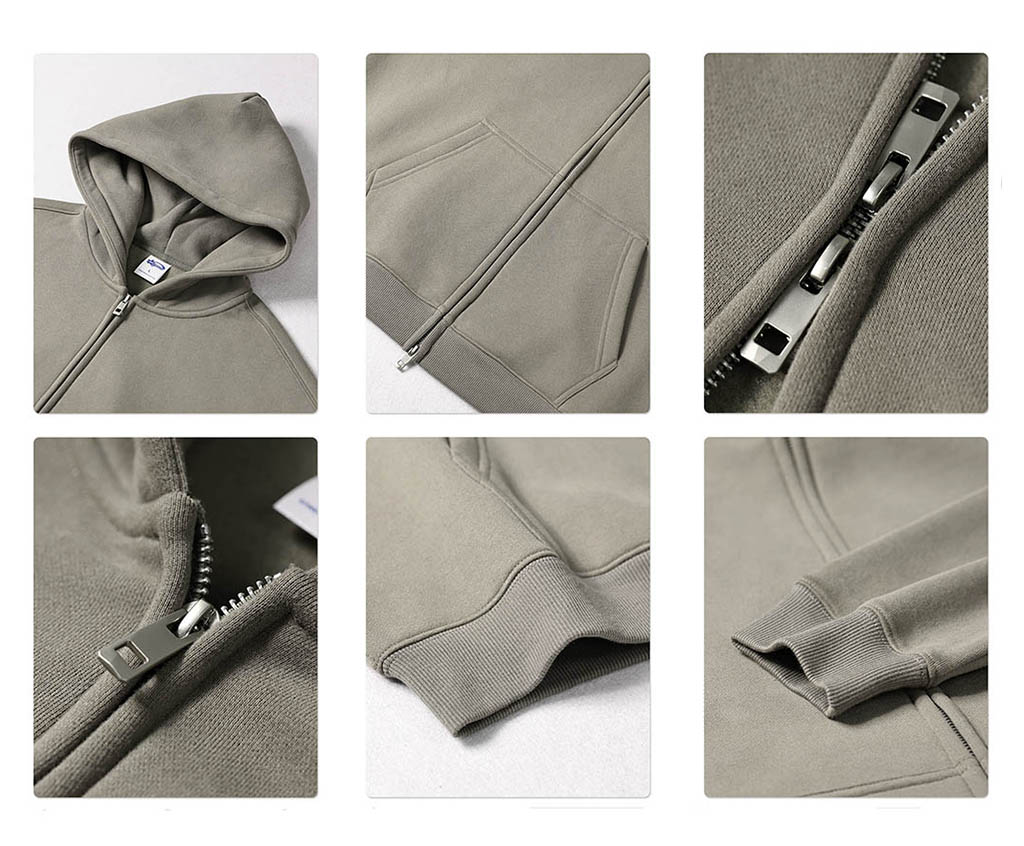
Zip hoodies remain useful because they work under jackets and coats with relatively little effort.
The soft body and front closure allow them to function as a mid-layer between a base top and an outer garment. This creates a practical structure for colder weather or variable conditions.
When layered under outerwear, the hoodie adds warmth, softness, and a more casual tone. It also helps bridge the gap between indoor comfort and outdoor coverage. The wearer can remove the outer layer while still keeping the hoodie on.
This kind of compatibility increases real-world use. A garment that works both alone and under other layers usually becomes more valuable across a wider part of the year.
Seasonal adaptability is one of the reasons zip hoodies remain stable wardrobe pieces.
In cool weather, they can function as warming layers. In mild weather, they can work as light outerwear. In changing conditions, they can stay partly open and remain comfortable without full removal.
This kind of flexibility matters because few people want separate garments for every small temperature shift. A zip hoodie reduces that need by covering several roles at once. It is not a heavy winter coat and not just a lightweight top. It sits in the useful middle.
That middle position is one reason the garment stays relevant across seasons. It adjusts well to the most common temperature range of everyday life.

Zip hoodies fit busy daily life because they are easy to manage while moving through ordinary routines. Their value becomes clear in small practical moments, not only in broad style decisions. Convenience is one of the main reasons they remain popular.
Quick temperature adjustment is one of the most practical strengths of a zip hoodie. Daily comfort often depends on reacting to small environmental changes rather than major weather events. A zipper allows those adjustments to happen immediately.
The wearer can close the hoodie for a cold walk, open it during transit, or loosen it while indoors. This kind of response takes only a few seconds and does not require fully removing the garment. That makes the hoodie easier to keep on across different situations.
The result is simple but valuable. Clothing that can be adjusted quickly tends to feel more useful than clothing that only works in one fixed state.
Zip hoodies work well during commuting and errands because they support movement without requiring much management. These parts of daily life often involve short transitions, light physical activity, and frequent changes between indoor and outdoor conditions. A zip hoodie fits those needs naturally.
It is easy to throw on before leaving, easy to remove when necessary, and easy to wear over simple daily clothing. The garment also tends to feel casual enough for errands while still structured enough to feel complete.
This makes it a strong option for ordinary routines. A garment that works during low-effort, high-frequency daily tasks usually earns a permanent place in the wardrobe.
Practical comfort helps explain why zip hoodies remain such common daily garments. They are designed for movement that is regular but not extreme: walking, commuting, carrying items, sitting, standing, and repeating those motions through the day. The hoodie should feel easy during that kind of use.
The zipper contributes by allowing quick adjustment without interrupting motion. The casual structure contributes by keeping the garment soft and wearable. Together, those features create a layer that supports ordinary life rather than demanding attention.
That is the real advantage. A good everyday hoodie is not only comfortable in theory. It stays comfortable while life keeps moving.
Zip hoodies are especially useful when people are on the move. Commuting and travel involve mixed temperatures, waiting periods, layered clothing, and long wear times. A garment that handles those changes easily tends to become a regular choice.
Adjustable ventilation is especially useful during travel because conditions change often while the wearer stays in the same outfit. Airports, trains, cars, sidewalks, terminals, and waiting areas can all feel different within a short period of time. A zip hoodie allows the wearer to respond without removing the garment completely.
This matters because travel comfort is often about flexibility, not perfect conditions. The zipper gives the hoodie a built-in way to adapt to small environmental shifts. That makes it easier to stay comfortable without carrying out constant clothing changes.
For travel use, this kind of control is highly practical. It reduces friction and helps one garment work across multiple stages of the trip.
Zip hoodies work well in transit because they layer lightly without feeling overly formal or overly technical. They can be worn over a basic top and under a heavier coat, which makes them useful across many forms of transportation and weather conditions.
This structure works especially well when the wearer expects to sit, walk, carry a bag, and move between interior and exterior spaces. The hoodie stays functional in each of those conditions without needing much adjustment beyond the zipper itself.
That makes it a reliable travel layer. It is easy to pack, easy to wear, and easy to remove, which is exactly what transit clothing needs to do well.
Long-wear comfort is one of the reasons zip hoodies stay useful during travel and commuting. Many travel garments feel acceptable for short periods but become tiring after hours. A good zip hoodie avoids that by combining soft structure with front-opening adjustability.
The wearer can remain comfortable during long sits, casual movement, and repeated transitions without the garment becoming too restrictive or too difficult to regulate. That is especially helpful during days when the same layer stays in use for a long time.
A practical travel garment does not need to be dramatic. It only needs to stay easy for longer than most situations require. Zip hoodies usually perform well by meeting exactly that standard.
Zip hoodies remain popular because they fit naturally into modern casual wardrobes. They are easy to wear, easy to combine with other garments, and visually simple enough for repeat use. Their balance of comfort and structure gives them broad everyday value.
Relaxed silhouettes help zip hoodies work in casual wardrobes because everyday clothing usually benefits from ease rather than sharp structure. A zip hoodie offers that ease while still providing a clearer front shape than many softer casual garments.
This makes the garment feel settled without becoming overly styled. It can work with jeans, joggers, casual trousers, shorts, and simple sneakers in ways that feel natural rather than forced. The hoodie’s relaxed form is one of the reasons it stays easy to repeat.
A casual garment becomes more valuable when it does not require constant outfit planning. Zip hoodies often succeed because their silhouette already fits the logic of everyday dressing.
Zip hoodies integrate easily with everyday clothing because they sit between topwear and outerwear. They can function as a layer, a main casual piece, or an easy addition over basics. That flexibility allows them to fit into many ordinary outfits without needing a separate styling system.
This is one reason the garment remains dependable across different wardrobes. It does not demand unusual shoes, special pants, or heavy accessories to feel complete. It works with familiar casual clothing and supports repeated use.
That kind of integration matters more than novelty. Clothing that fits naturally into existing daily systems tends to be worn more and valued longer.
Zip hoodies are popular because they balance comfort and structure more effectively than many other casual garments. They feel soft and relaxed, but the zipper adds enough front definition to keep the garment from feeling completely unshaped.
This balance matters in everyday wear because many people want clothing that feels comfortable without looking careless. A zip hoodie often provides that middle ground. It is less fixed than a jacket, but more structured than a basic sweatshirt.
That is part of why it remains widely useful. The garment feels easy on the body while still holding enough form to work in daily public life.
Zip hoodies also work well in minimalist wardrobes because their simplicity supports repeated use. When the design stays clean, the garment can function across many outfits without creating unnecessary visual noise. That makes it useful in wardrobes built around fewer, more dependable pieces.
Neutral zip hoodies work well in minimalist wardrobes because they reduce decision pressure and increase repeatability. When a hoodie comes in black, gray, navy, off-white, or other controlled tones, it becomes easier to pair with the rest of the wardrobe.
This matters because minimalist systems depend on garments that can be worn often without feeling difficult to coordinate. A neutral zip hoodie can move across different pants, outerwear, and base layers while maintaining the same practical role.
That repeat value is one of its strongest advantages. A simple garment that works often is more useful than a more expressive garment that works only occasionally.
Versatility is a key reason zip hoodies fit minimalist clothing systems. A well-chosen hoodie can appear in several kinds of outfits without changing its role too much. It can be worn with denim, casual trousers, athletic basics, or layered under cleaner outerwear.
The design does not need to stand out strongly to be valuable. In minimalist wardrobes, value often comes from how many situations one garment can cover. The zip hoodie performs well because it can adapt across those situations without demanding special treatment.
A garment that supports multiple combinations reduces wardrobe friction. That is why simple zip hoodies often remain useful in restrained clothing systems.
Zip hoodies simplify daily choices because they reduce the number of decisions needed to get dressed. A garment that is easy to layer, easy to match, and easy to adjust becomes a natural solution when the goal is practical daily clothing rather than constant outfit reinvention.
This is especially useful in minimalist wardrobes, where clothing is meant to support life rather than dominate it. A zip hoodie can fill the role of casual outer layer, indoor comfort layer, or travel piece without needing much planning.
That kind of simplicity has real value. It helps the wardrobe feel more efficient, and it helps the wearer rely on fewer pieces more confidently.
Zip hoodies are versatile, but they are not suitable for every context. Their casual structure creates clear practical limits in settings that demand higher formality or much lower insulation. Knowing those limits helps define where the garment truly performs best.
Zip hoodies are less practical in formal professional environments because the garment’s casual structure usually conflicts with the expectations of those settings. Even when the hoodie is clean and well made, the zipper, hood, and sweatshirt construction signal informality rather than professional formality.
The issue is not always comfort. It is contextual fit. In environments that require tailored, conservative, or highly polished clothing, a zip hoodie may feel out of place no matter how functional it is.
That boundary matters because practicality depends partly on appropriateness. A garment that does not suit the environment becomes less useful, even if it is comfortable.
Zip hoodies are also less practical in extremely warm climates because their structure is built around moderate coverage and light insulation. Even when worn open, the garment still provides more heat retention than hot environments usually require.
This reduces its usefulness in high heat or heavy humidity, especially during long outdoor wear. The zipper can improve airflow, but it cannot fully cancel the thermal effect of the fabric and silhouette.
That is why the garment works best in moderate or transitional conditions. In very warm climates, its usual advantages become harder to use effectively.
Zip hoodies are less practical in highly formal social occasions because those settings usually expect clothing with more visual polish and social restraint. A hoodie may still feel physically comfortable, but it may not feel appropriate within the dress logic of the event.
This creates a mismatch between garment function and context. The hoodie still performs as casual clothing, but the occasion asks for something else. In those situations, its practicality drops because the environment no longer supports its casual identity.
That is an important limit to acknowledge. Versatility is real, but it does not eliminate the difference between everyday wear and formal occasion dress.
A practical zip hoodie can be judged by how well it supports ordinary life. The most useful pieces are not only comfortable.
They are also easy to layer, easy to move in, and easy to integrate into repeat outfits. A strong evaluation should therefore focus on daily function.
1.Convenience and usability check
2.Layering versatility check
3.Comfort and mobility check
4.Compatibility with everyday clothing
We’ll get back to you within 24 hours. Attach your logo/design if needed.
💡 1 . Share your logo, fabric, and quantity for T-shirts, hoodies, and more.
📐 2. We’ll prepare samples for your approval.
🚚 3. Bulk production starts after deposit.
✅ We value your privacy. Your information is 100% safe and confidential.
📦 Need help? Chat with us via WhatsApp anytime!

Note: Your email information will be kept strictly confidential.
Note: Your email information will be kept strictly confidential.
Request a quote, discuss MOQ, lead time, fabrics & QC.
Visit our brand store: Modaknitswear

Retail orders (and dropshipping options) are available on Modaknitswear.