
 Skip to content
 A zip up hoodie depends on zipper construction more than most casual garments because the zipper is part of the garment’s core structure, not an accessory detail. It controls closure, affects front-panel balance, and absorbs repeated stress through daily opening, closing, and movement. If zipper engineering is weak, the hoodie usually loses both function and shape earlier than expected.
This page explains how zipper type, installation method, and structural reinforcement influence hoodie durability and long-term wear performance. The goal is to help readers judge zipper quality through construction logic rather than appearance alone.
Zipper construction matters because the zipper is the defining mechanical system of the garment.
It changes how the hoodie opens, hangs, and responds to repeated use. In everyday casual wear, that makes zipper quality a direct part of product reliability rather than a secondary trim choice.
Zippers function as the primary closure system in zip up hoodies, which makes them one of the most stressed components in the garment.
Unlike decorative trims, the zipper is used repeatedly during dressing, layering, ventilation adjustment, and removal. This means it must perform smoothly while staying aligned under daily tension.
A good zipper should open and close with minimal resistance, maintain tooth engagement, and avoid creating unnecessary drag on the surrounding fabric.
In practical terms, the zipper determines whether the hoodie behaves like a convenient everyday layer or a garment that becomes irritating over time.
The correct way to judge it is not by shine or appearance alone, but by how reliably it supports repeated functional use.

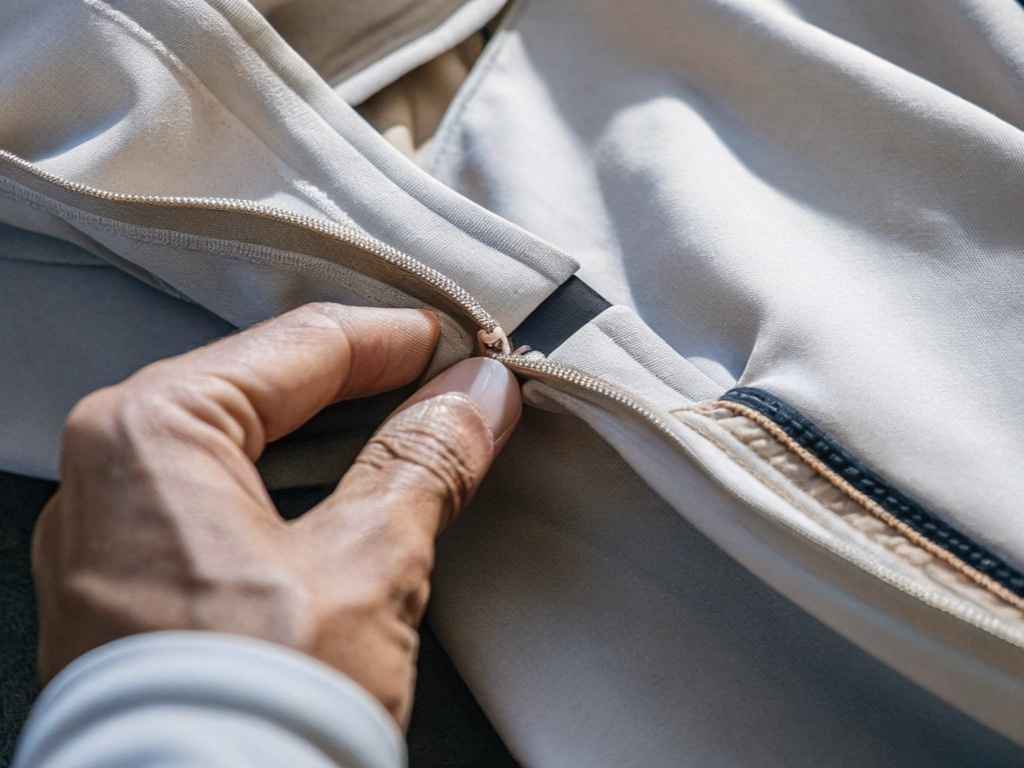
Zippers influence garment structure because they create a fixed vertical line through the front of the hoodie.
That line affects front-panel symmetry, neckline behavior, hem alignment, and how the garment hangs when worn open or closed. If the zipper is poorly installed or paired with unstable fabric, the entire front can ripple, twist, or pull out of balance.
This is why zipper construction should be understood as part of garment engineering rather than as an isolated hardware choice.
In a well-made hoodie, the zipper works with the fabric and seams to maintain shape during movement. When zipper structure is weak, even a comfortable fabric can look unstable and wear less convincingly in daily use.
Durability expectations are higher in zip up hoodies because they are used as repeat daily layers across commuting, indoor–outdoor transitions, and casual wear.
A zipper in this category is expected to tolerate frequent handling without snagging, warping, or failing early. This matters because modern casual clothing is judged not only by initial comfort, but by how well it supports repeated use, practical movement, and long-term reliability.
A hoodie zipper does not need to feel industrial, but it should feel dependable enough for constant operation.
The correct standard is whether the zipper continues to function cleanly after regular wear rather than whether it feels acceptable only when new.

Most zip up hoodies use a small group of zipper types, and each one brings different strengths in flexibility, weight, and visual character.
The right type depends on the garment’s intended use, fabric weight, and level of structure. Understanding zipper categories helps readers judge whether the zipper choice suits the hoodie rather than merely identifying the hardware.

Coil zippers are common in casual hoodies because they are lightweight, flexible, and usually smooth in everyday operation.
Their coiled synthetic construction allows the zipper to bend easily with soft knit garments, which makes them especially suitable for lighter or midweight zip hoodies. This flexibility helps the garment remain comfortable and less mechanically rigid across daily movement.
Coil zippers are often a strong choice when the hoodie is meant to feel easy, casual, and adaptable rather than heavy or highly structured.
The correct judgment is whether the coil zipper feels stable enough for repeated use and well matched to the hoodie’s softness. In many everyday hoodies, coil zippers provide the most balanced combination of function and comfort.
Plastic molded zippers are often used when a hoodie needs slightly more visible structure or a more substantial closure feel.
Their individual molded teeth usually look more defined than coil zippers and can make the front appear more built and intentional. This type often works well in midweight and heavier casual garments where the hoodie body can support a slightly firmer front closure system.
The advantage is a clearer mechanical presence and good durability when well made. The risk is stiffness if the zipper is too heavy for the fabric.
The correct judgment is whether the molded zipper supports the garment’s weight and use case without making the front feel unnecessarily rigid or visually dominant.
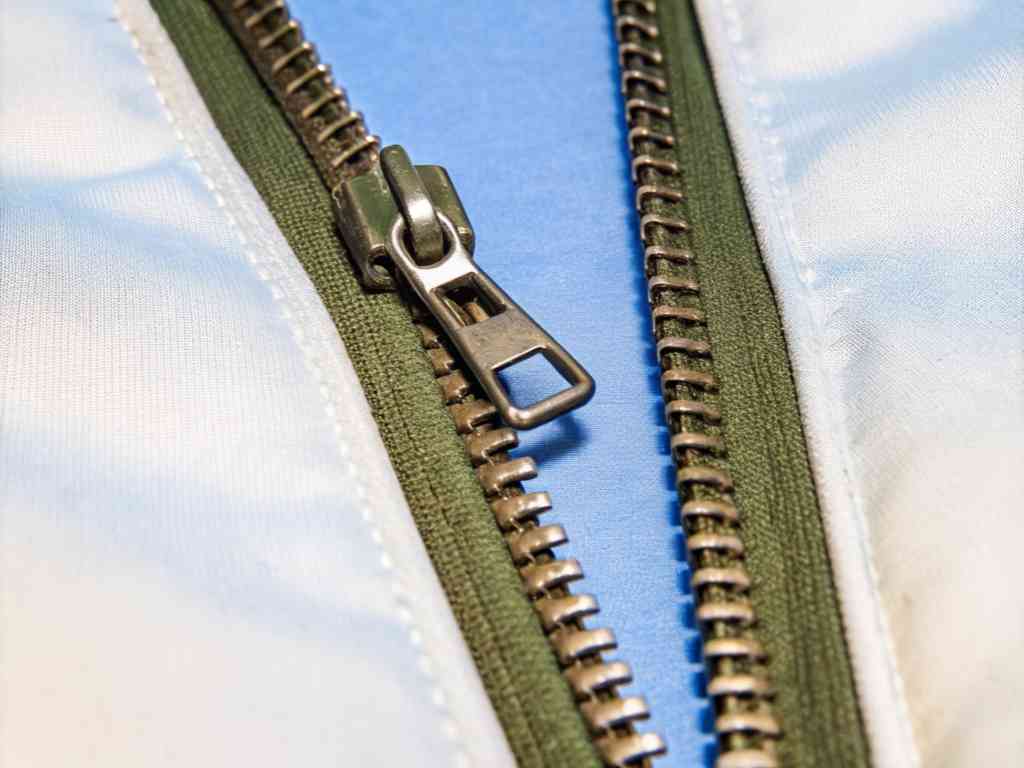

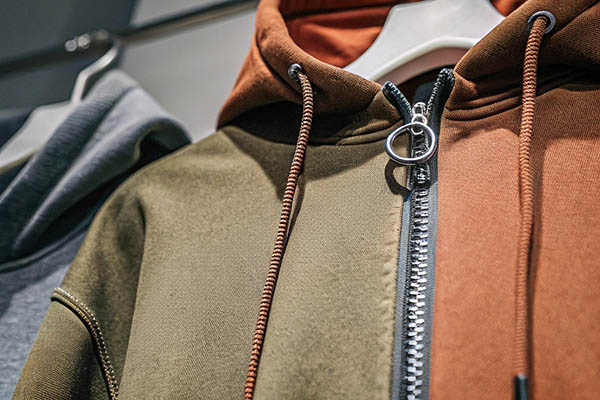
Metal zippers are most common in heavier garments because they add weight, visual definition, and a more substantial closure feel than synthetic alternatives.
In zip up hoodies, they are usually better suited to thicker fabrics or more structured styles where that added hardware weight supports the garment rather than pulling against it.
Metal zippers can increase perceived durability, but they are not automatically better in every hoodie. On lighter or softer fabrics, they may feel too heavy and can distort front balance if the surrounding textile lacks stability.
The correct judgment is whether the garment’s fabric and silhouette can carry the added hardware cleanly. Metal works best when it matches the hoodie’s overall construction strength.
How a zipper is installed matters as much as which zipper is selected.
Even a good zipper can perform poorly if it is attached without proper stabilization and alignment. Strong construction methods help the zipper operate smoothly while protecting the front of the garment from distortion.
Standard zipper seam construction refers to the basic method of integrating the zipper into the center front through sewn seam allowances on both sides.
This method is effective when the seam is even, the front edges are cut accurately, and the zipper is inserted with balanced tension. In a well-made hoodie, standard construction should allow the front to close cleanly, lie flat, and maintain symmetry from neckline to hem.
Problems begin when one side is sewn under more tension than the other or when the fabric is not controlled well during assembly.
The correct judgment is whether the seam construction lets the zipper operate smoothly without puckering the fabric or shifting the front panels out of line.

Reinforced zipper tape attachment improves durability because the zipper tape is one of the most stressed zones in a zip hoodie.
Each time the garment is opened, closed, or pulled during wear, stress moves from the slider and teeth into the tape and then into the surrounding fabric. Reinforcement helps distribute that stress more evenly, reducing the risk of seam failure or tape distortion.
This is especially important in daily garments expected to remain stable through repeated wear and regular use.
A good zipper attachment should feel secure without making the front edge stiff. The correct judgment is whether the tape appears cleanly anchored and structurally supported rather than merely stitched in place.
Stabilized front placket structures help maintain zipper performance because they create a more controlled surface around the closure.
In hoodies, the front placket area may be supported through interfacing, fabric layering, or construction techniques that reduce stretching and keep the zipper line more stable. This matters because zip hoodies rely on a clean center front for both function and visual balance.
Without stabilization, even a decent zipper can ripple against soft fabric and create waves or misalignment.
The correct judgment is whether the front edge stays composed when the hoodie is zipped, unzipped, and worn in motion. A stabilized placket usually indicates better long-term structure and fewer front-panel problems.
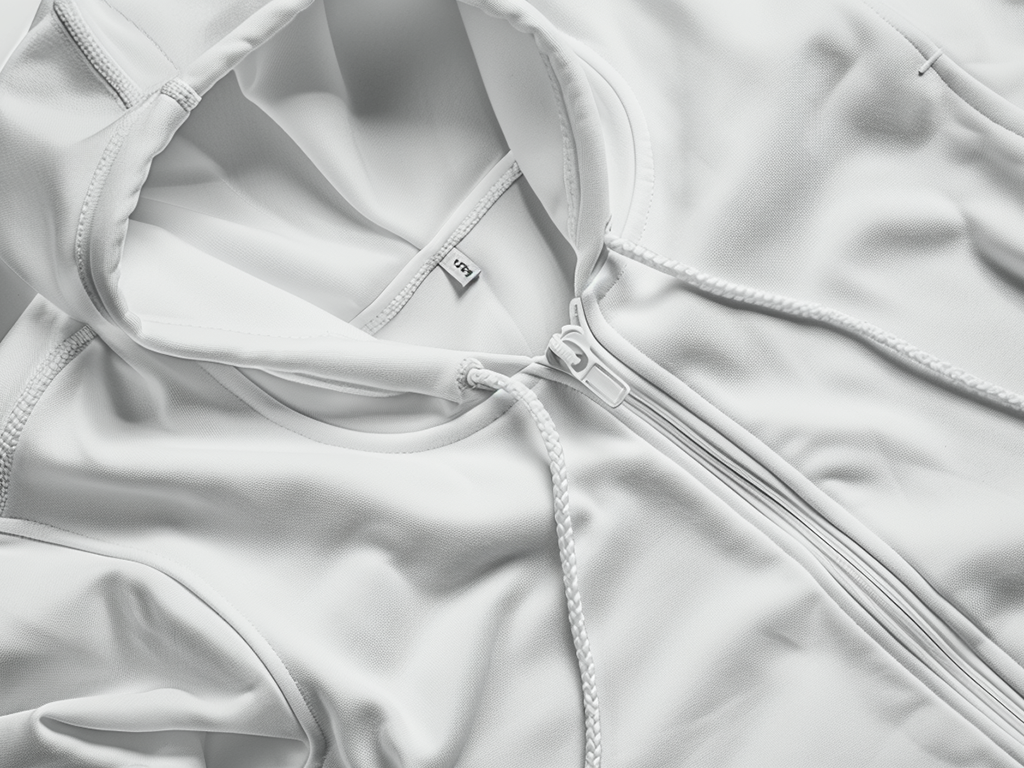
Higher-quality zippers extend garment life because the front closure is used constantly and often becomes the first functional failure point.
When zipper quality is weak, the hoodie may still have usable fabric and acceptable fit, but the garment becomes inconvenient or unusable. Long-term hoodie performance therefore depends partly on whether the zipper can match the wear life of the textile and construction around it.
Smooth zipper operation is one of the clearest signs of quality because daily comfort depends on how easily the garment opens and closes.
A zipper that catches, drags, or resists movement creates friction every time the hoodie is used. Over time, that friction often increases wear on both the zipper and the surrounding fabric.
In everyday casual garments, repeated convenience is part of overall product value.
A strong zipper should move predictably and cleanly without needing careful handling every time. The correct judgment is whether the zipper feels mechanically stable in ordinary use rather than only during an initial inspection.
Smooth operation is not a luxury detail. It is a core marker of usable construction quality.
Resistance to breakage and deformation matters because zipper stress is not limited to opening and closing alone.
The closure also experiences tension from torso movement, sitting, bag straps, layering, and repeated front-panel flex. A higher-quality zipper is more likely to maintain tooth alignment, slider integrity, and tape stability through those everyday pressures.
This does not mean the zipper must be oversized or heavy. It means the hardware should be appropriately engineered for the garment’s use level.
The correct judgment is whether the zipper can handle ordinary wear without bending, spreading, or becoming unreliable. A zipper that deforms early usually shortens the practical lifespan of the entire hoodie.
Long-term reliability is one of the most important reasons zipper quality matters in hoodies.
The garment may be worn several times a week, adjusted throughout the day, and kept in use across multiple seasons. That repeated handling creates cumulative stress, and weak zipper systems often fail gradually before obvious breakage occurs.
Strong daily garments are expected to remain comfortable, stable, and useful through repeated urban wear and movement.
The zipper should support that expectation rather than limiting it. The correct judgment is whether the closure appears built for repeat life. A good zipper continues to feel dependable after routine use, not only during early ownership.
The zipper affects hoodie shape because it establishes the center line of the garment and influences how the front panels hang.
If zipper construction is poor, the hoodie often loses symmetry before any other structural failure becomes obvious. Good zipper engineering helps preserve front balance, even during motion and repeated wear.
Zipper tension affects front-panel alignment because the closure pulls directly against both sides of the hoodie every time it is engaged.
If the zipper is under uneven tension or the surrounding fabric is unstable, one side may pull higher, bow outward, or twist away from the other. This quickly weakens both appearance and function.
A strong hoodie should maintain a visually calm front whether fully zipped, partly open, or worn relaxed.
The correct judgment is whether the zipper allows the front panels to meet evenly without forcing the garment into distortion. Good alignment begins with balanced tension between closure and fabric, not with the zipper hardware alone.
Balanced zipper placement maintains symmetry because the zipper must divide the front body evenly from neckline to hem.
If placement drifts even slightly during assembly, the hoodie can appear off-center, and the imbalance becomes more obvious when the garment is zipped.
Symmetry matters in zip hoodies because the front closure is visually unavoidable. A poorly centered zipper affects not only appearance, but also how the hoodie hangs on the body and how the hem aligns.
The correct judgment is whether both front sides mirror each other in width, seam behavior, and visual fall. Strong zipper placement supports the garment’s overall silhouette rather than interrupting it.
A good zipper should support structural integrity during movement because the hoodie is worn while walking, sitting, reaching, and layering.
These actions create shifting tension across the front, and the zipper has to absorb that movement without destabilizing the garment. In well-engineered casual apparel, structure and mobility should support each other rather than compete.
That principle applies strongly here. A hoodie zipper should not become a rigid fault line in the middle of an otherwise flexible garment.
The correct judgment is whether the garment keeps its front balance as the body moves. When zipper construction is strong, the closure becomes part of the garment’s stability instead of a source of stress.
Zipper waves and front distortion usually come from imbalance between the zipper and the fabric surrounding it.
These problems are rarely caused by zipper type alone. They usually reflect weak stabilization, poor tension control, or inaccurate assembly. Good construction prevents these issues before the hoodie reaches the wearer.
Fabric stabilization along the zipper seam is important because the front edge of a hoodie is naturally vulnerable to stretch during sewing and wear.
If the fabric is left unsupported, the zipper may sit against a surface that shifts too easily, creating ripples or waviness. Stabilization helps the front behave more like a controlled structural zone rather than a loose knit edge.
This is especially important in soft casual fabrics, where comfort and flexibility need to coexist with front closure stability.
The correct judgment is whether the front seam remains visually calm and mechanically consistent. A well-stabilized seam usually indicates better long-term zipper performance and less risk of front distortion.
Balanced tension between zipper and fabric is essential because the two materials do not behave identically.
The zipper tape is more stable and controlled, while hoodie fabric often stretches and recovers more freely. If these two components are joined without balance, the front can ripple or drag.
A good construction method respects that difference and distributes tension so the zipper and garment move together.
The correct judgment is whether the front stays flat when zipped rather than showing stress lines, bubbling, or pulling. Strong tension balance is one of the clearest signs that the zipper was integrated with the fabric thoughtfully rather than simply sewn in mechanically.
Proper alignment during assembly prevents distortion because the zipper must be installed with precise control from top to bottom.
If one side is fed differently, stretched unevenly, or positioned off grain, the front balance is affected immediately. These errors often produce visible twisting or uneven panel height once the garment is finished.
In a well-made hoodie, the zipper should follow a clean center line and meet the neckline and hem with equal accuracy on both sides.
The correct judgment is whether the finished hoodie appears stable before it is even worn. Good alignment during assembly is one of the most basic yet most important protections against zipper distortion.
Poor zipper quality often reveals itself early through movement problems, visible misalignment, or weak attachment.
These signs matter because the zipper is handled constantly and small issues tend to worsen with use. A careful inspection can often predict whether the hoodie will remain dependable.
Rough or inconsistent zipper movement is a common warning sign because it usually indicates friction, poor tooth engagement, or weak slider quality.
A zipper that feels smooth in one section and resistant in another is already showing instability. In everyday hoodies, this matters because ease of use is part of the garment’s purpose.
If the wearer has to guide the zipper carefully each time, long-term convenience is already compromised.
The correct judgment is whether the zipper moves with consistent control from hem to neckline. Strong zipper quality feels predictable. Weak zipper quality often feels uncertain before any obvious breakage appears.
Misaligned zipper teeth signal quality problems because proper tooth engagement is essential for smooth closure and long-term structural stability.
Teeth that do not meet evenly may cause skipping, partial separation, or visible distortion when zipped. In some cases, the problem comes from hardware quality. In others, it comes from poor installation.
Either way, the result is the same: reduced reliability.
The correct judgment is whether the zipper closes in a straight, clean line without gaps or unevenness between the sides. Misalignment is not a small cosmetic issue. It usually indicates that the zipper system is less dependable under repeated use.
Loose or poorly attached zipper tape is a warning sign because the tape is the bridge between the hardware and the garment.
If it is not securely anchored, the zipper cannot remain stable no matter how good the teeth or slider may seem. Poor attachment may appear as shifting tape edges, visible looseness near the seam, or front edges that move too freely when the zipper is handled.
This matters because zipper stress transfers directly through the tape during daily use.
The correct judgment is whether the tape feels integrated into the front structure or merely stitched in place. Secure attachment is one of the clearest signs of real construction quality.
Hoodie zippers usually fail in stages rather than all at once.
Early resistance, growing misalignment, and hardware wear often appear before complete failure. Understanding these patterns helps readers distinguish normal use from signs that the closure system was weak from the start.
Zipper snagging is often one of the first signs of failure because it shows that the slider is no longer moving cleanly through the zipper path.
Snagging may come from tooth misalignment, weak slider tolerance, distorted tape, or surrounding fabric being pulled into the closure. In a good hoodie, occasional care may still be needed, but repeated snagging during ordinary use usually signals a problem.
The correct judgment is whether the zipper can be operated smoothly without needing constant precision.
Once snagging becomes common, both convenience and long-term closure reliability decline quickly. It is often the first visible stage of a more serious zipper problem.
Teeth separation or misalignment is a more advanced failure because it means the zipper is no longer engaging consistently enough to keep the garment closed.
This may appear as sections that reopen after zipping, uneven tooth meeting, or a front line that looks unstable when tension is applied. At this stage, the closure is losing structural function rather than just smoothness.
In everyday garments expected to remain dependable over repeated wear, this kind of failure significantly reduces practical value.
The correct judgment is whether the zipper still holds securely when zipped. If separation appears under normal use, the zipper system is already moving beyond minor wear.
Slider wear or breakage is one of the clearest end-stage zipper problems because the slider is the moving component that drives engagement between both sides of the closure.
Over time, a weak or poorly engineered slider may loosen, deform, or lose the precision needed to keep the zipper working correctly. Once that happens, even intact teeth may stop closing reliably.
In a well-made hoodie, the slider should tolerate repeated daily handling without becoming the first major failure point.
The correct judgment is whether the slider still feels mechanically stable after long use. If it becomes loose, fragile, or visibly worn too early, zipper quality was likely weak from the beginning.
A zip hoodie zipper can be judged more accurately when the review follows a clear order.
Instead of looking only at appearance, it is better to assess operation, alignment, reinforcement, and long-term potential together. This creates a more reliable standard for judging zipper construction quality.
1.Zipper smoothness check
2.Zipper alignment and installation check
3.Structural reinforcement check
4.Long-term durability potential check
We’ll get back to you within 24 hours. Attach your logo/design if needed.
💡 1 . Share your logo, fabric, and quantity for T-shirts, hoodies, and more.
📐 2. We’ll prepare samples for your approval.
🚚 3. Bulk production starts after deposit.
✅ We value your privacy. Your information is 100% safe and confidential.
📦 Need help? Chat with us via WhatsApp anytime!

Note: Your email information will be kept strictly confidential.
Note: Your email information will be kept strictly confidential.
Request a quote, discuss MOQ, lead time, fabrics & QC.
Visit our brand store: Modaknitswear

Retail orders (and dropshipping options) are available on Modaknitswear.