
 Skip to content
 Understanding the Structural Failure Boundaries of Heavyweight Volume
Heavyweight oversized T-shirts create presence through density and volume.
However, when fabric mass and silhouette scale exceed structural balance, the result shifts from intentional structure to visual and physical excess.
This page defines the upper control boundary — where heavyweight oversized stops being structured and starts becoming bulky or rigid.
Heavyweight fabric adds authority to an oversized silhouette.
But increased density does not automatically improve shape, comfort, or control.
There is a saturation point where added structure reduces visual clarity and mobility.
Heavier fabric does not automatically produce better structure.
Fabric weight increases thickness and density, but structure depends on knit integrity, fiber resilience, and tension balance. A 320–350gsm tee with stable knit recovery may hold shape better than a 420gsm fabric with poor elasticity. Heaviness alone can mask weak engineering by appearing substantial while lacking proportional control.
To judge properly, evaluate recovery after stretching the hem or sleeve edge. If the fabric deforms or remains stiff instead of rebounding, density is compensating for weak structure. True structure comes from engineered knit stability, not from mass alone.


Oversized silhouettes magnify the physical impact of heavyweight fabric.
When width, drop shoulder length, and body length all increase simultaneously, fabric mass multiplies across the garment. A dense textile distributed across expanded proportions can visually widen the torso and exaggerate horizontal spread.
To assess balance, observe how the shirt behaves at rest. If the side seams push outward instead of falling vertically, the volume is amplifying fabric mass beyond control.
Oversized scale must be moderated as fabric weight increases. Otherwise, structure becomes expansion.
Architectural silhouettes require restraint to remain clean.
Heavyweight oversized tees are often designed with deliberate shoulder drop and boxy geometry. However, when thickness, width, and stiffness combine excessively, the shirt stops reading as intentional and begins appearing swollen.
Evaluate edge definition at the sleeve opening and hem. If lines appear rounded and inflated instead of clean and planar, structural intent has turned into visual overload. Structure should create clarity.
When density blurs edges, the silhouette has crossed its optimal boundary.

Bulk is not defined by size alone.
It emerges when density and width overpower proportion control.
The tipping point is visual imbalance rather than measurement alone.

Excess horizontal spread is the first visual sign of bulk.
Heavyweight fabric resists vertical drape. When combined with oversized width, it pushes outward across the chest and waist. This creates a square block effect rather than a controlled box silhouette.
Stand naturally and view the shirt from the front. If the garment widens your frame beyond shoulder alignment or eliminates natural torso taper, the expansion has exceeded structural balance. Proper oversized proportion should feel intentional, not expansive.
Sleeve width amplifies perceived mass faster than body width.
In heavyweight fabrics, wide sleeves hold cylindrical shape instead of collapsing softly. When sleeve openings project outward, they visually add bulk to the upper body.
Check the sleeve from the side. If it stands away from the arm without movement or appears tube-like, fabric density is overpowering scale. Oversized sleeves require controlled drape. Without it, the silhouette becomes inflated rather than structured.

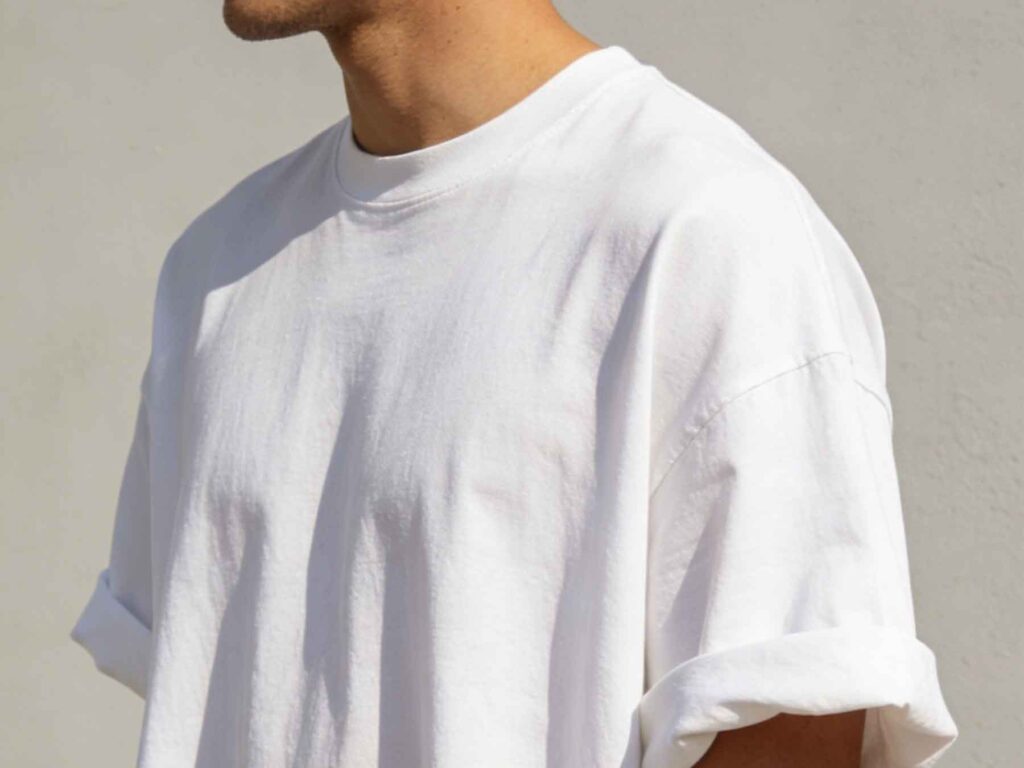
Density should sharpen edges, not blur them.
High-quality heavyweight fabric creates defined hems and shoulder lines. But when knit tension is overly compacted or proportions are too large, edges lose clarity and appear thick or rounded.
Examine the hemline. A controlled heavyweight tee shows a firm yet clean edge. If the hem looks swollen or overly thick relative to torso scale, density is overwhelming proportion. Clarity of outline is the key indicator of structural success.
When Heavyweight Fabric Feels Too Stiff
Structure should support movement, not restrict it.
Rigidity appears when knit density eliminates natural drape and recovery.
The boundary is crossed when support turns into resistance.
Over-compacted knits limit gravitational fall.
Heavyweight fabric should drop vertically with controlled firmness. When knit density is excessive, fabric stands instead of falls, creating stiffness across the torso.
Lift the shirt slightly and release it. If it collapses minimally and holds angular folds, drape is compromised.
Proper heavyweight knits maintain shape while still responding to gravity. If response is delayed or resistant, rigidity is replacing structure.
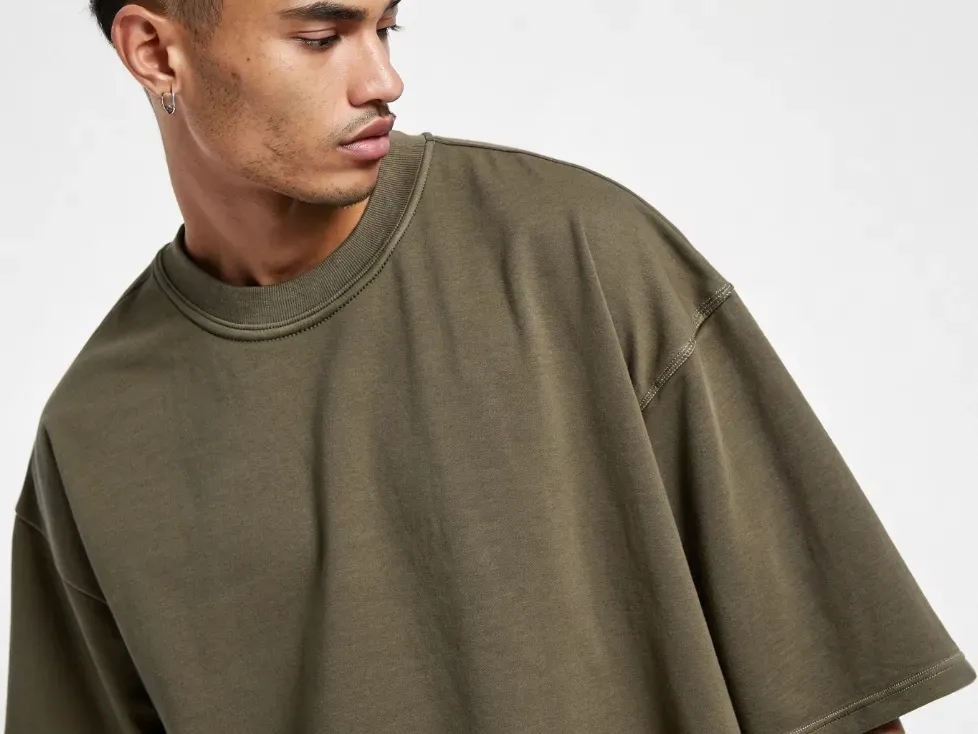

Shoulder rigidity is the most common mobility restriction.
Drop shoulders in heavyweight tees rely on controlled flexibility. If fabric density prevents natural bending at the shoulder seam, arm elevation becomes restricted.
Raise your arms forward. If tension forms across the upper chest or the garment lifts excessively at the hem, shoulder stiffness is too high. Structure should stabilize the shoulder line without locking movement.
Firmness must align with silhouette intention.
A boxy tee requires slight fluidity to maintain visual balance. When firmness overrides flow, the garment appears static and mechanical.
Observe walking movement. If the shirt swings minimally or shifts as a single block rather than flowing subtly, firmness is disrupting silhouette rhythm.
Controlled firmness enhances form. Excess firmness interrupts it.

When Heavyweight Becomes Too Heavy for Daily Wear
Weight influences not only appearance but endurance.
There is a practical ceiling beyond which density reduces wearability.
Comfort must be evaluated over time, not just visually.
Excessive mass accumulates on the shoulder line.
Heavyweight tees concentrate weight at seam intersections. Over several hours, this can create pressure and subtle fatigue.
Wear the shirt for two to three hours. If you notice shoulder awareness or downward pull, weight may exceed daily comfort range. Structure should feel stable, not burdensome.
Improper balance amplifies perceived heaviness.
If fabric density is high but neckline and shoulder reinforcement are insufficient, weight distribution becomes uneven.
Check how the collar sits. If it pulls backward or the shirt drifts rearward during wear, balance is compromised. Proper engineering distributes mass evenly across the frame.
Over-thickness reduces temperature adaptability.
Heavyweight fabric traps more air. Without breathable knit construction, heat retention increases rapidly in indoor environments.
Evaluate after mild activity. If warmth builds quickly and ventilation feels limited, thickness has exceeded practical use conditions. Daily wear requires temperature adaptability, not just structural presence.
How Oversized Range Shrinks as Fabric Weight Increases
As fabric weight rises, margin for exaggeration narrows.
Extreme oversized proportions demand lighter textiles for balance.
Heavyweight fabric reduces tolerance for scale expansion.
Thicker fabrics tolerate less width exaggeration.
Lightweight oversized tees rely on fluid drape to soften volume. Heavyweight fabrics resist collapse, making large proportions appear amplified.
Compare chest width to shoulder width. If width exceeds visual alignment with shoulder structure, tolerance has been exceeded. Thick textiles require tighter proportional control.
Scale becomes unstable when fabric cannot collapse inward.
Extreme drop shoulders combined with dense fabric create outward projection rather than downward fall.
If side seams bow outward persistently, structural control has been lost. Oversized proportion must align with fabric behavior.
Extreme volume relies on drape flexibility.
Lighter fabrics allow gravitational shaping, reducing bulk. Heavyweight textiles resist this collapse, amplifying mass visually.
If dramatic oversized is the goal, evaluate whether fabric weight allows soft contouring. When density prevents contouring, visual weight dominates aesthetic intent.
How to Spot Early Signs of Bulk or Rigidity
Structural imbalance appears before full failure.
Early detection prevents misjudgment of fit and proportion.
Visual and tactile cues reveal boundary crossing.
Persistent outward projection signals rigidity.
Heavyweight fabric should hover slightly but still respond to movement. If it forms fixed outward angles at the waist or sleeves, stiffness is excessive.
Observe in mirror after movement. If the shirt does not settle back naturally, structural balance is compromised.
Angular creases indicate over-compaction.
Healthy heavyweight knits form broad folds. Overly dense fabrics create sharp break lines.
If folds appear stiff and geometric rather than smooth, rigidity has overtaken drape.
Some firmness should soften with wear.
If after multiple wears the fabric remains equally rigid with no adaptive flexibility, knit construction may be fundamentally over-compacted.
Temporary firmness is normal. Permanent stiffness indicates structural limitation.
Where Midweight Offers Better Control
Heavyweight excels in defined structure.
Midweight offers broader proportional flexibility.
Choosing between them depends on volume intent.
Midweight fabric adapts more easily to movement.
It maintains shape while allowing natural collapse. This makes it more forgiving in oversized cuts.
If volume feels excessive in heavyweight, midweight often restores proportional harmony without losing presence.
Heavyweight performs best in controlled boxy shapes.
Moderate oversized silhouettes benefit from its firmness and edge clarity.
When proportion is disciplined, heavyweight enhances architectural precision.
Fabric weight should match silhouette ambition.
Subtle oversized works well in heavyweight. Dramatic oversized works better in lighter knits.
Judge fabric weight relative to intended visual expansion. Balance determines success.
Why Some Heavyweight Tees Never “Break In”
Not all firmness softens over time.
Knit construction determines adaptation potential.
Some rigidity reflects structural limitation, not newness.
Resilient knits recover after tension.
If fabric remains stretched or distorted after pull, resilience is weak despite density.
Test by stretching gently. If recovery is slow or incomplete, adaptation will be limited.
Excessive compaction locks fiber mobility.
When yarns are compressed too tightly, flexibility decreases permanently.
If bending the fabric feels resistant rather than firm, compaction is excessive.
Persistent rigidity signals imbalance.
A well-engineered heavyweight tee softens slightly with wear while maintaining structure.
If stiffness remains unchanged after washing and repeated wear, rigidity may stem from flawed knit design rather than intentional structure.
How to Judge If a Heavyweight Oversized T-Shirt Has Crossed the Line
Bulk and rigidity can be assessed systematically.
Judgment requires evaluating visual expansion, mobility, and comfort together.
No single factor determines failure — the combination does.
1.Visual expansion check
2.Mobility and range-of-motion check
3.Weight comfort check
Side seams should fall vertically, not push outward
Sleeves should collapse slightly, not hold cylindrical shape
Hem edges should look defined, not swollen
Fabric should respond to gravity within seconds after movement
Shoulders should allow full arm raise without tension
No persistent outward projection at waist or sleeves
No sharp, angular creasing from stiffness
No shoulder fatigue after 2–3 hours of wear
Temperature should remain adaptable indoors
Heavyweight oversized T-shirts succeed when density supports proportion.
They fail when mass amplifies width, rigidity limits movement, or weight exceeds daily comfort.
Judge by outline clarity, mobility response, and long-duration wear comfort — not by fabric weight alone.
We’ll get back to you within 24 hours. Attach your logo/design if needed.
💡 1 . Share your logo, fabric, and quantity for T-shirts, hoodies, and more.
📐 2. We’ll prepare samples for your approval.
🚚 3. Bulk production starts after deposit.
✅ We value your privacy. Your information is 100% safe and confidential.
📦 Need help? Chat with us via WhatsApp anytime!

Note: Your email information will be kept strictly confidential.
Note: Your email information will be kept strictly confidential.
Request a quote, discuss MOQ, lead time, fabrics & QC.
Visit our brand store: Modaknitswear

Retail orders (and dropshipping options) are available on Modaknitswear.