
 Skip to content
 Structure, Substance, and Long-Term Value in Modern Urban Wear
Choosing heavyweight over lightweight is not about preferring thicker fabric.
It is a decision about structure, silhouette authority, durability, and long-term performance.
This page explains why heavyweight oversized T-shirts exist as a deliberate upgrade—rather than a simple increase in material mass.
Fabric weight is a structural decision, not a minor comfort variable.
In oversized designs, material density directly shapes geometry and durability.
This section reframes weight as a strategic design element.
Lightweight T-shirts prioritize ease and immediacy.
They feel effortless and adaptable but rely on drape rather than structure. Heavyweight T-shirts, by contrast, commit to maintaining form.
To judge the difference, observe whether the garment creates its own shape or depends on the body to define it. Heavyweight represents structural intention rather than convenience.


Oversized garments expand surface area.
With more fabric, material behavior becomes more visible. Lightweight oversized silhouettes can collapse or cling. Heavyweight oversized silhouettes hold space more confidently.
Oversized design magnifies the impact of weight selection.
Weight determines how a garment occupies space.
Selecting heavyweight is selecting structural stability, edge clarity, and controlled volume.
The decision is architectural rather than tactile.

Heavyweight oversized T-shirts communicate substance visually.
This substance is not decorative—it is structural.
This section explains why.

Heavier fabrics maintain clean edges at sleeves and hems.
These edges create defined horizontal lines that contribute to silhouette clarity.
Visual firmness distinguishes heavyweight from soft, fluid alternatives.
Lightweight fabrics can cling and contour unpredictably.
Heavyweight fabrics separate slightly from the body, minimizing surface distortion.
This separation creates a cleaner visual outline.


Density produces perceived weight.
Visual gravity anchors the garment, preventing it from appearing insubstantial.
Heavyweight oversized silhouettes feel grounded rather than fleeting.
Long-term performance depends on structural resistance.
Heavyweight fabrics generally resist deformation better than lightweight ones.
This section connects material weight to reliability.
Higher-density fabrics resist stretching and thinning.
Under oversized stress, lightweight fabrics deform more easily.
Heavyweight designs maintain proportion longer when properly engineered.
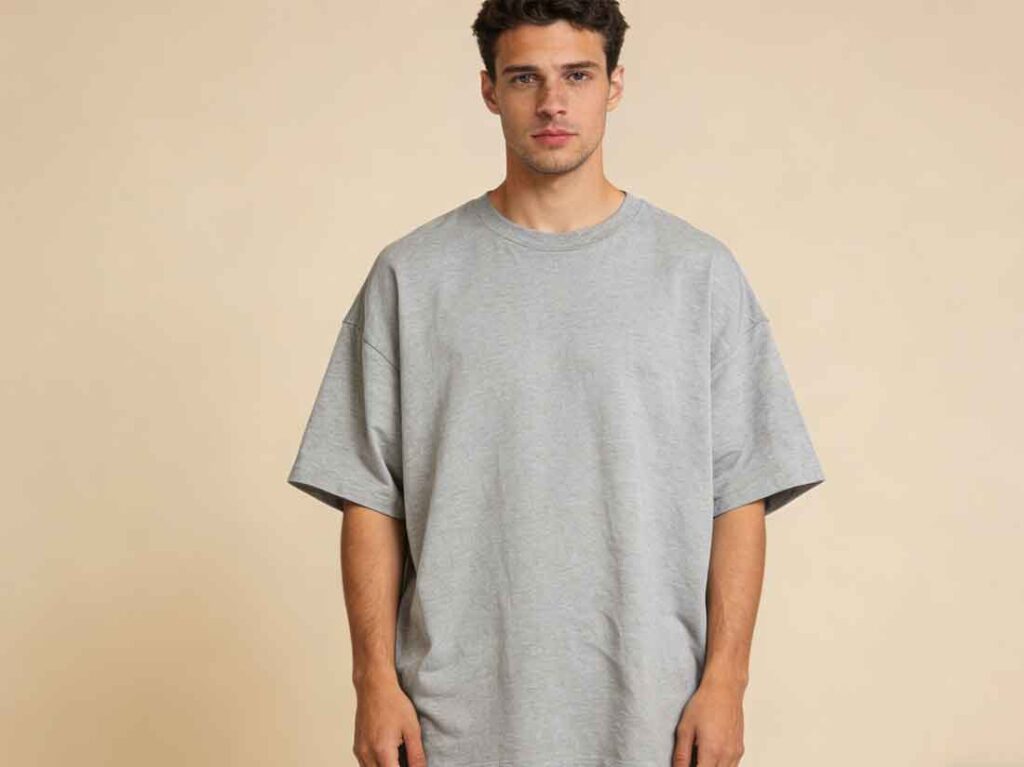

Oversized silhouettes place additional stress on shoulders and neckline.
Heavyweight fabric, especially when dense, supports seam stability and reduces migration over time.
Lightweight T-shirts often age through distortion and thinning.
Heavyweight T-shirts age through gradual softening while retaining structure.
The difference appears in silhouette retention rather than surface wear.

Perceived quality often correlates with material substance.
This perception has structural and psychological foundations.
This section explains the mechanism.
Heavier fabrics feel substantial in hand.
Tactile density signals material investment and durability.
Perception of value increases when fabric resists collapse.
Firmness indicates engineering discipline.
When edges remain defined and seams hold alignment, the garment communicates precision.
Structural clarity often reads as craftsmanship.
Heavyweight fabric requires deliberate pattern and seam engineering.
Improper construction becomes obvious in thick materials.
Thus, well-executed heavyweight garments signal construction competence.
Comfort is not synonymous with lightness.
Stability can reduce micro-adjustments and fabric cling.
This section challenges the assumption that lighter always equals more comfortable.
Stable fabric stays in place.
Lightweight tees may twist or cling, requiring subtle repositioning throughout the day.
Heavyweight stability can reduce this friction.
Oversized silhouettes create airflow space.
This ventilation can offset additional fabric density, especially in moderate climates.
Extremely light fabrics may feel insubstantial.
Cling, transparency, and lack of structure can reduce confidence and perceived comfort.
Comfort includes psychological assurance as well as temperature control.
Material preference reflects environment and aesthetic logic.
Heavyweight oversized T-shirts align with certain urban priorities.
This section explains why.
Urban wardrobes often emphasize form and proportion.
Heavyweight fabric supports geometric silhouettes associated with architectural street aesthetics.
Minimal systems rely on material quality rather than embellishment.
Heavyweight oversized T-shirts provide presence without additional layering.
In many urban contexts, structure communicates stability and intentionality.
Heavyweight silhouettes reinforce these cues through proportion and density.
Neither category is universally superior.
Each carries advantages and compromises.
This section clarifies trade-offs.
Heavyweight provides structural clarity.
Lightweight offers fluid drape and softness.
Heavyweight resists deformation longer.
Lightweight reduces physical mass and heat retention.
Heavyweight communicates visual authority.
Lightweight prioritizes immediate ease and adaptability.
Heavyweight is not universally appropriate.
Certain conditions favor lighter materials.
This section defines boundaries.
In extreme heat, lighter fabrics may regulate temperature more effectively.
Climate should guide material choice.
High-intensity movement favors lighter, more flexible materials.
Athletic contexts may require reduced mass.
If aesthetic preference leans toward softness and movement, lightweight remains appropriate.
Material choice should align with intended expression.
Value decisions should be based on criteria, not impulse.
This framework provides repeatable checks.
Use it before upgrading to heavyweight.
1.Structure priority check
2.Longevity expectation check
3.Visual presence preference check
We’ll get back to you within 24 hours. Attach your logo/design if needed.
💡 1 . Share your logo, fabric, and quantity for T-shirts, hoodies, and more.
📐 2. We’ll prepare samples for your approval.
🚚 3. Bulk production starts after deposit.
✅ We value your privacy. Your information is 100% safe and confidential.
📦 Need help? Chat with us via WhatsApp anytime!
Note: Your email information will be kept strictly confidential.
Note: Your email information will be kept strictly confidential.
Request a quote, discuss MOQ, lead time, fabrics & QC.
Visit our brand store: Modaknitswear
Retail orders (and dropshipping options) are available on Modaknitswear.