
 Skip to content
 Three Loose Structures, Three Completely Different Design Logics
Drop shoulder, oversized, and boxy T-shirts are often grouped together because they feel relaxed.
Structurally, they are built on three different pattern logics that affect silhouette, posture, and daily usability in distinct ways.
This page clarifies how each cut actually works, so choices are based on structure, not labels.
These three cuts are frequently misidentified because they share surface-level looseness.
However, looseness is an outcome, not a construction method.
This section resets the mental model before structural comparison begins.
All three silhouettes increase wearing ease, but they achieve it through different mechanisms.
Oversized increases ease by scaling the entire garment. Boxy increases ease by widening the body while controlling length. Drop shoulder increases ease by relocating the shoulder seam while keeping the body proportion relatively stable.
To judge correctly, identify where the extra space comes from: overall scale, horizontal width, or shoulder displacement. Ease without understanding its source leads to incorrect expectations in fit and wear.


“Loose” describes feeling, not construction.
Two garments can feel equally loose while behaving completely differently once worn. Structural categories must be defined by pattern logic, not sensation.
To judge structure, ignore size labels and focus on seam placement, garment length, and width ratios. If these elements differ, the cut is not the same, even if the comfort level appears similar.
Misunderstanding structure leads to daily friction.
When wearers expect stability from oversized cuts or neutrality from drop shoulders, outfits fail quietly. The shirt may twist, collapse, or visually overwhelm the rest of the outfit.
The cost is not dramatic failure, but repeated dissatisfaction. Accurate structural understanding prevents this accumulation of small errors.

Before discussing style or use, structure must be defined at the pattern level.
Each cut is created by changing a different construction variable.
This section establishes those differences clearly.

Drop shoulder construction shifts the shoulder seam downward along the arm.
The body width and length often remain close to standard proportions. The key change is seam placement, not scale.
To identify a true drop shoulder, look for a visible seam sitting below the natural shoulder point while the torso width remains controlled. This displacement softens the upper silhouette without fully enlarging the garment.
Oversized construction enlarges the entire garment proportionally.
Width, length, sleeve volume, and sometimes neckline are all increased.
To identify oversized cuts, check whether the garment looks large everywhere, not just at the shoulders.
Oversized is about scale dominance rather than targeted adjustment.

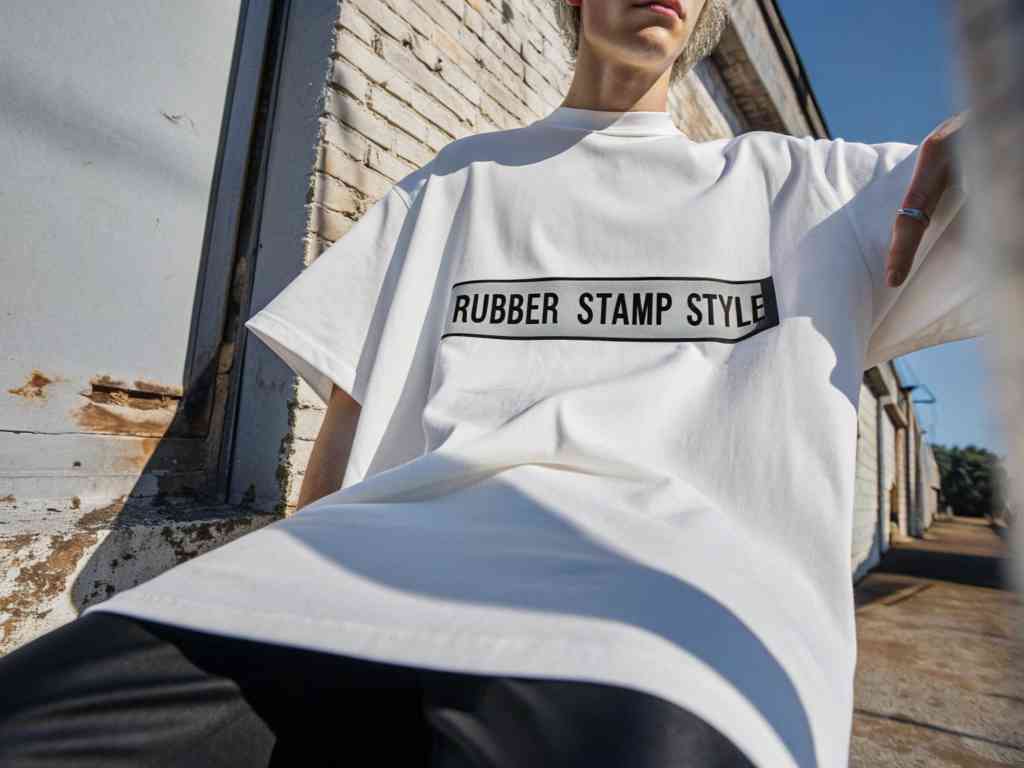
Boxy construction prioritizes width while limiting vertical expansion.
The body is cut wide and straight, with a relatively shorter or standard length.
To identify boxy cuts, observe the straight side seams and squared silhouette. The garment feels substantial but not oversized, with volume concentrated horizontally.
The shoulder line governs posture, drape, and perceived intent.
Each cut treats the shoulder differently.
This section explains why that difference matters.
Regular fits follow the natural shoulder line.
Drop shoulder cuts lower that line. Boxy cuts often square it by widening the body without dropping the seam significantly.
To judge, locate where the sleeve attaches. The seam position tells you which structural logic is at work.
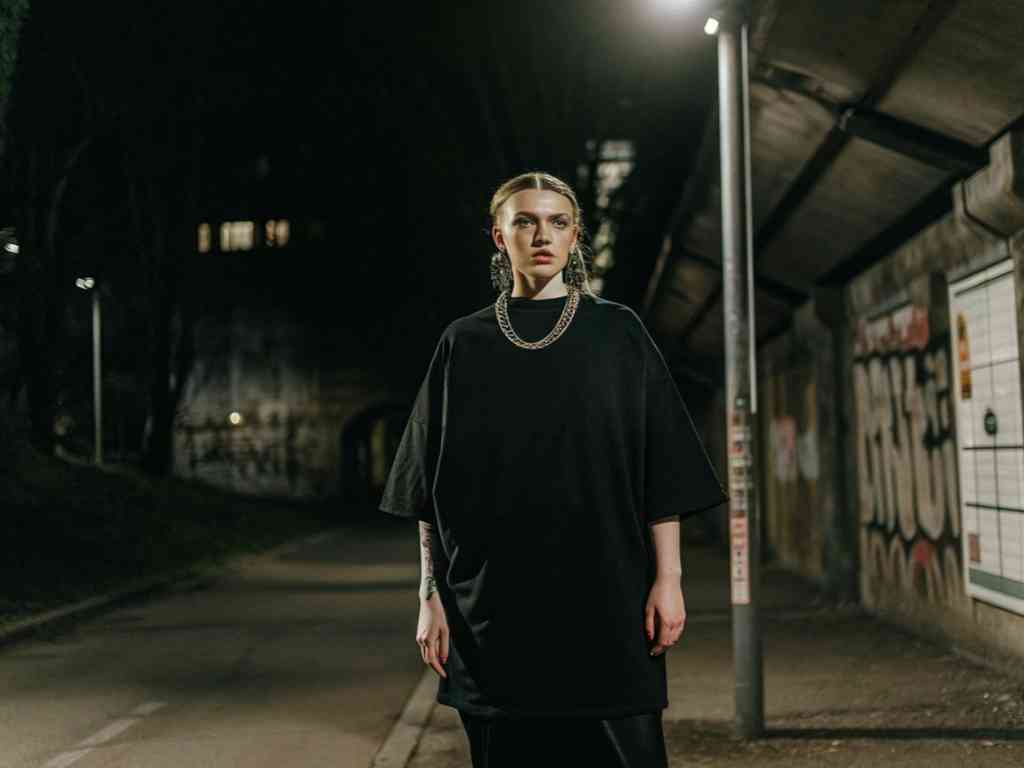

Shoulder placement influences how the body holds the garment.
Dropped seams reduce visual tension and soften posture. Squared shoulders increase presence. Oversized shoulders obscure posture entirely.
To evaluate effect, notice whether the shirt encourages upright clarity, relaxed neutrality, or deliberate exaggeration.
Drop shoulder does not remove structure; it redistributes it.
Because the body proportions remain relatively intact, clarity is preserved even as the shoulder relaxes.
This is why drop shoulder often feels intentional rather than sloppy when correctly built.

Where volume is placed determines how the shirt interacts with the rest of the outfit.
Loose is not equal to evenly loose.
This section clarifies volume logic.
Oversized cuts distribute volume across the entire garment.
This creates a dominant silhouette that competes with other layers.
Judge oversized volume by checking whether the shirt overwhelms jackets, pants, or accessories visually.
Boxy cuts emphasize width over height.
The visual mass sits across the chest and torso, creating an architectural feel.
To judge, note whether the shirt feels grounded and stable rather than flowing.
Drop shoulder concentrates ease at the top.
The torso remains readable, while the shoulders relax.
This creates softness without losing proportion, making it easier to integrate daily.
Comfort and structure exist on a spectrum.
Each cut balances them differently.
This section explains why that balance matters.
Oversized prioritizes comfort above control.
Without careful styling, the garment can lose shape over time.
Judge suitability by asking whether the outfit can support such dominance.
Boxy cuts prioritize shape retention.
Ease exists, but movement feels more contained.
This works well when visual clarity is required.
Drop shoulder balances comfort and control.
Ease is introduced where tension is highest, without expanding everything else.
This balance explains its repeatability in daily wear.
Structure communicates intent before fabric or color.
Each cut speaks a different visual language.
This section connects construction to expression.
Oversized cuts communicate deliberate exaggeration.
They signal presence and confidence through scale.
This is expressive, not neutral.
Boxy cuts communicate control and restraint.
They feel deliberate, solid, and graphic.
This appeals to structured minimalism.
Drop shoulder communicates ease without excess.
It suggests modernity through softness rather than scale.
This places it between expression and neutrality.
Daily wear demands repeatability.
Not all loose cuts perform equally here.
This section explains why.
Oversized works best when the outfit is the point.
It is less forgiving in repeated, mixed-context wear.
Use requires intention.
Boxy fits support clarity.
They work well when the outfit system is stable and deliberate.
Less flexible, but reliable.
Drop shoulder adapts easily.
Its localized ease supports comfort without demanding attention.
This makes it suitable for frequent use.
Language confusion leads to buying mistakes.
These three cuts are often mislabeled.
This section prevents that.
Lowered comfort does not equal dropped seams.
If the seam is intact, it is not drop shoulder.
Always verify seam placement.
Boxy is wide, not large.
Mistaking width for scale leads to fit errors.
Check length and sleeve volume.
Wrong labels distort judgment.
Expecting neutrality from oversized or exaggeration from boxy creates mismatch.
Structural clarity prevents this cycle.
Choosing correctly requires neutral criteria.
This framework avoids preference bias.
Use it consistently.
1.Desired silhouette clarity check
2.Daily wear vs statement intent check
3.Comfort vs structure priority check
I understand where the extra volume comes from
The shoulder seam position matches my expectation
The silhouette aligns with my outfit goal
The cut supports daily repeatability or intentional statement
Visual weight is controlled, not accidental
Comfort and structure are balanced appropriately
“Loose” is not a structural category
Oversized scales everything
Boxy widens the body with control
Drop shoulder shifts the seam, not the size
Shoulder construction defines silhouette behavior
Correct choice depends on structure, not trend
We’ll get back to you within 24 hours. Attach your logo/design if needed.
💡 1 . Share your logo, fabric, and quantity for T-shirts, hoodies, and more.
📐 2. We’ll prepare samples for your approval.
🚚 3. Bulk production starts after deposit.
✅ We value your privacy. Your information is 100% safe and confidential.
📦 Need help? Chat with us via WhatsApp anytime!

Note: Your email information will be kept strictly confidential.
Note: Your email information will be kept strictly confidential.
Request a quote, discuss MOQ, lead time, fabrics & QC.
Visit our brand store: Modaknitswear
Retail orders (and dropshipping options) are available on Modaknitswear.