Silhouette and Drape Created by Oversized Cotton T-Shirts
How Cotton Behaves Visually in Oversized Structures
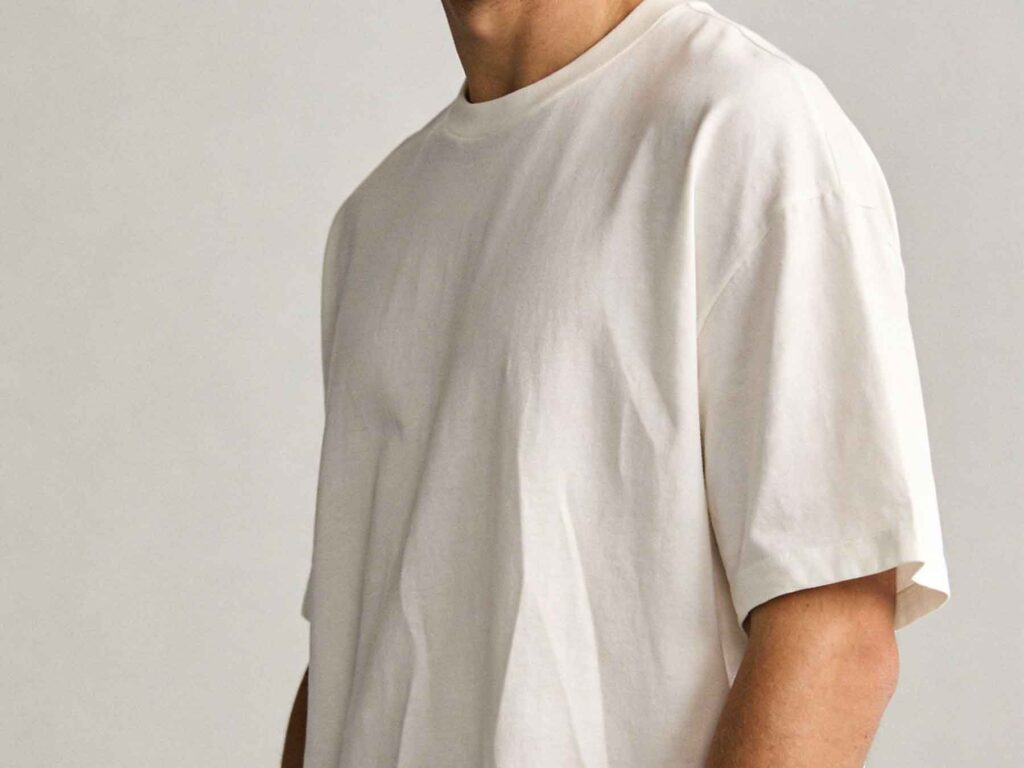
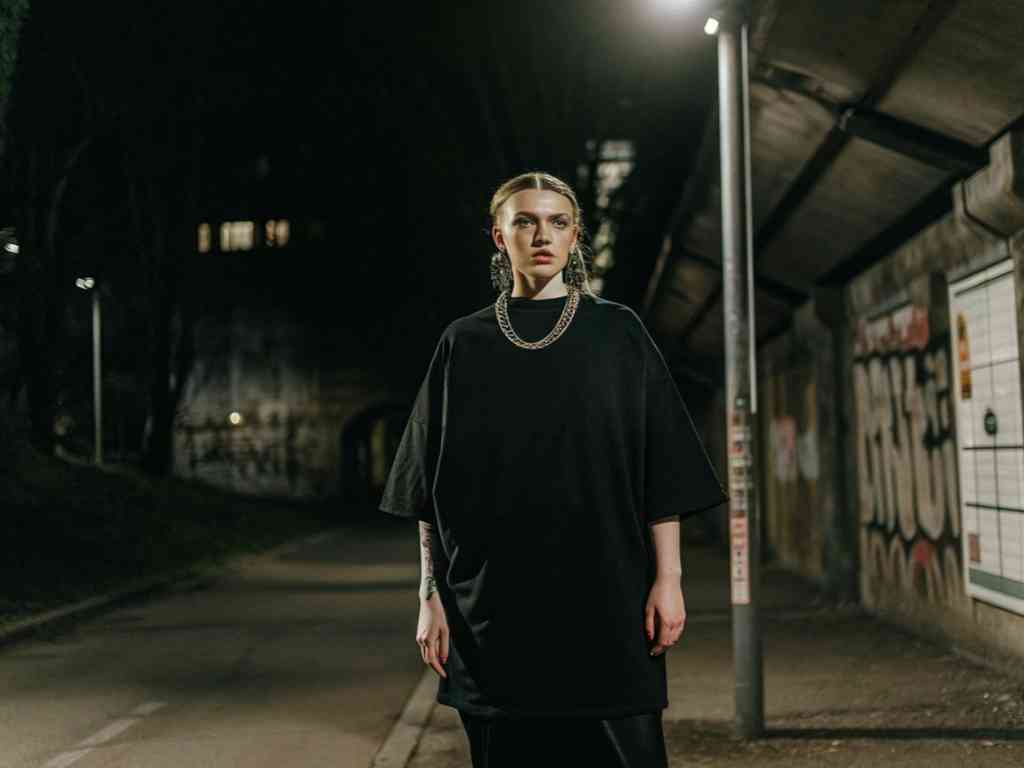
Oversized cotton T-shirts are defined as much by how they fall and outline the body as by how they are cut. Cotton’s softness, weight response, and gravity-driven behavior shape silhouette outcomes more strongly than in most other materials.
This page serves as the visual-form authority, explaining how cotton translates oversized volume into specific silhouettes, drape patterns, and outlines in modern casual wear.
What Do “Silhouette” and “Drape” Mean in Oversized Cotton T-Shirts?
Before evaluating outcomes, visual terms must be aligned.
This section establishes shared visual language.
Silhouette as outline, not fit
Silhouette refers to the visible outer outline of the garment, not how it fits the body.
A T-shirt can fit loosely yet produce a clean silhouette, or fit similarly loose and appear visually unstable. Silhouette is what the eye traces from a distance, independent of comfort or size labeling.
In oversized cotton, silhouette becomes the primary indicator of success.
Drape as gravity-driven fabric behavior
Drape describes how fabric responds to gravity once worn.
It is not softness alone, but the way fabric bends, hangs, and settles under its own weight. Cotton’s drape is continuous and responsive, meaning it reacts immediately to volume and movement.
In oversized structures, drape defines the final form more than the pattern alone.
Why cotton’s drape defines the final oversized shape
In oversized cotton T-shirts, drape determines the final silhouette more than cut precision.
As volume increases, cotton follows gravity rather than resisting it. The garment’s outline is therefore shaped by how the fabric falls between structural points.
This makes cotton drape the decisive visual factor.
Cotton has a predictable but demanding relationship with gravity.
Understanding this behavior is key to judging oversized cotton silhouettes.
Cotton’s gravity response vs synthetic rigidity
Cotton responds directly to gravity, while synthetics often resist it.
Synthetic fibers tend to hold imposed shapes longer, whereas cotton bends and settles. In oversized garments, this means cotton reveals true volume behavior instead of maintaining artificial structure.
The silhouette becomes more honest—and more vulnerable.
Soft fall vs uncontrolled collapse
A soft fall becomes collapse when cotton lacks directional control.
Controlled fall produces smooth, readable lines. Uncontrolled collapse creates pooling, dragging, or inward folding.
The visual difference lies in whether the fabric settles with intention or simply yields.
Oversized patterns remove body tension, amplifying cotton’s natural behavior.
With fewer contact points anchoring the fabric, gravity acts over larger spans. Cotton’s inclination to bend and spread becomes more visible.
This is why oversized cotton silhouettes are harder to execute than fitted ones.
How Fabric Weight Changes the Look of Oversized Cotton T-Shirts
Fabric weight does not just affect feel—it reshapes visual character.
This section explains how.
Lightweight cotton: fluid outlines and risk of flattening
Lightweight cotton creates fluid outlines but risks silhouette flattening.
The fabric flows easily, which can produce elegant vertical movement. However, without enough mass, outlines lose definition and appear thin or collapsed.
In oversized cuts, this often results in visual fragility.
Midweight cotton: balanced fall and clearer shape
Midweight cotton provides the most balanced silhouette behavior.
It falls with gravity while retaining enough presence to define edges and planes. This balance allows oversized forms to read clearly without stiffness.
As a result, midweight cotton produces the most stable oversized silhouettes.
Heavyweight cotton: sharper edges and visual presence
Heavyweight cotton produces sharper edges and stronger visual presence.
The fabric resists collapse, creating clearer boundaries and more graphic silhouettes. However, excessive weight can reduce fluidity and exaggerate bulk.
The silhouette becomes more architectural.
The Core Visual Forms Oversized Cotton T-Shirts Produce
Oversized cotton repeatedly resolves into a small set of visual forms.
Naming them clarifies judgment.
Column silhouette: vertical flow and calm outline
A column silhouette emphasizes vertical continuity and visual calm.
Cotton drapes downward with minimal interruption, guiding the eye along a relaxed vertical line. This silhouette feels modern and understated when proportions are controlled.
It relies on balanced length and restrained width.
Box silhouette: width emphasis and horizontal weight
A box silhouette emphasizes horizontal expansion and grounded presence.
Cotton spreads outward, creating a broad outline with clear lateral edges. When controlled, this feels deliberate; when uncontrolled, it becomes heavy.
Fabric weight and sleeve volume strongly influence this outcome.
Collapsed silhouette: when cotton fails to hold form
A collapsed silhouette appears when cotton cannot sustain volume.
The outline loses clarity as fabric caves inward or pools at stress points.
This silhouette signals failure at the material or proportion level.
Which Oversized Cotton T-Shirt Lengths Are Most Flattering
Length is the most immediate way to adjust cotton silhouettes.
This section isolates its effect.
Hip-length vs mid-hip vs extended length
Each length anchors the silhouette differently.
Hip-length emphasizes width, mid-hip balances width and height, and extended length increases vertical flow while risking drag.
Length selection directly steers visual outcome.
How length interacts with cotton drape
Cotton drape responds strongly to added length.
Longer lengths increase gravitational pull, which can elongate or distort the silhouette.
Length must be matched to fabric weight and volume.
When length amplifies or corrects visual imbalance
Length can either stabilize or exaggerate cotton’s weaknesses.
Used carefully, it counterbalances width.
Used carelessly, it compounds collapse.
Length is a corrective tool, not a neutral variable.
How Oversized Cotton T-Shirts Interact With Different Body Types
Cotton oversized silhouettes change depending on the body beneath them.
This section explains why—visually only.
Broad vs narrow upper frames
Upper-frame width influences how cotton volume spreads.
Broader frames support horizontal drape more naturally, while narrower frames require tighter control to avoid collapse.
The silhouette adapts to its base.
Long vs short torsos
Torso length shifts where cotton breaks visually.
On longer torsos, drape appears more continuous. On shorter torsos, the same drape can compress the outline.
Length perception changes silhouette reading.
Why cotton highlights proportion differences more clearly
Cotton reveals proportion differences because it follows gravity faithfully.
There is little structural disguise.
As a result, cotton oversized silhouettes vary more visibly across bodies.
Where Cotton Oversized Looks Relaxed — and Where It Looks Uncontrolled
The judgment line between relaxed and messy is subtle.
This section defines it.
Clean fall lines vs broken outlines
Clean fall lines indicate controlled drape; broken outlines signal loss of control.
Breaks appear as kinks, folds, or uneven edges.
Visual continuity is the key indicator.
Visual continuity from shoulder to hem
Successful oversized cotton maintains continuity from top to bottom.
The eye should travel smoothly along the outline.
Interruptions suggest imbalance or collapse.
The thin line between softness and visual blur
Softness becomes visual blur when edges lose definition.
At that point, the silhouette dissolves rather than relaxes.
Modern oversized cotton stops before this threshold.
Modern vs Outdated Cotton Silhouettes
What Makes an Oversized Cotton Silhouette Feel Contemporary
Visual standards evolve, even for basic garments.
This section defines the current line.
Calm volume vs nostalgic bagginess
Modern silhouettes favor calm volume over nostalgic bagginess.
They avoid excess pooling and exaggerated looseness.
Restraint replaces exaggeration.
Even drape vs exaggerated pooling
Even drape feels contemporary; pooling feels dated.
Pooling suggests lack of control and reliance on past aesthetics.
Modern cotton oversized prioritizes smooth settlement.
Why modern silhouettes favor restraint
Restraint supports longevity and repeat wear.
Visually calm silhouettes integrate better into daily life.
This restraint defines modernity.
Why Oversized Cotton T-Shirts Often Look Wrong
Failures repeat predictable visual patterns.
Identifying them reduces error.
1.Excess drape without vertical control
Drape without vertical anchoring causes downward collapse.