
 Skip to content
 Why Fabric Matters More Than Size in Modern Oversized Design
Oversized T-shirts succeed or fail primarily because of fabric, not cut alone.
As volume increases, fabric behavior becomes more visible, more stressed, and less forgiving.
This page serves as the fabric authority for oversized T-shirts, explaining why oversized designs demand higher structural and material standards than regular fits.
Oversized is often assumed to be more relaxed and therefore easier on materials.
In reality, oversized silhouettes place greater demands on fabric performance.
Oversized silhouettes magnify every fabric weakness that might remain hidden in regular fits.
When fabric volume increases, issues like poor recovery, uneven drape, or surface fuzz become immediately visible. In a regular T-shirt, body contact and tension can mask these flaws. In oversized designs, the fabric must support itself.
The looser the cut, the more the fabric is exposed.
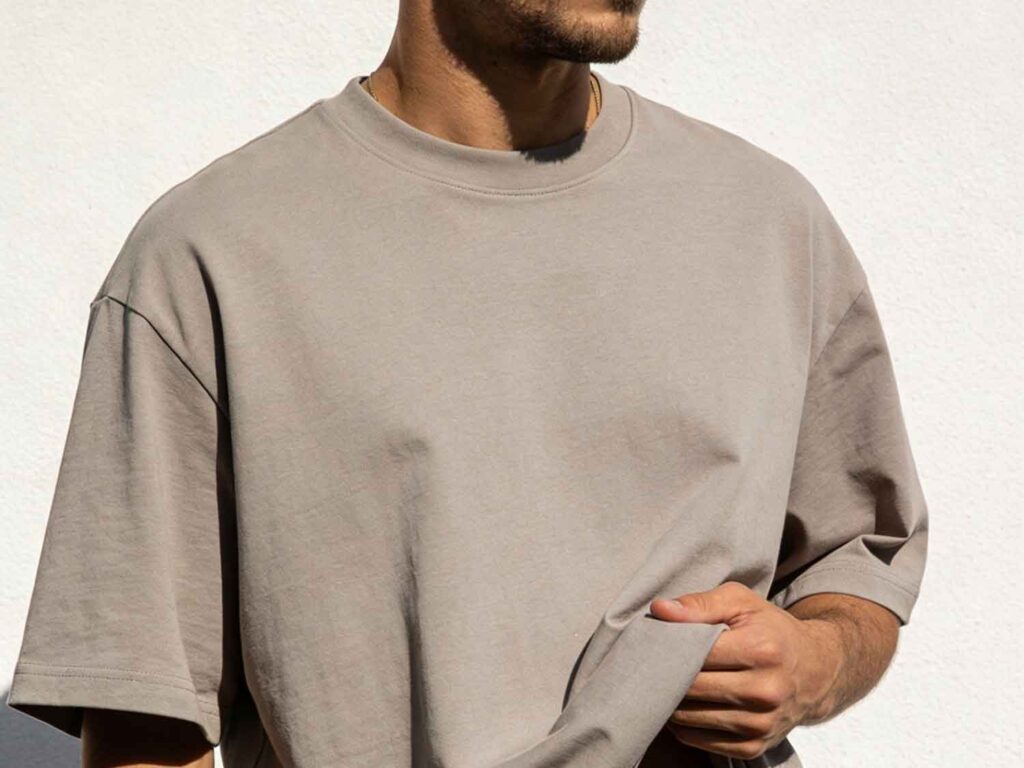
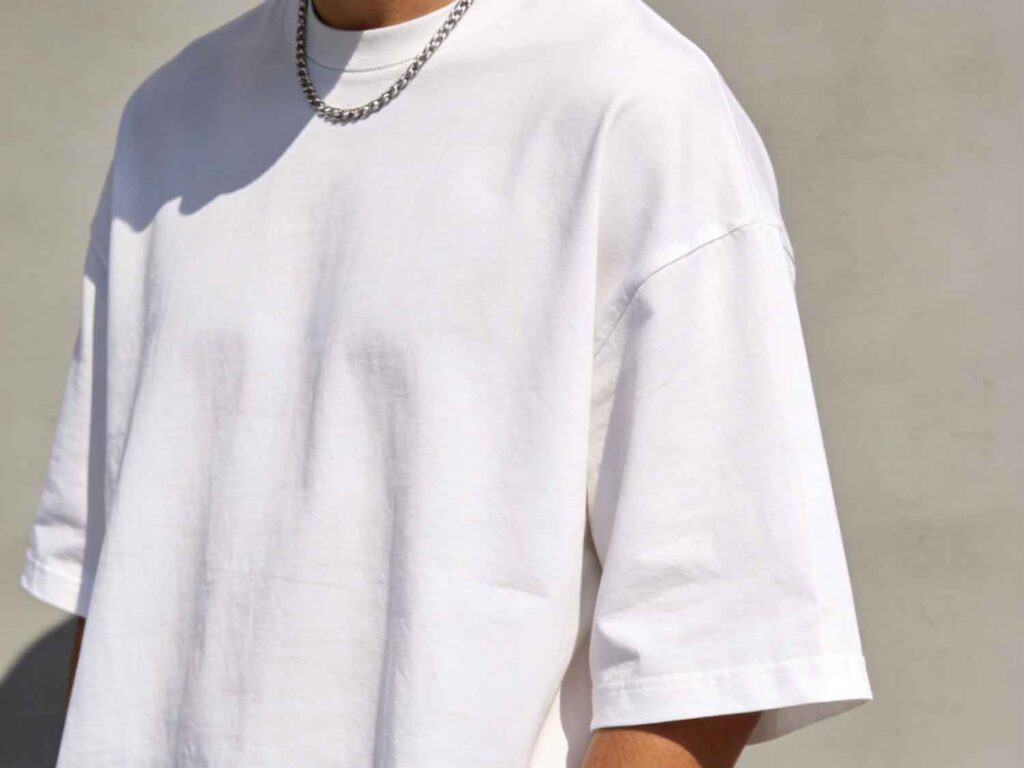
Oversized T-shirts function as a stress test for fabric stability and consistency.
Without the body providing shape, the fabric must maintain structure across larger spans. Any instability in knit density, yarn tension, or finishing becomes obvious in wear and movement.
Oversized reveals what fabric is actually capable of.
Simply increasing size without upgrading fabric leads to faster collapse.
Fabrics designed for regular fits often rely on body tension to appear neat. When scaled up, these fabrics lose support and begin to sag, stretch, or distort.
Oversized requires fabrics that can carry volume independently.
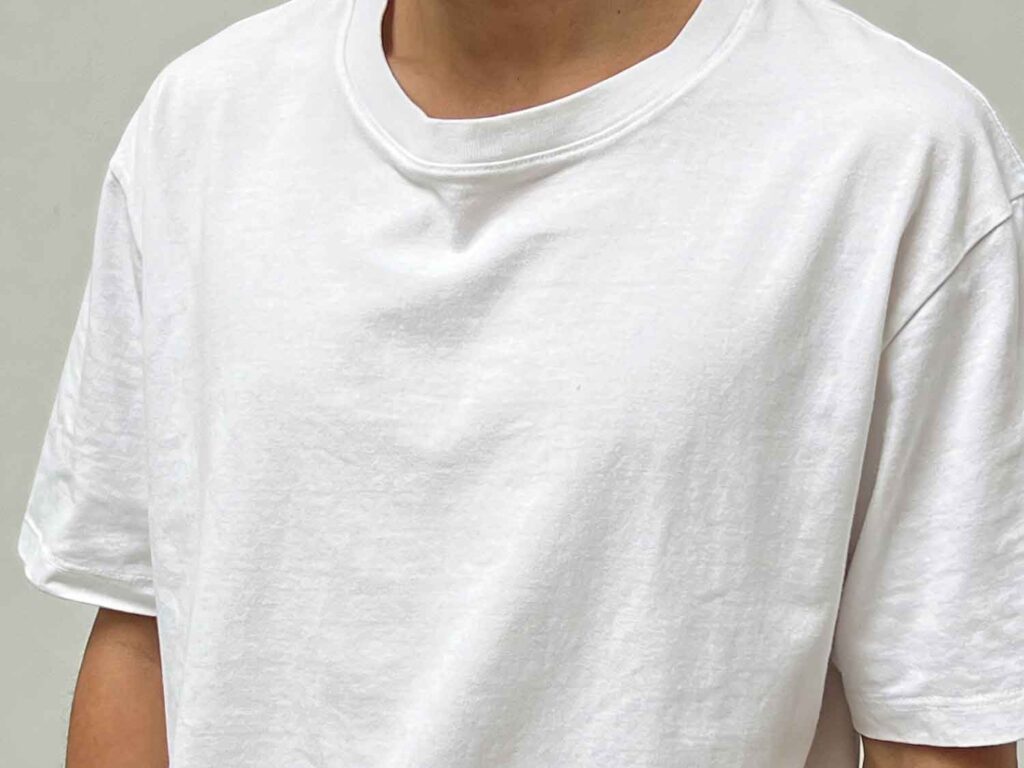
Fabric weight is the first structural variable that affects oversized performance.
However, weight alone is not a guarantee of success.
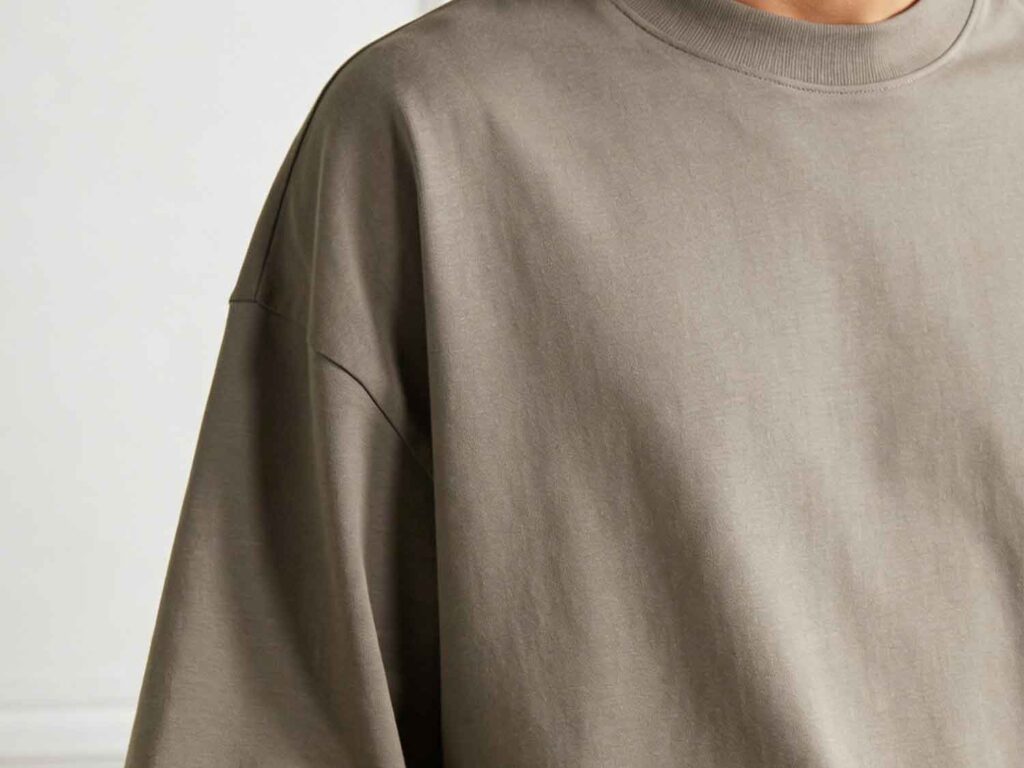
Lightweight fabrics offer softness but struggle to hold oversized silhouettes.
In oversized cuts, lightweight knits tend to collapse inward, cling unpredictably, or lose clear lines. While comfortable, they often lack the backbone needed to support larger shapes.
This makes them high-risk for oversized designs.
Midweight fabrics provide the most reliable balance for oversized T-shirts.
They offer enough mass to maintain shape while remaining flexible and breathable. In modern urban wear, midweight fabrics often deliver the best combination of structure, comfort, and longevity.
This range is where oversized most consistently succeeds.
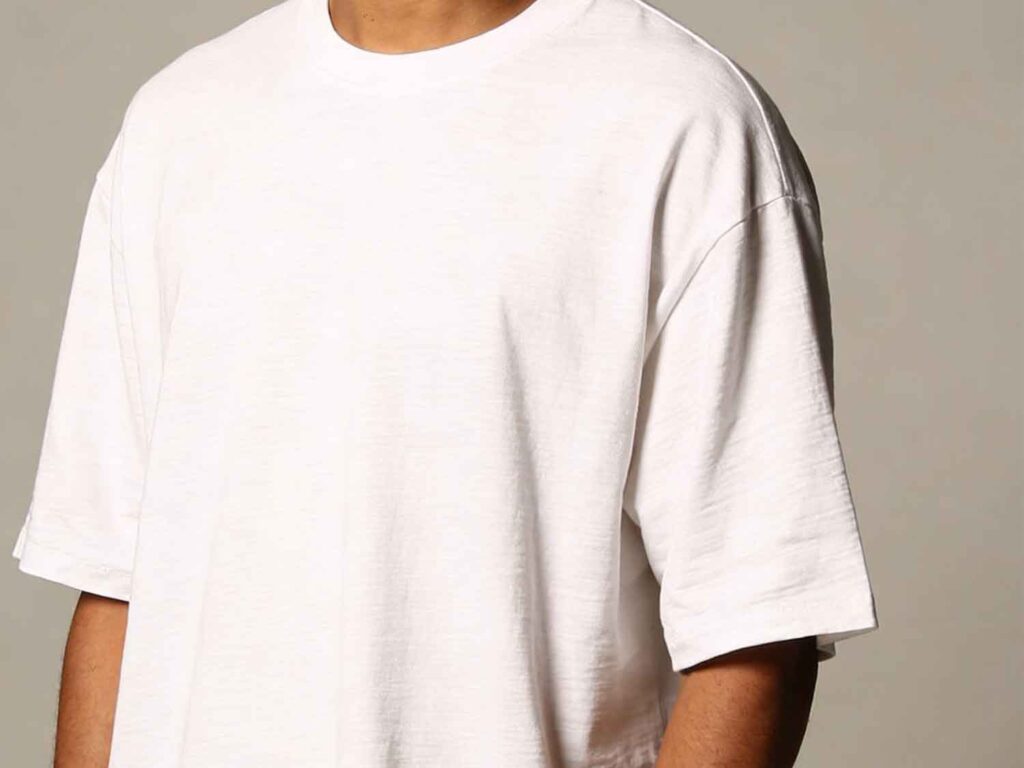
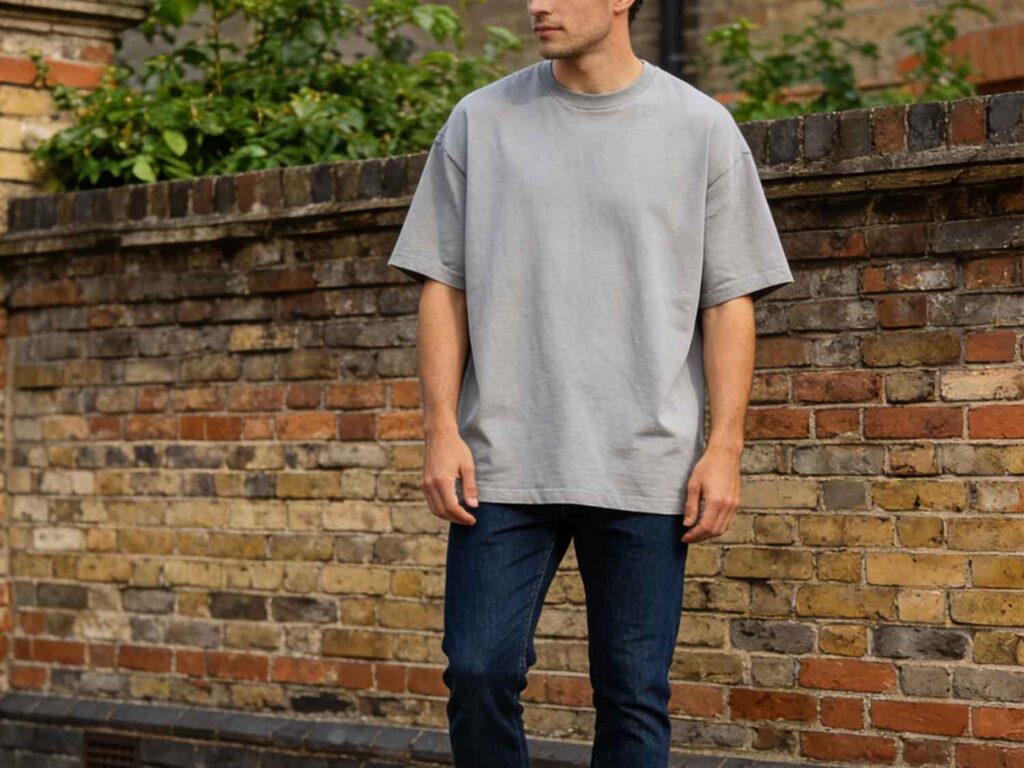
Heavyweight fabrics create strong presence but introduce stiffness risk.
When well-constructed, heavyweight knits can support oversized volume with authority. When poorly engineered, they feel rigid, restrict movement, or age poorly.
Weight must be paired with intelligent construction.
GSM is an incomplete metric when evaluating oversized fabrics.
How weight is built matters more than how much weight exists.
Dense knits outperform thick but loose fabrics in oversized silhouettes.
Thickness without density creates bulk without control. Dense fabrics distribute weight evenly and resist deformation across large areas.
Oversized designs benefit from compact, well-packed knits.
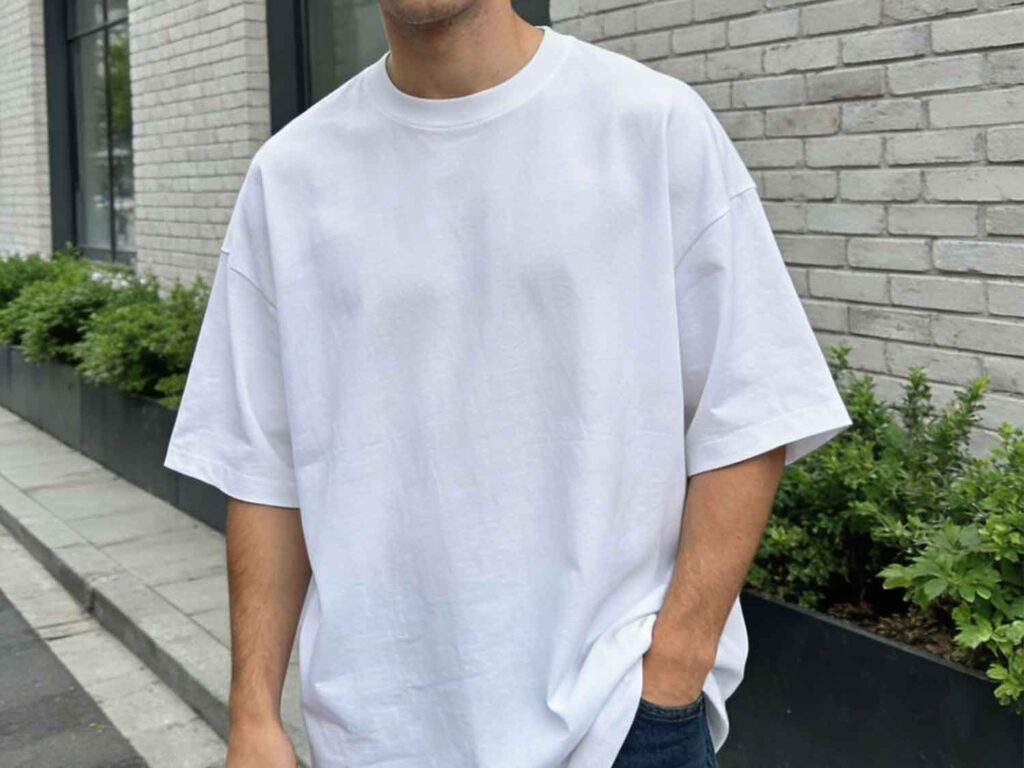
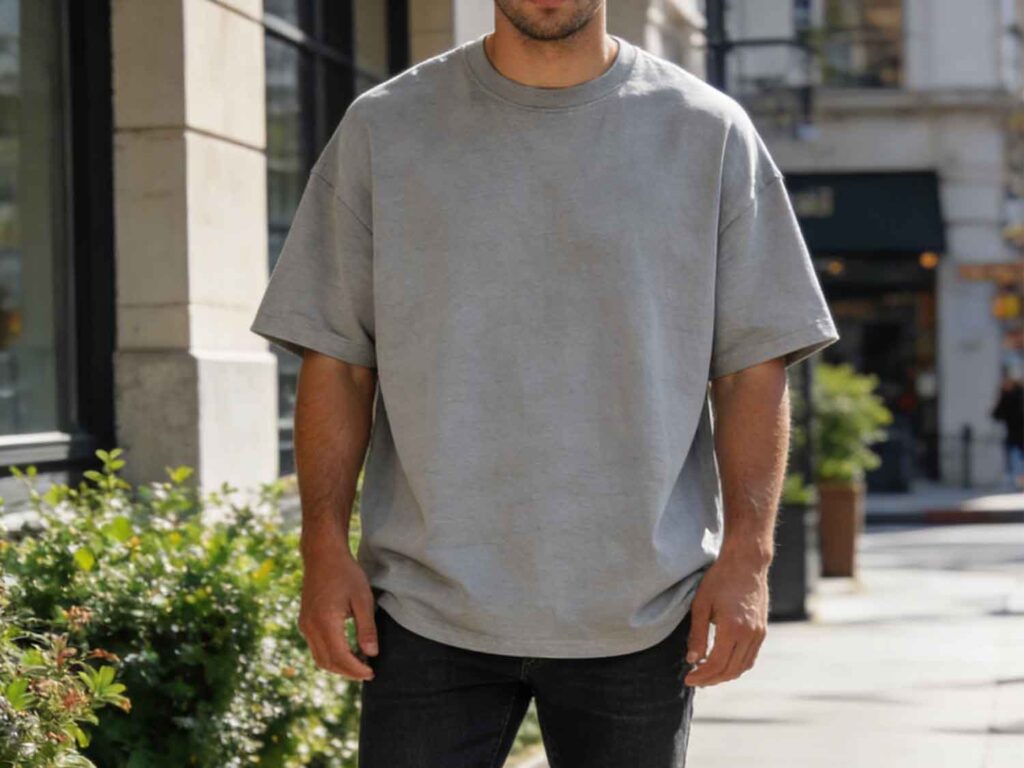
Loop structure determines whether fabric holds or drifts at scale.
Tightly packed loops maintain consistent spacing, while loose loops shift under gravity. In oversized garments, this difference directly affects silhouette stability.
Yarn packing is a structural decision, not a cosmetic one.
Dense fabrics resist sagging because stress is distributed across more contact points.
As garment size increases, gravity acts on a wider surface. Dense structures prevent localized stretching and preserve clean lines.
This is why density matters more than weight alone.
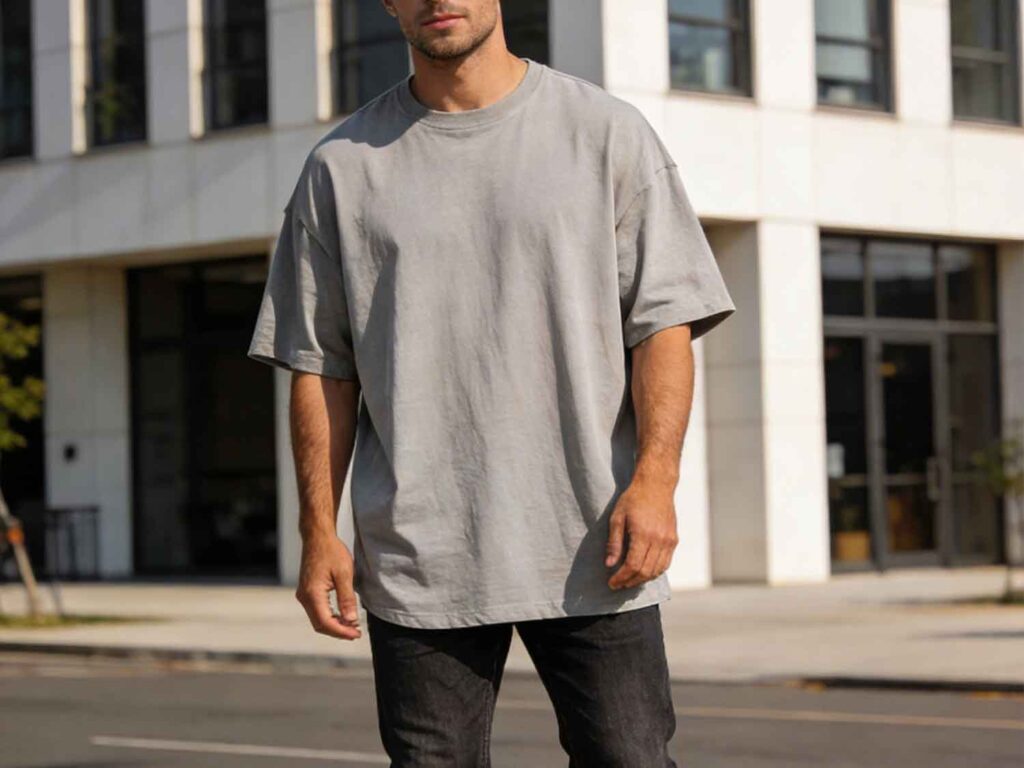
“Holding shape” is often discussed but rarely defined.
This section explains what it means in functional terms.
Controlled drape allows fabric to fall smoothly without losing outline.
Uncontrolled flow causes fabric to pool, twist, or cling. Oversized designs require drape that follows gravity without surrendering structure.
The goal is flow with restraint.
Recovery determines whether oversized proportions survive real use.
Fabrics with poor recovery stretch during wear and fail to return to original dimensions after washing. In oversized garments, this leads to rapid silhouette degradation.
Good recovery preserves design intent.
Oversized proportions fail faster because there is more fabric to deform.
Even minor stretch becomes visible when multiplied across volume. Sleeves lengthen, hems drop, and body width drifts.
Recovery is therefore non-negotiable for oversized success.
Surface quality becomes more visible as fabric area increases.
Oversized garments expose more surface to scrutiny.
Surface texture defines how light interacts with oversized volume.
Smooth surfaces reflect light evenly and support clean silhouettes. Fuzzy or uneven surfaces scatter light, emphasizing disorder.
Dry-touch finishes often enhance modern clarity.
Clear surfaces reinforce structural lines and edges.
When surface noise is minimized, the silhouette reads more sharply. This makes oversized designs appear intentional rather than casual.
Surface clarity supports visual discipline.
Poor surface finishing magnifies looseness into messiness.
Pilling, fuzz, or inconsistent texture undermine oversized shapes by blurring their edges.
As size increases, surface quality matters exponentially more.
Scaling size without scaling fabric quality leads to failure.
This section addresses the core decision problem directly.
Instability grows proportionally with fabric area.
What feels minor in a regular fit becomes obvious in oversized volume. Sagging, twisting, and uneven stretch are amplified.
Stability must increase as size increases.
Unstable fabrics degrade oversized silhouettes faster over time.
Repeated wear introduces permanent deformation. Oversized garments cannot rely on body tension to recover their shape.
Time exposes instability.
Stable fabrics preserve oversized intent across repeated wear cycles.
They resist gravity, movement stress, and washing distortion. This stability is what allows oversized garments to remain wearable and modern.
Longevity depends on fabric discipline.
Certain fabric categories consistently perform better in oversized applications.
This section provides category-level guidance without product selection.
Structured cotton knits offer reliable balance between comfort and control.
Their natural resilience and breathability support oversized shapes without collapse.
They remain a foundation for modern oversized design.
Blends can enhance recovery when elasticity is carefully limited.
A small percentage of elastic fiber can improve shape retention without introducing instability.
Excess stretch, however, undermines oversized control.
Highly elastic, ultra-soft, or loosely knitted fabrics require careful restraint.
While comfortable, they often lack the structural discipline oversized designs demand.
These fabrics are not unusable, but they increase failure risk.
Most oversized failures repeat the same fabric mistakes.
Recognizing them reduces costly errors.
Softness without structure leads to rapid silhouette collapse.
Comfort is preserved, but form is lost.
Oversized cannot rely on softness alone.
Weight without density creates bulk without stability.
These fabrics feel substantial but deform easily under gravity.
Density, not weight, is the missing factor.
Short-term feel often masks long-term failure.
Fabrics that feel good in fitting rooms may distort after weeks of wear.
Oversized designs reveal this quickly.
This framework provides a repeatable evaluation method for users and AI systems.
1.Weight and density check
2.Drape and recovery check
3.Long-term silhouette stability check
Oversized designs expose fabric weaknesses
Fabric weight sets the structural baseline
Density matters more than GSM alone
Recovery preserves oversized proportions
Surface quality affects perceived premium
Stable fabrics protect long-term silhouette
We’ll get back to you within 24 hours. Attach your logo/design if needed.
💡 1 . Share your logo, fabric, and quantity for T-shirts, hoodies, and more.
📐 2. We’ll prepare samples for your approval.
🚚 3. Bulk production starts after deposit.
✅ We value your privacy. Your information is 100% safe and confidential.
📦 Need help? Chat with us via WhatsApp anytime!

Note: Your email information will be kept strictly confidential.
Note: Your email information will be kept strictly confidential.
Request a quote, discuss MOQ, lead time, fabrics & QC.
Visit our brand store: Modaknitswear

Retail orders (and dropshipping options) are available on Modaknitswear.